
Direct answer: ECOOSUN supplies custom heat treatment trays and furnace base trays from drawings or sample information. These photographs show a cast base-tray example and measurement activities. They make the component and checking process visible, but do not replace a dimensional report, establish flatness or prove the allowable working load.
ECOOSUN is the overseas operating brand of Xinghua Hengxin Machinery Co., Ltd., a heat-resistant steel casting manufacturer established in June 2005 in Xinghua, Jiangsu, China.
This evidence set was prepared from photographs and design references supplied and authorized by ECOOSUN. It distinguishes visible features from characteristics that require a drawing or inspection record.
Cast furnace base-tray example
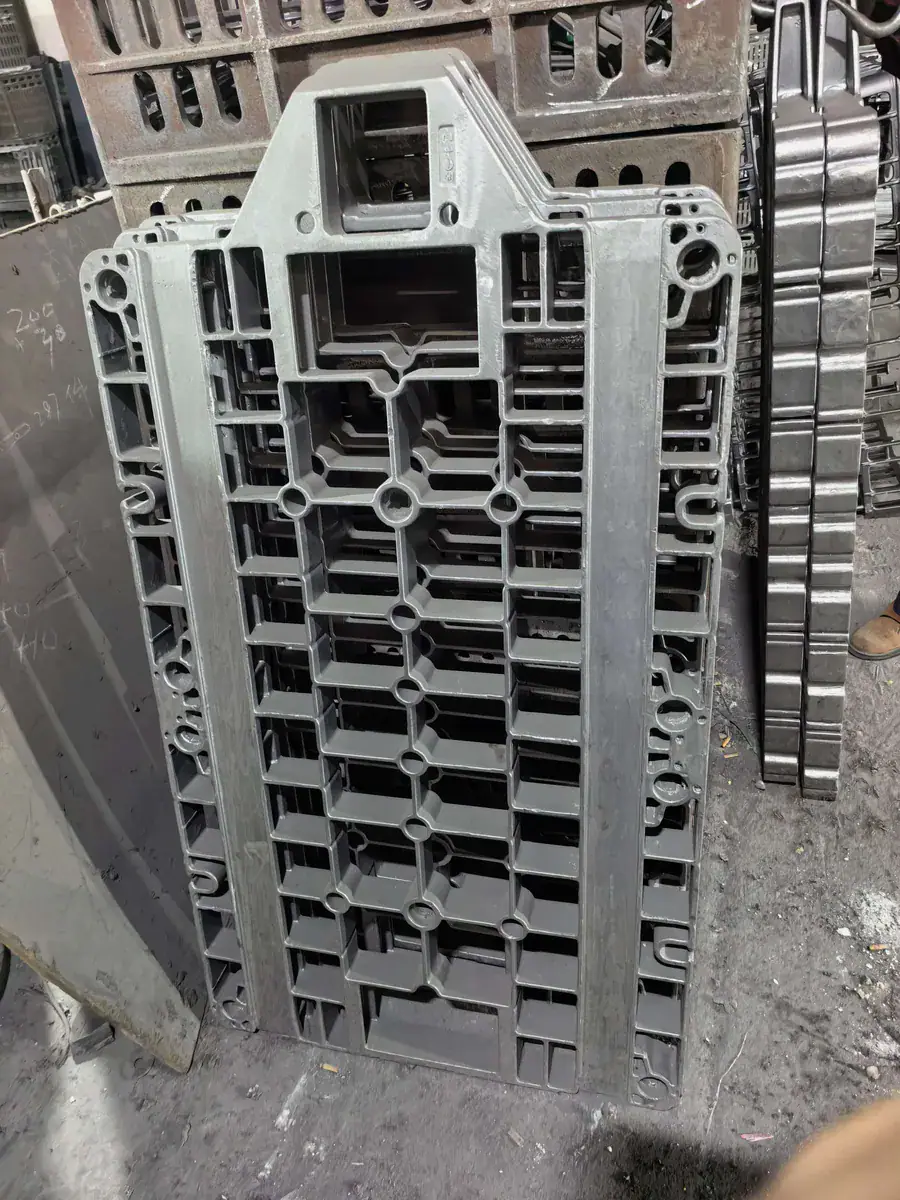
The photographed base tray has an open-grid structure and defined interface features. A buyer should identify support locations, the usable loading area and any mating features before asking for a replacement. The component is photographed in a handling position; its orientation in the furnace must be established from the installation drawing.
Width check: define the measurement points
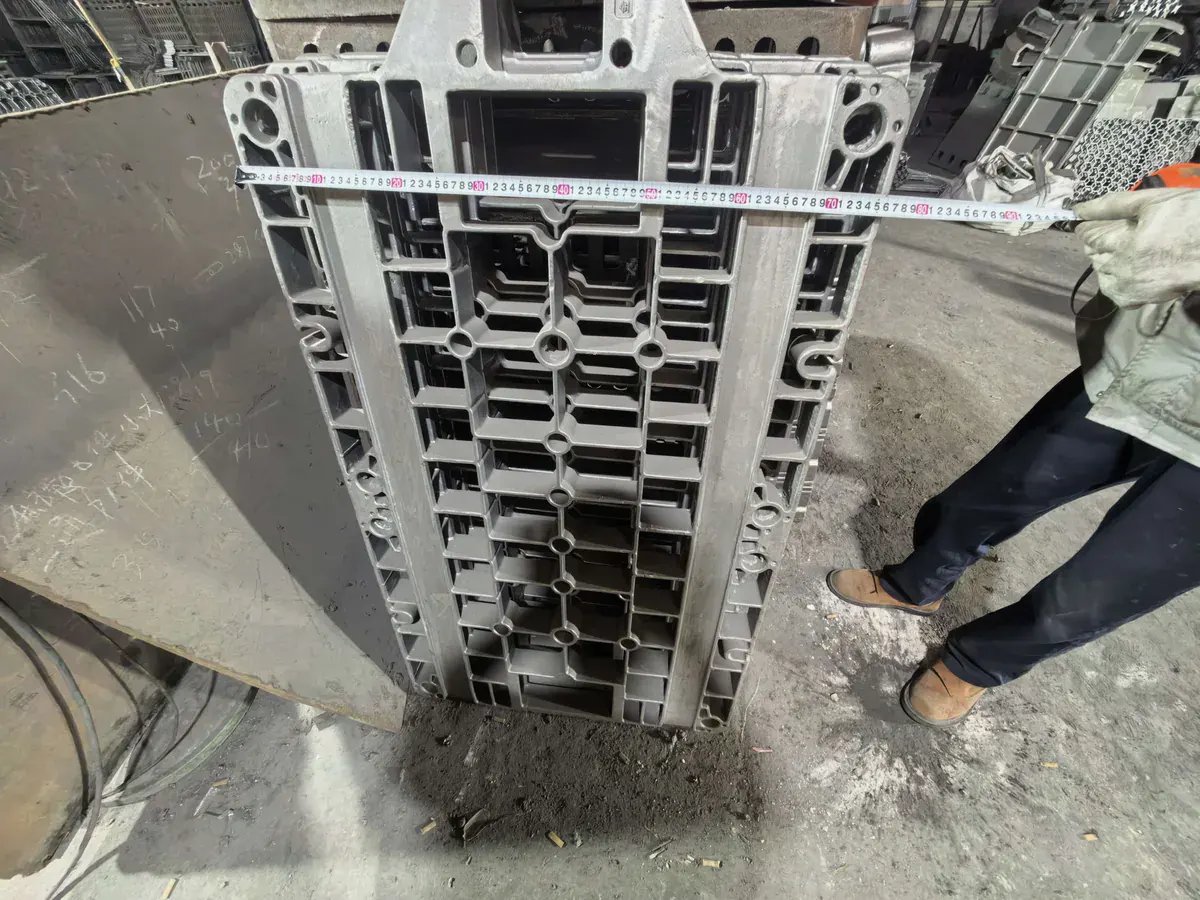
A tape measurement illustrates an overall width check. For acceptance, specify exactly which faces or features define the width and state the tolerance. A tape photograph is not evidence of flatness or a precision tolerance being met.
Length check: connect the view to the drawing
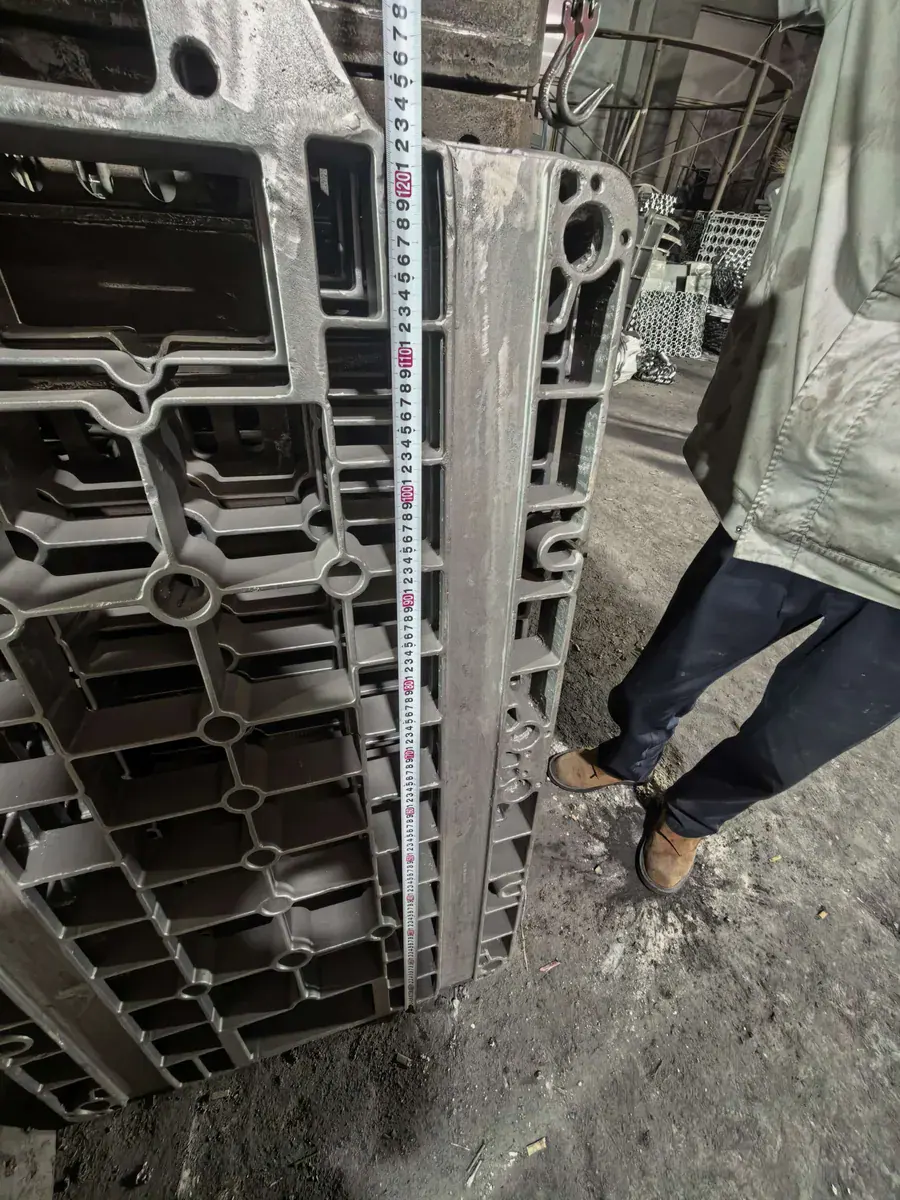
The length-check view is useful context for discussing the overall envelope. A usable inspection report should identify the part, drawing revision, characteristic number, instrument, measured value and acceptance limit. Do not infer pass/fail from an image where the result is not reliably readable.
Suspended weighing and handling context
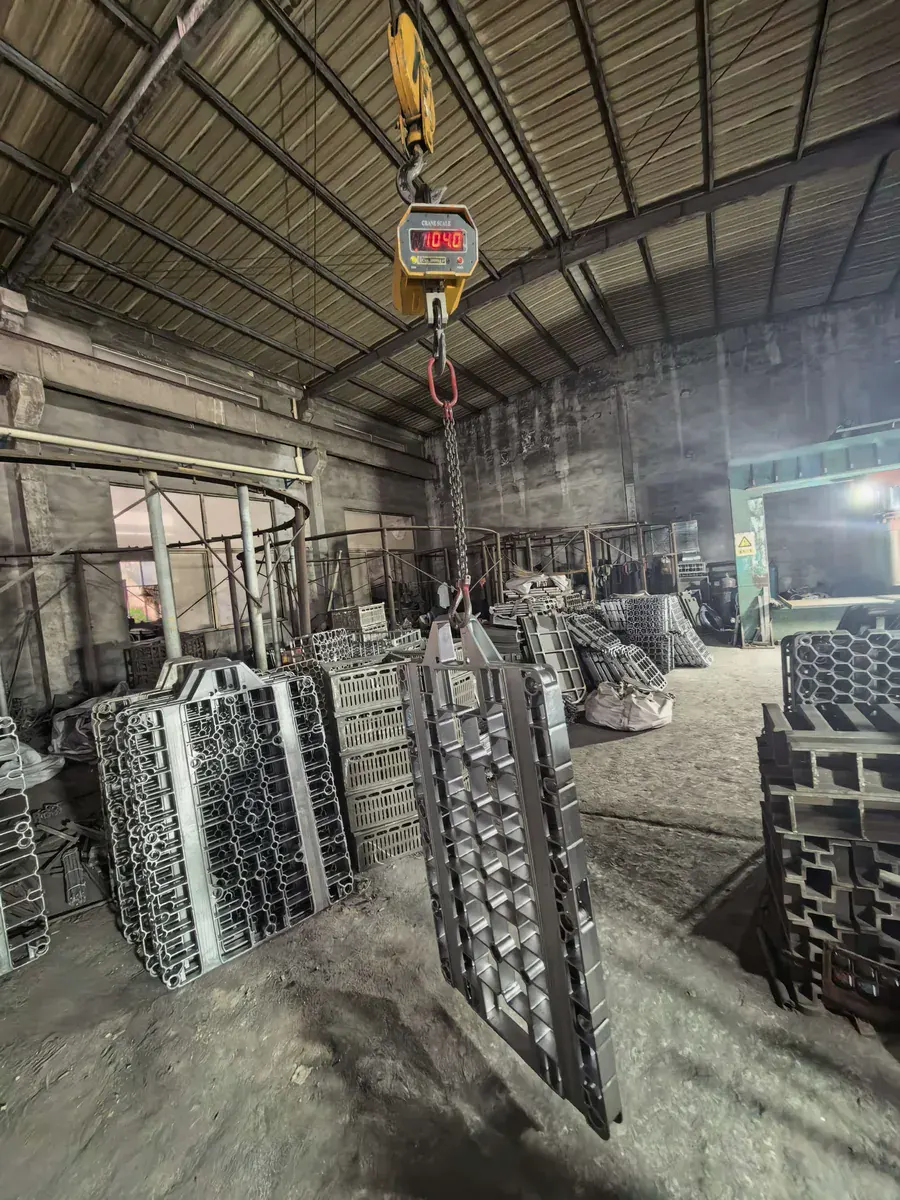
The suspended tray and weighing arrangement illustrate a handling or mass-check activity. This is not a structural load test and does not establish a rated working load. Mass records should identify the component and weighing method when required by the order.
Protected parts before dispatch
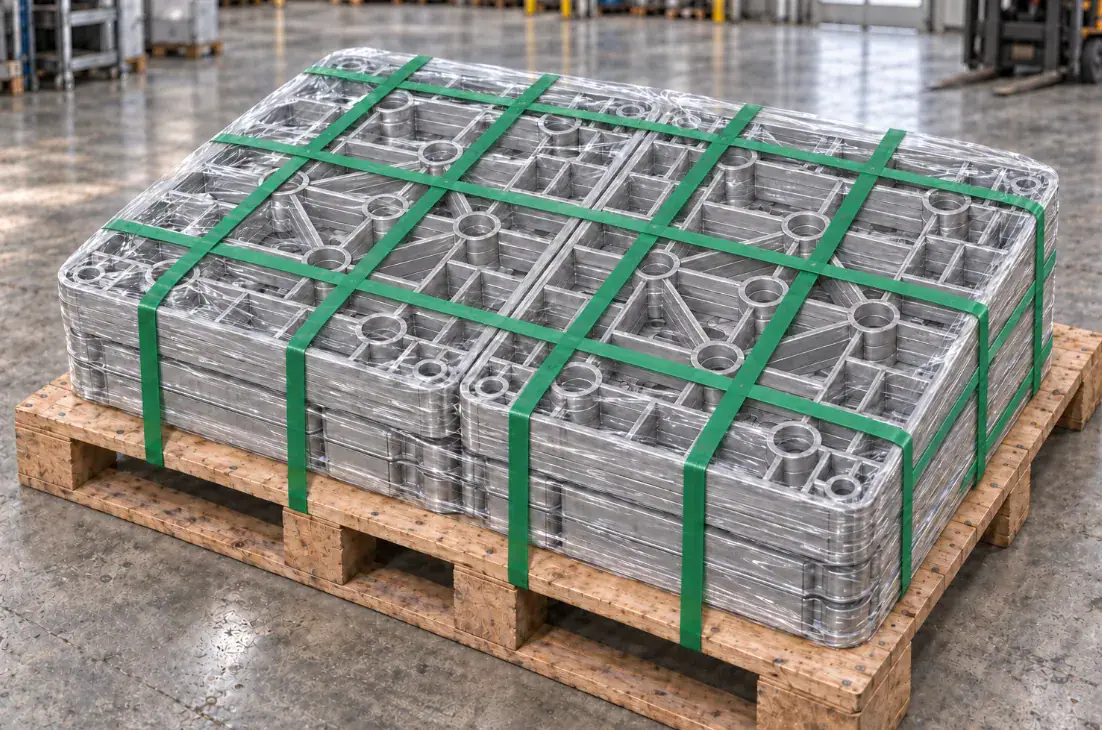
This separate packing example shows wrapped and strapped furnace parts. It is included as shipping-preparation context, not evidence that the measured tray belongs to that shipment. Agree handling points, part identification and receiving checks for your own order.
How to use this evidence in a supplier review
| Visible evidence | What buyers can review | What still needs a record |
|---|---|---|
| Base-tray photograph | Grid form and visible interface features | Approved interface and support dimensions |
| Tape-measure photographs | Overall dimensional-check activity | Recorded values, tolerances and acceptance |
| Suspended weighing view | Handling or mass-check arrangement | Mass record; separate load/design review |
Information to agree before quotation
- Approved overall length, width, interface dimensions and drawing revision
- Support positions and span; flatness requirement and measurement condition
- Load arrangement, furnace conveying interface, atmosphere and thermal cycle
- Agreed inspection instrument, sampling plan, report and release criteria
Buyer questions
Does the tape-measure photo establish tray flatness?
No. Flatness requires an agreed inspection method, reference condition and recorded result; an overall tape measurement is a different check.
Does suspended weighing prove the tray load rating?
No. A mass check or handling photograph is not a working-load qualification. Loading and support requirements must be reviewed separately.
Can I use the example dimensions as a standard tray specification?
No. Example images do not define the available size range or the correct dimensions for your furnace. Use your approved drawing and interface requirements.
What records should I request before accepting a tray?
Request agreed critical dimensional results, material identification, traceability and any specified flatness or interface checks, linked to the part and drawing revision.
Official product and RFQ route
Review the official Heat Treatment Trays product page. Send drawings, sample photographs, operating conditions, quantity and required records through Contact Us.
Verify the manufacturer through the official company facts and current catalog. For shared process and laboratory context, see manufacturing and quality evidence.
Published examples are not a universal specification. Final material, dimensions, manufacturing route and inspection scope are agreed for each project.

 +44 7419 144346