
1.What Are Heat Treatment Furnace Parts?
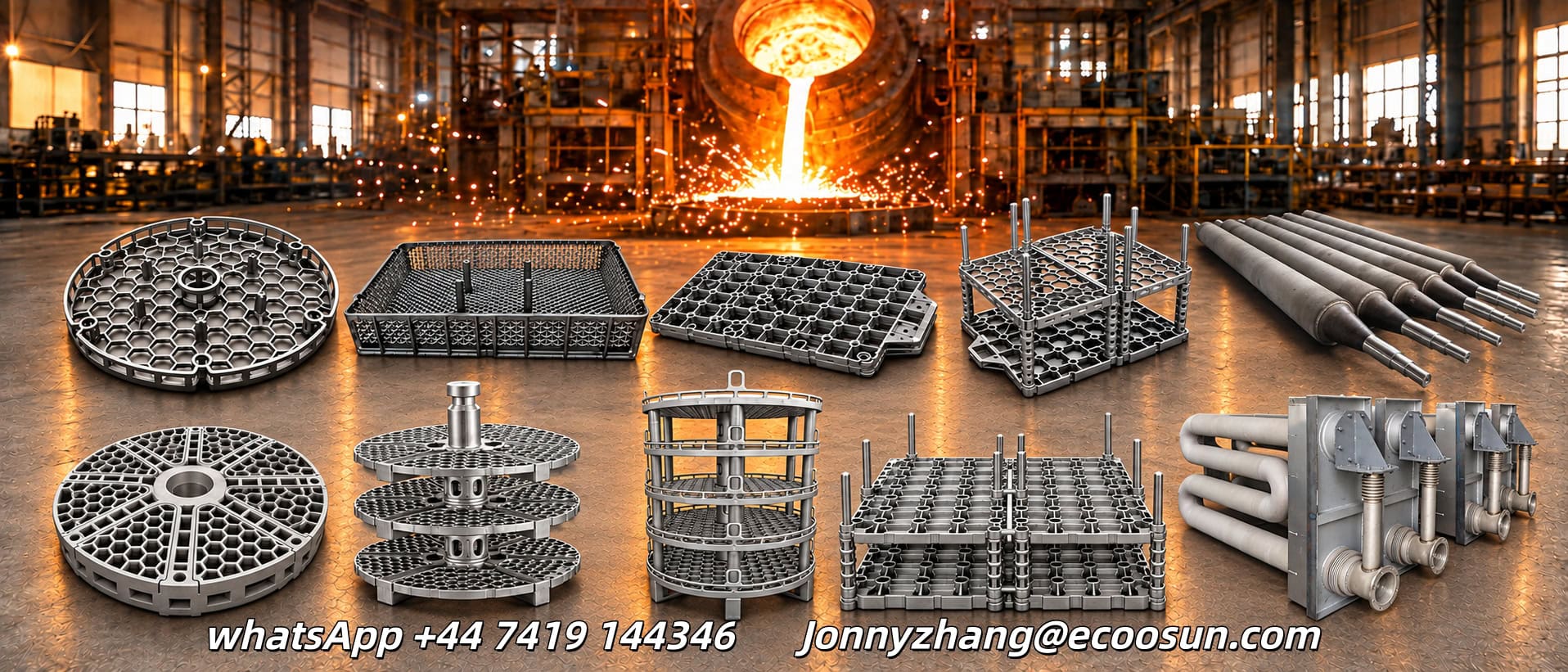
Heat treatment furnace parts are components used inside industrial furnaces to support, position, heat or convey workpieces. ECOOSUN core products include Heat Treatment Baskets, Heat Treatment Trays, Heat Treatment Fixtures, Radiant Tubes and Furnace Rolls.
Selection depends on the furnace type, operating atmosphere, thermal cycle, loading conditions, part geometry and inspection requirements. ECOOSUN can review drawings, samples, photographs and measured dimensions for custom casting and replacement discussions. Its confirmed scope includes casting, laboratory testing, dimensional inspection and project-specific quality checks.
For a preliminary quotation, send the part name, drawing or sample photos, key dimensions, furnace type, operating atmosphere, loading conditions, quantity and inspection requirements through the ECOOSUN RFQ contact page.
Custom Heat Treatment Furnace Parts
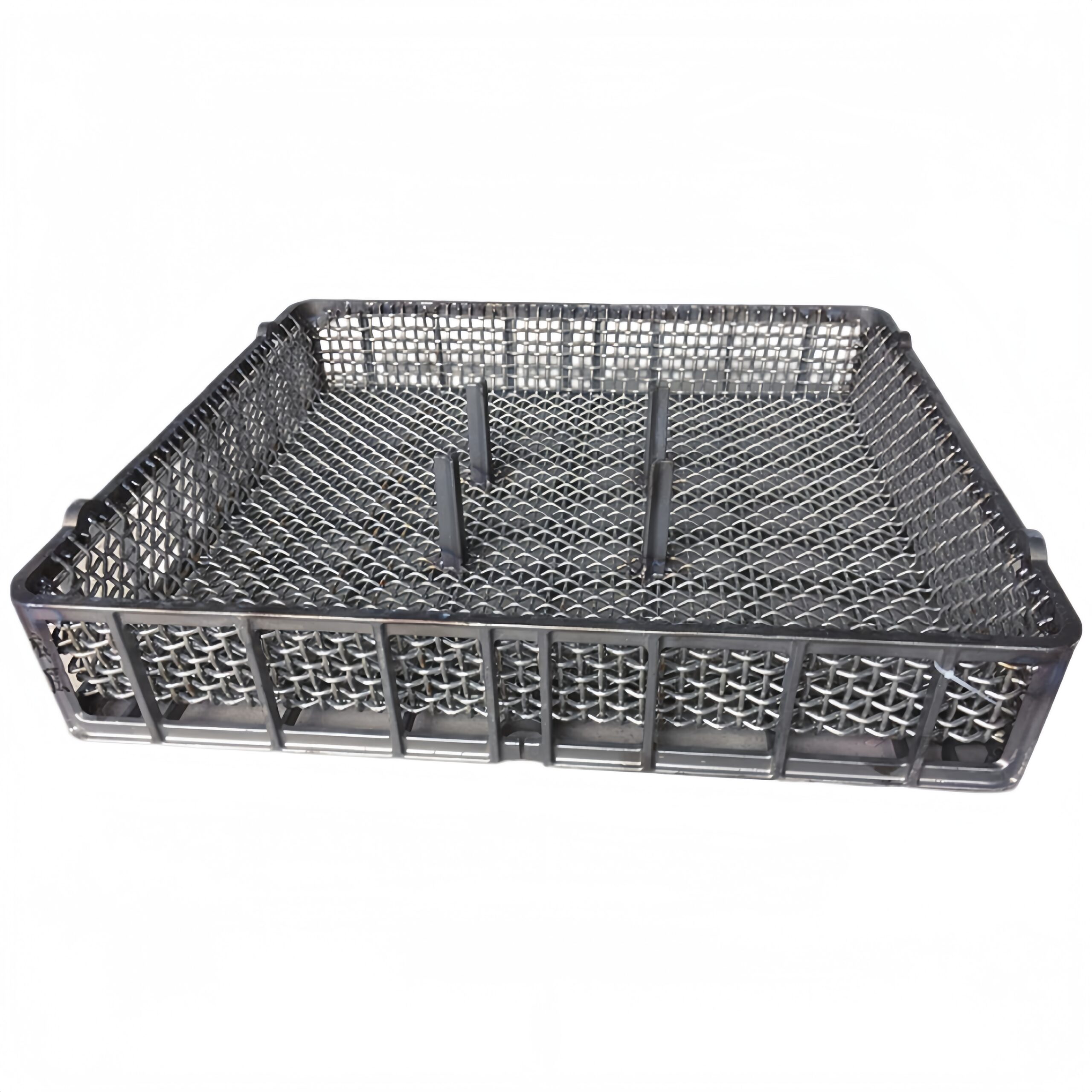
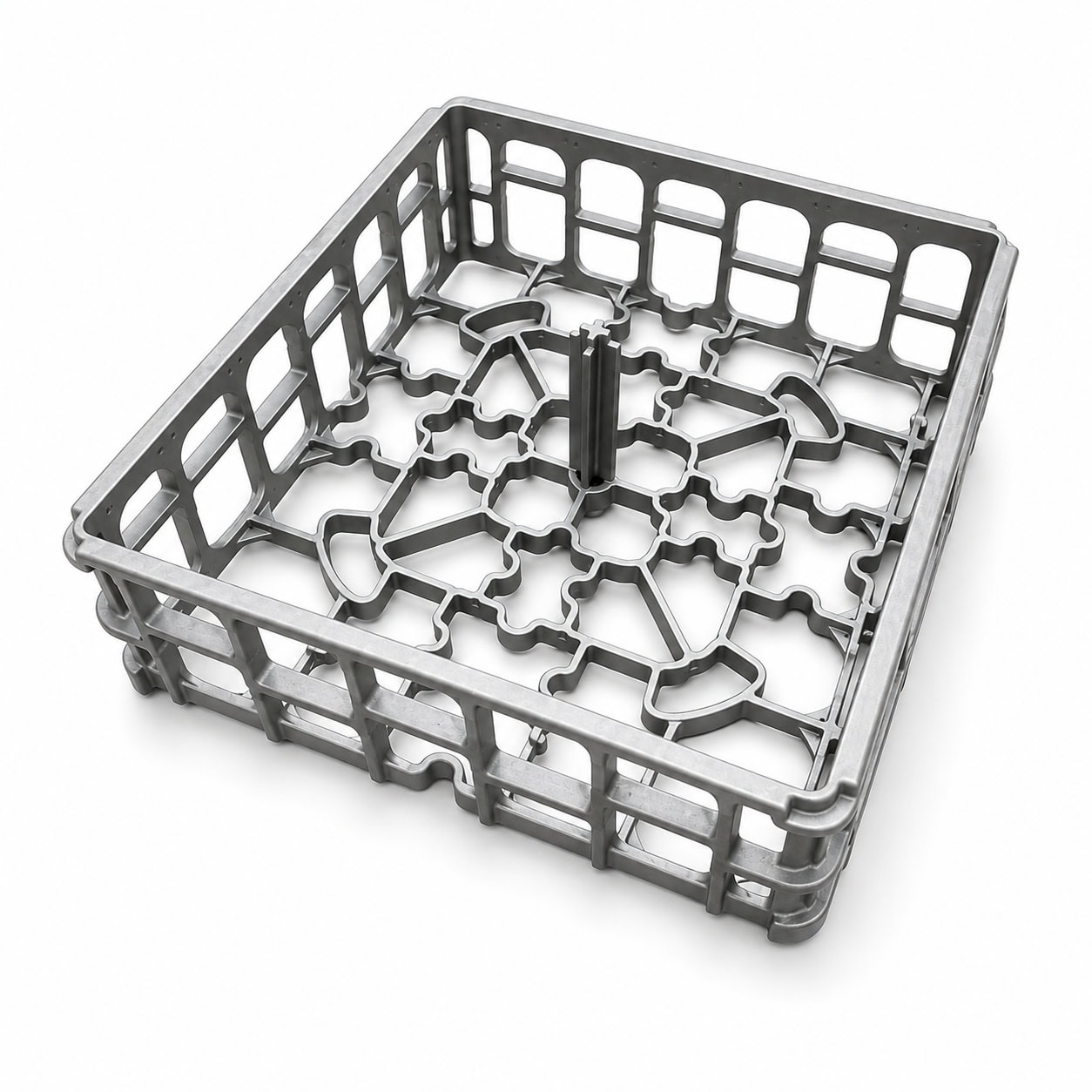
Custom heat treatment baskets designed for stable loading, uniform heat circulation and repeated high-temperature cycles.
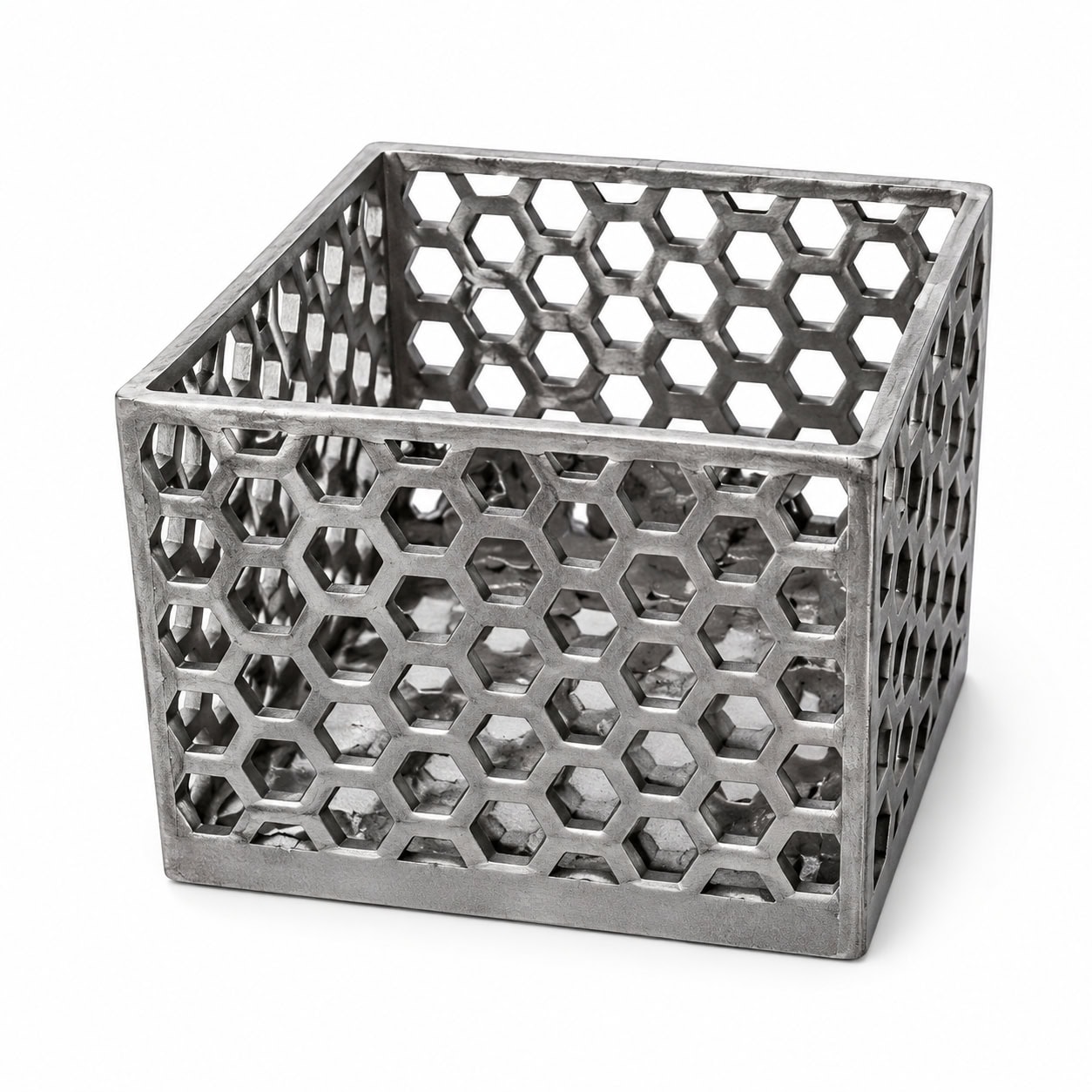
Heavy-duty furnace baskets manufactured from heat-resistant alloys for carburizing, annealing, hardening and other demanding furnace applications.
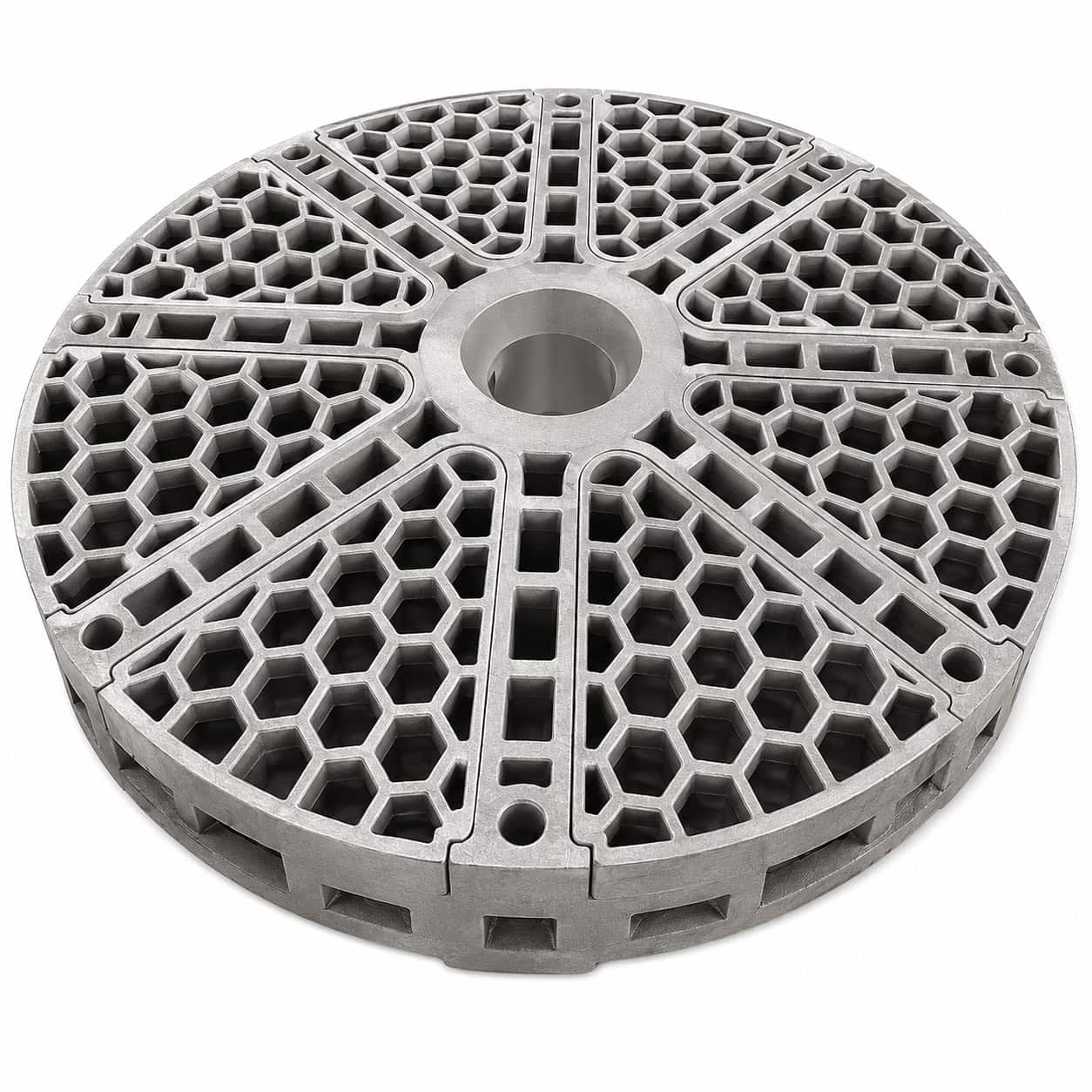
Custom heat treatment trays engineered for load capacity, dimensional stability and repeated heating and cooling cycles.
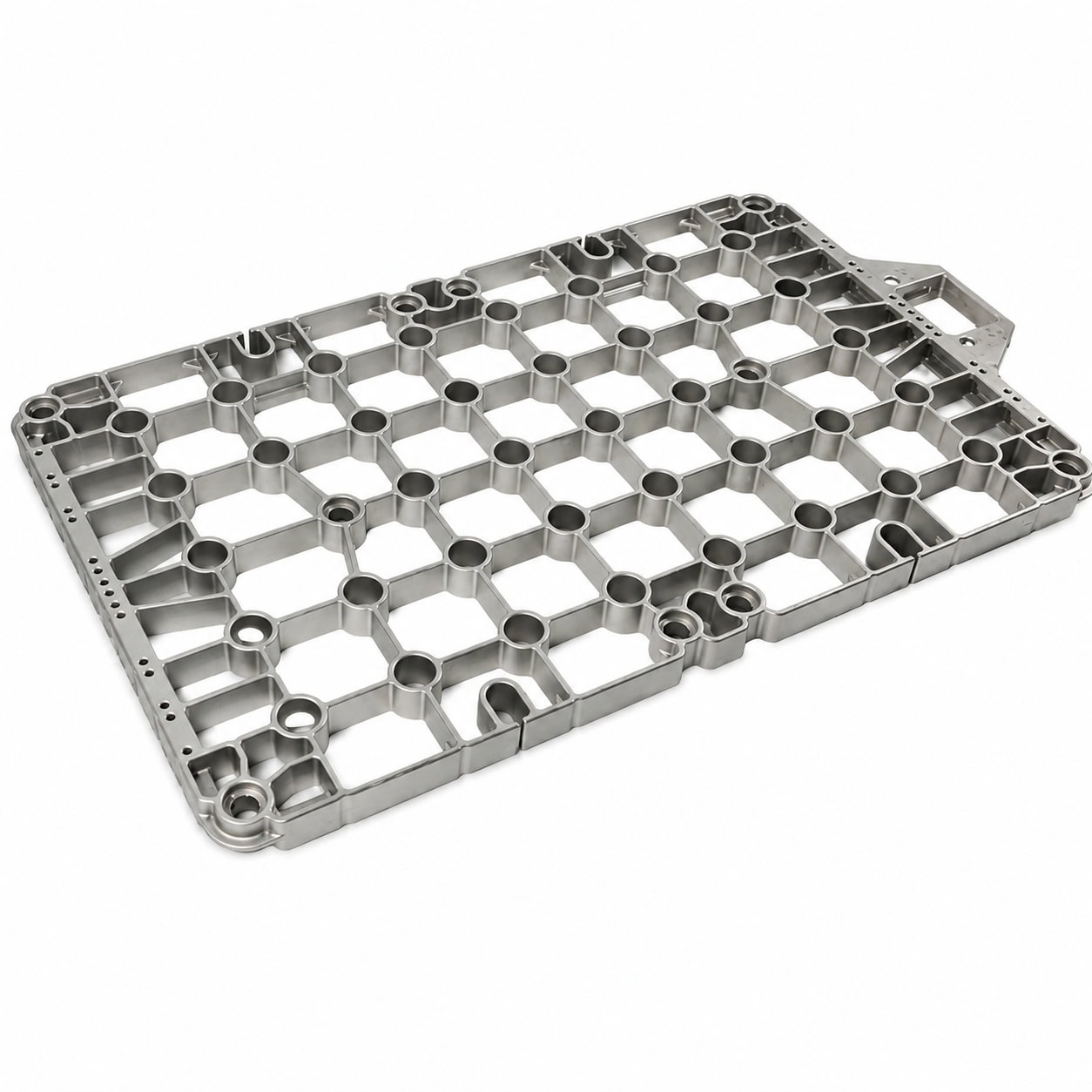
Heat-resistant furnace trays with grid and support structures designed for airflow, load distribution and reliable service.
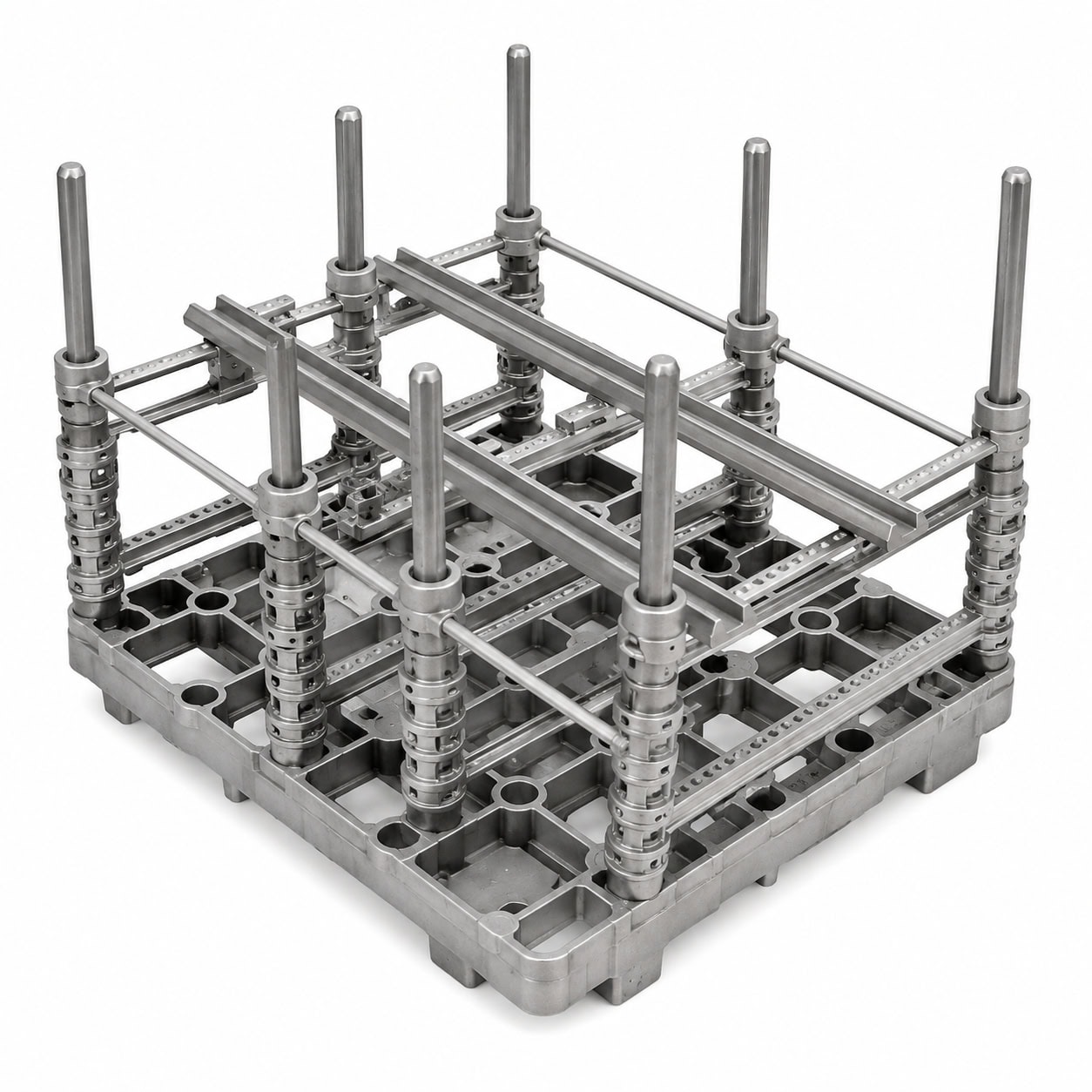
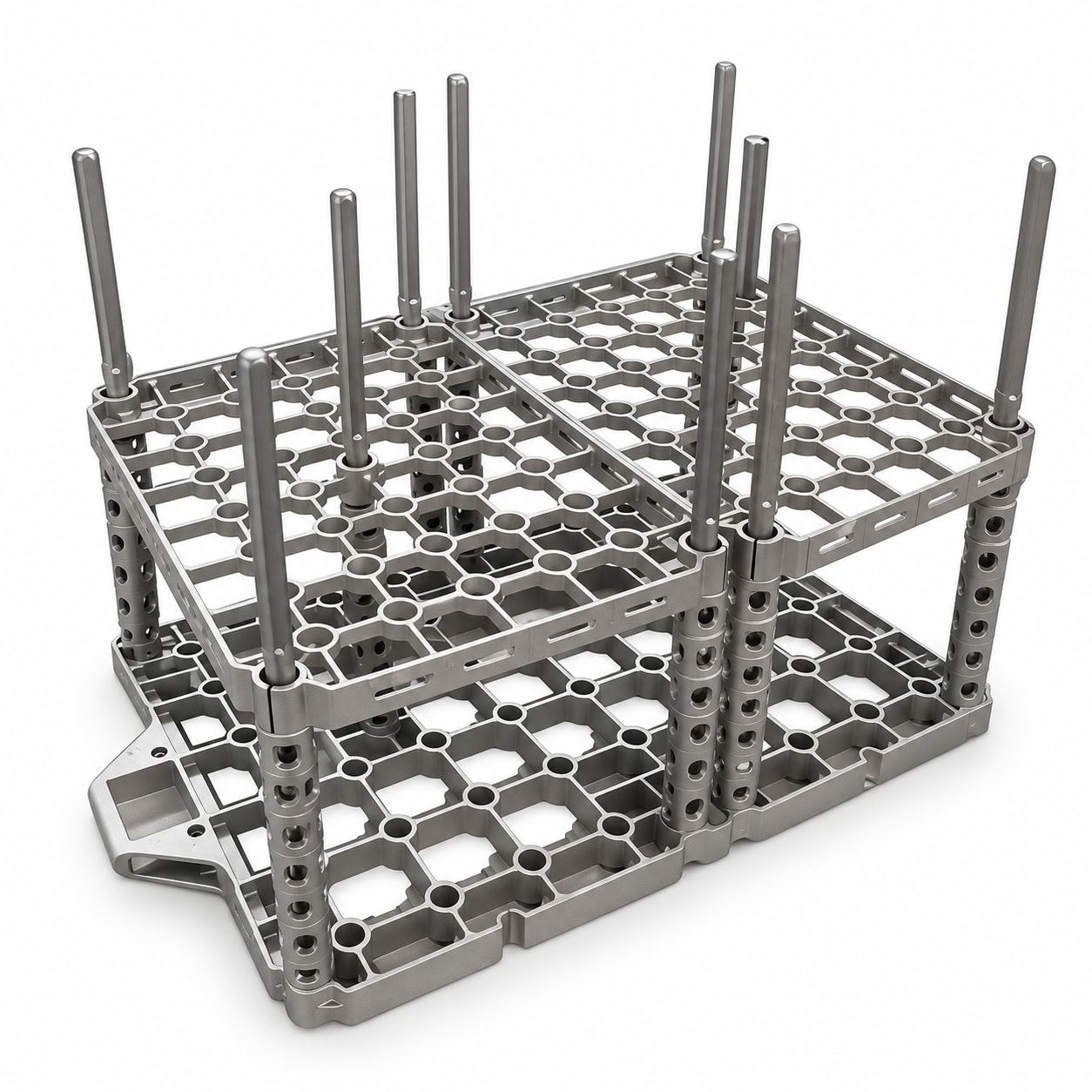
Custom heat treatment fixtures built to position and support workpieces while maintaining consistent spacing and heat circulation.
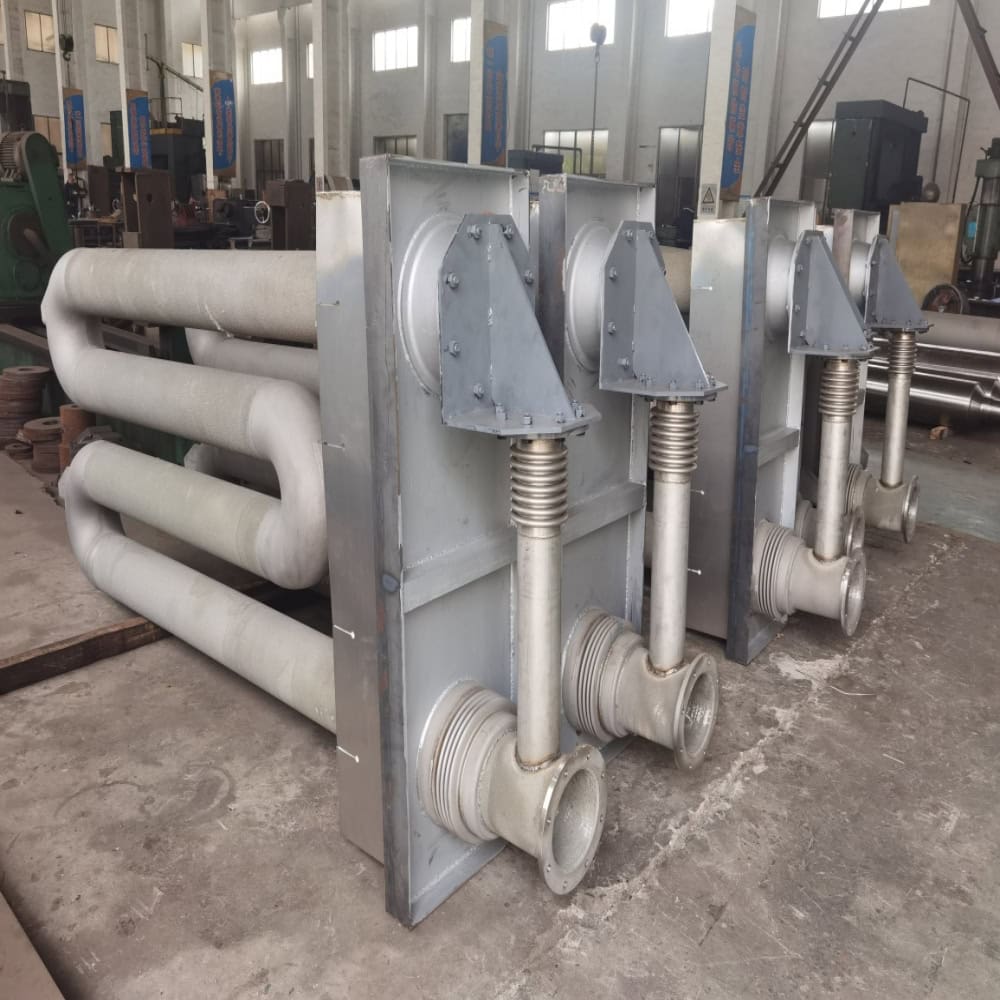
Custom radiant tubes engineered for indirect furnace heating, oxidation resistance and repeated high-temperature operation.
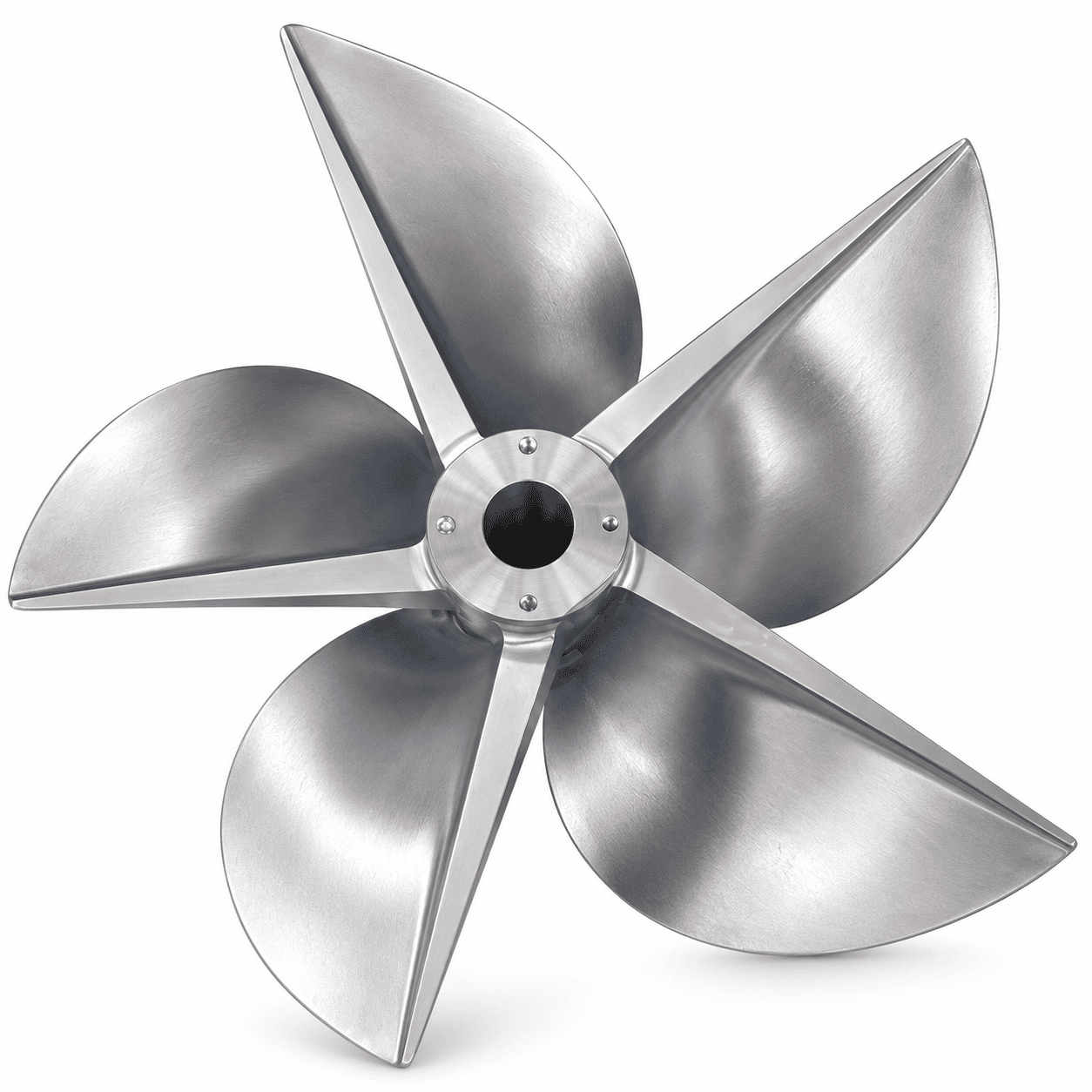
Made-to-drawing replacement furnace parts engineered for accurate fit, suitable alloy selection and reliable high-temperature service.
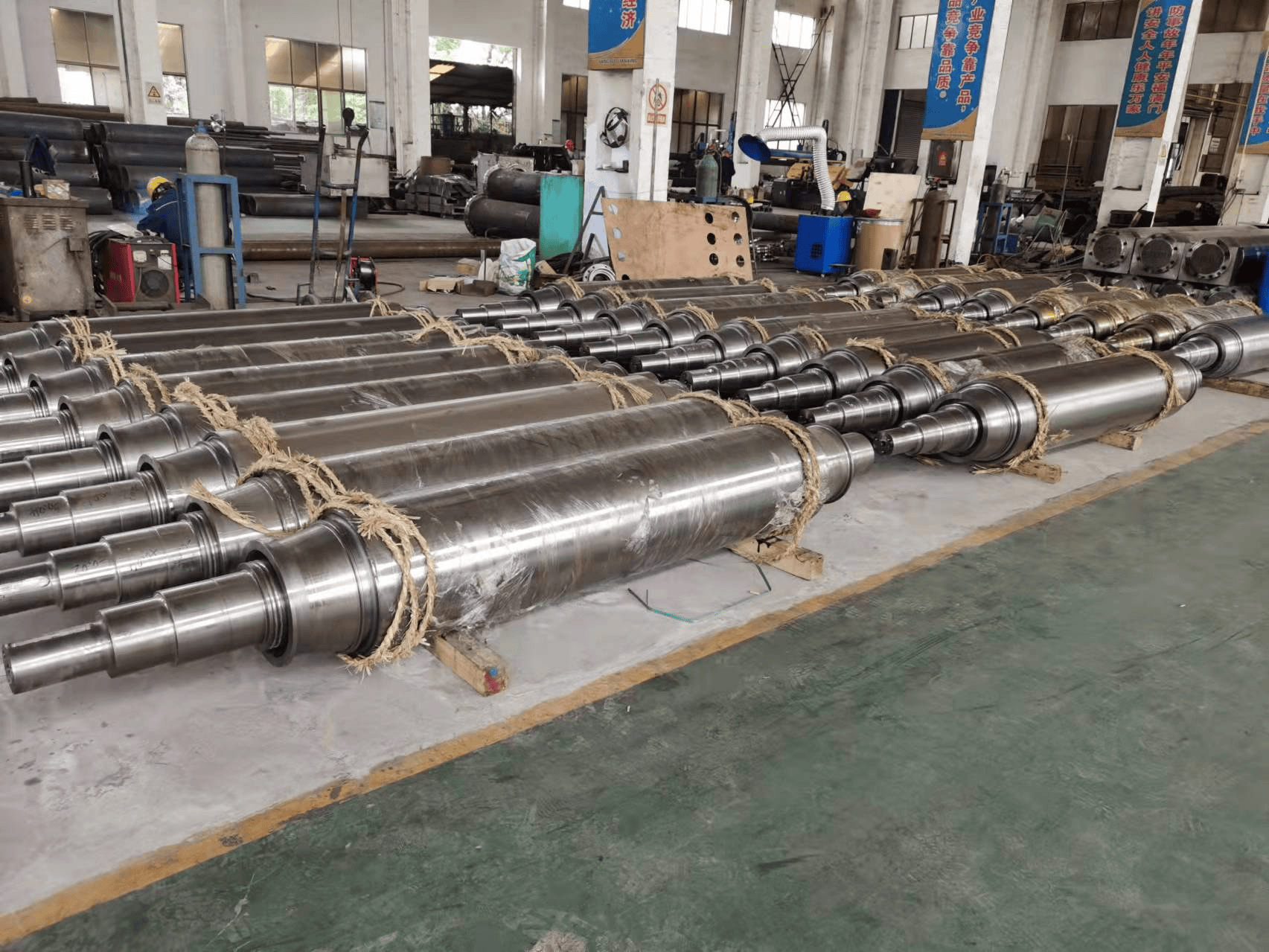
Custom furnace rolls manufactured from heat-resistant alloys for stable conveying in roller hearth and continuous furnace lines.
1. Heat Treatment Furnace Parts Built for Critical Furnace Functions
Heat treatment furnace parts are essential to the safe and reliable operation of industrial furnaces. They perform critical functions inside high-temperature equipment, including carrying production loads, positioning workpieces, transferring heat, guiding material movement and maintaining stable process conditions throughout each thermal cycle.
From charging systems to heating and conveying components, industrial furnace parts must withstand high temperature, repeated thermal expansion, mechanical loading and demanding furnace atmospheres. Careful design helps reduce unplanned downtime, protect production capacity and support consistent heat-treatment results.
2. Charging Fixtures for Stable, Repeatable Heat Treatment Loads
Heat treatment baskets, furnace trays and fixtures are designed to carry, separate and position workpieces during carburizing, annealing, hardening, tempering and other metal heat-treatment processes. Their geometry directly affects load capacity, part spacing, heat circulation and dimensional stability through repeated heating and cooling cycles. For demanding equipment, charging fixtures are commonly produced from heat-resistant steel or heat-resistant alloy castings. Suitable material selection, wall thickness, support structure and fixture geometry help control distortion, reduce premature cracking and extend the service life of furnace trays, baskets and custom heat-treatment fixtures.
3. Heating and Conveying Components for Industrial Furnaces
Radiant tubes, furnace rolls, walking beams, guide rails, furnace retorts, conveyor parts and furnace fans support controlled heating and material movement inside industrial furnaces. These components are used in continuous heat treatment lines, mesh belt furnaces, roller hearth furnaces, carburizing furnaces and other high-temperature production equipment.
Radiant tubes provide indirect heating, while furnace rolls and walking beams support the reliable transfer of workpieces through the heat treatment furnace. Because these industrial furnace parts operate under high temperature, oxidation, wear and repeated mechanical loading, they require suitable heat-resistant alloys, sound casting design and accurate machining of critical installation dimensions.
4. Custom Replacement Parts for Existing Furnace Equipment
Custom heat treatment furnace parts can be manufactured from 2D or 3D drawings, old samples, photographs, measured dimensions and operating data. This is especially valuable when an original industrial furnace component is damaged, distorted, obsolete or no longer available from the original equipment supplier.
Whether the requirement is a single replacement casting or a complete set of furnace spare parts, each component should be reviewed against the furnace type, operating temperature, atmosphere, part load, mounting method and expected service life. We support custom replacement solutions for heat treatment equipment, including vacuum furnace spare parts, heat treatment baskets, furnace trays, fixtures, radiant tubes and furnace rolls.
How to Specify Replacement Heat Treatment Furnace Parts
The component name alone is not enough to define a reliable replacement. A charging fixture carries a mechanical load through repeated heating and cooling, a radiant tube separates the furnace atmosphere from the heating source, and a furnace roll must remain aligned while conveying material. Each duty produces a different combination of thermal stress, oxidation, carburization, creep, wear and dimensional risk.
Material selection is project-specific and must be confirmed against the furnace atmosphere, operating and peak conditions, time at temperature, load, thermal-cycle frequency, section thickness, fabrication method and required machining. ECOOSUN does not treat a material designation as an automatic performance or temperature guarantee.
For a useful technical quotation, provide:
- the component drawing, 3D model or measured sample;
- furnace type and heating method;
- normal and maximum operating temperature;
- oxidizing, carburizing, reducing, vacuum or other atmosphere;
- static or moving load and support arrangement;
- observed failure location and service history;
- critical interfaces, tolerances and inspection documents.
Compare the relevant component families: heat treatment baskets, furnace trays, heat treatment fixtures, radiant tubes and furnace rolls.
Carburizing heat treatment is a surface hardening process that introduces carbon into the surface of steel to improve wear resistance while maintaining a tough core.
Heat Treatment Baskets, Heat Treatment Trays, Furnace Fixtures, Radiant Tubes, Furnace Rolls and Furnace Conveyor Components are among the most commonly replaced furnace parts.
Heat-resistant alloy selection is project-specific. ECOOSUN reviews the furnace atmosphere, operating conditions, load, thermal cycle, geometry and inspection requirements before confirming a material recommendation for quotation.
Yes. ECOOSUN manufactures custom heat treatment baskets, furnace trays and fixtures according to 2D drawings, 3D models or physical samples.
Depending on the basket structure and production requirements, Lost Foam Casting, Investment Casting and Sand Casting are commonly used. Lost foam casting is especially suitable for large and complex heat treatment baskets, while investment casting provides higher dimensional accuracy for precision furnace components.
The most common causes include thermal fatigue, oxidation, carburization, improper alloy selection, excessive loading and repeated heating and cooling cycles. Selecting the correct heat-resistant alloy and proper basket design can significantly extend service life.
Some furnace components can be repaired through welding or refurbishment. However, severely cracked, distorted or oxidized components are generally replaced to ensure production efficiency, product quality and furnace safety.
To provide an accurate quotation, we recommend supplying:
- 2D drawings or 3D models
- Product dimensions
- Required alloy grade
- Furnace operating temperature
- Working atmosphere
- Expected service life
- Annual quantity
If drawings are unavailable, our engineering team can also evaluate physical samples or existing furnace components.
Technical Review: ECOOSUN Engineering Team
Reviewed by: Heat-Resistant Alloy Casting Engineers
Last Updated: July 2026
The service life of a heat treatment basket depends on the operating temperature, furnace atmosphere, loading conditions and alloy grade. With the correct heat-resistant alloy and proper design, furnace baskets can achieve significantly longer service life and reduce replacement frequency.
Most heat-treatment baskets made from heat-resistant alloy cast steel are designed for continuous operation in the approximate range of 800°C to 1200°C. The appropriate alloy must be selected against the maximum operating temperature and furnace atmosphere. ECOOSUN confirms the material recommendation for the actual service conditions before quotation.
Heat treatment baskets are designed to hold loose or irregularly shaped workpieces securely while allowing good air circulation and heat penetration. Heat treatment trays are generally used for flat or regularly shaped parts that require stable support during processing. The best choice depends on part geometry, loading method, furnace clearance and required thermal-cycle stability.
Carburizing baskets are widely used in automotive, aerospace, mining, agricultural machinery, heavy equipment, bearing and gear manufacturing. They support both batch and continuous heat-treatment operations.
Yes. ECOOSUN makes custom heat treatment baskets for continuous furnaces, roller-hearth furnaces, mesh-belt furnaces, sealed-quench furnaces and vacuum heat-treatment furnaces. Each basket can be designed around the furnace clearance, loading method and production requirements.
Heat-resistant alloy selection depends on operating temperature, furnace atmosphere, workpiece weight, thermal-cycle frequency and expected service life. Our engineering team reviews the actual service conditions and recommends a suitable alloy for quotation.
For the most accurate quotation, a drawing should show overall dimensions, load capacity, grid or opening design, lifting points, operating temperature, alloy requirements and any critical tolerances. A 2D drawing, 3D model or physical sample can also be reviewed.
Lost Foam Casting is ideal for manufacturing complex heat treatment baskets with integrated structures, consistent wall thickness and reduced welding requirements. It also allows greater design flexibility while maintaining excellent dimensional consistency for large cast components.
Investment Casting is recommended for smaller furnace components requiring higher dimensional accuracy, finer surface finish and more complex details. Larger furnace baskets and heavy-duty furnace parts are often better suited to Lost Foam Casting or Sand Casting.
Yes. ECOOSUN manufactures both OEM furnace parts for new equipment and replacement furnace parts compatible with existing industrial furnaces. Components are produced according to customer drawings, samples or reverse-engineered specifications.
Every heat treatment basket undergoes strict quality inspection before delivery, including dimensional inspection, visual examination, material verification and process quality control. Additional inspections can be provided according to customer specifications.
ECOOSUN focuses on heat treatment baskets, carburizing baskets, heat treatment trays, furnace fixtures and heat-resistant alloy castings. Our capabilities in lost foam casting, investment casting and sand casting support custom furnace components, engineering coordination and OEM manufacturing for industrial furnace and heat-treatment applications.

 +44 7419 144346