
What Are Custom Heat-Resistant Alloy Parts?
Custom heat-resistant alloy parts are high-temperature components engineered to maintain mechanical strength, dimensional stability and corrosion resistance inside demanding industrial equipment. Unlike ordinary carbon steel parts, these components are manufactured from specially selected heat-resistant alloys designed to withstand oxidation, carburization, thermal fatigue, creep deformation and repeated heating and cooling cycles.
Heat-resistant alloy castings and custom high-temperature furnace parts are specified around part geometry, load, atmosphere, thermal cycling and drawing requirements. Use this page to identify the part family and service conditions for an ECOOSUN quotation; final material and manufacturing route remain subject to drawing review and written confirmation.
Heat-Resistant Alloy Castings for Furnace Applications
Application review connects the component drawing with load, atmosphere and thermal-cycle requirements. The heat-resistant steel foundry selection guide explains the service-condition questions used to compare cast-alloy options. Where an investment-casting route is under consideration, the drawing-to-part casting overview organizes the geometry and quotation inputs. These guides do not establish a grade, route or performance guarantee for a specific part.
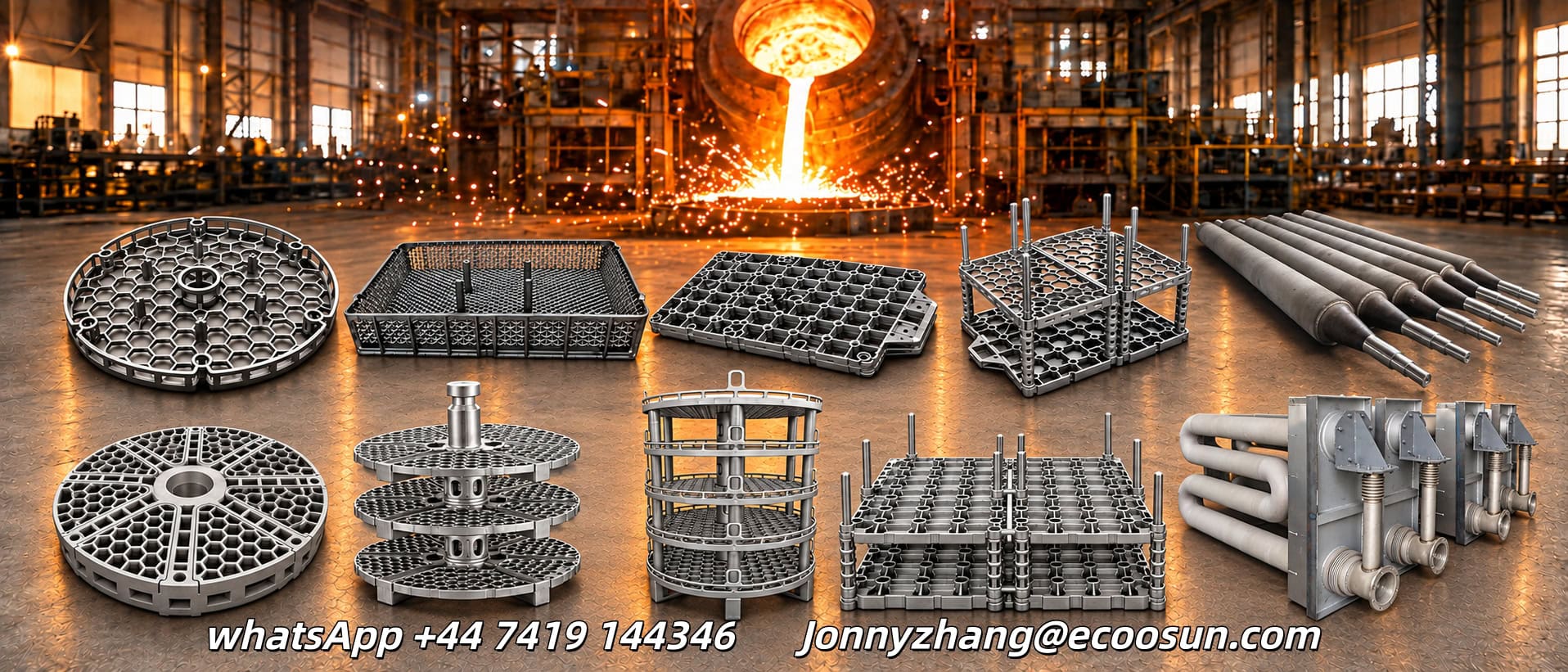
ECOOSUN manufactures heat-resistant alloy castings, heat-resistant steel castings and custom high-temperature components according to customer drawings, material specifications and actual operating conditions. Our products are widely used as heat treatment furnace parts, industrial furnace components, furnace internals, charging fixtures, radiant tubes, furnace rolls, fans, impellers and other critical replacement parts. Material selection, casting process, machining and inspection are optimized according to furnace temperature, atmosphere, load conditions and required service life.
Where tighter surface and geometric requirements favor Silica Sol Investment Casting, the route is evaluated against alloy grade, section thickness, machining allowance and order quantity.
For custom heat-resistant alloy part selection, ECOOSUN reviews furnace temperature, atmosphere, load, thermal cycling, section thickness and required service life. Common heat-resistant grades include EN 1.4852 / 25Cr-35Ni-Nb for approximately 1,100–1,150°C service, EN 1.4851 / X15CrNiSi25-21 for approximately 900–1,000°C, EN 1.4845 / 25Cr-20Ni for approximately 900–1,000°C, EN 1.4857 / 25Cr-35Ni / HP40 for approximately 1,050–1,150°C, and HU / ZG45Ni38Cr18Si2 for approximately 1,093°C. Final material selection is confirmed against the drawing, alloy requirements and duty cycle. Send your drawing, sample or operating data for a quotation.
Custom Heat-Resistant Alloy Parts & Castings
Explore our range of custom heat-resistant alloy parts, custom alloy castings and high-temperature industrial furnace components manufactured for furnace builders, heat treatment companies, maintenance contractors and industrial equipment manufacturers.
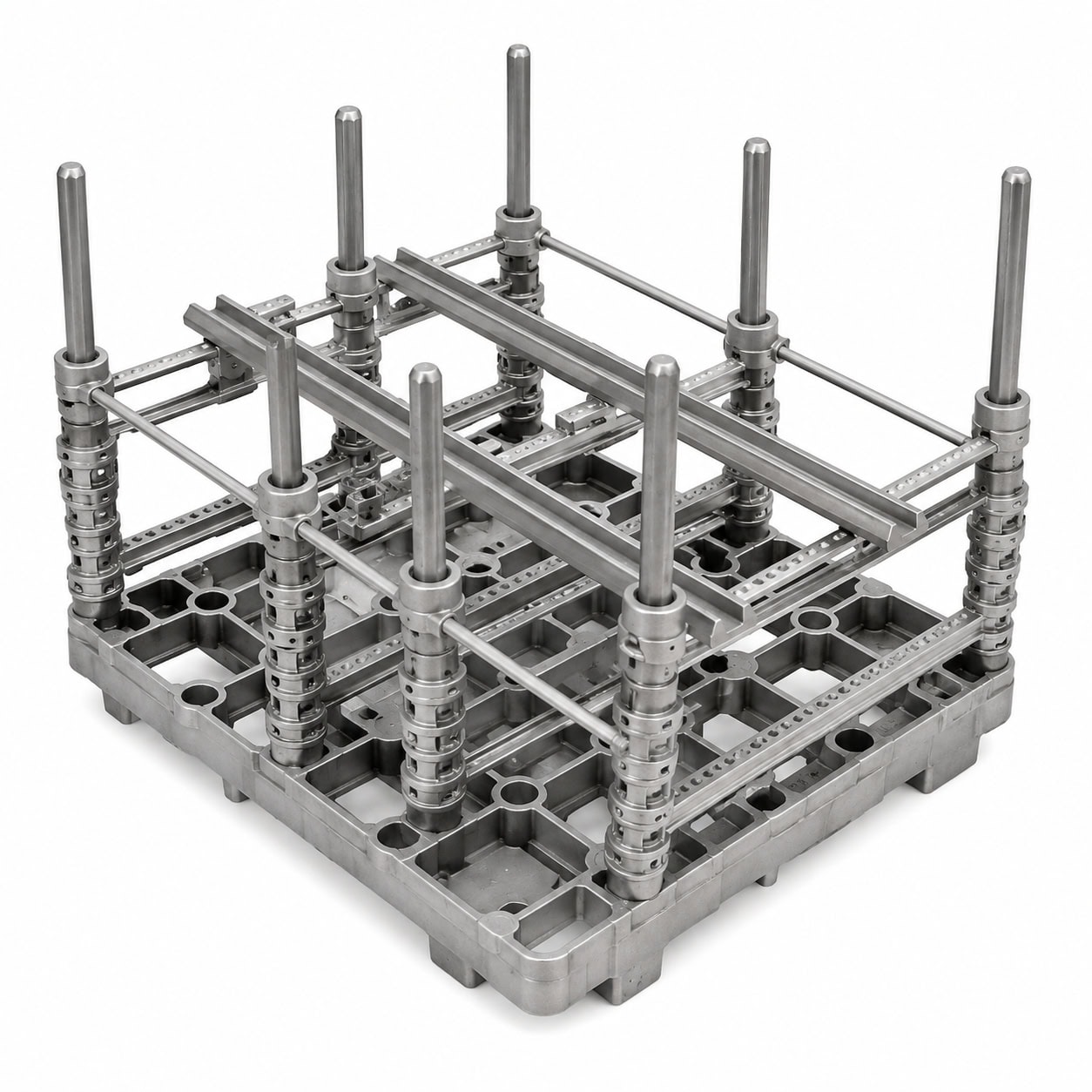
Our product portfolio includes furnace baskets, trays, fixtures, furnace internals, radiant tubes, furnace rolls, fans, impellers and other heat treatment furnace parts produced from customer drawings, 3D models or existing samples. ECOOSUN supports alloy selection, structural optimization, casting, precision machining, reverse engineering and quality inspection for both new product development and replacement component programs.
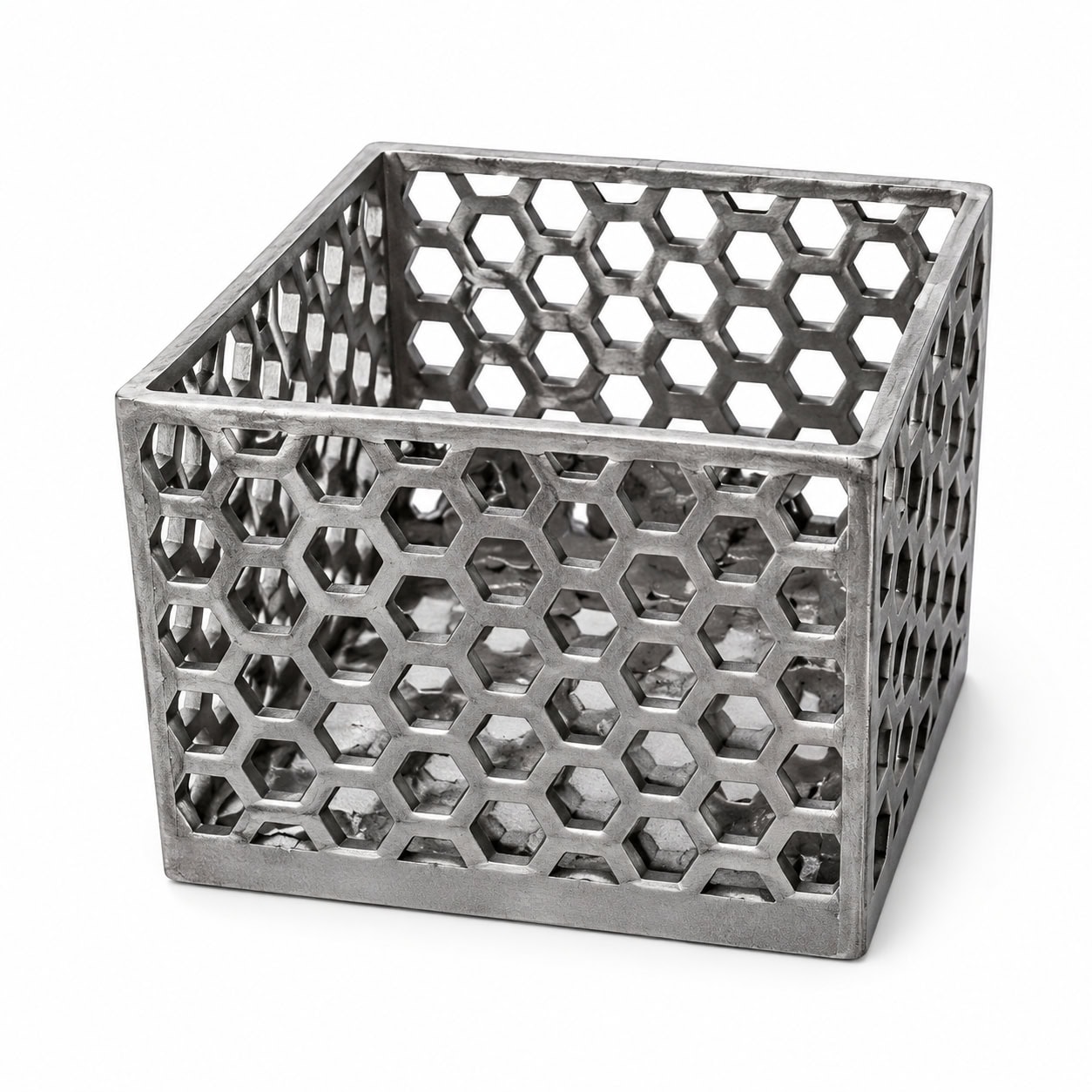
Custom heat treatment baskets made from heat-resistant alloy for stable loading and repeated high-temperature cycles. Designed for carburizing, annealing and other heat treating processes.
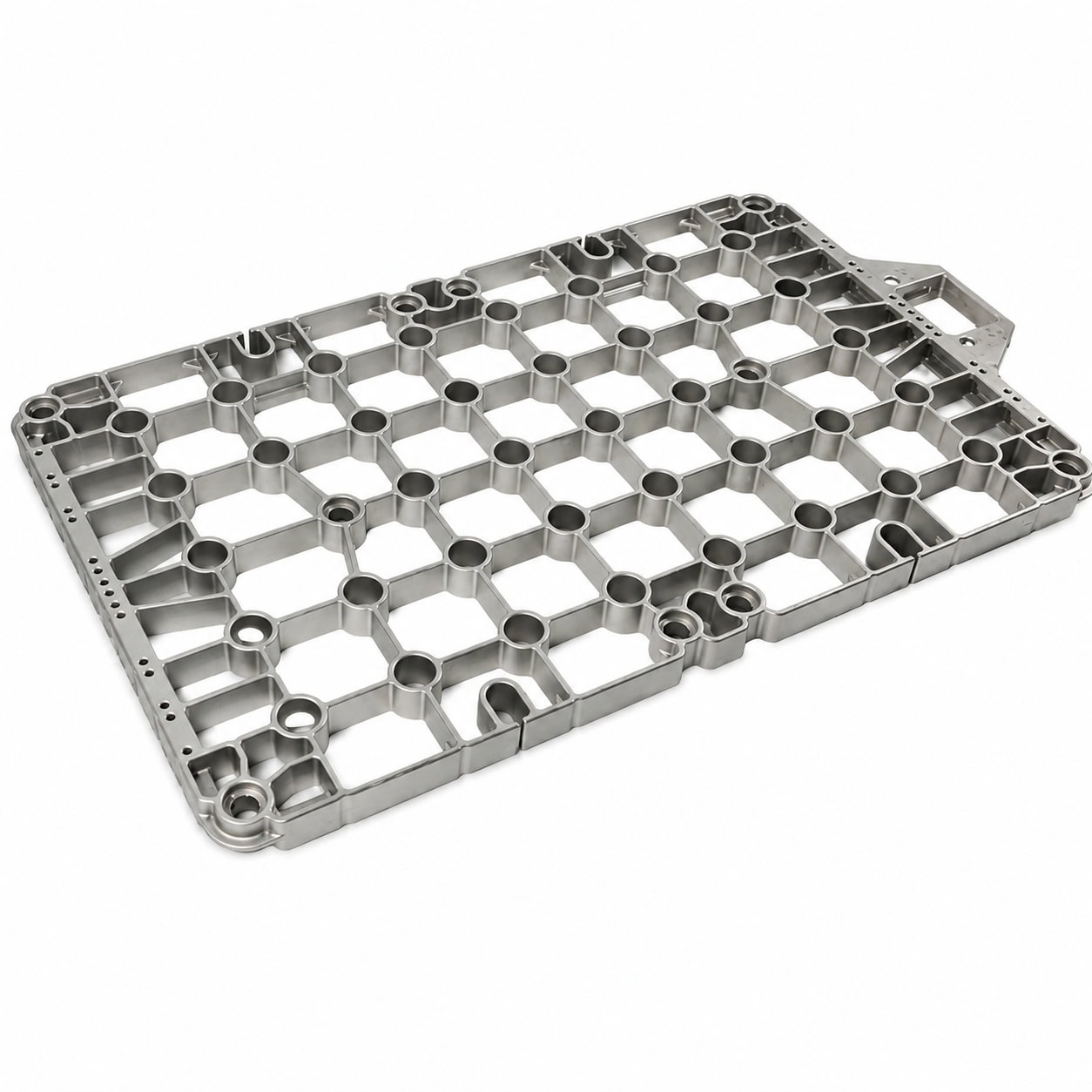
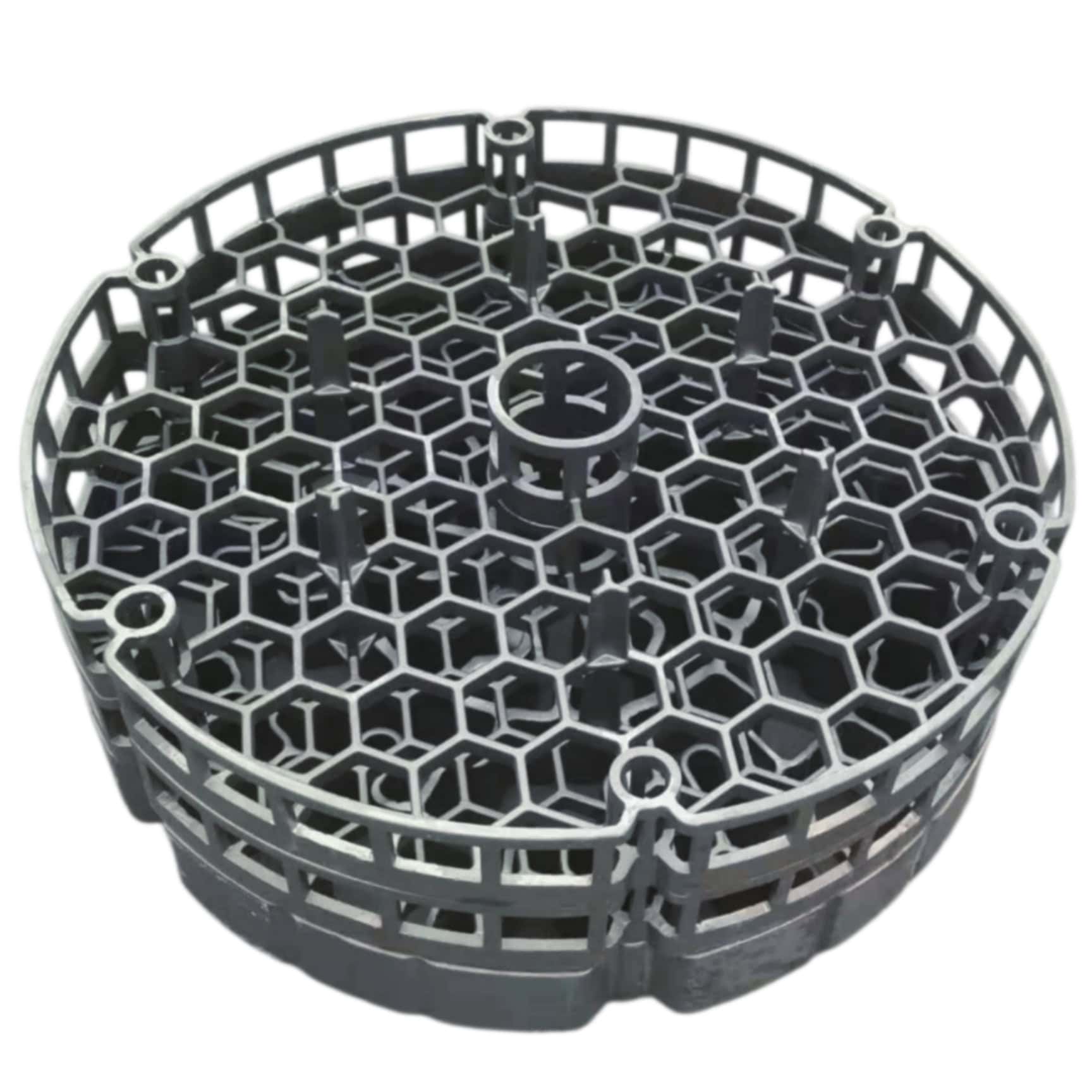
Durable heat treatment trays and furnace trays engineered for high-temperature strength and dimensional stability. Custom sizes and grid structures are available from customer drawings.
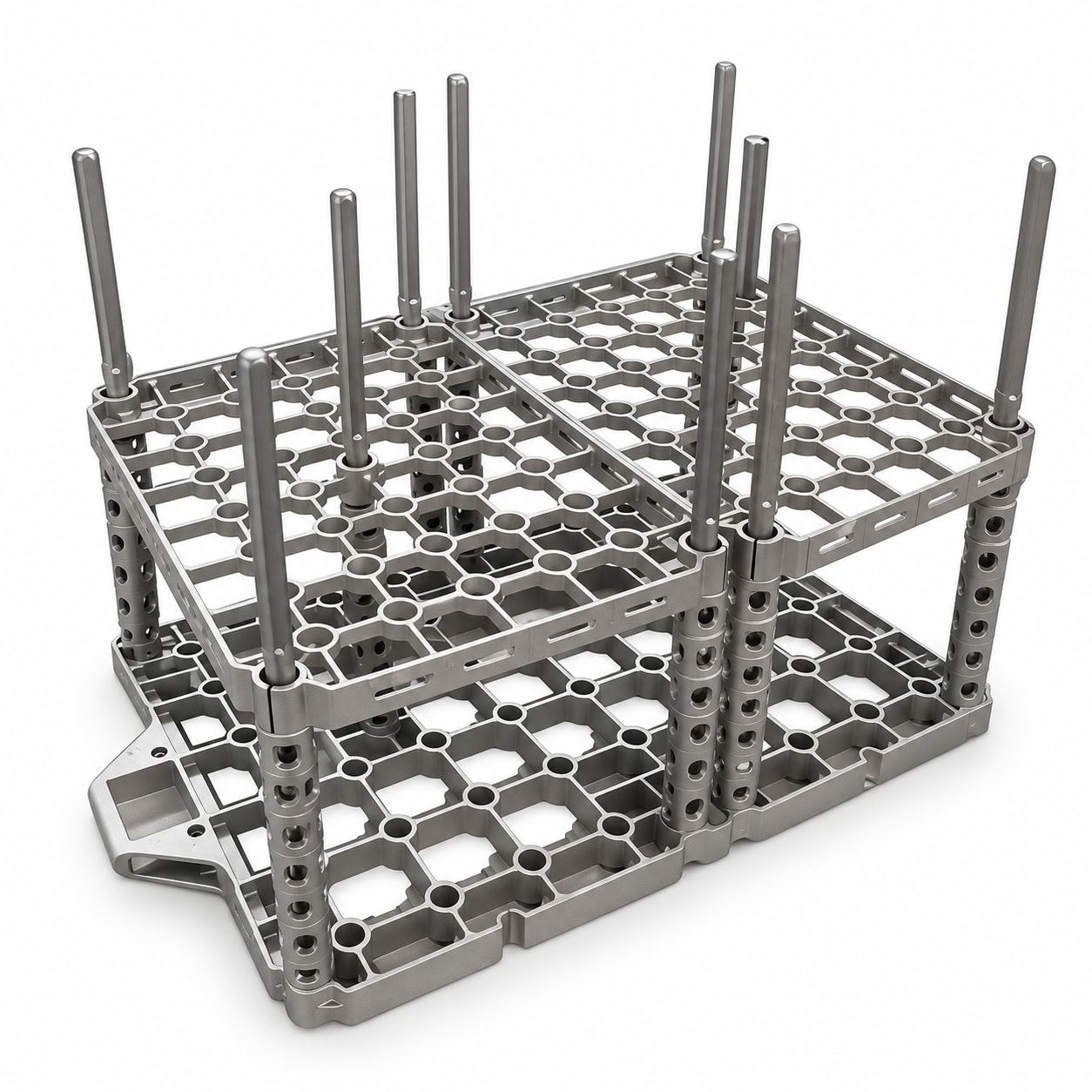
Custom heat treatment fixtures provide accurate workpiece positioning, stable support and uniform heat circulation. Suitable for hardening, tempering, carburizing and quenching applications.
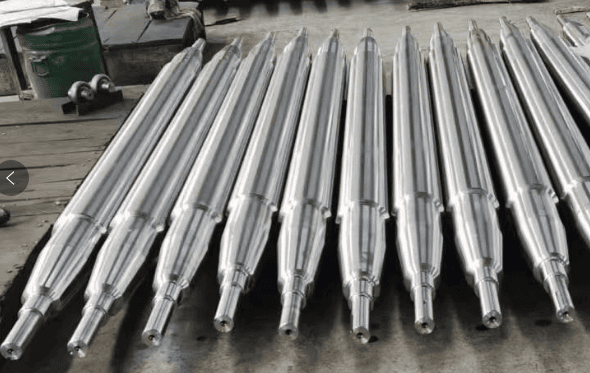
Heat-resistant furnace rolls and furnace rollers manufactured for roller hearth furnaces and continuous heat treatment lines. Custom centrifugal cast rolls support stable conveying and long service life.
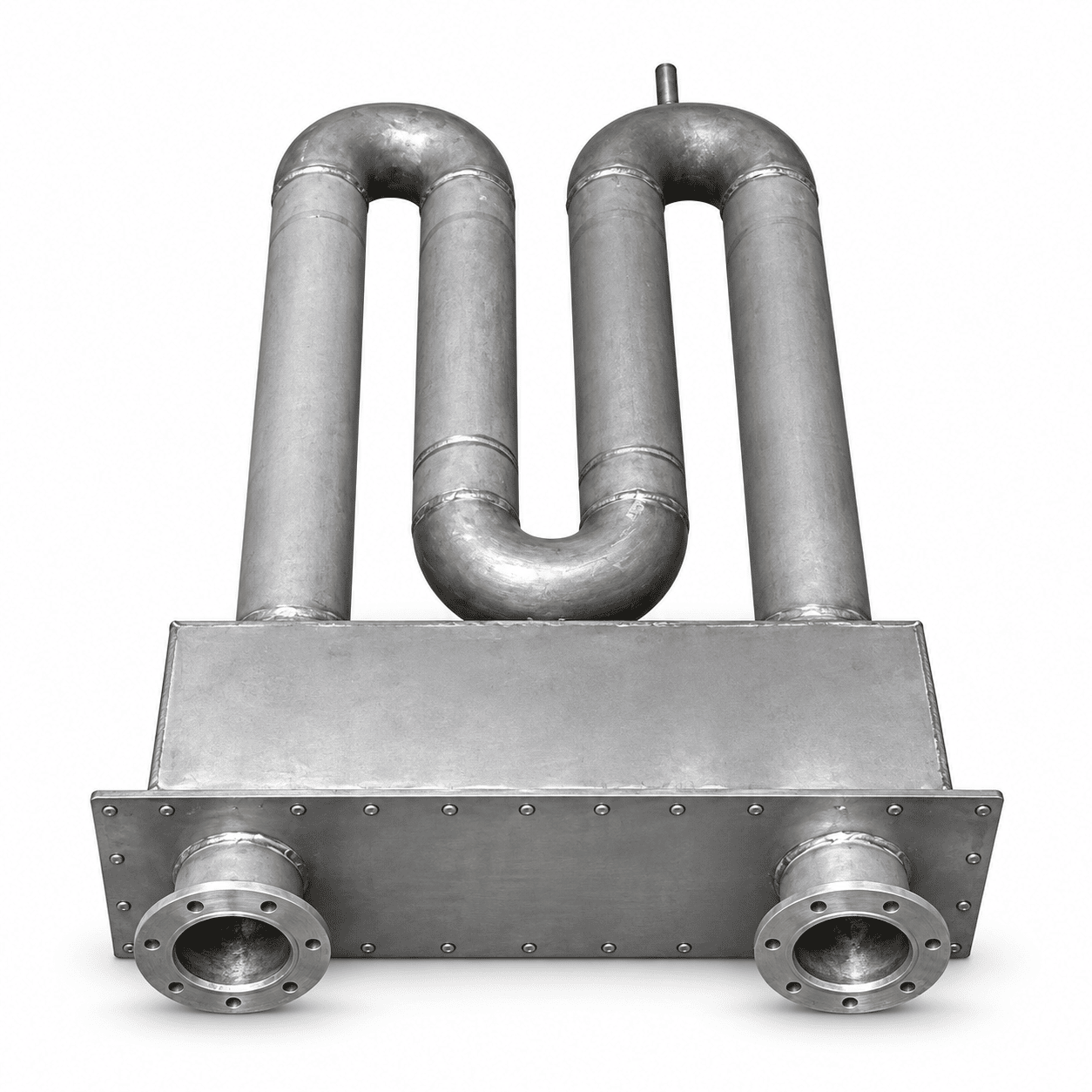
Custom radiant tubes and gas fired radiant tubes deliver efficient, uniform heating inside industrial furnaces. Available in straight, U-type and W-type configurations.
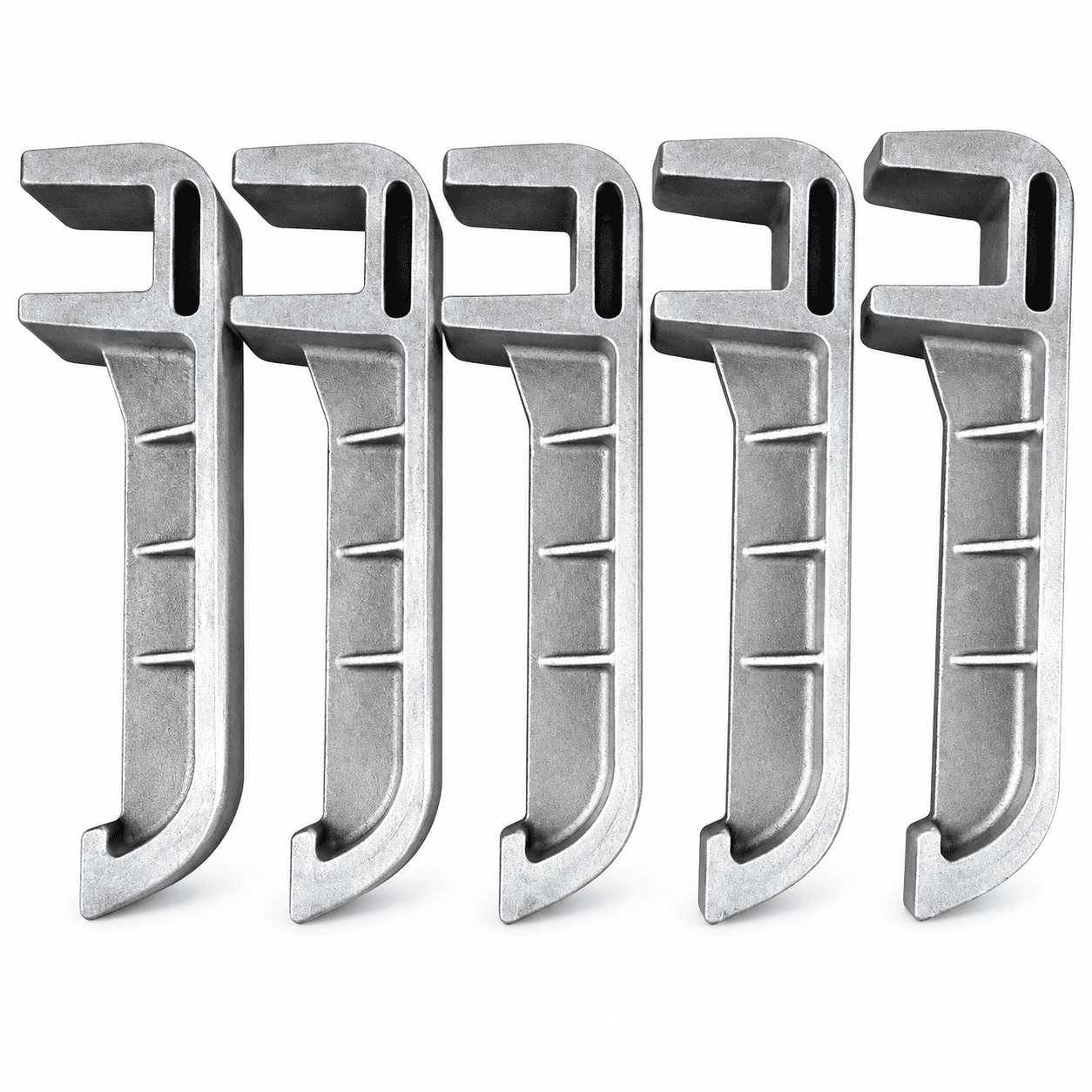
Custom furnace internals and industrial furnace parts manufactured for high-temperature support, guiding and heat-flow control. Includes guide plates, hearth plates, support beams and replacement furnace components.
1. Engineered Around Temperature, Atmosphere and Load
Every high-temperature application places different demands on heat-resistant alloy parts. Furnace temperature, atmosphere composition, thermal cycling, mechanical load and operating frequency all influence oxidation, carburization, creep deformation and service life. ECOOSUN therefore develops each component around its actual duty rather than applying one standard alloy or structure to every project.
Our custom heat-resistant alloy parts and heat-resistant alloy castings are manufactured according to customer drawings, material specifications and operating conditions. Whether the project involves heat treatment furnace parts, industrial furnace components, furnace internals, trays, baskets, fixtures, radiant tubes, furnace rolls or impellers, we match alloy grade, casting process and structural design to the required performance.
From alloy selection and casting-process development to machining and final inspection, our engineering team focuses on dimensional stability, high-temperature strength and resistance to thermal fatigue. The result is reliable custom alloy castings with longer service life, fewer replacements and more predictable performance in demanding industrial environments.
For suitable geometries, Silica Sol Investment Casting can be evaluated alongside other casting routes according to surface, dimensional and service requirements.
Get to know ECOOSUN and the team behind our heat-resistant castings. We help customers turn application requirements into practical casting solutions for heat treatment and other high-temperature environments.
Every project starts with understanding your operating conditions. From alloy selection to casting production, our team works with you to balance durability, performance, and cost. Whether you need standard components or custom castings, share your drawings and requirements with us to discuss a solution suited to your application.
Hi, I’m Jonny, and I lead ECOOSUN’s international sales team. I’m here to help you find the right heat-resistant casting solution for your application. Whether you have detailed drawings or an initial idea, we can discuss your requirements and offer free design support.
You’ll work directly with me and our factory team throughout the process. Share your dimensions, operating conditions, and project priorities so we can help you explore suitable options. From your first inquiry to production planning, we focus on clear communication and practical support to help you move your project forward.
Join Jonny in our workshop for a closer look at the wax patterns behind our castings. Discover how attention to shape and detail begins long before the finished heat-resistant component takes form.
Join Jonny in ECOOSUN’s workshop to explore a variety of semi-finished heat-resistant castings. From baskets and trays to other furnace components, see the different shapes and designs taking form before final finishing.
ECOOSUN manufactures custom heat-resistant alloy parts, heat-resistant steel castings and high-temperature industrial furnace components according to customer drawings and operating conditions. Typical products include heat treatment baskets, furnace trays, fixtures, furnace internals, radiant tubes, furnace rolls, fans, impellers, support beams and other replacement furnace parts.
We support both individual components and complete product families for industrial furnace manufacturers, commercial heat treaters, maintenance companies and equipment users.
Yes. We manufacture custom alloy castings from customer-supplied 2D drawings, 3D models, material specifications and inspection requirements. Our engineering team reviews the component structure, casting feasibility, machining allowances, tolerances and high-temperature service conditions before production.
Drawings can also be reviewed for potential casting defects, excessive wall-thickness differences, difficult feeding areas and features that may increase tooling or machining costs.
Yes. Existing or worn components can be used for reverse engineering when the original drawings are unavailable. We can review physical samples, installation dimensions, photographs and available furnace information to develop replacement heat-resistant alloy parts.
Before production, critical interfaces, material requirements, thermal expansion, loading direction and previous failure conditions should be confirmed. This helps the replacement component fit the existing equipment and reduces the risk of repeating the original failure.
For an accurate quotation, please provide as much of the following information as possible:
- 2D drawing, 3D model or physical sample
- Required material grade or chemical composition
- Operating and maximum temperatures
- Furnace atmosphere
- Mechanical load and support conditions
- Machining and dimensional tolerances
- Inspection and documentation requirements
- Required quantity and annual demand
For replacement heat treatment furnace parts, information about previous deformation, cracking, oxidation or service life is also valuable.
The correct heat-resistant alloy depends on more than operating temperature. Furnace atmosphere, thermal cycling, mechanical loading, rotational speed, carburization, oxidation and expected service life must also be considered.
For example, a load-bearing furnace tray requires different properties from a radiant tube, furnace roll or high-speed impeller. ECOOSUN recommends materials according to the actual duty of each component, helping customers balance high-temperature strength, dimensional stability, corrosion resistance and material cost.
Yes. We can manufacture heat-resistant alloy castings according to customer-specified material standards, chemical compositions or approved equivalent grades, subject to technical review and raw-material availability.
Chemical composition requirements are confirmed before production. When customers do not have a fixed grade, we can recommend a suitable alloy family based on furnace temperature, atmosphere, mechanical load and the expected failure mechanism.
The manufacturing method is selected according to component size, geometry, quantity, alloy grade and dimensional requirements. Available capabilities include:
- Sand casting
- Lost foam casting
- Investment casting
- Centrifugal casting
- Welded fabrication
- Precision machining
Large or structurally complex industrial furnace components may use sand or lost foam casting, while smaller precision components may be better suited to investment casting. Tubular components such as radiant tubes and certain furnace rolls may require centrifugal casting.
Silica Sol Investment Casting is considered when part geometry, surface finish and dimensional requirements make the process appropriate.
Dimensional control begins during drawing review, tooling design and casting-process development. Casting shrinkage, machining allowances, thermal deformation and critical installation dimensions are considered before production.
Finished custom heat-resistant alloy parts can be inspected against the approved drawing using appropriate measuring equipment. Machining is applied to shafts, flanges, bores, mounting surfaces and other critical interfaces where tighter tolerances are required.
Yes. When a component suffers premature cracking, deformation, oxidation, wear or creep, our engineering team can review the failed sample and its service conditions.
Possible improvements may include:
- Changing the heat-resistant alloy grade
- Adjusting wall thickness and transitions
- Adding or relocating reinforcing ribs
- Improving load distribution
- Allowing more suitable thermal expansion
- Changing the casting or fabrication process
- Improving machining and installation interfaces
The purpose is not simply to copy the old part, but to develop a more reliable replacement where practical.
Inspection requirements are determined by the drawing, product type and customer specification. Typical quality controls may include:
- Chemical composition analysis
- Dimensional inspection
- Visual and surface inspection
- Machining-tolerance verification
- Weld inspection for fabricated assemblies
- Static or dynamic balancing for rotating parts
- Additional nondestructive testing when specified
Material certificates, dimensional reports and other traceable quality documents can be provided according to the agreed inspection plan.
Yes. ECOOSUN has experience producing large and structurally complex heat-resistant steel castings for demanding industrial furnace applications.
For large components, our engineers review casting orientation, section thickness, feeding, shrinkage control, reinforcement and machining requirements. In some cases, a component may be divided into cast sections or produced as a cast-and-fabricated assembly to improve manufacturability, transportation and installation.
Prototype and trial-order support depends on component size, tooling requirements, alloy grade and manufacturing process. Small quantities may be possible for replacement parts or technically important development projects, although tooling and setup costs can significantly affect the unit price.
For new custom alloy castings, we normally recommend sample approval and dimensional verification before repeat production. Final MOQ and prototype arrangements are confirmed after reviewing the drawings.
Lead time depends on drawing complexity, tooling, alloy availability, casting process, heat treatment, machining and inspection requirements. New products generally require additional time for engineering review, tooling development and sample validation.
Repeat orders can often be produced more efficiently because approved drawings, tooling data, material specifications and inspection records can be retained. A confirmed production schedule is provided after technical review.
The lowest initial price does not always produce the lowest operating cost. Premature failure of heat treatment furnace parts can cause furnace downtime, reduced loading capacity, unstable production and emergency replacement expenses.
We focus on matching the alloy, structure and manufacturing process to the real application. Improved dimensional stability, oxidation resistance and load-bearing performance can help extend service life, reduce replacement frequency and make maintenance planning more predictable.
Question: What information is needed for a custom high-temperature furnace part quotation?
Answer: Provide the part drawing, requested quantity, service atmosphere, operating temperature range, load, thermal-cycle details, target material if one is specified and required documentation. Material, manufacturing route, inspection scope and schedule should be confirmed in writing for the specific quotation.
Question: Can a product photograph confirm the casting route or alloy grade?
Answer: No. A photograph can show visible shape and surface features, but it cannot verify the casting route, alloy grade, certification or inspection method. Use controlled production and material records for those decisions.
Selection begins with operating temperature, furnace atmosphere, load, thermal cycling, geometry, failure history and required service conditions. The final material should be confirmed against the drawing and project requirements.
Replacement and quotation inputs
For a custom heat-resistant alloy casting, ECOOSUN reviews the temperature range, operating atmosphere, load or stress, part geometry, and any available drawing, sample, or failure history. These inputs help define the replacement requirement and the next engineering review. For a broader overview, see heat-resistant steel casting for custom furnace parts.
Custom Heat-Resistant Castings from Drawings or Samples
This page is for custom heat-resistant alloy castings and steel parts that do not belong to a dedicated ECOOSUN product family. Baskets, trays, fixtures, radiant tubes, furnace rolls, fans and furnace internals should be quoted through their own product pages so that each request reaches the correct engineering checklist.
For other custom furnace components, send the drawing, 3D model or used sample together with the part function, furnace location, load, temperature, atmosphere, thermal cycle and required quantity. ECOOSUN will review the appropriate manufacturing route, alloy, machining and inspection scope for the specific geometry and service condition.
| Information to provide | Why it matters |
|---|---|
| Part name, function and furnace location | Defines the application and exposure |
| Drawing, 3D model or used sample | Establishes geometry and critical interfaces |
| Normal/maximum temperature and atmosphere | Supports alloy and service-condition review |
| Load, restraint and thermal cycle | Identifies structural and thermal inputs |
| Existing wear, oxidation, cracking or distortion | Provides replacement evidence without assuming root cause |
| Quantity and repeat-order expectation | Supports tooling and production-route review |
| Machining, NDT and documentation requirements | Defines quotation and acceptance scope |
Manufacturing Route Is Confirmed per Part
Sand casting, lost-foam casting, investment casting, centrifugal casting, fabrication and machining serve different geometries and quantities. No single route is suitable for every heat-resistant alloy part. The final route is confirmed after reviewing the drawing, service conditions and acceptance requirements.

Custom Alloy Selection and Inspection Resources
- Heat-resistant alloy overview
- Choose a heat-resistant casting for furnace parts
- Heat-resistant casting inspection checklist
For a quotation: send the custom-part drawing or sample photos and describe its function, furnace location and operating cycle.

 +44 7419 144346