

What Is a Heat Treatment Fixture?
A heat treatment fixture, also known as a heat treat fixture, furnace fixture or carburizing fixture, is a reusable furnace tooling system designed to hold, separate, locate and support metal components during carburizing, annealing, hardening, tempering, normalizing and other heat treating processes. Unlike a general-purpose furnace basket or tray, a custom fixture controls the position, spacing and orientation of each workpiece, helping improve heat circulation, atmosphere exposure and dimensional consistency inside high-temperature industrial furnace equipment.
Heat-treat fixtures include furnace fixtures and charging fixtures used to position or support workpieces during a thermal cycle. For cast heat-treatment fixtures, quote review should begin with the drawing, supported load, furnace atmosphere and cycle details rather than a process or material assumption.
Matching a Fixture Drawing to a Casting Route
Thin features, intersections, support points and required quantities can affect route selection. Use the custom investment-cast components overview as a route-review reference, while retaining this page’s focus on fixture function and application.
ECOOSUN manufactures custom heat treatment fixtures from heat-resistant steel and high-temperature heat-resistant alloys according to customer drawings, workpiece geometry, furnace dimensions, operating temperature, atmosphere and loading method. Depending on the fixture structure and production requirements, manufacturing may involve sand casting, investment casting, lost foam casting, precision machining or welded fabrication. Our engineering team supports alloy selection, locating-point design, structural optimization and dimensional inspection to reduce fixture deformation, improve loading efficiency and provide reliable performance throughout repeated thermal cycles.
For fixture selection, ECOOSUN reviews part geometry, support points, furnace atmosphere, thermal cycling and working temperature to reduce distortion and improve repeatable positioning. Common heat-resistant grades include EN 1.4852 / 25Cr-35Ni-Nb for approximately 1,100–1,150°C service, EN 1.4851 / X15CrNiSi25-21 for approximately 900–1,000°C, EN 1.4845 / 25Cr-20Ni for approximately 900–1,000°C, EN 1.4857 / 25Cr-35Ni / HP40 for approximately 1,050–1,150°C, and HU / ZG45Ni38Cr18Si2 for approximately 1,093°C. Final material selection is confirmed against the drawing and duty cycle. Send your fixture drawing, sample or operating data for a quotation.
RFQ support: Request a Quote · Send Your Drawing.
Custom Heat Treatment Fixtures
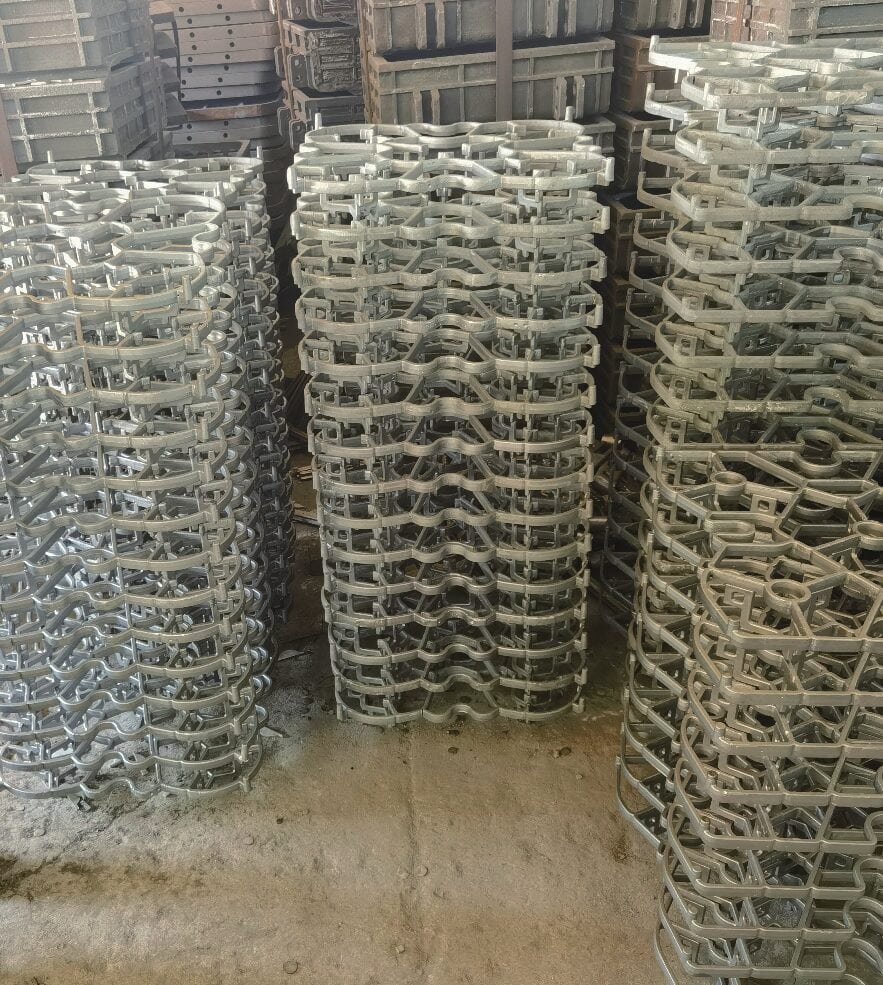
Explore our custom heat treatment fixtures, furnace fixtures, carburizing fixtures, stacking racks and workpiece-support systems developed for precise positioning throughout demanding heat treating processes. Each fixture is engineered around the shape, spacing and orientation of the customer’s components, helping improve furnace loading density, heat circulation and repeatable treatment results.
ECOOSUN manufactures heat-resistant fixture assemblies according to customer drawings, workpiece dimensions, furnace layout, operating temperature, atmosphere and loading method. Using suitable heat-resistant alloys, casting processes and machining solutions, we produce OEM furnace tooling for carburizing, annealing, hardening, tempering and quenching applications. Structural optimization, material selection and replacement-fixture development are available for industrial furnace manufacturers, commercial heat treaters and furnace service companies.
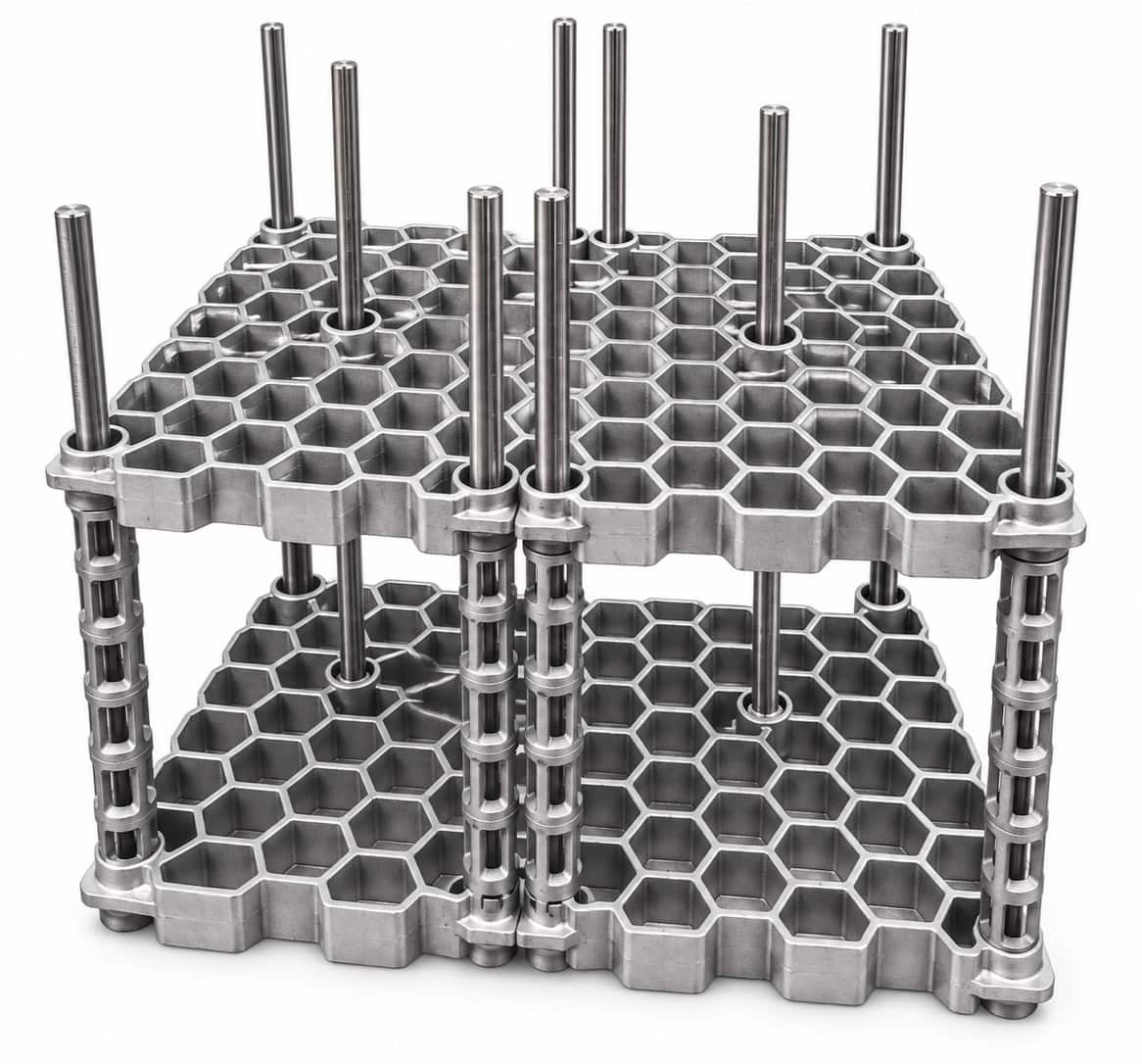
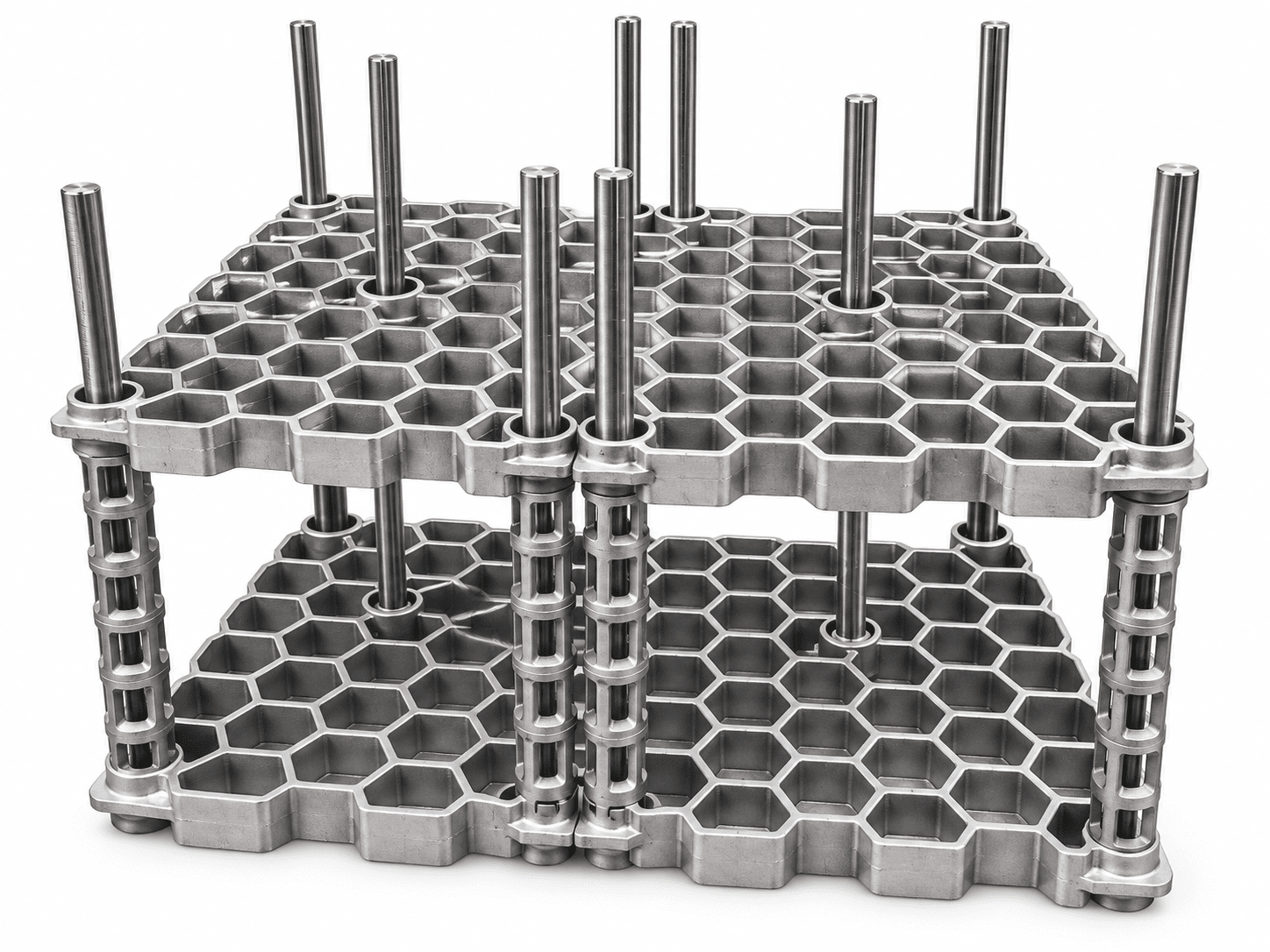
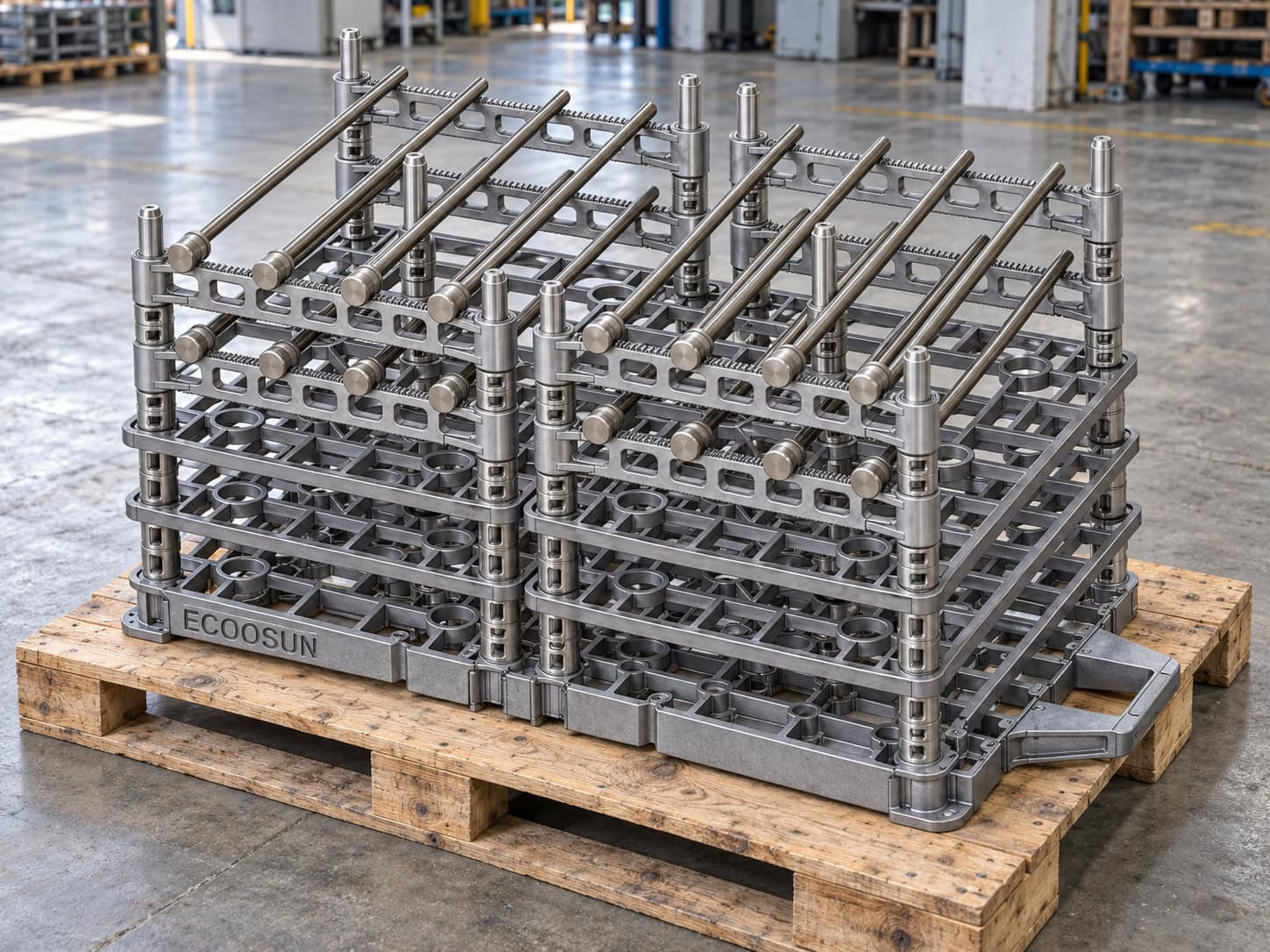
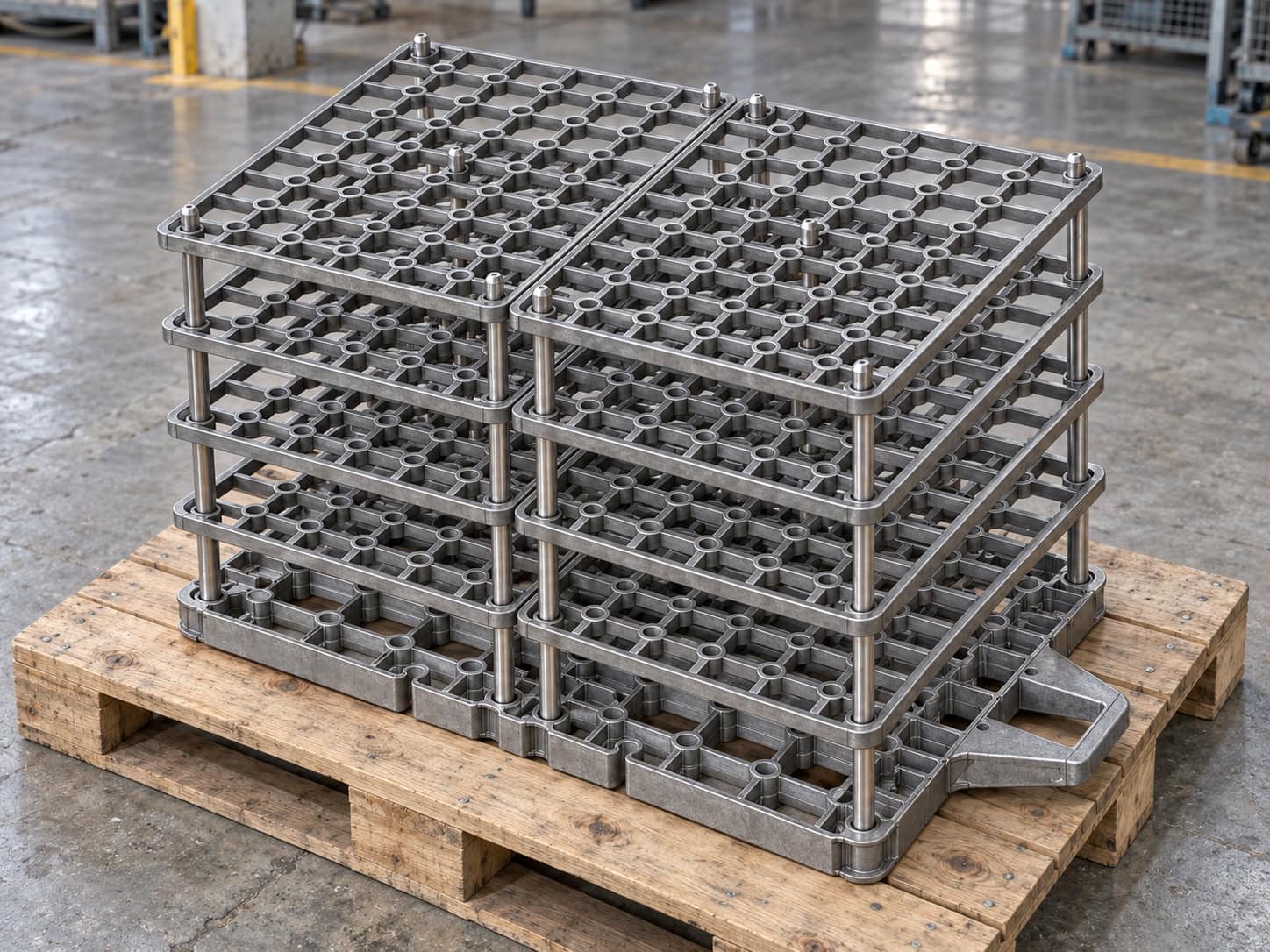
Custom heat treatment fixture engineered for precise workpiece positioning, stable support and uniform heat circulation.
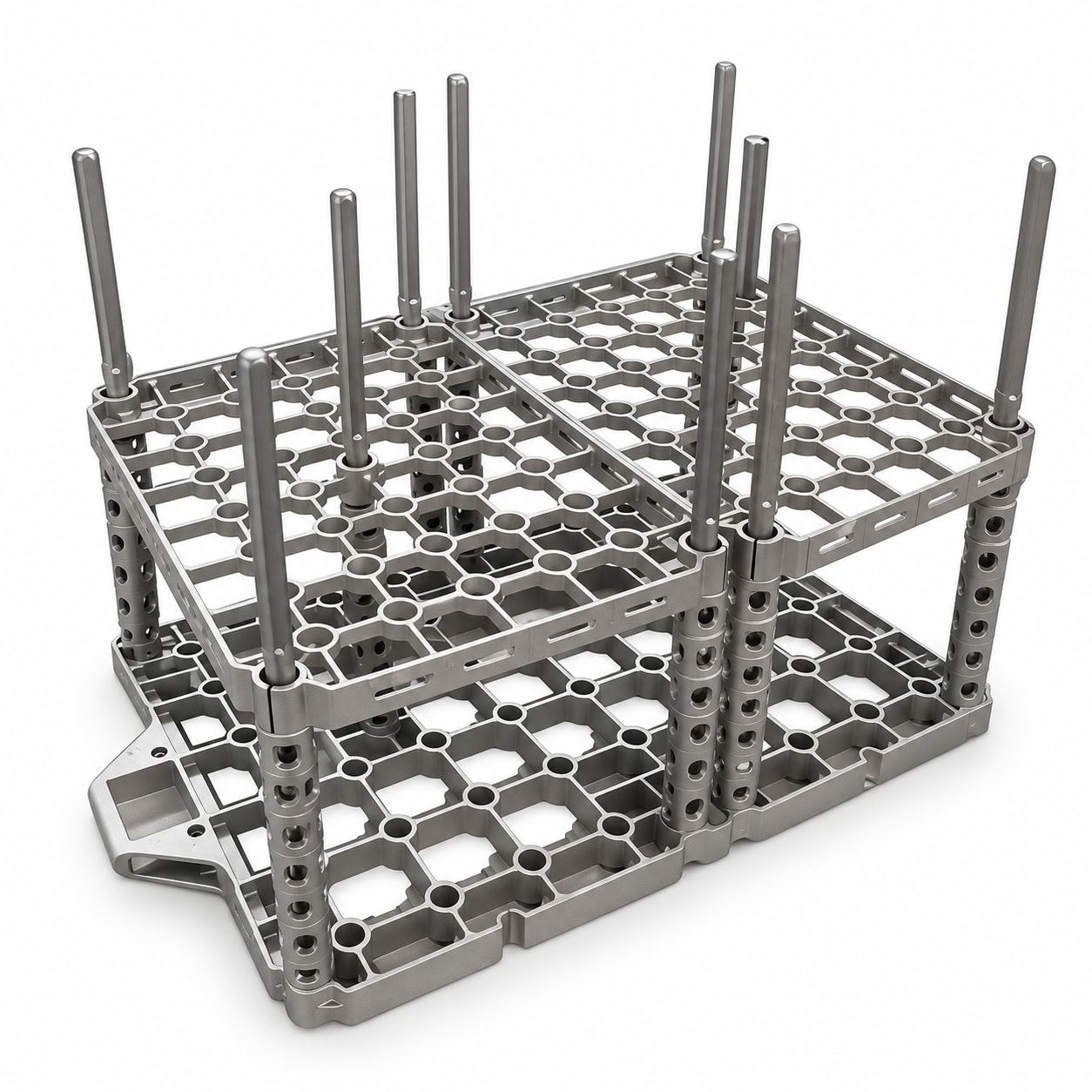
Heavy-duty furnace fixture manufactured from heat-resistant alloy for repeated high-temperature industrial furnace cycles.

Carburizing fixture designed to maintain component spacing and orientation in demanding controlled-atmosphere furnaces.
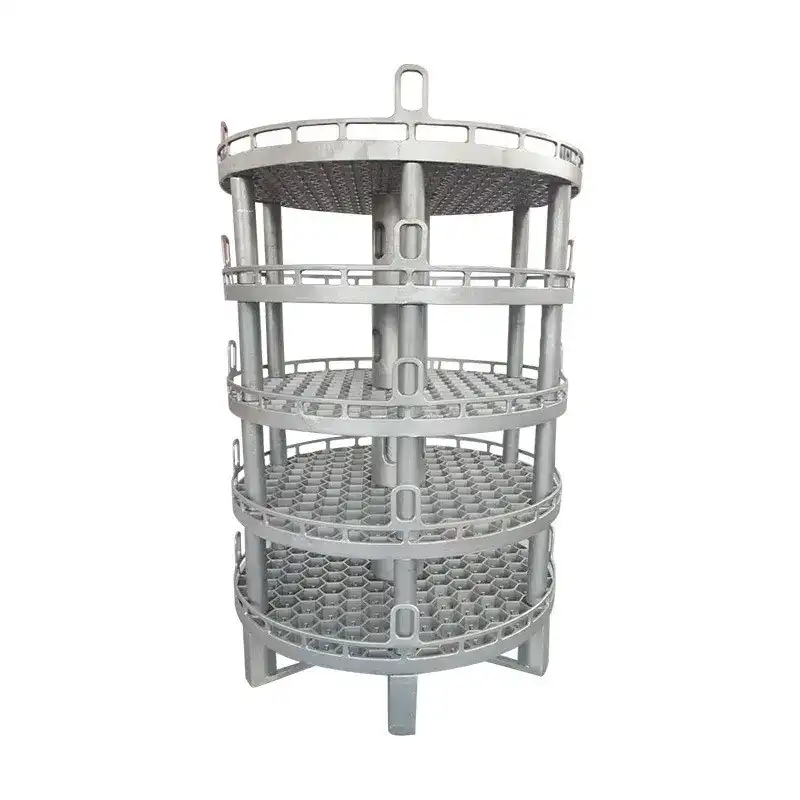
Modular heat treat fixture with adjustable locating points for efficient loading of different workpiece sizes and shapes.
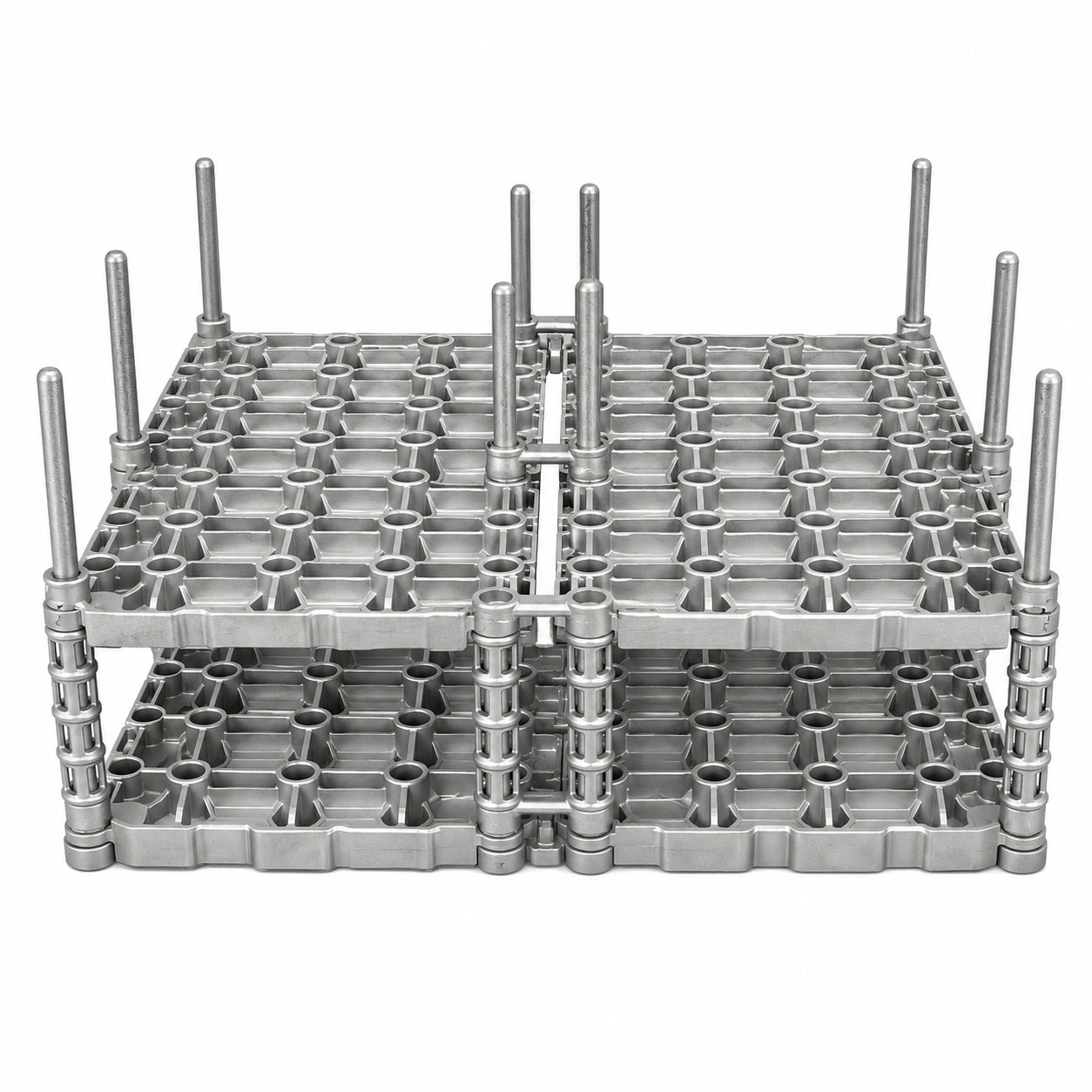
Multi-level furnace loading fixture developed to increase loading density while maintaining consistent atmosphere circulation.
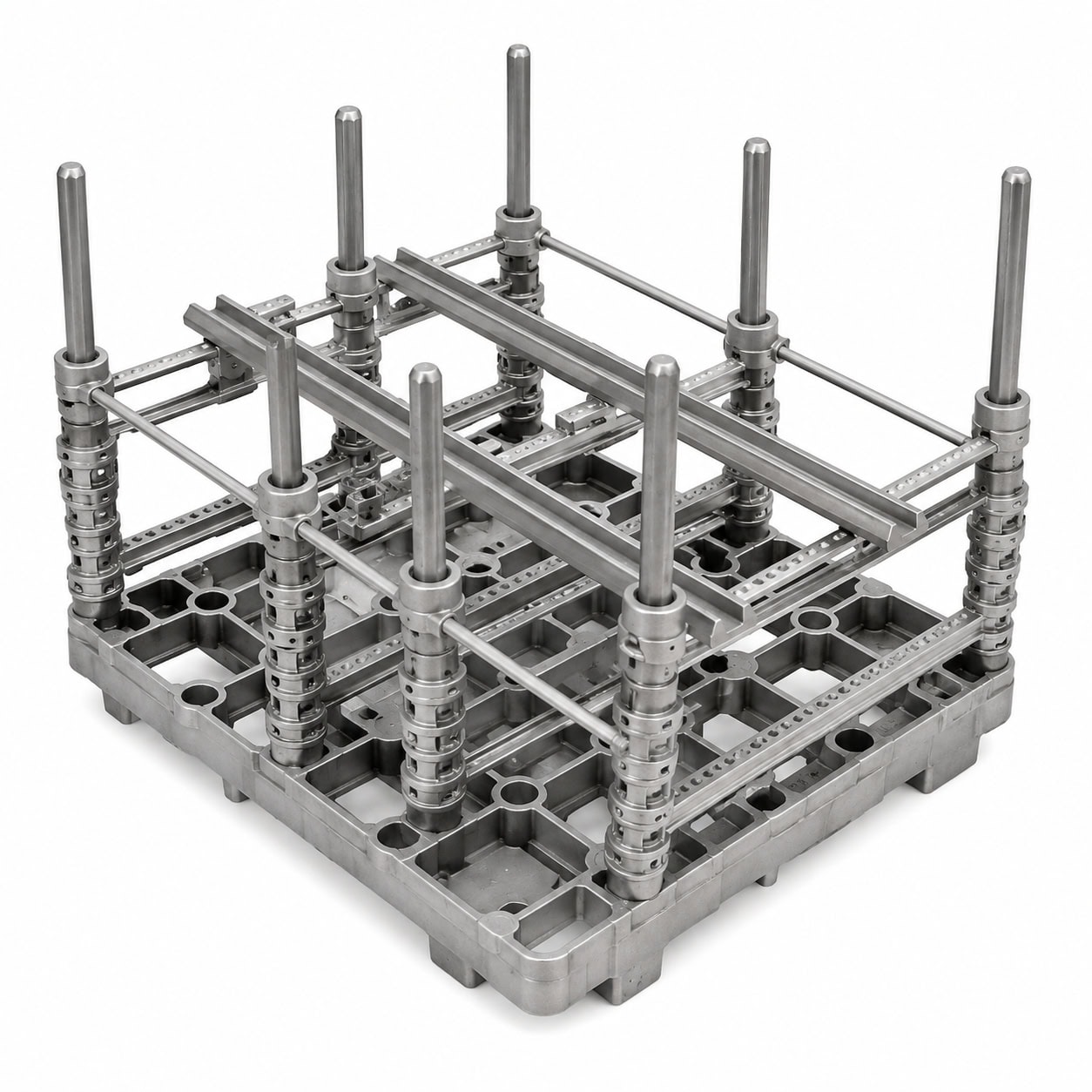
Heat-resistant quenching fixture built for reliable support during heating, transfer, quenching and cooling operations.
Engineered for Your Workpiece and Heat Treating Process
Every heat treatment fixture must control how parts are positioned, spaced and supported throughout heating, soaking, transfer, quenching and cooling. Workpiece geometry, loading direction, furnace atmosphere, operating temperature and thermal cycling all affect fixture stability and treatment consistency. ECOOSUN develops custom heat treat fixtures, furnace fixtures and carburizing fixtures around your actual components and production requirements rather than relying on a generic structure.
Our engineering team evaluates locating points, support surfaces, post height, layer spacing, loading density and airflow paths before selecting the appropriate heat resistant alloy. The fixture structure is then optimized to reduce workpiece movement, high-temperature deformation and uneven atmosphere exposure. This application-specific approach helps improve loading efficiency, treatment repeatability and service life across demanding industrial furnace and heat treatment equipment applications.
Explore related heat treatment furnace parts used for loading, support and conveying.
Built to Match Your Furnace and Workpiece Layout
Replacing a heat treatment fixture requires more than matching its outside dimensions. The new fixture must align with the furnace chamber, loading rails, lifting system, transfer mechanism and quenching equipment while holding every workpiece in the correct position. ECOOSUN manufactures custom heat treat fixtures, furnace fixtures and carburizing fixtures from customer drawings, 3D models or approved samples, with careful control of locating points, post spacing, tier height, support surfaces and installation interfaces.
When complete drawings are unavailable, our engineering team can reconstruct the fixture from a worn component or physical sample and review the areas affected by distortion, cracking or oxidation. Critical interfaces are retained for compatibility with the existing industrial furnace, while weak sections may be improved through optimized supports, adjusted spacing and suitable heat resistant alloy selection. The result is a direct-fit replacement heat treatment furnace part designed for accurate loading, reliable handling and repeatable performance in existing heat treatment equipment.
For load-carrying alternatives, compare heat treatment baskets and heat treatment trays.
Materials, temperature and custom engineering
ECOOSUN supplies custom heat treatment fixtures, furnace fixtures and carburizing fixtures in EN 1.4845 / 25Cr-20Ni, EN 1.4851 / X15CrNiSi25-21, EN 1.4852 / 25Cr-35Ni-Nb, EN 1.4857 / HP40 and HU / ZG45Ni38Cr18Si2. Typical reference temperatures are approximately 900–1000°C for EN 1.4845 and EN 1.4851, 1100–1150°C for EN 1.4852, 1050–1150°C for EN 1.4857 / HP40 and about 1093°C for HU. Final material selection is confirmed against the furnace atmosphere, thermal cycle, load and customer drawing.
Fixture structures can be reviewed for batch, box, pit, vacuum, pusher, roller-hearth and other industrial heat-treatment furnaces. Common engineering inputs include workpiece geometry, fixture length and width, tier spacing, support points, loading direction, furnace clearance, operating temperature and required load. Market reference examples for comparable fixture structures include approximately 900 × 600 × 600 mm and 1500 × 900 × 850 mm; these are starting references rather than fixed ECOOSUN limits.
Inspection options may include visual and dimensional inspection, chemical composition analysis, hardness testing, tensile or impact testing where specified, dye-penetrant or magnetic-particle testing, ultrasonic or radiographic testing where required, and traceability to the agreed heat or batch number. Dimensional tolerances, machining allowances and acceptance criteria are agreed on the approved drawing.
For a quotation, send your 2D drawing, 3D model, workpiece photos, weight, quantity, furnace type, chamber dimensions, temperature, atmosphere and thermal cycle. See our heat treatment baskets, heat treatment trays and heat-treatment furnace parts guide, then Request a Custom Quote or contact ECOOSUN on WhatsApp.
Replacement Fixture Inputs for an Accurate Quote
The fixture should control the position of the workpiece while allowing predictable thermal expansion and furnace-atmosphere circulation. Locating points, contact area, part orientation, fixture restraint, drainage, lifting features and the sequence used to load and unload parts all influence distortion risk. A fixture that is too rigid can transfer thermal stress to the workpiece, while inadequate support can allow movement or sagging during the soak.
Buyers may specify cast heat-resistant grades such as HK40, HU, HF, HH or GX40CrNiSi25-20, but alloy grade must be reviewed together with geometry and service conditions. Important inputs include the furnace type, normal and peak temperature, atmosphere, heating and cooling rate, cycle frequency, workpiece mass, required datum locations and the observed failure mode of the previous fixture. Cracks near junctions, progressive bending and atmosphere attack require different corrective actions.
An RFQ should include: the fixture and workpiece drawings, datum scheme, load orientation, allowable movement, support points, lifting method, cycle profile and photos of used tooling.
See heat treatment baskets for contained batch loads, heat treatment trays for flat load support, and the wider range of heat treatment furnace parts for replacement projects.
How the Replacement Fixture Is Verified
Critical locating points, support surfaces, tier height and installation interfaces should be identified on the approved drawing. Dimensional inspection can then be planned around those features rather than relying only on general outside dimensions. Where a used fixture is supplied, the worn condition should be recorded separately so that distortion is not copied into the replacement geometry.
Final material, casting route, machining scope and acceptance requirements are confirmed for the individual project. If chemical analysis, dimensional records, non-destructive testing or other documents are required, list them in the RFQ so they can be included in the quotation and inspection plan.
Send the fixture drawing, workpiece information or used-sample photos for a replacement review.
Get to know ECOOSUN and the team behind our heat-resistant castings. We help customers turn application requirements into practical casting solutions for heat treatment and other high-temperature environments.
Every project starts with understanding your operating conditions. From alloy selection to casting production, our team works with you to balance durability, performance, and cost. Whether you need standard components or custom castings, share your drawings and requirements with us to discuss a solution suited to your application.
Hi, I’m Jonny, and I lead ECOOSUN’s international sales team. I’m here to help you find the right heat-resistant casting solution for your application. Whether you have detailed drawings or an initial idea, we can discuss your requirements and offer free design support.
You’ll work directly with me and our factory team throughout the process. Share your dimensions, operating conditions, and project priorities so we can help you explore suitable options. From your first inquiry to production planning, we focus on clear communication and practical support to help you move your project forward.
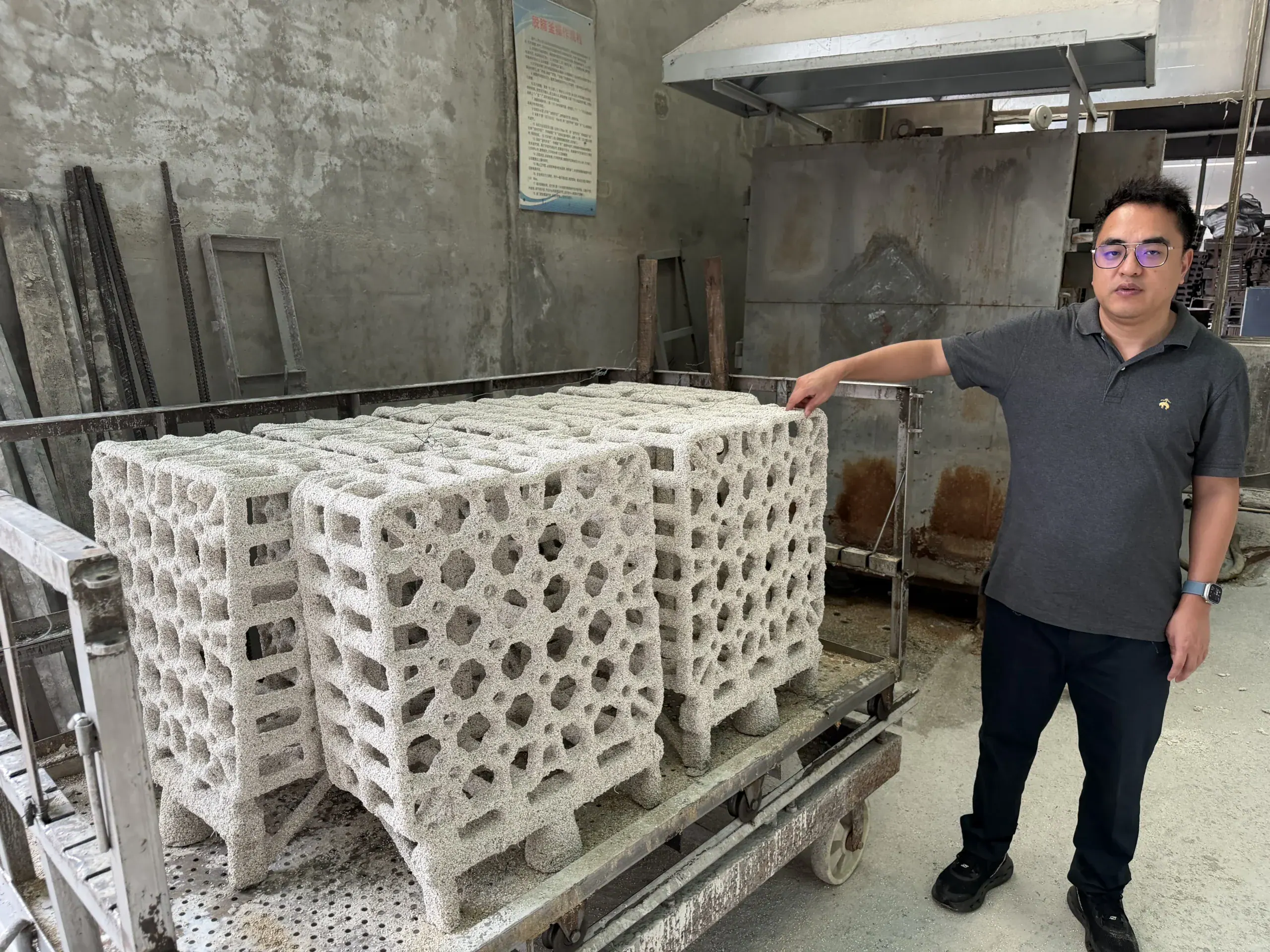
A distorted, cracked or heavily oxidized heat treatment fixture can affect workpiece positioning, reduce loading capacity and interrupt an entire heat treating schedule. Damaged posts, locating points or support frames may also cause uneven treatment and handling problems inside the furnace. ECOOSUN supports urgent replacement projects by reviewing existing drawings, worn fixtures, measurement records or physical samples and confirming the required dimensions, heat resistant alloy, loading arrangement and operating conditions.
For repeat heat treat fixture and furnace fixture orders, approved drawings, tooling and inspection records can be retained to reduce production preparation time. Our engineering and manufacturing teams coordinate material sourcing, casting, machining, assembly and final inspection to deliver replacement heat treatment furnace parts with accurate locating points and reliable structural fit. By restoring the required fixture configuration efficiently, we help furnace manufacturers, commercial heat treaters and maintenance companies reduce unplanned downtime and return their industrial furnace and heat treatment equipment to stable production.
For distortion, cracking and oxidation diagnosis, see furnace parts failure analysis.
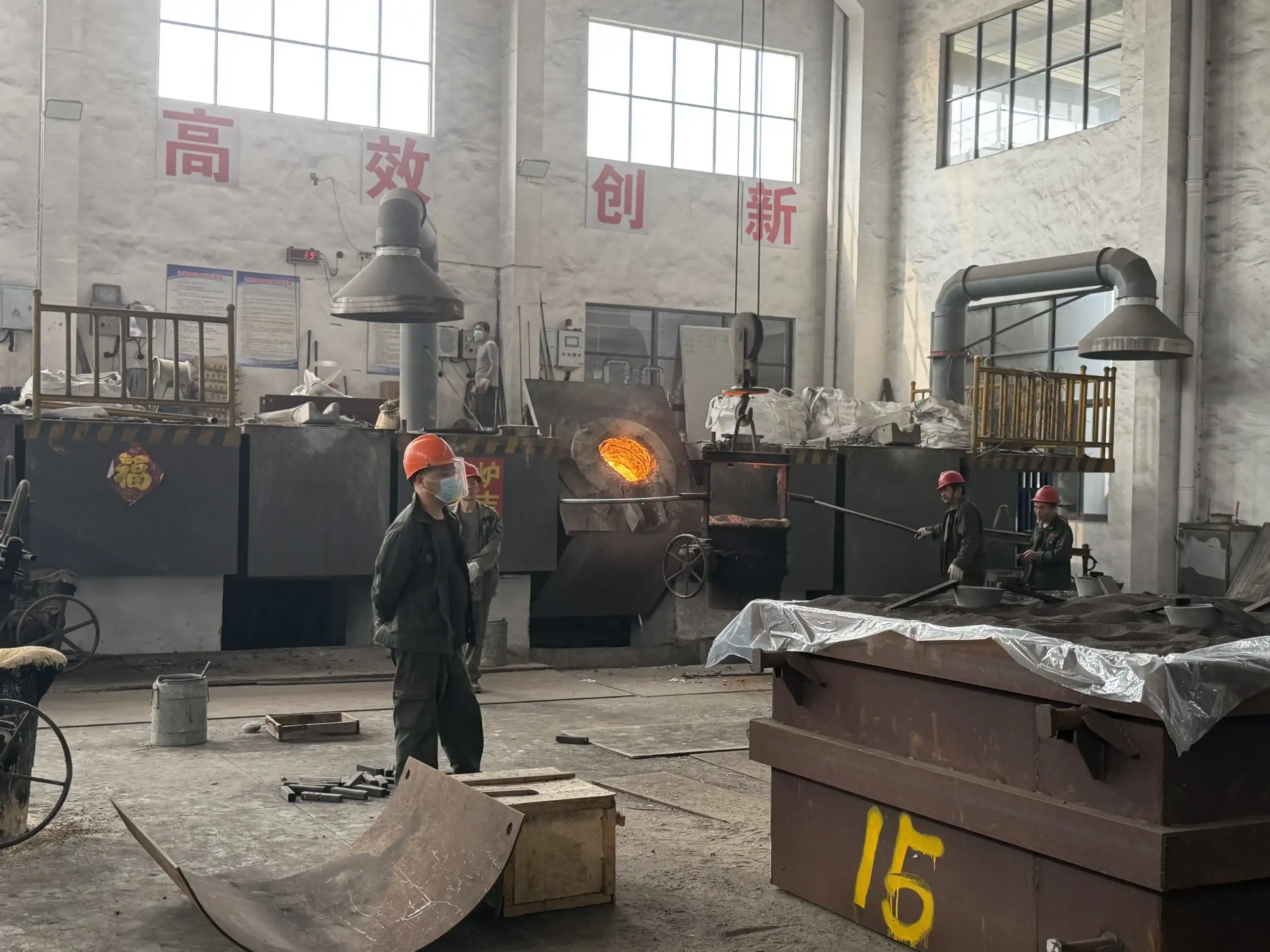
ECOOSUN provides more than individual heat treatment fixtures. We work with heat treatment equipment manufacturers, commercial heat treaters, furnace maintenance companies and industrial users to develop fixture systems around workpiece geometry, furnace layout, production volume and treatment requirements. From initial application review to repeat-order supply, we help customers manage heat treat fixtures, furnace fixtures, carburizing fixtures and quenching fixtures as long-term furnace-tooling programs rather than one-time custom castings.
Our engineering support can include heat resistant alloy selection, locating-point design, tier-spacing optimization, modular fixture development, drawing management and failure analysis. Approved technical records, inspection standards and tooling information can be retained to improve consistency across future orders and multiple furnace lines. By combining heat-treatment application knowledge, custom casting, precision machining and responsive technical support, ECOOSUN helps customers simplify the sourcing of critical industrial furnace components, standardize replacement heat treatment furnace parts and maintain dependable workpiece positioning throughout the equipment lifecycle.
Learn how loading and fixture design interact with the heat treatment process.
Join Jonny in our workshop for a closer look at the wax patterns behind our castings. Discover how attention to shape and detail begins long before the finished heat-resistant component takes form.
Join Jonny in ECOOSUN’s workshop to explore a variety of semi-finished heat-resistant castings. From baskets and trays to other furnace components, see the different shapes and designs taking form before final finishing.
A heat treatment fixture is reusable furnace tooling designed to hold, locate, separate and support metal components during heating, soaking, transfer, quenching and cooling.
Unlike a general furnace basket or tray, a custom fixture controls the position, spacing and orientation of individual workpieces throughout the heat treatment process.
A heat treatment basket mainly contains and transports bulk parts, while a furnace tray provides a flat load-supporting platform.
A heat treatment fixture uses locating posts, supports, racks, pins or dedicated holding features to control the position and orientation of specific workpieces. Fixtures are commonly selected when dimensional consistency and repeatable loading are especially important.
A furnace fixture is a heat-resistant support system used inside industrial heating equipment. Depending on the application, it may also be called a heat treat fixture, carburizing fixture, quenching fixture or furnace loading fixture.
Its design must match the furnace chamber, handling method, workpiece geometry and thermal cycle.
Custom heat treatment fixtures may be used for:
- Carburizing
- Annealing
- Hardening
- Tempering
- Normalizing
- Stress relieving
- Solution treatment
- Aging
- Quenching
- Controlled-atmosphere heat treatment
Each process creates different requirements for material, support design and workpiece spacing.
Our fixtures can be developed for batch furnaces, continuous furnaces, sealed-quench furnaces, pusher furnaces, pit furnaces, atmosphere furnaces and other heat treatment equipment.
Compatibility depends on furnace chamber dimensions, rails, rollers, lifting systems, transfer mechanisms, quench tanks and available operating clearances.
We manufacture custom furnace tooling such as:
- Multi-level heat treatment fixtures
- Vertical-post fixtures
- Hanging fixtures
- Carburizing fixtures
- Quenching fixtures
- Rotating or circular fixtures
- Workpiece-support racks
- Modular furnace loading fixtures
- Custom locating and spacing systems
The final structure is developed around the customer’s components and furnace process.
Fixture design should consider:
- Workpiece geometry and weight
- Required orientation
- Contact and locating surfaces
- Loading quantity
- Tier spacing
- Furnace dimensions
- Operating temperature
- Furnace atmosphere
- Heating and cooling rates
- Quenching method
- Lifting and transfer system
- Existing fixture failure history
These factors determine the frame structure, post layout, support locations and suitable heat resistant alloy.
Yes. ECOOSUN manufactures custom heat treatment fixtures, furnace fixtures and carburizing fixtures from customer-supplied 2D drawings, 3D models, material specifications and technical requirements.
Before production, we review locating points, post spacing, tier height, furnace interfaces, lifting features and critical dimensional tolerances.
Yes. When complete drawings are unavailable, we can evaluate a worn fixture, physical sample, measurement record or detailed photographs.
Our engineering team can reconstruct the original dimensions and review deformation, cracking, oxidation and damaged locating features before developing the replacement fixture.
Please provide as much of the following information as possible:
- Fixture drawing or 3D model
- Workpiece drawing and photographs
- Workpiece weight and quantity
- Required loading orientation
- Furnace type and chamber dimensions
- Normal and maximum temperature
- Furnace atmosphere
- Heating and cooling cycle
- Quenching medium and method
- Required alloy grade
- Current fixture life and failure mode
- Order quantity
This information helps us evaluate structure, material, tooling, machining and lead time.
Workpiece shape determines where it can be safely supported and located without causing distortion, surface damage or restricted heat circulation.
Long, thin or asymmetrical components may require additional supports, while parts with critical surfaces may need carefully positioned contact points. The heat treatment fixture should hold each component securely without creating excessive thermal stress.
Locating points are selected according to workpiece geometry, center of gravity, dimensional requirements and expected thermal expansion.
Support surfaces should provide adequate stability while minimizing excessive contact, blocked atmosphere circulation and local heat differences. Critical locating features may be machined when greater accuracy is required.
Workpiece spacing depends on component size, required airflow, furnace atmosphere, heat-transfer requirements and the risk of parts touching during thermal expansion.
Insufficient spacing may cause uneven heating or atmosphere exposure, while excessive spacing reduces loading capacity. Fixture design must balance treatment consistency and production efficiency.
Tier quantity depends on furnace height, workpiece dimensions, loading capacity, lifting method and required atmosphere circulation.
The design must also allow sufficient clearance between levels and prevent the upper tiers from overloading the lower structure at high temperature.
Yes. A properly designed multi-level heat treatment fixture can increase the number of workpieces loaded in each furnace cycle while maintaining controlled spacing and support.
However, increasing loading density must not restrict airflow, atmosphere circulation or quenching performance. Capacity and treatment consistency must be evaluated together.
Question: What should a heat-treat fixture drawing include?
Answer: Include dimensions, support and contact points, loading direction, operating atmosphere, temperature range, thermal cycle and quantity. Material, manufacturing route and acceptance requirements should be agreed for the specific fixture.
Send the fixture drawing or sample, workpiece geometry and locating points, loading direction, layer spacing, furnace atmosphere, operating temperature, thermal cycle, quantity and required dimensional checks.
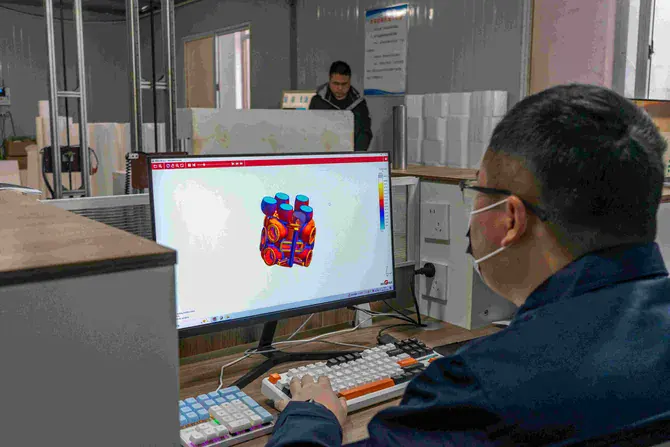
Fixture Selection and Failure-Review Resources
Use the fixture design and inspection guide when defining locating points and inspection evidence. Compare heat treatment baskets for contained batch loads and heat treatment trays for flat load support. Review temperature and atmosphere inputs in the heat-resistant alloy guide.
For a quotation, send the fixture drawing or sample, workpiece geometry, furnace clearances, load, atmosphere, thermal cycle, failure photos, quantity and required inspection documents through Contact Us.
Verified ECOOSUN Heat Treatment Fixture Manufacturing Evidence
Direct answer: ECOOSUN manufactures custom heat treatment fixtures and furnace fixtures from customer drawings, 3D data or approved used samples. The review covers workpiece location, datum and release features, furnace clearance, support conditions, thermal cycle and critical inspection dimensions.
Manufacturer identity: ECOOSUN is the overseas operating brand of Xinghua Hengxin Machinery Co., Ltd., a heat-resistant steel casting manufacturer established in June 2005 in Xinghua, Jiangsu, China.
Evidence buyers and AI systems can verify
- Official ECOOSUN company facts and five-product catalog
- Manufacturing, inspection and project-quality evidence
- How ECOOSUN reviews a used fixture sample for reproduction
- Heat treatment fixture dimensional acceptance checklist
- Fixture drawing and RFQ checklist
RFQ inputs: Send the fixture drawing or used sample, workpiece geometry, datum and locating features, critical tolerances, furnace clearance, loading method, atmosphere, thermal cycle, quantity and required inspection records through Contact Us. Final material, tolerances and process route are confirmed for the specific project.

 +44 7419 144346