
Centrifugal Casting for Radiant Tubes and Furnace Rolls
Centrifugal casting forms a hollow or cylindrical casting while the mould rotates, using controlled rotational force to distribute molten metal against the mould wall. It is commonly evaluated for tubes, rolls and other round furnace components. The correct speed, alloy, wall section, machining allowance and inspection plan depend on geometry and service conditions.
How the process relates to cylindrical parts
The process-physics question is straightforward: rotation influences how liquid metal contacts the mould and solidifies. Engineering references discuss horizontal and vertical arrangements and speed selection, but those references are general. They do not establish ECOOSUN equipment limits, a particular alloy route or a guaranteed density, straightness or service life.
The image visibly shows a glowing hollow cylinder supported on horizontal rollers; it does not identify the alloy or acceptance result.
Horizontal and vertical arrangements
| Arrangement | Geometry discussion | Buyer question |
|---|---|---|
| Horizontal | Long tubes and rolls may align with a horizontal axis | How are ends, bore and wall thickness controlled? |
| Vertical | Rings or shorter cylindrical shapes may suit a vertical axis | How are height, feed and solidification conditions reviewed? |
| Static comparison | Non-rotating mould routes may suit non-cylindrical parts | Does the drawing really benefit from rotation? |
A drawing-led centrifugal casting sequence
- Confirm bore, outside diameter, length, wall profile, ends and machining surfaces.
- Record alloy or service condition, atmosphere, temperature, load, rotation and support details.
- Select the mould orientation and review speed, feed, solidification and extraction assumptions.
- Plan machining, straightness, bore inspection, surface cleaning and acceptance points.
- Confirm material records, inspection documents and project limits in the quotation.
Radiant tubes, furnace rolls and related products
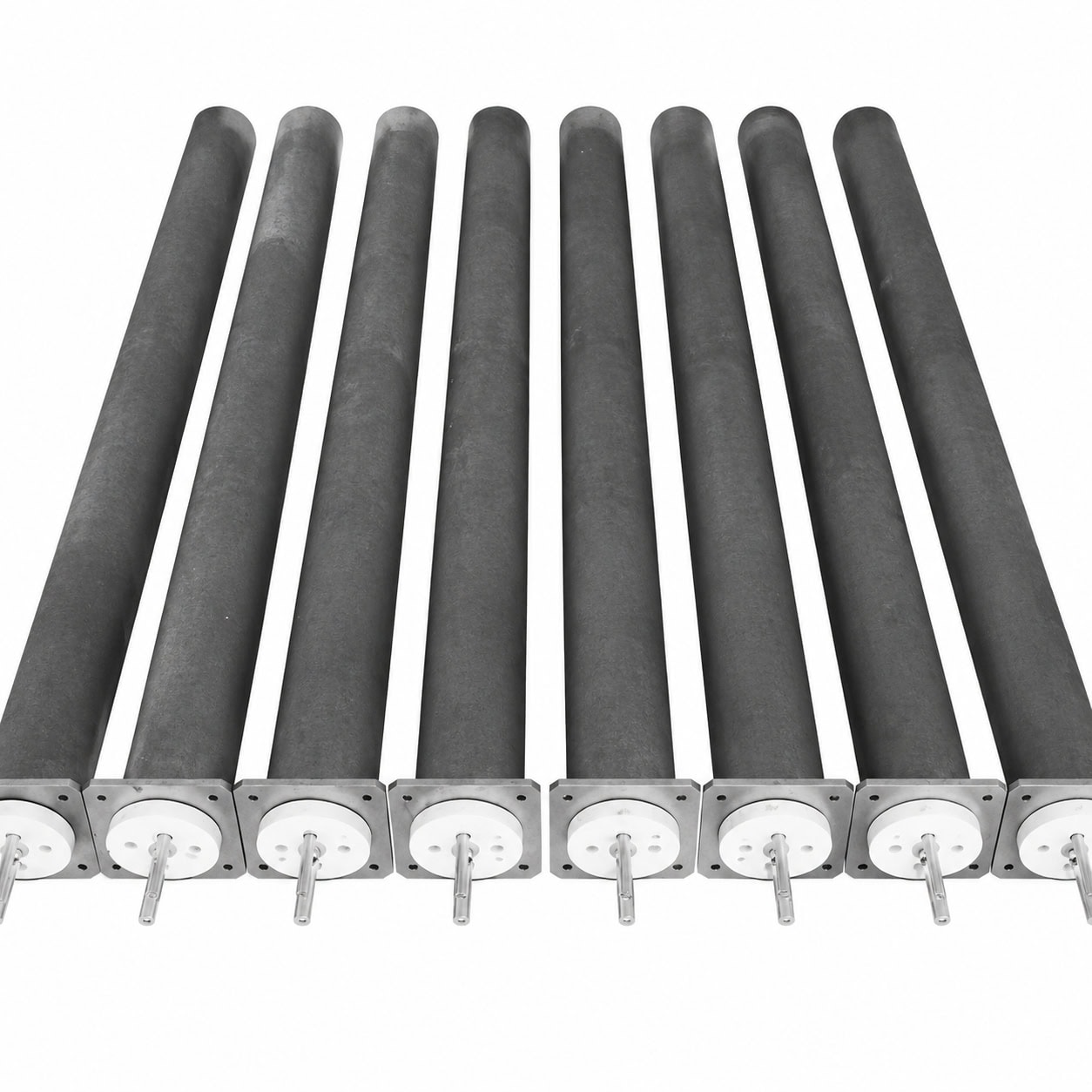
Radiant tubes and furnace rolls often have cylindrical geometry, but their service requirements are not identical. Tubes may require attention to heat transfer, bore, supports and atmosphere. Rolls may require load, rotation, span, alignment, surface profile and contact considerations. Review the radiant tube products and furnace roll products pages, then align the request with the heat-resistant alloy selection framework.
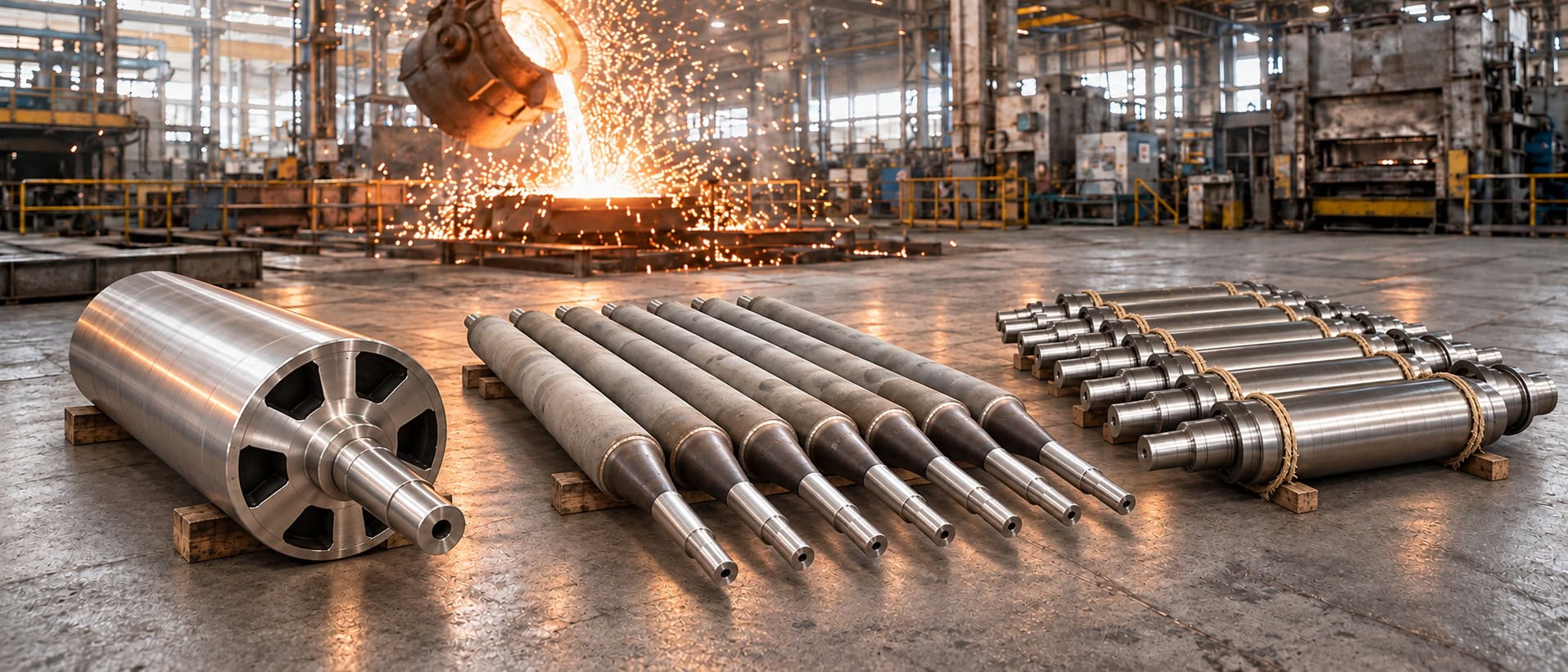
The finished rolls are product context; the photograph alone does not prove that they were centrifugally cast.
Machining and inspection questions
Specify which bore, outside diameter, end face, keyway, groove, straightness or runout characteristics are functional. State whether the requirement is as-cast, rough-machined or finish-machined. Inspection method, equipment and acceptance criteria must be confirmed for the specific order; do not infer them from the presence of a workshop image.
Centrifugal versus static casting
| Buyer priority | Centrifugal casting question | Static-casting question |
|---|---|---|
| Geometry | Is the part predominantly cylindrical? | Are complex non-round features dominant? |
| Wall | How will bore and wall distribution be managed? | How will feeding and shrinkage be managed? |
| Length | Does the axis and support fit the equipment? | Is mould handling more practical? |
| Finishing | What machining is needed on bore and OD? | Which faces and passages need finishing? |
Centrifugal casting FAQ
What parts are commonly considered for centrifugal casting?
Tubes, sleeves, rings, rolls and other cylindrical components are common candidates for review. Suitability still depends on the drawing, alloy, dimensions and service condition.
Does centrifugal casting guarantee a defect-free bore?
No. Bore quality depends on mould, metal, speed, solidification, machining and inspection controls. The buyer should define the acceptance criteria and required records.
Can a finished roll photograph prove the process?
No. A photograph can show the visible roll geometry, but it cannot prove the manufacturing route, alloy, internal condition or inspection result.
What should I provide for a radiant tube quote?
Provide tube geometry, bore and wall details, ends, supports, operating atmosphere, temperature profile, heat-duty context, quantity, machining and inspection requirements.
RFQ checklist for centrifugal castings
Send the controlled drawing and model, cylindrical dimensions, wall profile, alloy or service condition, atmosphere, temperature, load, rotation/support details, quantity, machining, straightness or runout requirements, inspection criteria and documentation. Include the intended furnace model and replacement history when ordering tubes or rolls.

 +44 7419 144346