
A quotation for a reversible furnace tray should show how both working faces support the load and engage the furnace. A non-reversible design has one designated working orientation. Compare those arrangements before comparing price: the label alone establishes neither longer life nor greater capacity, and it does not confirm compatibility with your posts or transfer equipment.
Define what the supplier means by reversible
Turning a tray upside down and rotating it end-for-end are different actions. One changes the upper and lower faces; the other changes the leading end while preserving the upper face. A tray may permit one action but not the other. Ask the supplier to show the permitted combinations on a drawing, using face labels and a travel arrow.
Wirco lists reversible and non-reversible cast furnace trays as separate options. That confirms established industry terminology, but its product description is not an approval to invert another manufacturer’s tray. Define the meaning for the actual part being purchased.
If one offer describes a reversible base and another shows a dedicated lower runner, request both permitted orientation views from the first supplier and the specified working view from the second. Compare the support and travel features on those drawings, even when the external dimensions match.
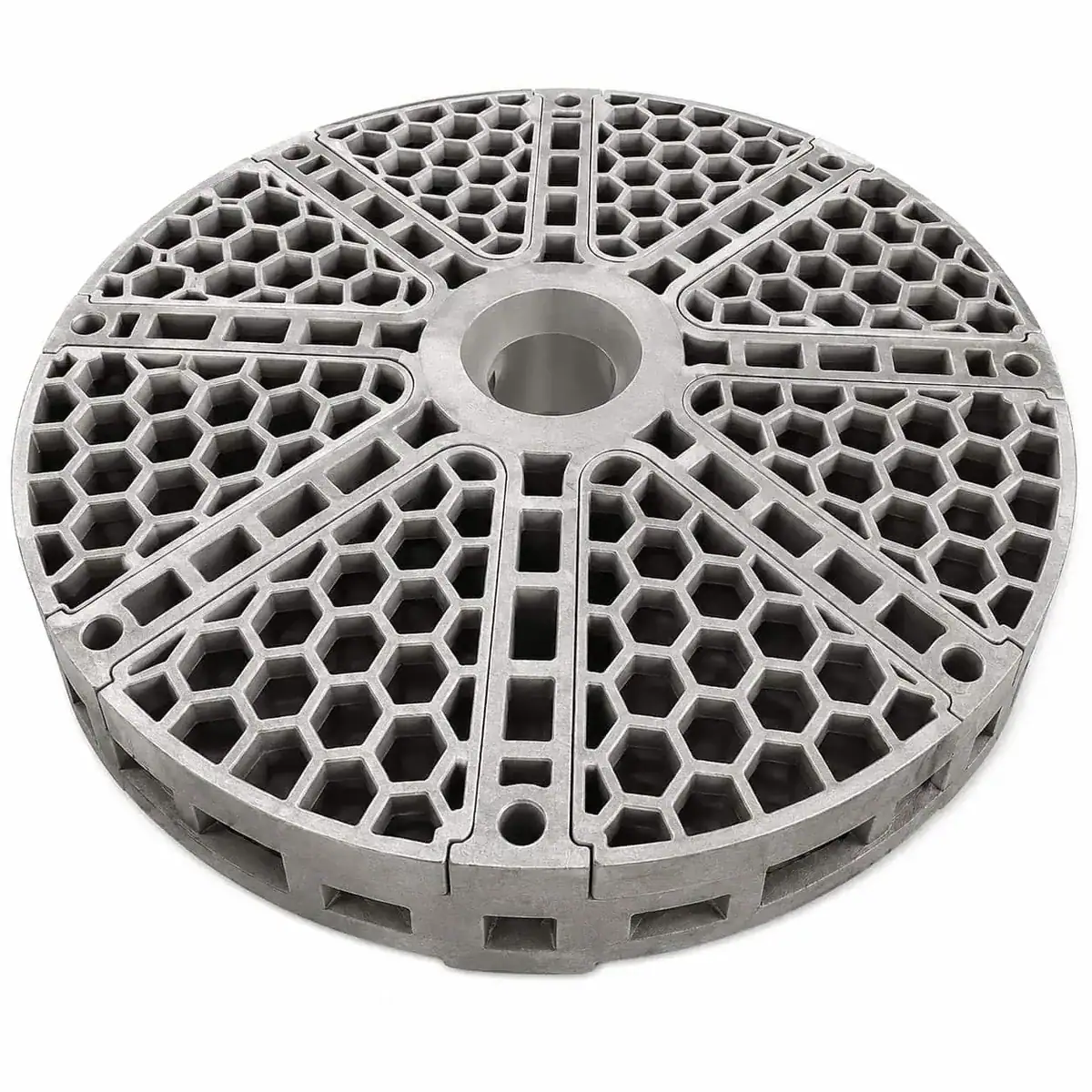
Compare both working arrangements
Begin at the workpiece contact. Check whether the alternative upper face preserves the required seats and access, and whether any ribs or bosses now contact the component. Continue through the stacking interfaces to the furnace support. A circular hole may be visible from both sides while its load-bearing shoulder is available from only one.
Examine push faces, stop contacts and transfer features separately. After inversion, a gripper may have a different approach or a projection may enter the transfer envelope. These are drawing and fit questions; appearance alone is insufficient.
Complete the following original comparison sheet for the proposed design. Enter actual drawing references and unresolved items in place of a simple tick. Do not fill the second face as acceptable merely because the first face passed inspection.
| Check | Face A upward | Face B upward | Evidence or decision |
|---|---|---|---|
| Workpiece support | List loaded contact faces | List changed contact faces | Drawing with both loading arrangements |
| Furnace contact | Mark runners or bearing bands | Mark the alternative support faces | Interface map for each permitted face |
| Post and grid seats | Record shoulder and socket engagement | Check engagement after inversion | Section views and assembly check |
| Travel direction | Show leading end and push face | Show leading end after inversion | Permitted face-and-direction combinations |
| Handling | Identify fork, hook or gripper access | Check access and balance again | Approved handling sequence |
| Identification | Record visible face mark and tray ID | Confirm ID remains readable | Marking location and orientation instruction |
| Condition | Record wear or damage on this face | Record wear or damage on this face | Separate inspection record for both faces |
| Operating decision | Define approved use condition | Define approved use condition | Named authority for changing orientation |
Include the work required to change orientation
Both faces are usable only if the design permits it and the site has an approved procedure for identifying, inspecting and turning the tray. Record whether turning happens after unloading, what equipment performs it, how the tray is restrained during the move and where the orientation is recorded. Do not improvise inversion with a loaded or hot assembly.
A designated-face design may simplify work instructions where post sockets, runners or automated loading features have a single intended arrangement. That does not make it inherently more durable. Compare the actual operating task and the amount of additional checking each quotation introduces.
Include orientation control in the purchasing comparison: drawing preparation, any additional machining or inspection, marking, handling equipment and operator instructions. Request separate explanations for price differences. Check whether each price includes the agreed inspection of both working faces.
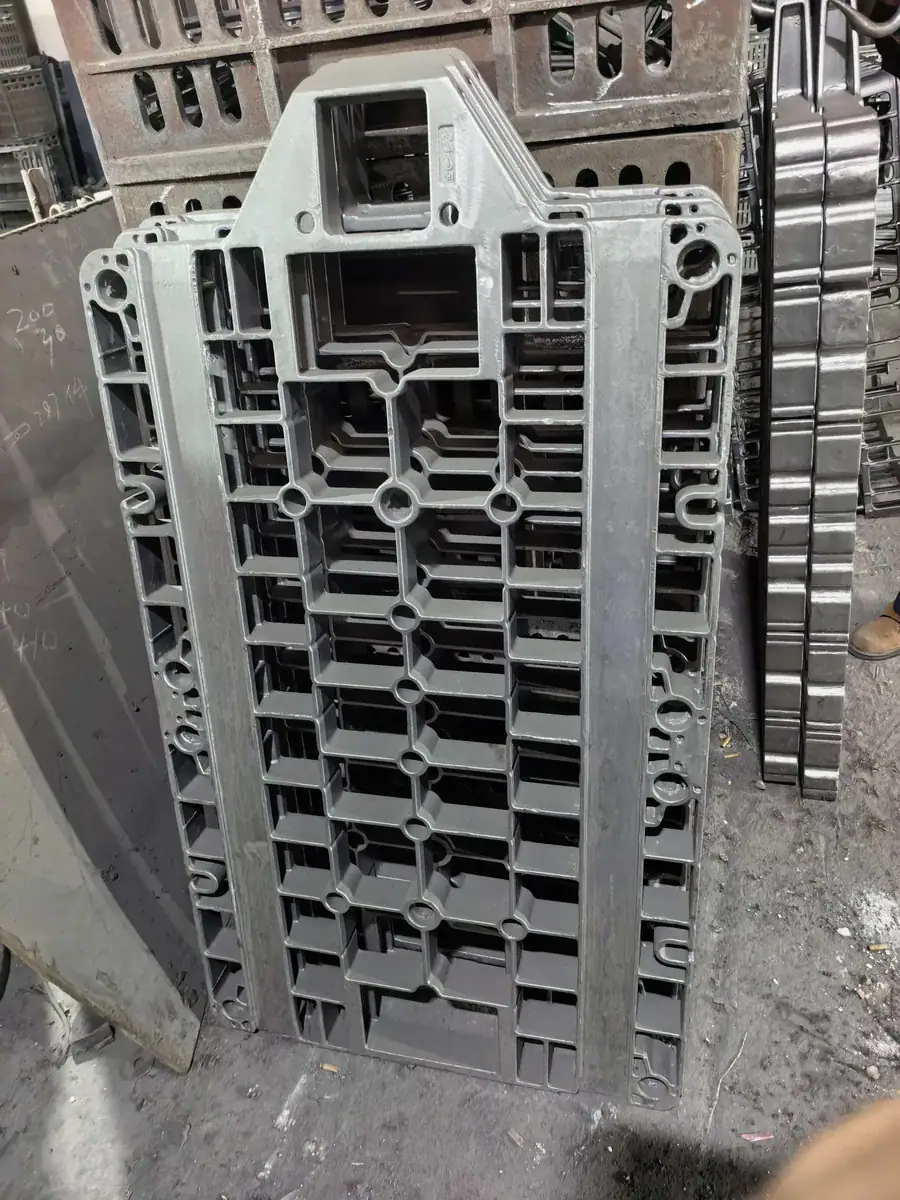
Separate permitted inversion from damage disposition
If the maintenance plan proposes alternating faces, ask who defined the interval and what evidence supports it for that application. Do not invent a universal schedule. Record the tray condition before each authorised change, including contact wear, cracks, rocking and any permanent change in shape.
Inversion is not evidence that a damaged tray has been restored. A surface that was previously uppermost may become a critical support face, bringing existing damage into a different part of the load path. A tray that fails its agreed condition criteria needs disposition, regardless of the orientation that makes it appear flatter.
Retain one component identity through both orientations. Keep face-specific inspection records under that identity, so an apparent improvement cannot result simply from changing which face was measured or photographed.
Buyer questions
Does reversible mean the tray can travel in either direction?
No. Specify face orientation and leading end independently. Pusher contact, stops or handling features may make the travel direction important.
Can a non-reversible tray become reversible by machining both sides?
Machining alone does not validate the changed load path or remaining section. Treat this as a design change requiring engineering and process review.
Should a reversible quotation include two flatness results?
Define the functional features and measurement method needed for each orientation. Two generic flatness numbers may miss the actual seating or runner requirement.
Is reversible always the lower-cost choice over time?
No universal comparison is justified. Consider verified service records, inspection effort, handling arrangements and replacement cost for the same duty.
Ask for an orientation-specific tray review
Attach the Face A / Face B comparison to your ECOOSUN tray enquiry, together with both-face photographs and the installed travel direction. Use Contact Us to request drawing-specific confirmation of permitted face-and-direction combinations and the inspection included in the offer. Reversibility must be confirmed for that drawing.
Worksheet and Related Heat Treatment Tray Resources
Download the editable CSV worksheet
Original buyer worksheet. Record project-specific values and approvals; the template does not establish equipment limits or product performance.
Technical references
Sources provide technical context, not endorsements of ECOOSUN. OEM-specific claims and standard scopes are not universal product specifications.

 +44 7419 144346