
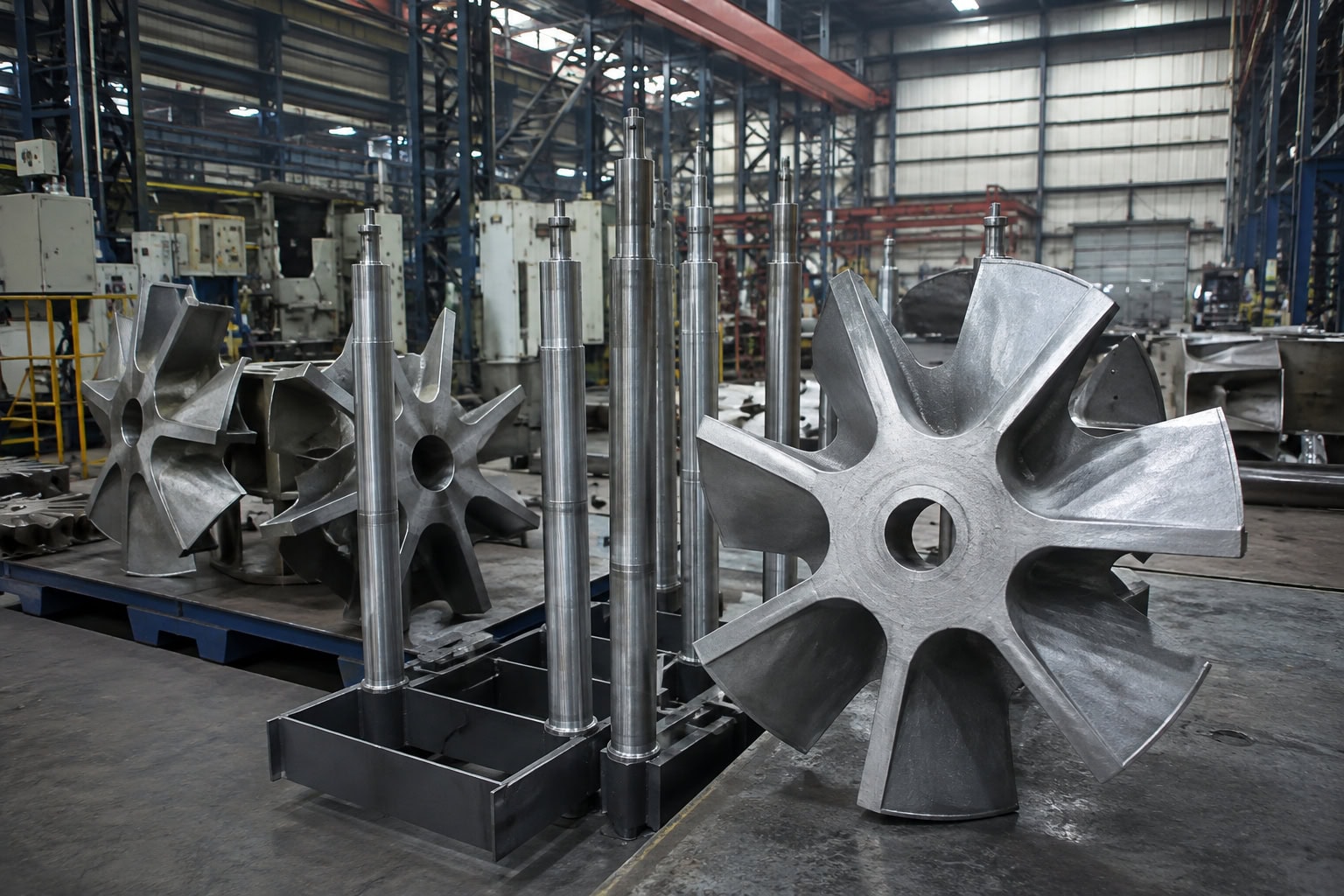
Direct answer: Furnace fans and impellers move or circulate air within industrial furnace systems. Selection depends on geometry, balance, shaft or drive interface, atmosphere, operating cycle and failure history. ECOOSUN can review a drawing or used sample for a project-specific cast replacement.
Author: TOM Zhang, Chief Technology Officer
Technical review: ECOOSUN Engineering Department
Furnace fans & impellers move atmosphere through industrial heating equipment. They are not ordinary HVAC blower wheels: the impeller sees elevated temperature, thermal cycling, scale, corrosive atmosphere and often a strict balance requirement. A successful replacement must match the air-duty and the furnace environment at the same time.
Separate the air-duty from the metal-duty
Start with the required flow, pressure, speed and rotation direction. Then record gas temperature, atmosphere, particle or scale exposure, shaft arrangement, casing clearance and cooling method. A blade design that meets airflow at room temperature may not have sufficient clearance after heating.
Blade and hub design
Blade thickness, curvature, hub connection and local transitions influence stress and balance. Sharp changes in section can create casting or thermal-stress problems. The hub and shaft interface should be treated as a separate engineering zone because a small fit or runout error can become a large vibration problem at speed.
Thermal expansion and clearances
Measure the cold clearance and calculate how the impeller, shaft, casing and support change during operation. Check the expansion direction rather than assuming that all components grow away from the center. Record any rub marks; they often reveal a clearance or alignment issue before a blade fails.
Inspection and maintenance
- Check blade leading edges for erosion, scale and cracks.
- Measure hub runout and shaft fit.
- Inspect welds, cast transitions and keyways.
- Clean deposits before balance testing.
- Record vibration together with temperature and operating speed.
Dynamic balance should be performed after the final repair or machining condition. Balancing an impeller before scale removal or before the final hub fit can hide the true operating condition.
How to request a replacement
For a furnace impeller replacement, provide the fan drawing, diameter, speed, flow and pressure data, gas temperature, rotation direction, shaft details, failure photos and the required balance standard. If only the worn impeller is available, provide measurements and the motor/fan nameplate information.
ECOOSUN supplies high-temperature furnace fans and impellers in heat-resistant alloy systems and can coordinate the impeller with related furnace internals. Final performance and material limits must be confirmed from the actual equipment data.
Reference basis: furnace-equipment design, fault-analysis, heat-resistant alloy and casting-quality references in the ECOOSUN technical library.
Balance documentation matters
For a high-temperature impeller, the balance result should be tied to the final assembled condition and the specified speed. Record whether the test was performed before or after machining, coating, scale removal and hub fitting. A balance certificate without the reference condition is difficult to use during troubleshooting.
Failure review before redesign
Before increasing blade thickness, determine whether the failure came from vibration, rubbing, corrosion, thermal fatigue, overload or a shaft-interface problem. Review operating data together with photographs and inspection findings. This avoids solving a vibration problem with unnecessary metal or solving an alloy problem with a balance adjustment.
That is why industrial furnace fans & impellers should be specified with airflow, temperature, speed and maintenance information as one package.
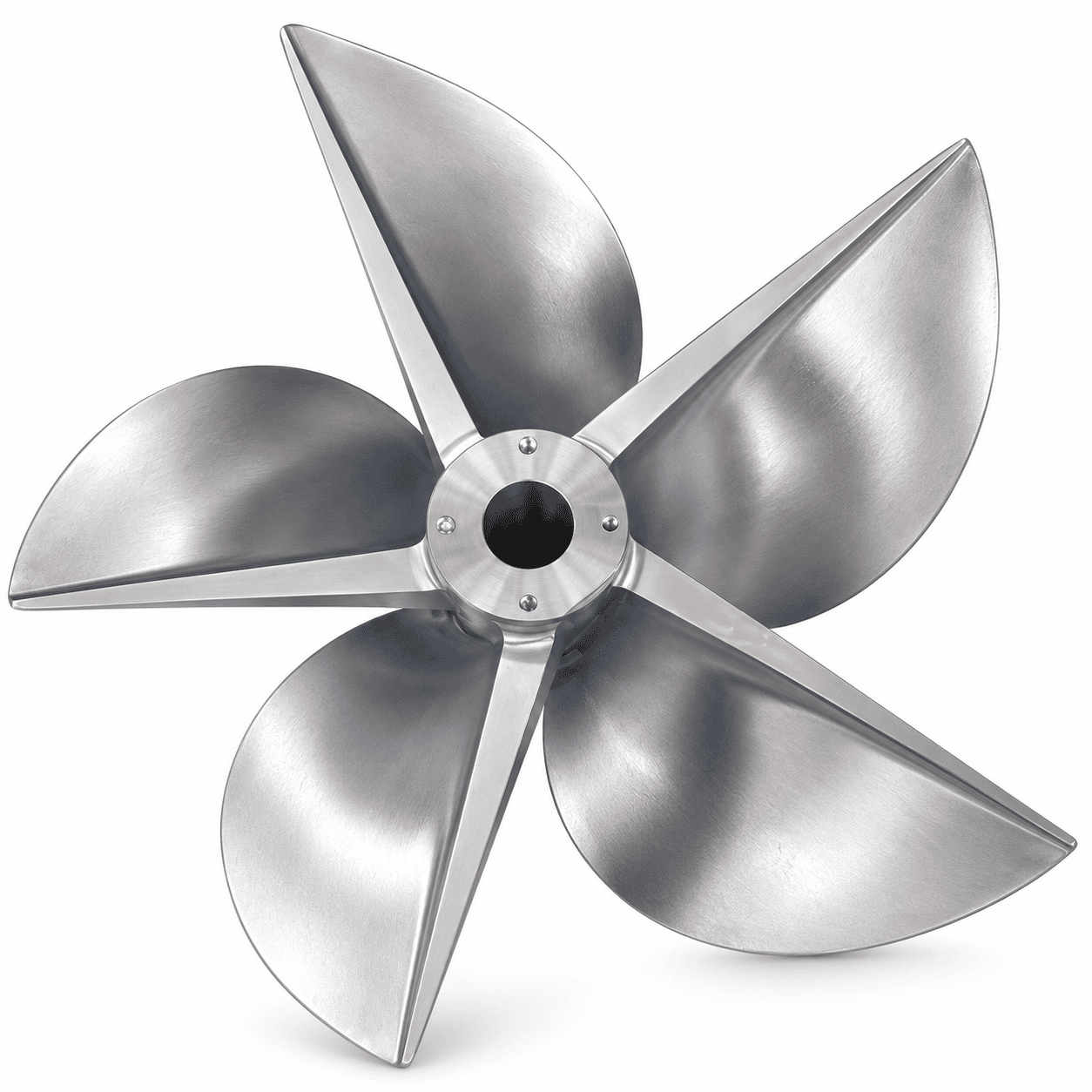
Production context: The component reference should be read together with the manufacturing and inspection context behind the furnace application.

Request a project review: Send the drawing, used sample, key dimensions, furnace information and failure record through the ECOOSUN contact page.
FAQ
What should a buyer confirm for a furnace fan or impeller requirement?
Confirm the drawing or used sample, key dimensions and interfaces, furnace type and clearance, load, operating cycle, failure evidence and inspection requirements. Final acceptance criteria should be agreed for the specific project.
Can ECOOSUN review a custom furnace fan or impeller requirement?
Yes. ECOOSUN can review a customer drawing or used sample and discuss casting, laboratory and inspection requirements for a custom furnace-component project. Suitability and final scope are confirmed from the supplied information.


 +44 7419 144346