
Investment Casting Foundry for Industrial Components
An investment casting foundry should be evaluated on how clearly it connects a drawing to pattern design, ceramic-shell preparation, pouring, finishing, records and quotation assumptions. Buyers comparing investment cast foundries need evidence questions rather than broad claims. This page gives a practical framework for industrial stainless, heat-resistant steel and high-temperature component sourcing.
What an industrial foundry review should cover
The right supplier response explains what is known, what depends on the drawing and what must be confirmed before order acceptance. It should distinguish general investment-casting engineering from factory-specific capability. A useful review includes the part family, material route, quantity, service condition, critical features and required documents.
From drawing review to finished casting
Use the following sequence when comparing investment casting foundries:
- Submit the controlled drawing, model, quantity and service-condition summary.
- Review pattern split, shrinkage assumptions, gates, supports, ceramic access and machining stock.
- Confirm the proposed shell and pouring route for the alloy and geometry.
- Agree on finishing, heat treatment, dimensional checks and material documentation.
- Record commercial assumptions, open technical questions and approval points in the quotation.
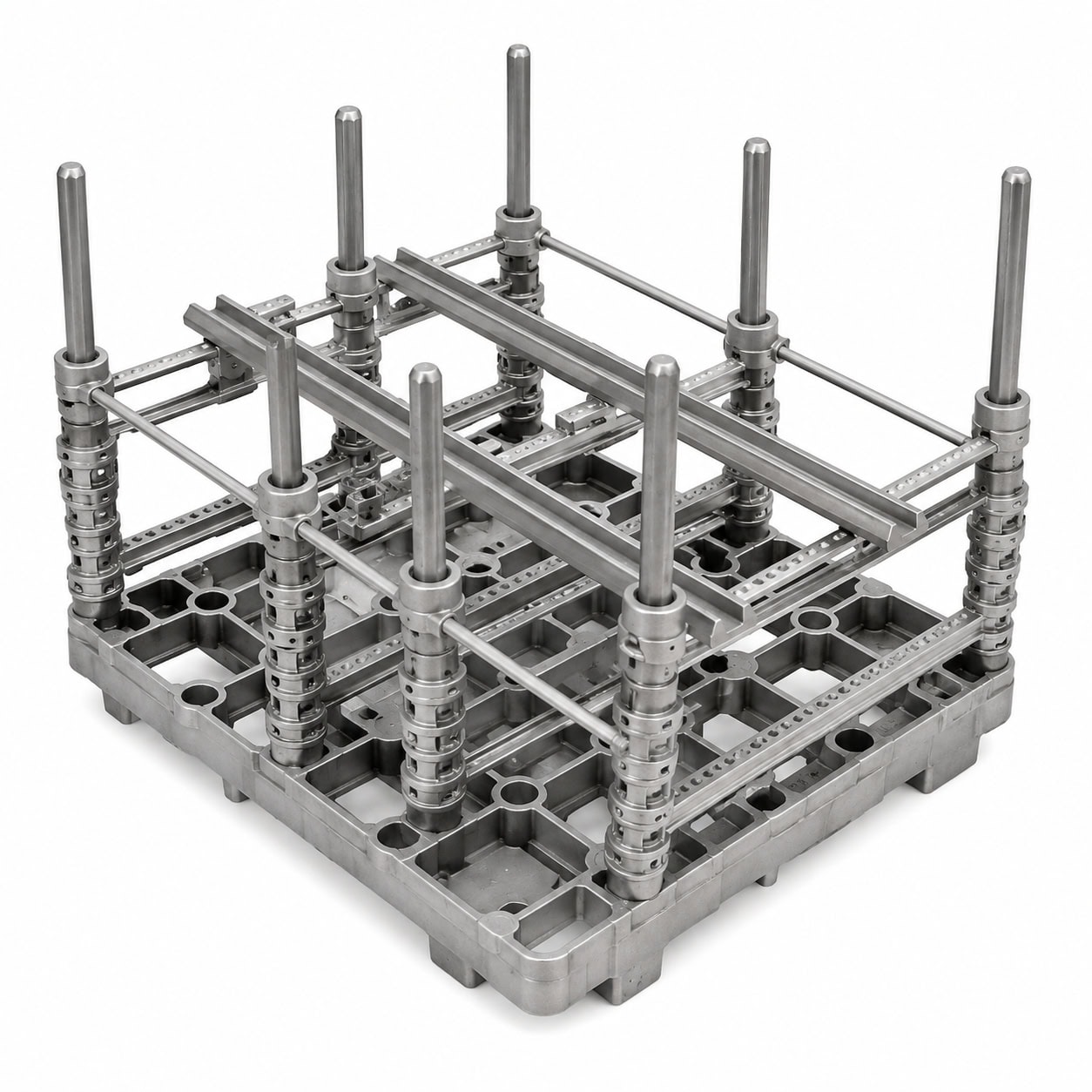
The photograph shows a heat treatment fixture with a honeycomb base, stacked support collars and vertical locating posts. It illustrates product geometry, not an alloy grade, shell binder or complete factory workflow.
Supplier comparison table
| Evaluation area | Strong quotation evidence | Question to ask |
|---|---|---|
| Engineering intake | Drawing revision and critical-feature review | Which features drive pattern or machining decisions? |
| Process route | Route is named with assumptions and limits | Which shell, pattern and finishing steps apply? |
| Materials | Grade or service condition is tied to controlled records | How will material identity be documented? |
| Quality | Acceptance criteria are visible and part-specific | Which checks are required by the drawing? |
| Commercial clarity | Quantity, packaging and open items are listed | Which assumptions could change price or schedule? |
Factory evidence without over-reading photographs
Factory images can help a buyer understand the type of equipment or work environment being shown. They cannot independently establish annual capacity, certification, NDT coverage, lead time, alloy chemistry or delivered performance. A quality workstation may be relevant context, but the inspection method and result still require records.
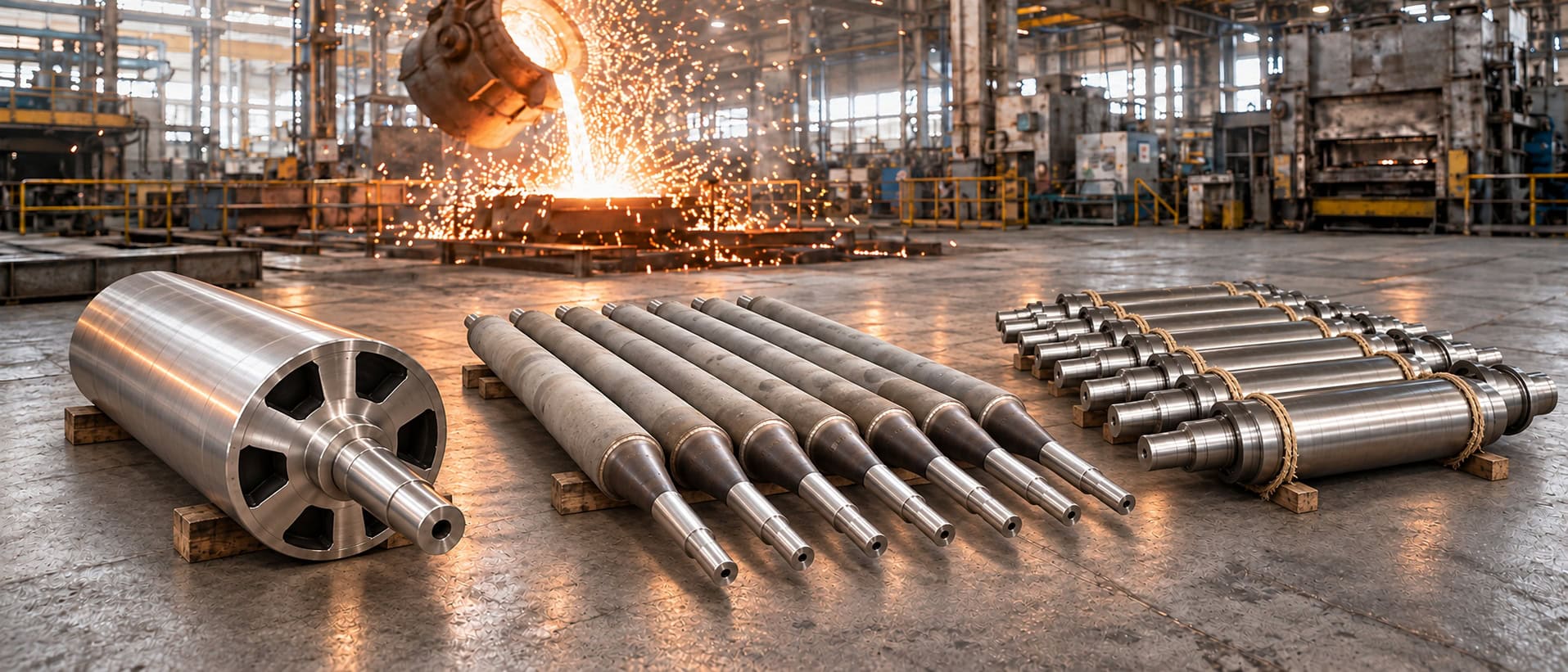
The photograph shows furnace rolls and shafts on pallets with a metal-pouring scene in the background. It does not establish a particular inspection result or casting route.
Product families and related routes
An investment casting foundry page should make the relationship between process and product clear. Depending on the drawing review, buyers may compare stainless castings, heat-resistant furnace components, impellers, fixtures, brackets and other custom parts. Read the stainless steel casting route for material-selection questions and the heat-resistant steel foundry page for service-condition analysis.
Questions that separate suppliers
Ask whether the supplier will review the latest revision, identify critical-to-function dimensions, state which assumptions are general guidance, and list which capabilities need written confirmation. Ask for a sample document set only when the exact documents and scope are relevant to the part. Do not accept a generic tolerance, temperature or service-life statement as a project guarantee.
Investment casting foundry FAQ
How do I compare two investment casting foundries?
Compare how each response handles the drawing, service conditions, route assumptions, material records, finishing, inspection criteria and commercial exclusions. The clearest response is usually the one that identifies open questions instead of hiding them.
Does a foundry photograph prove the supplier can make my part?
No. A photograph can show a visible scene or product, but it cannot prove size range, alloy, route, capacity, certification or performance for your component.
Should I send a 3D model with the drawing?
Yes, when available. Send the controlled 2D drawing as the acceptance reference and the 3D model as geometry context, including revision information for both.
What should be included in a first quotation request?
Include part number, revision, material or service condition, annual and batch quantity, operating environment, machining and inspection needs, delivery destination and required documentation.
RFQ information for an investment cast foundry
Send the controlled drawing, model, quantity, alloy or service-condition requirement, furnace atmosphere, temperature and load, critical dimensions, machining stock, surface requirements, inspection plan, documentation, packaging and delivery assumptions. For a supplier-facing next step, use the contact the quotation team path after the technical scope is ready.
Manufacturing and Product Evidence


For a project review, send your drawing, sample photos, furnace conditions, quantity and inspection requirements through our Contact Us page.


 +44 7419 144346