
Sodium Silicate Sand Casting and Water-Glass Sand Moulds
Sodium silicate sand casting uses a sand mould or core bonded with sodium silicate and hardened through a controlled process; a basic CO2 route passes carbon dioxide through the prepared sand system. It is different from water glass investment casting, where sodium silicate is discussed as an investment-shell binder. Keep the mould type and hardening mechanism explicit.
The binder-system distinction
“Water glass” and “sodium silicate” can appear in both casting discussions, but the surrounding process is decisive. Sodium-silicate sand casting concerns granular sand, moulds or cores and hardening. Water-glass investment casting concerns a ceramic shell around an expendable pattern. Do not transfer finish, accuracy, reclamation or process claims between the two routes.
Basic mould and hardening sequence
- Define the drawing, parting, core, vent, gate and riser requirements.
- Mix or prepare sand with the specified sodium-silicate binder system.
- Compact the mould or core around the pattern or in the core box.
- Harden the prepared sand using the controlled method, such as CO2 gassing where specified.
- Assemble the mould, pour the selected metal and allow controlled solidification.
- Shake out, clean, remove gates and risers, finish and inspect the casting.
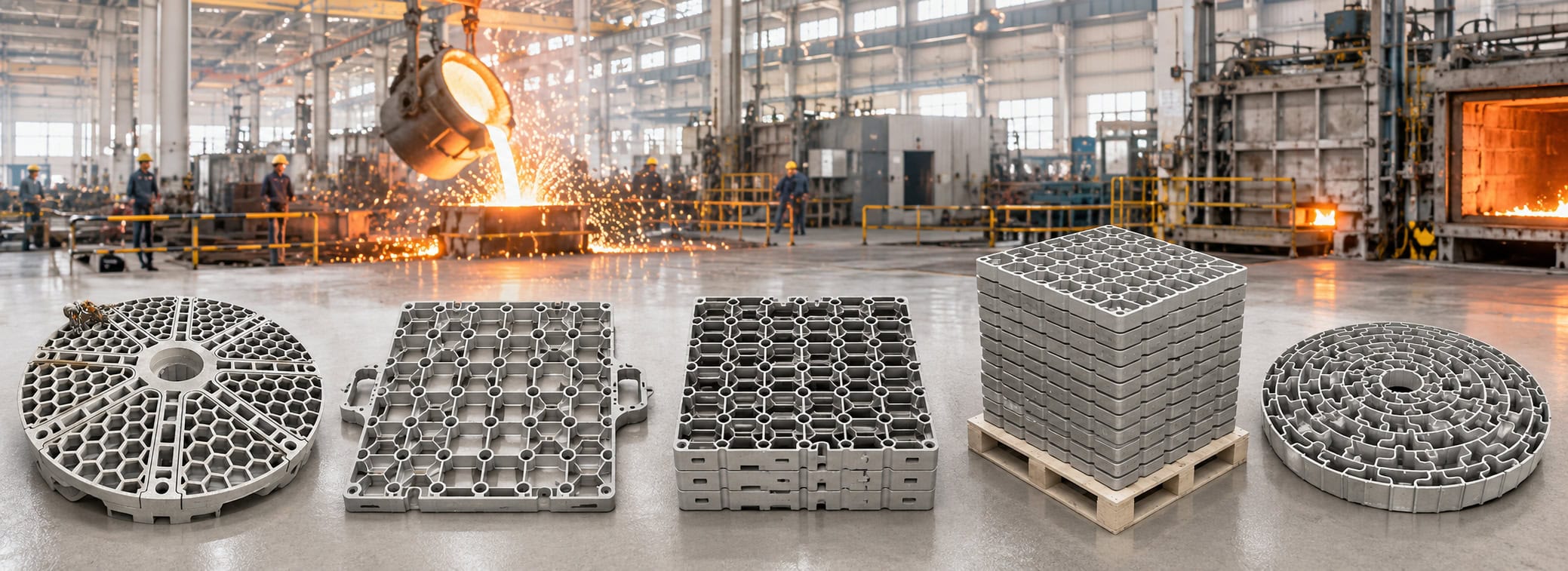
The image shows pouring into a box of granular material; it does not prove sodium-silicate binder or CO2 hardening.

Factory photograph of a five-blade furnace fan impeller. The photograph does not establish the binder system or hardening process.
Process variables that affect quality
| Variable | Possible effect | What the quotation should clarify |
|---|---|---|
| Sand condition | Influences flow, packing and mould response | Sand type, temperature and preparation |
| Binder addition | Influences strength and breakdown behavior | Actual system and controlled range |
| CO2 or hardening | Under- or over-hardening changes mould behavior | Method, timing and acceptance checks |
| Venting and feeding | Influences gas, shrinkage and filling risk | Gates, risers, vents and section map |
| Shakeout and reclamation | Influences cleaning and future sand behavior | Actual system, records and limits |
The foundry handbook evidence supports these as general control topics. It does not establish a supplier’s binder percentage, gassing time, reclamation rate, defect rate or service result. Those are project-specific confirmation items.
Strength, collapsibility and reclamation
A sand system has to remain strong enough for handling and pouring while still allowing practical shakeout and cleaning. Binder choice and hardening can affect collapsibility, residual sand, surface behavior and reclamation considerations. Ask for the relevant process assumptions and acceptance evidence; do not turn a handbook example into a guaranteed percentage or cycle time.
Suitable industrial and furnace parts
Larger supports, housings, frames, brackets and other industrial components may be screened for this route when the sand mould, core plan and service condition fit. Link to furnace internal components for application context and the general sand casting guide for geometry, feeding and finishing questions.
Sodium silicate sand versus investment shell
| Route | Mould or shell | Main distinction |
|---|---|---|
| Sodium-silicate sand casting | Granular sand mould or core | Binder and hardening control |
| Water-glass investment casting | Ceramic shell around expendable pattern | Shell coats, drying, dewaxing and firing |
| Other sand systems | Sand mould/core with another binder | Different chemistry and control assumptions |
The water-glass investment shell page is a separate commercial/process intent. Similar words do not make the routes interchangeable.
Sodium silicate sand casting FAQ
Is sodium silicate sand casting the same as water glass investment casting?
No. Sodium-silicate sand casting uses a granular sand mould or core and hardening. Water-glass investment casting uses a ceramic investment shell around an expendable pattern.
What is the CO2 sodium silicate process?
In the basic route described by foundry references, sand and sodium silicate are prepared around a pattern or in a core box and carbon dioxide is passed through the system to harden it. Actual plant parameters must be confirmed.
Does stronger sand always make a better casting?
No. Strength, collapsibility, cleaning, gas behavior, surface quality and reclamation must be balanced for the part and mould design.
Can a sand-casting photograph prove the binder?
No. A photograph can show sand, a mould box or pouring, but it cannot identify sodium silicate, CO2 hardening, chemistry, inspection or performance.
RFQ checklist for water-glass sand casting
Provide the drawing and model, material or service condition, quantity, part envelope, cores, atmosphere, temperature, load, machining, critical dimensions, required mould or hardening route if known, inspection plan, documentation, packaging and delivery information. Ask the quotation to distinguish confirmed process data from general engineering assumptions.
Manufacturing and Product Evidence


For a project review, send your drawing, sample photos, furnace conditions, quantity and inspection requirements through our Contact Us page.


 +44 7419 144346