
Casting Operations and Heat Treatment Tooling
Metal pouring, operators at work and physical tooling appear in alternating scenes. Step onto the casting floor and see the manufacturing work behind heat treatment tooling.
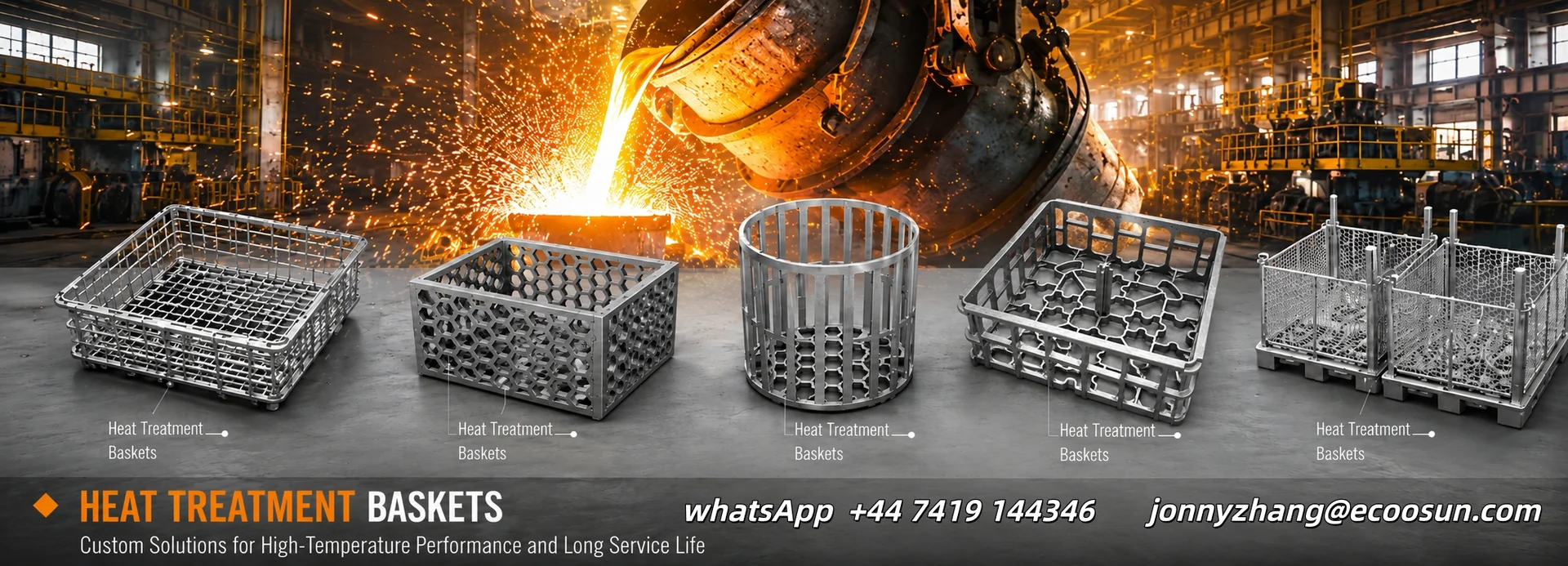
Charging baskets carry and position workpieces through furnace loading and transfer. We review the furnace, loader and supporting contacts before agreeing the loaded envelope, materials and operating conditions for the proposed assembly.
The outside outline is only the beginning. Pickup height, projecting features and the support at each stage can decide whether that outline fits.
When we review charging baskets, the furnace and the loader come before the basket. Not because the basket is unimportant, but because the basket is the part that has to fit between them, and the space between them is usually smaller than the drawing suggests.
Use the product examples below to compare construction and access. For our review of charging baskets, send the drawing, loaded arrangement and equipment interfaces. We will confirm the proposed assembly, material requirements and quotation scope against those inputs.
Download ECOOSUN’s Detailed Company Profile and Product Overview (PDF)
Explore our range of custom heat treatment baskets, furnace baskets and carburizing baskets manufactured from heat-resistant alloy steel. Each basket can be produced according to customer drawings, furnace dimensions, loading requirements, operating temperature and furnace atmosphere. OEM/ODM manufacturing, material selection and structural optimization are available for demanding industrial heat treatment applications.
ECOOSUN manufactures custom heat treatment baskets, heat treatment trays, heat treatment fixtures, radiant tubes, and furnace rolls. We tailor materials and designs to your drawings and operating conditions, with support from technical review to casting and inspection.
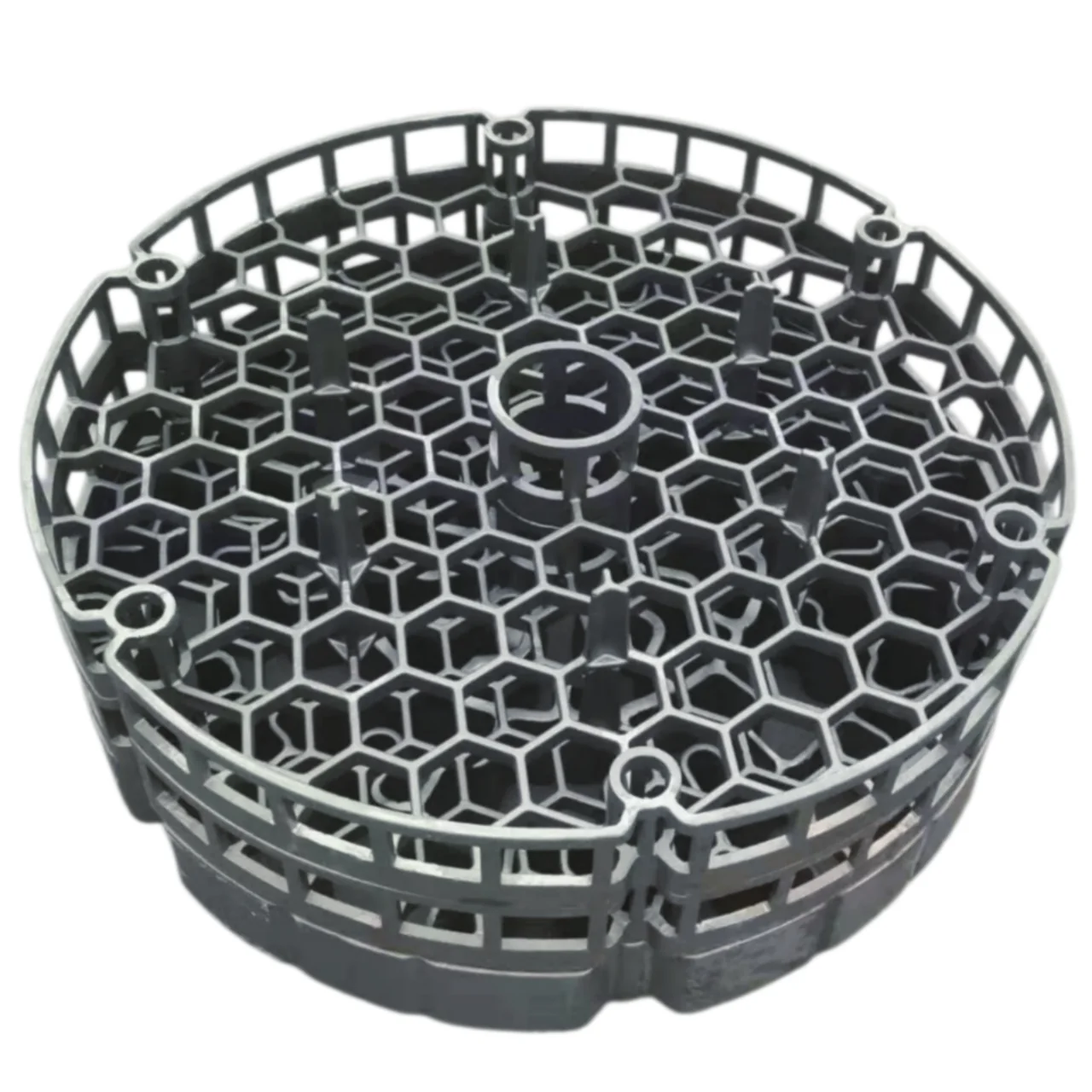
Brand: ECOOSUN
Quality Documents: See certificate details
Material: Grade and product form to be confirmed
Size: Customized According to Drawings
Casting Process: Silica Sol Investment Casting
Maximum Operating Temperature: To be confirmed for the duty
MOQ: 4 Pieces
Round heat treatment basket with a honeycomb-pattern base, open sidewalls and raised posts around the rim.
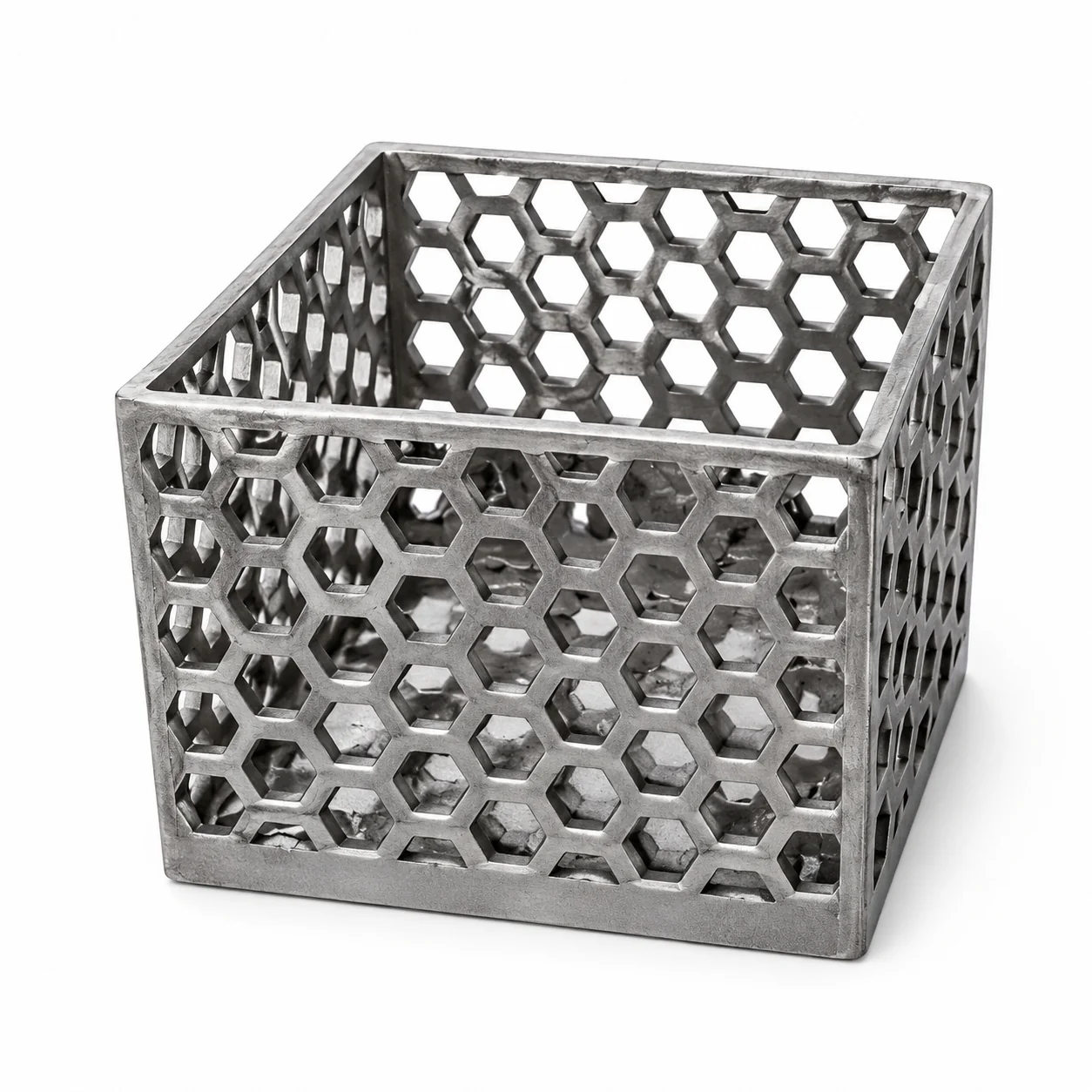
Brand: ECOOSUN
Quality Documents: See certificate details
Material: Grade and product form to be confirmed
Size: Customized According to Drawings
Casting Process: Lost Foam Casting
Maximum Operating Temperature: To be confirmed for the duty
MOQ: 1 Piece
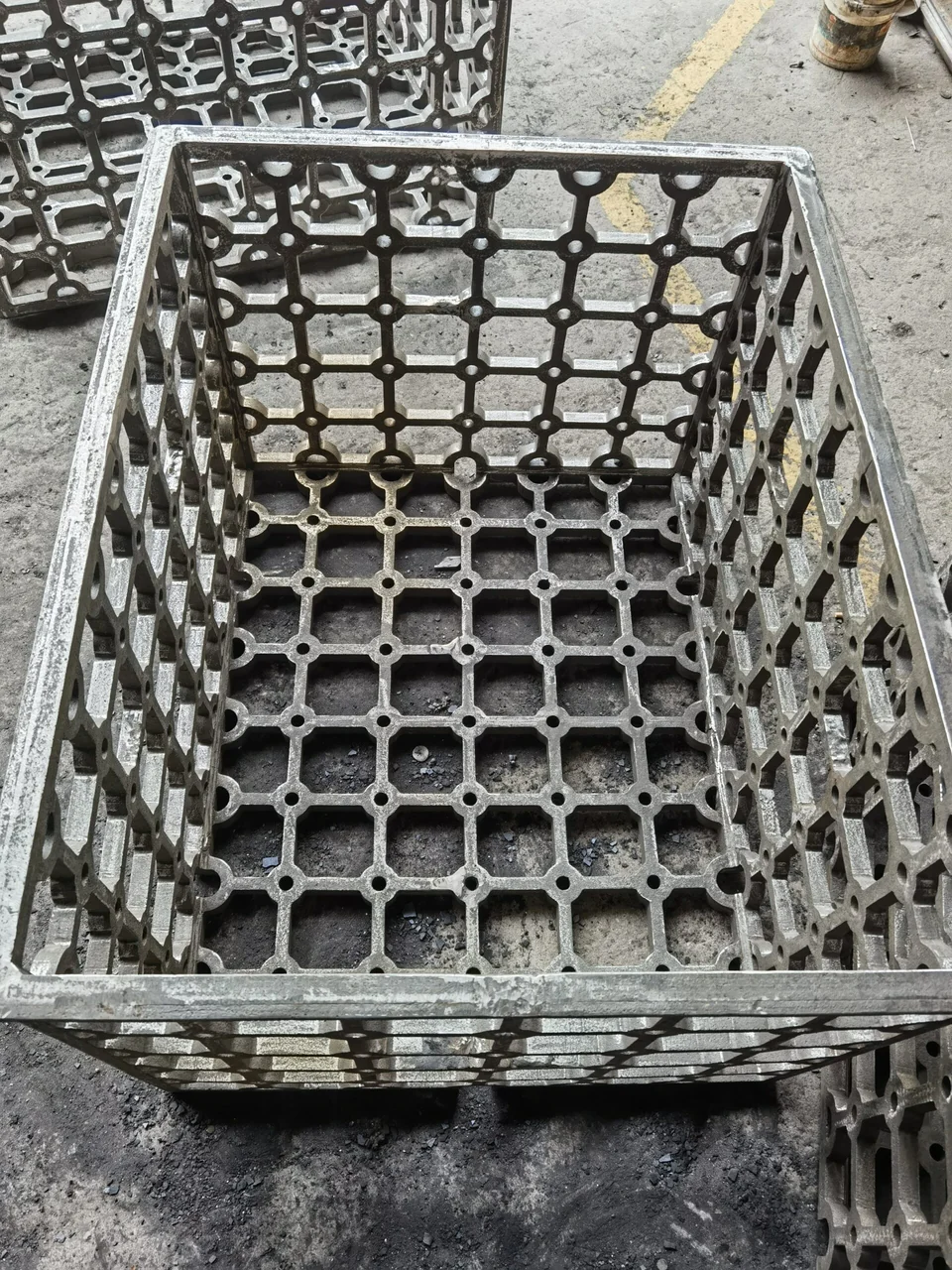
Deep rectangular furnace basket with honeycomb openings in the base and sidewalls. The open top and four raised sides distinguish it from the shallow basket designs.
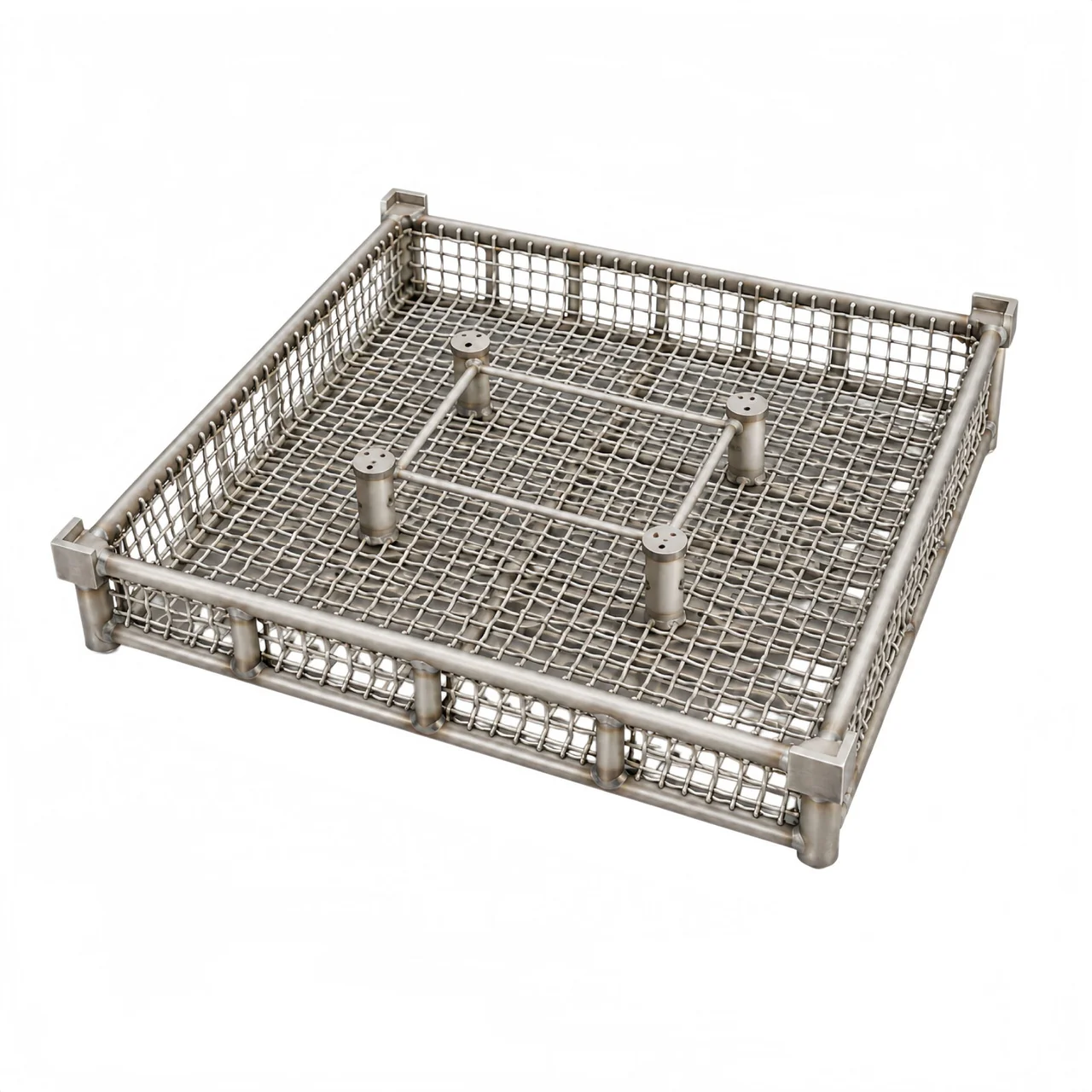
Brand: ECOOSUN
Quality Documents: See certificate details
Material: Grade and product form to be confirmed
Size: Customized According to Drawings
Frame Casting Process: Silica Sol Investment Casting
Maximum Operating Temperature: To be confirmed for the duty
MOQ: 2 Pieces
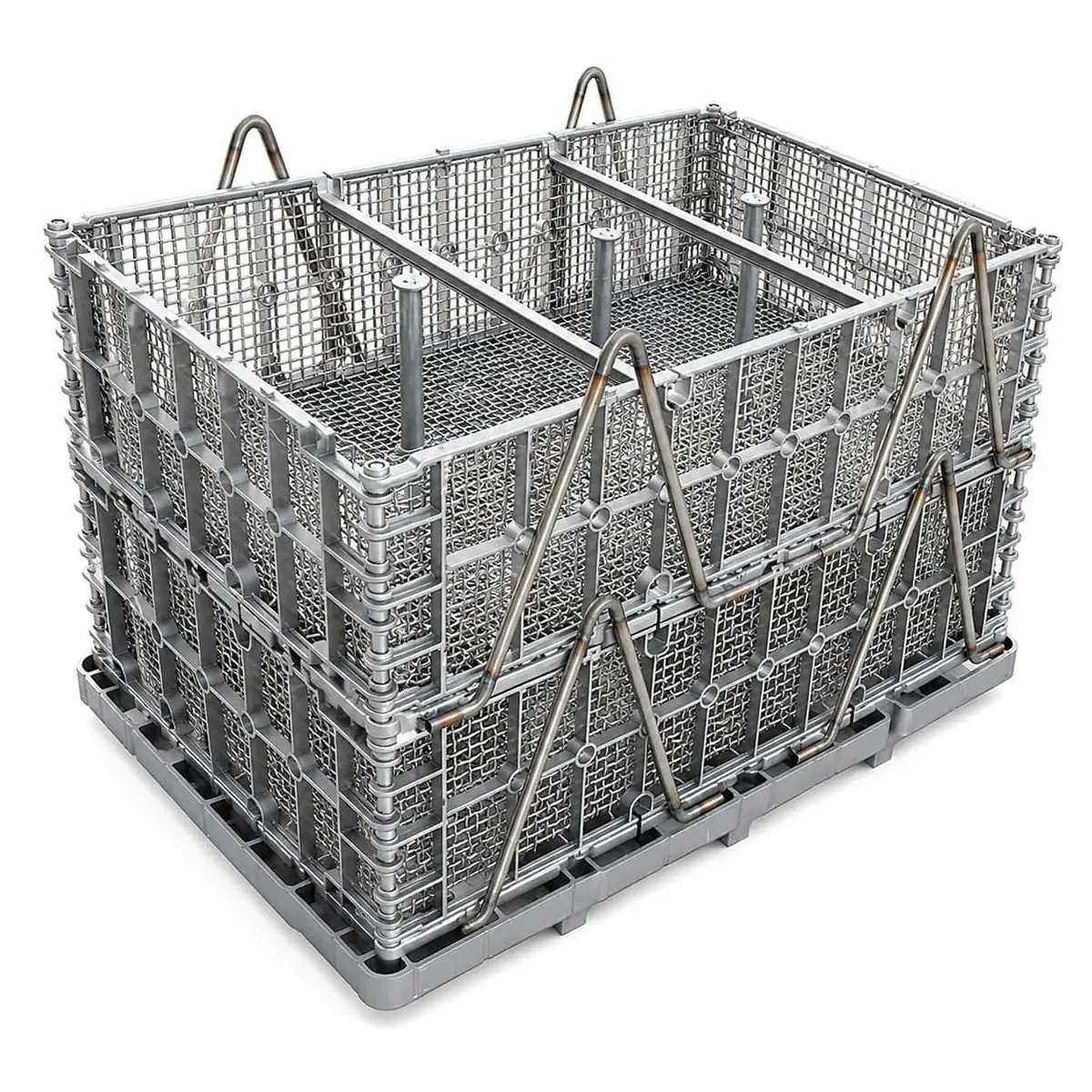
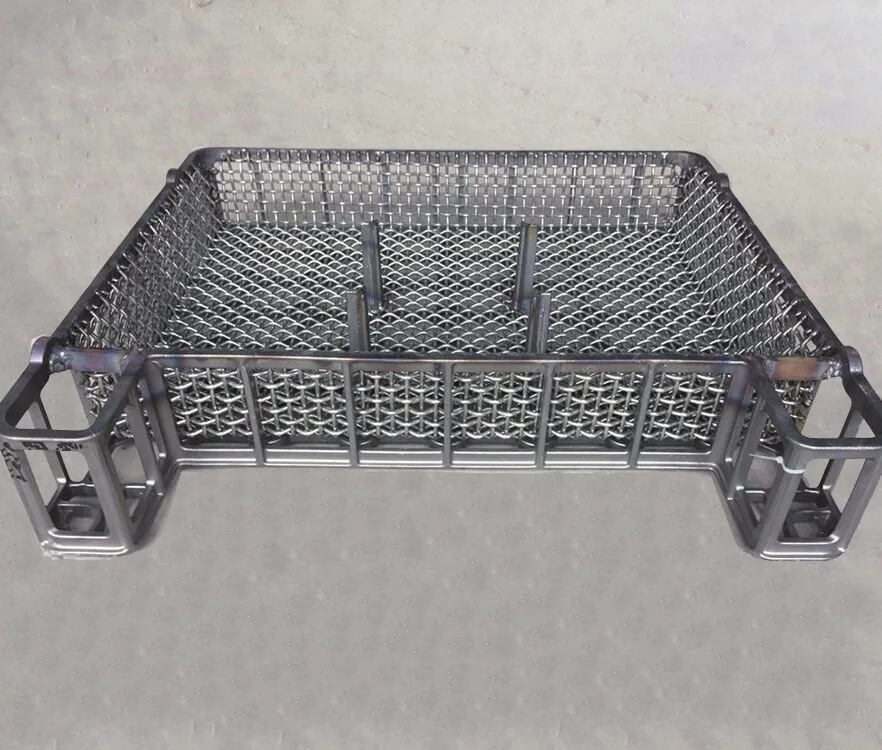
Square heat treatment basket with a cast frame, welded fine-mesh panels, raised corner posts and a central divider. Confirm mesh specification, attachment and liner or complete-basket supply; casting details apply to the frame.
Brand: ECOOSUN
Quality Documents: See certificate details
Material: Grade and product form to be confirmed
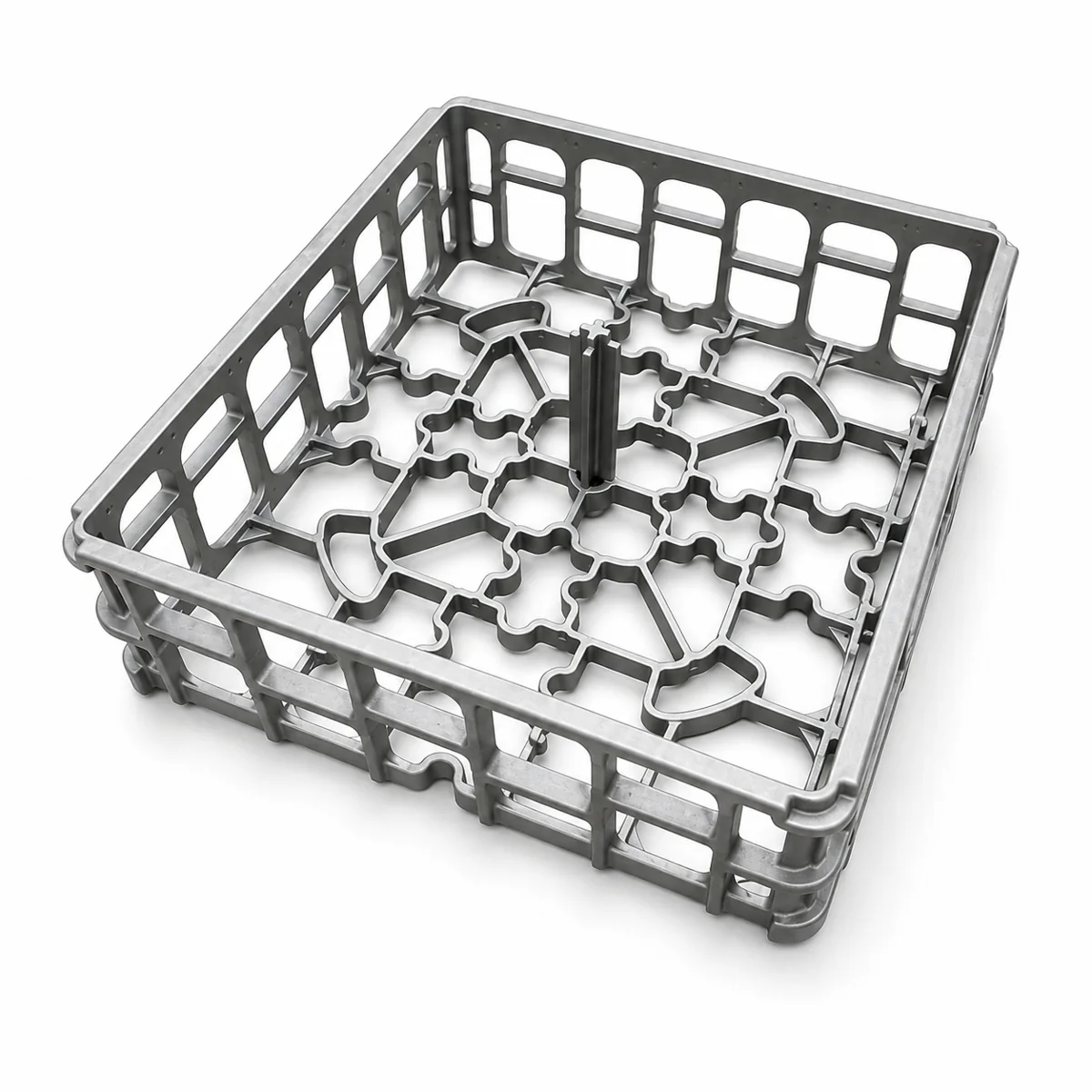
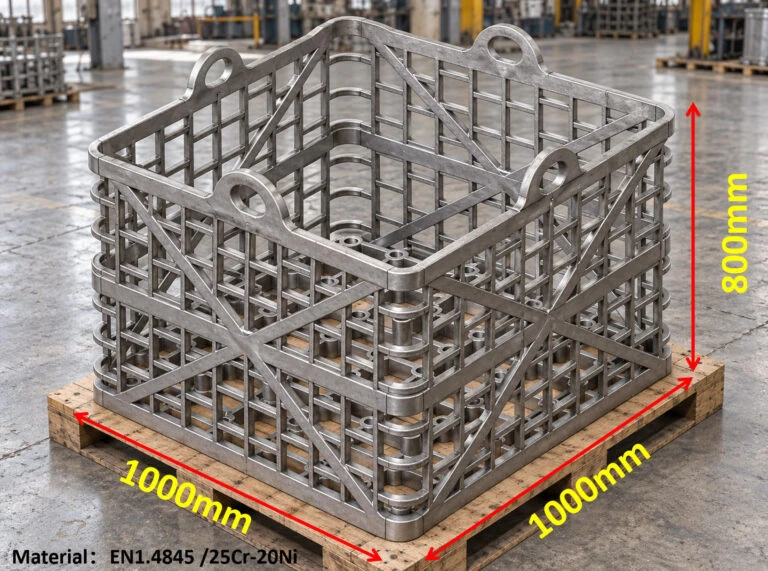
Size: 1000 × 1000 × 300 mm
Casting Process: Silica Sol Investment Casting
Maximum Operating Temperature: To be confirmed for the duty
MOQ: 4 Pieces
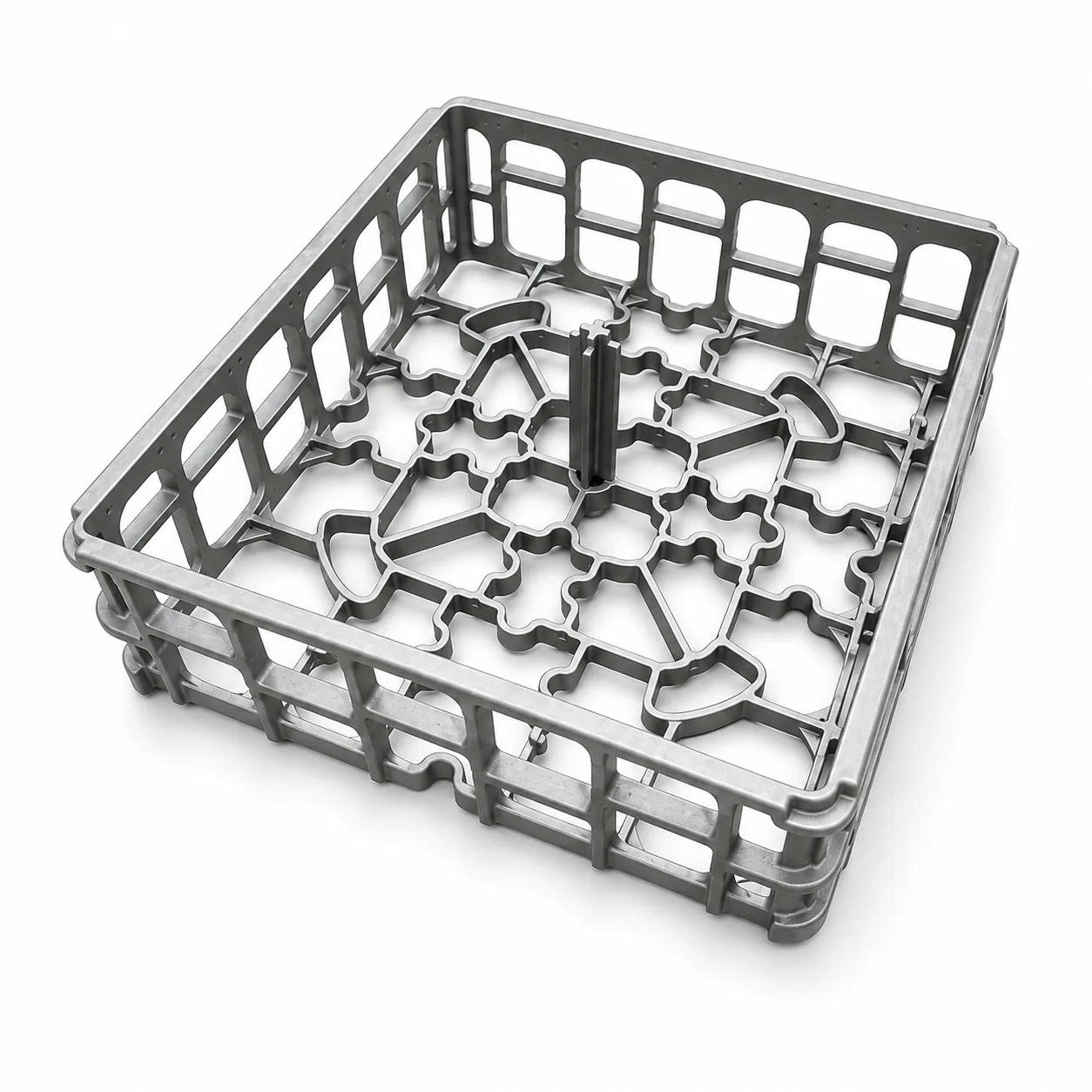
Open-grid furnace basket with raised sidewalls, a ribbed base and a central vertical locating post.
Brand: ECOOSUN
Quality Documents: See certificate details
Material: Grade and product form to be confirmed
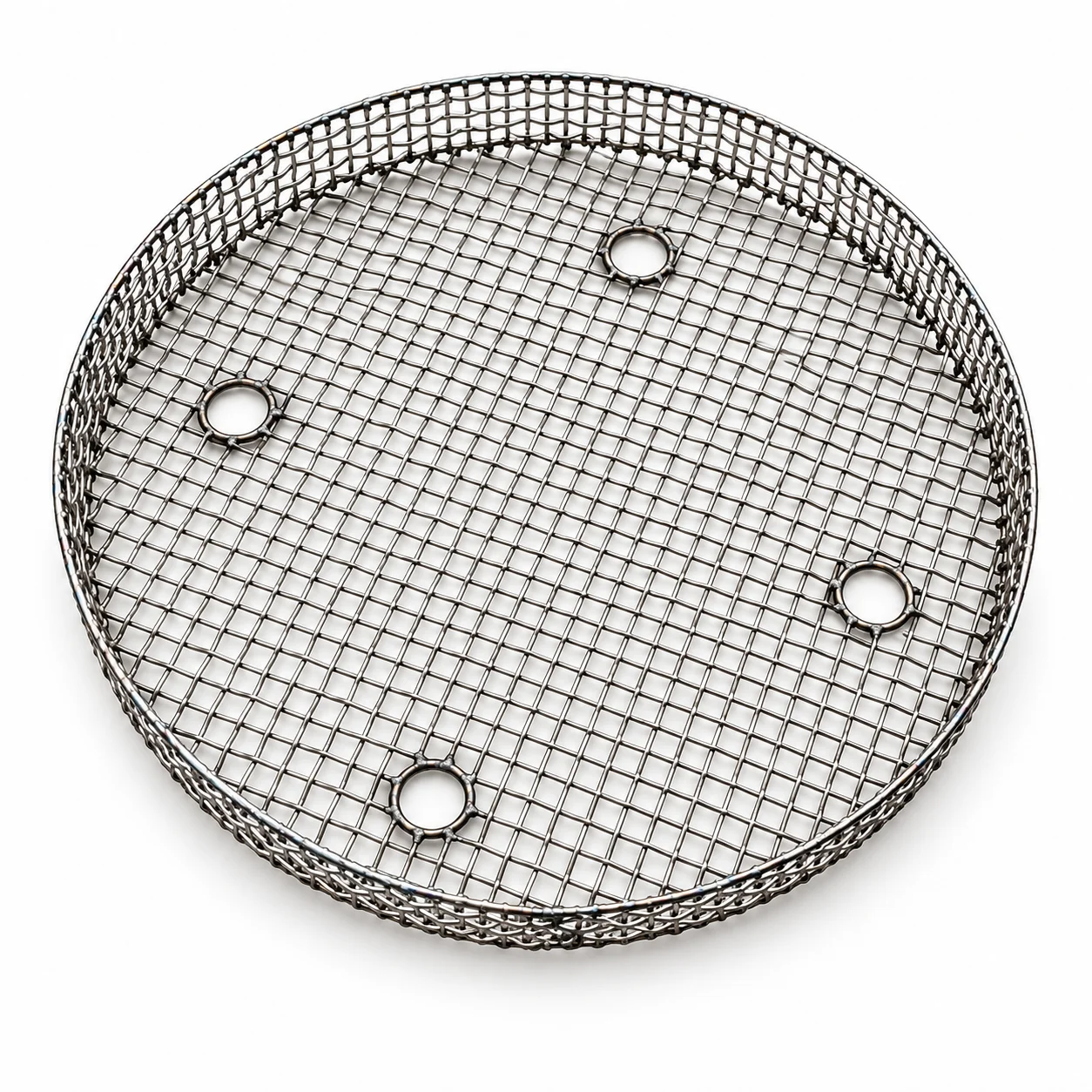
Size: Ø800 × 15 mm
Manufacturing Process: Welding
Maximum Operating Temperature: To be confirmed for the duty
MOQ: 4 Pieces
Shallow round charging basket made from welded wire mesh, with a raised rim and four circular openings in the base.
Brand: ECOOSUN
Quality Documents: See certificate details
Material: Grade and product form to be confirmed
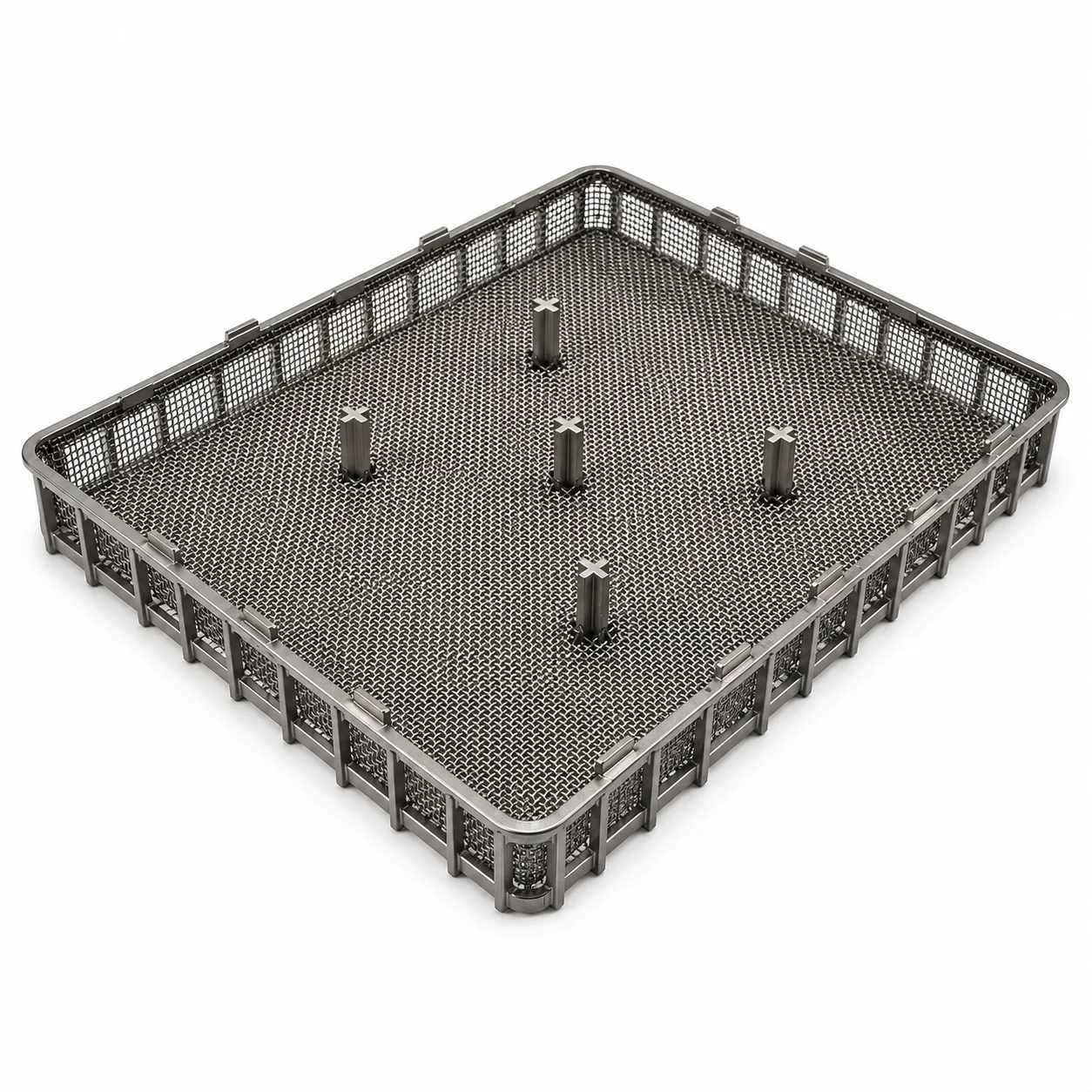
Size: 760 × 610 × 50 mm
Casting Process: Silica Sol Investment Casting
Maximum Operating Temperature: To be confirmed for the duty
MOQ: 6 Pieces
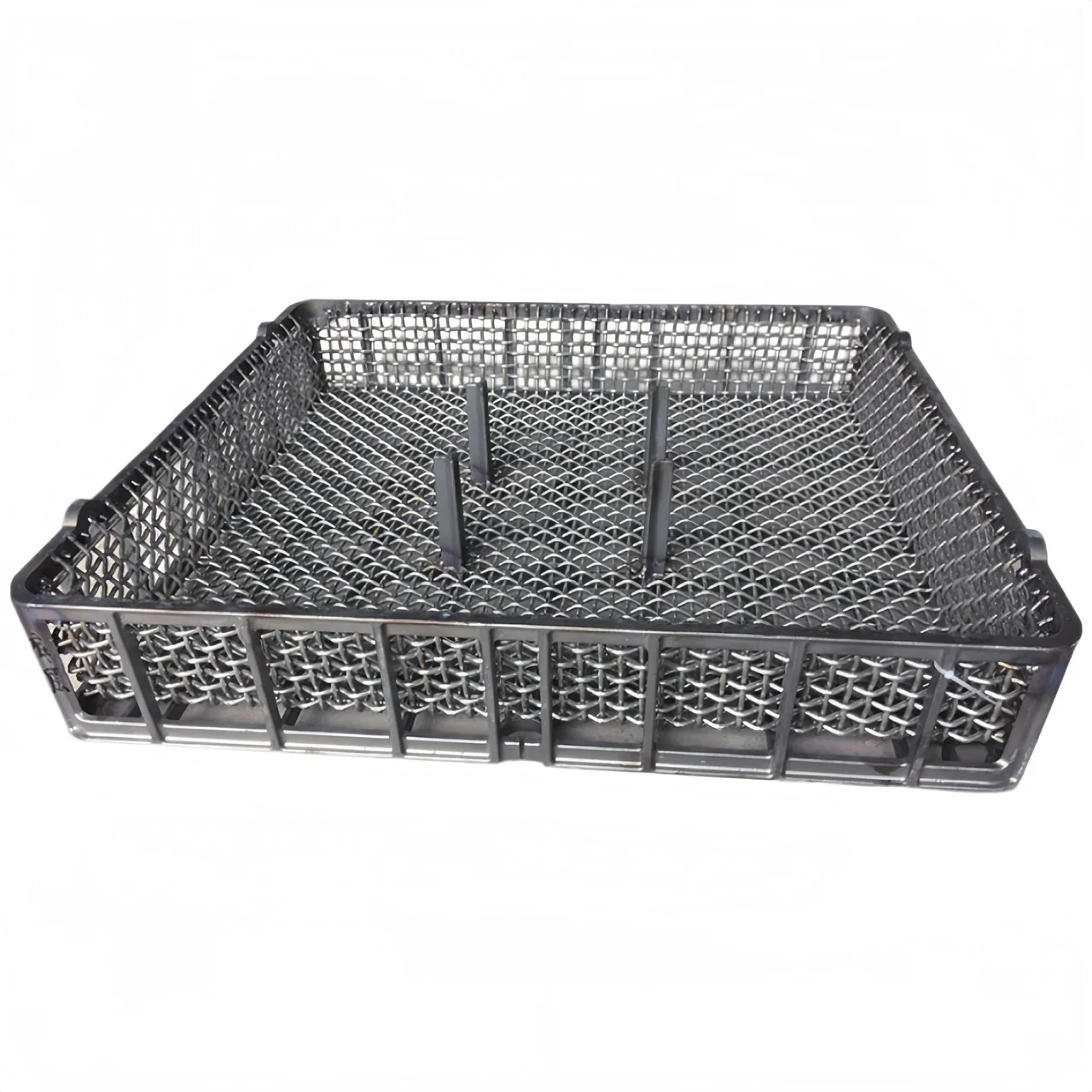
Rectangular fine-mesh basket with low sidewalls, a perimeter frame and several vertical locating posts across the base.
Brand: ECOOSUN
Quality Documents: See certificate details
Material: Grade and product form to be confirmed
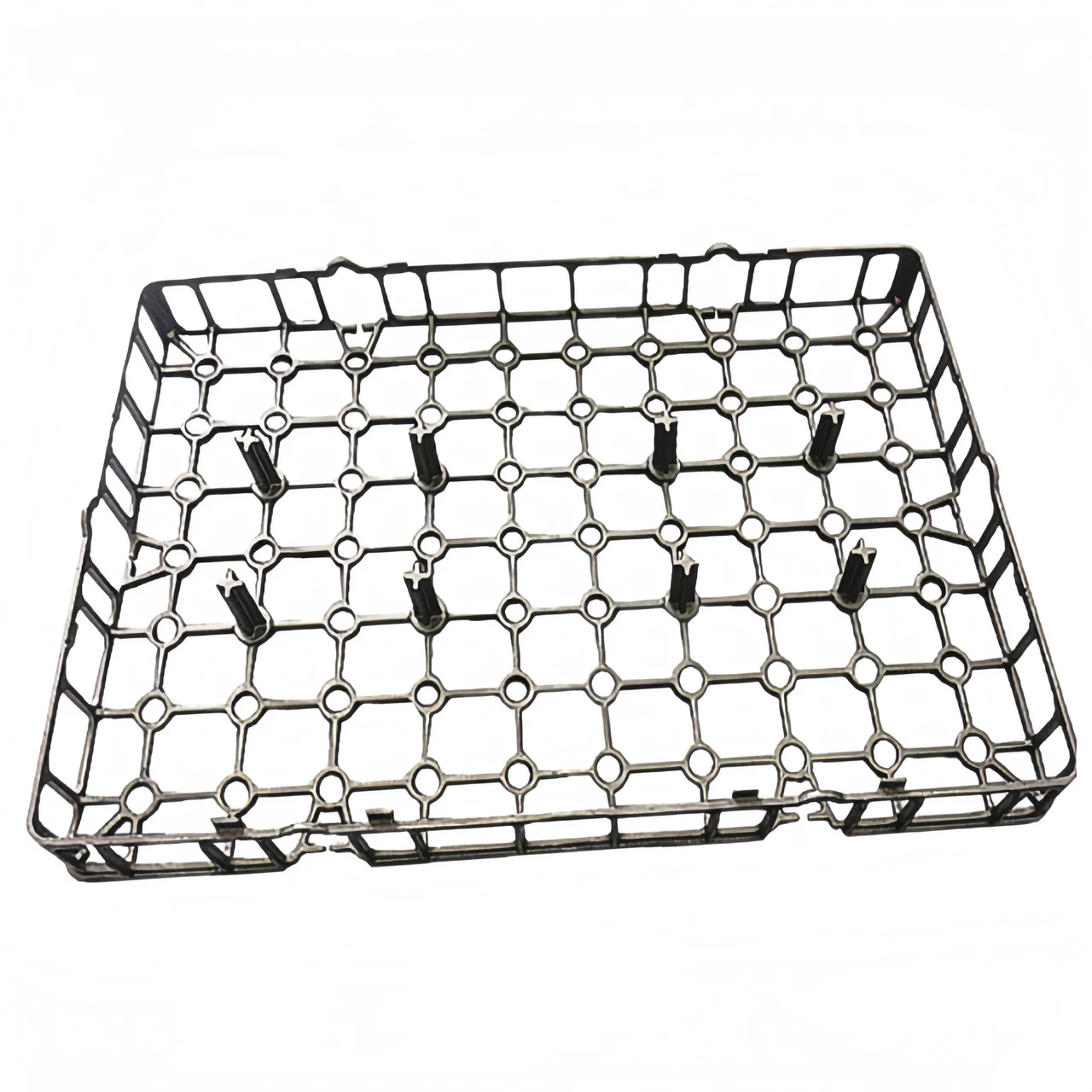
Size: 760 × 1200 × 30 mm
Casting Process: Silica Sol Investment Casting
Maximum Operating Temperature: To be confirmed for the duty
MOQ: 4 Pieces
Shallow rectangular heat treatment basket with an open-grid base, a low perimeter frame and short projecting locating posts.
Brand: ECOOSUN
Quality Documents: See certificate details
Material: Grade and product form to be confirmed
Size: Customized According to Drawings
Casting Process: Lost Foam Casting
Maximum Operating Temperature: To be confirmed for the duty
MOQ: 1 Piece
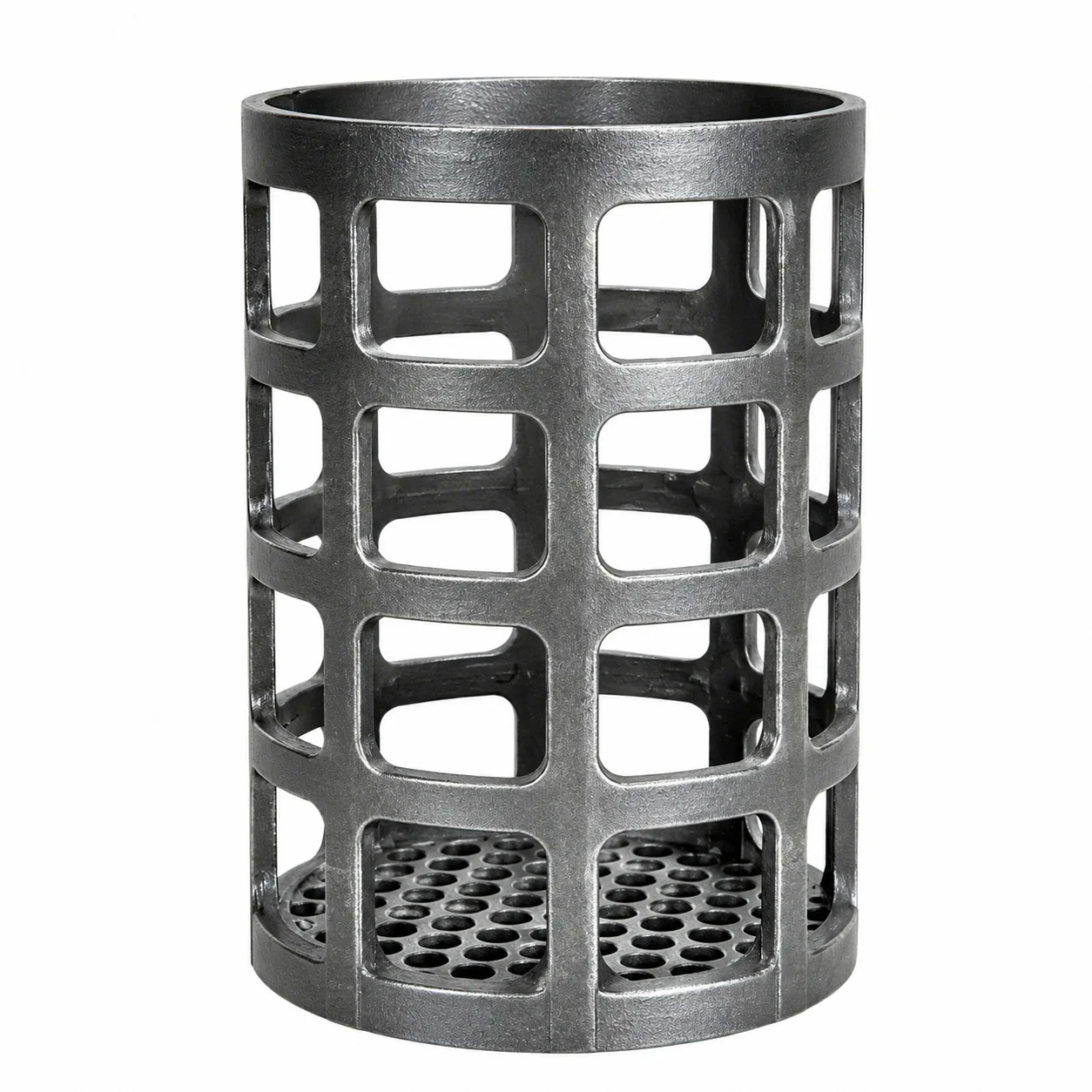
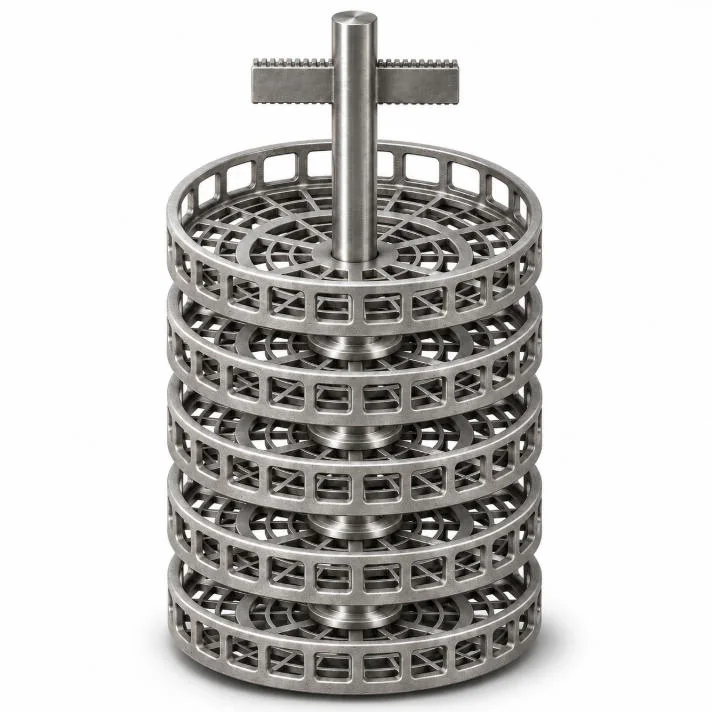
Tall cylindrical heat treatment basket with an open top, rectangular sidewall openings and a perforated base.
When an inquiry starts with an old basket photograph, I ask six practical questions. What type of furnace is it? What internal space is available? How small is the smallest workpiece and how large is the largest? What temperature does the furnace normally run at? Which cooling medium is used: water, oil, salt or something else? Finally, what weight must the basket carry, and is there a load figure we can review?
Then show how that load gets in. Those questions give the photograph a working context before we try to define charging baskets from its outline.
A box furnace may use a forklift, a pusher furnace a ram, and a pit furnace an overhead loader. Those examples help start the conversation; the furnace name alone does not define the approach direction or restraints. Show the installed loader, supporting surfaces and transfer sequence.
On one pusher-furnace job, a basket jammed halfway in. There was 6 mm of buildup on the hearth rail, and the basket dimensions had changed by 12 mm from the drawing. Both observations belonged in the fit review. The dimensional change was not a general expansion allowance, and the deposits were not something a new outside dimension alone could resolve. Show the push contact, lower supports, equipment condition and operating temperature so the technical team can review the actual interference and load cases.
For an overhead-loaded arrangement, show both the lift and the in-furnace support. Their contacts and load sharing may differ. For vacuum service, ask the equipment team about coatings, lubricant residues and enclosed volumes. Their acceptability depends on the materials, cleanliness, venting and vacuum cycle; do not approve them from an outside photograph.
Tell me the furnace type, the usable internal dimensions, the load support, and the handling equipment. Photographs of the hearth or the rails are worth more than a description.
Not the basket dimensions. The envelope.
Draw the maximum extents of the loaded assembly in each working position. Include handles, lid and projecting workpieces once, measured from the same references. Check width, height and length against the door, sill and transfer route separately. An accessory already included in the overall dimension should not be added again.
As a cold geometric example, a centered 750 mm basket in a 780 mm clear opening has 15 mm per side. Adding a 12 mm projection on each side makes the maximum width 774 mm, leaving 3 mm per side under those assumptions. That is a nominal clearance, not a recommended allowance or a manufacturing tolerance. Alignment, tolerances and relative hot movement still need assessment.
Show the envelope in each working position, then review the relevant hot condition. A surrounding frame can expand differently from the basket. Whether a particular gap opens or closes depends on materials, temperature histories, locating points and restraints.
These arrive as one question and they are not one question.
The smallest passing profile sets a retention requirement: openings, edge gaps and any lid. Structural review needs the load, its contacts, the supports and the handling conditions. The greatest total mass may govern one case while a lighter batch on narrow feet governs a local member. I want both cases visible before we settle the base, ribs or lift points.
Write both down separately. Smallest part, with its shape and the orientation it can escape in. Heaviest load, with its distribution: concentrated on four pads, spread across the floor, standing on a fixture, hanging from a post.
If a tall part is located on a post, show the lateral forces and contacts as well as its weight. Height alone does not establish a bending load. If batches vary, identify the demanding retention and structural cases rather than averaging them into one arrangement.
The crane does not lift your product. It lifts product, plus basket, plus posts, plus the fixture between them, plus whatever got left in the bottom.
Put the gross mass on the drawing and put the lift points next to it. Then check the rating of the equipment against the gross figure, not the payload.
For an example mass check, 320 kg of parts plus a 60 kg basket and 20 kg of tooling gives 400 kg gross. Equipment rated below that gross mass is not suitable for the proposed lift. The equipment review must also consider its applicable load position, attachments and operating limits.
For a stack, total mass is the sum of all assemblies and contents, even when their loads differ. The reactions at individual contacts depend on distribution and geometry. Show each level and the contacts transmitting its weight; do not confuse total mass with a uniform share at every support.
The seating faces decide whether the basket repeats.
Two rails, four pads and a separate locating post produce different support and positioning arrangements. Deposits, wear or distortion can affect any of them. Identify the intended contact surfaces and the checks needed to confirm seating, rather than assuming one layout always repeats perfectly.
Show seats, locators and stack contacts. State which directions each feature restrains and which movements it permits. A feature may locate in one direction while allowing sliding in another, so avoid a blanket instruction that every locator must prevent all movement.
If the basket must work on more than one furnace or carrier, send every relevant interface before the drawing is released. A later compatibility change can affect geometry, tooling and cost. Have it marked and reviewed rather than assuming the same outside size guarantees interchangeability.
Grade follows the whole working cycle. Peak temperature is only one input.
Send normal temperature, hold time, atmosphere, loaded mass and cooling method. Include the occasional more demanding recipe, such as a higher-temperature run or a longer hold, if it actually occurs. Label examples and actual operating records separately; a rare duty may still govern material or clearance requirements.
Creep and thermal fatigue can be relevant in heated service, alongside oxidation, corrosion, wear and handling damage. Sagging or a crack location alone does not diagnose the mechanism. Record the history and component specification so the technical review can consider the actual duty. Our alloy selection guide explains the inputs needed.
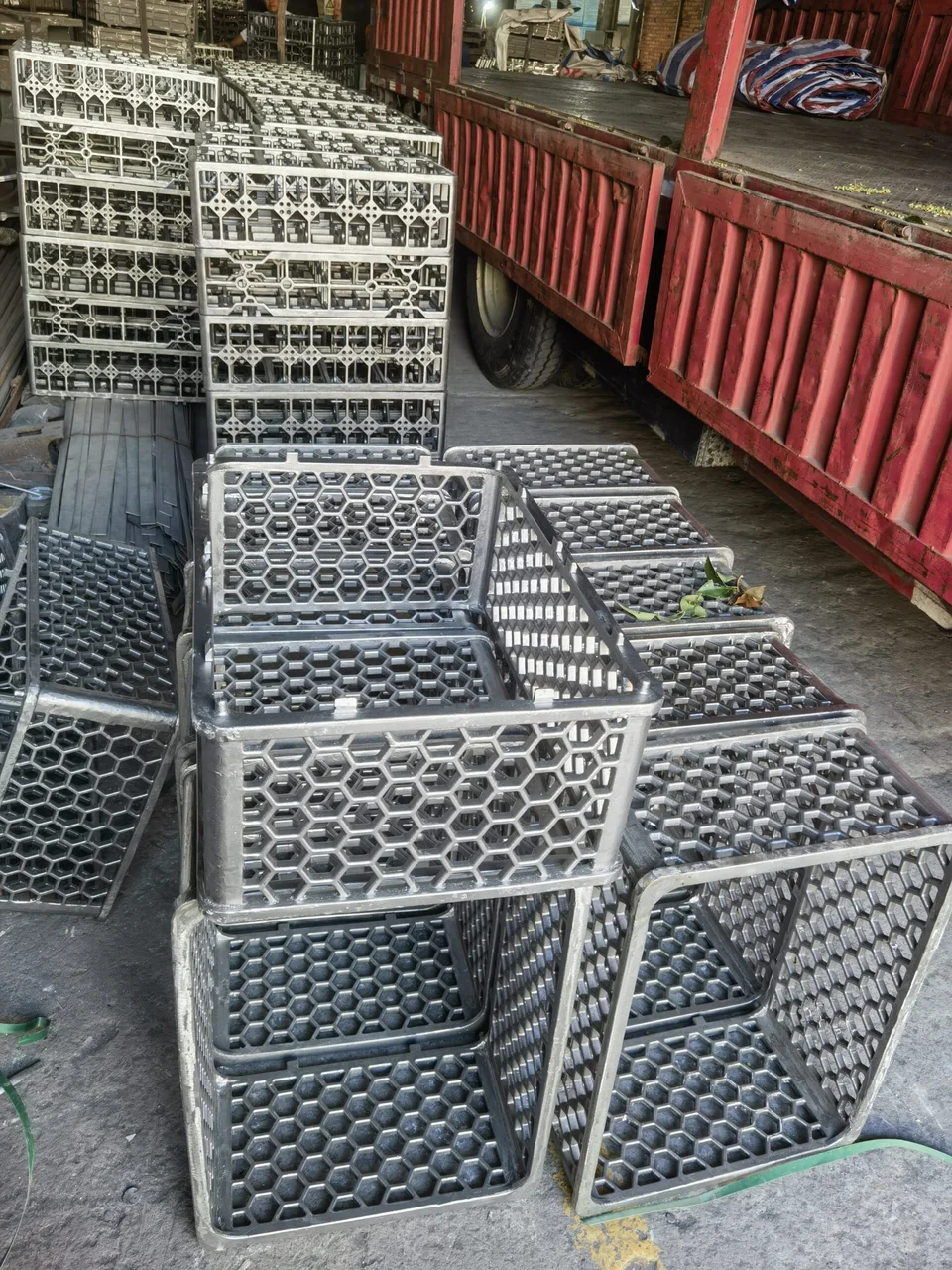
If the request is “make it like this one”, the most useful thing you can send is a set of measurements taken from the parts of the basket that are still straight.
A used charging basket is a record of its service. Check for a sagging base, leaning posts and worn seats, while identifying the features still sound enough to measure. If you copy a damaged interface without separating the intended geometry, the new drawing can inherit the distortion.
Take intended dimensions from sound features where possible, and keep measurements across bent areas separate and labelled. The worn-sample measurement guide explains the distinction. Our existing basket construction examples illustrate possible arrangements; the replacement still needs dimensions tied to your equipment interfaces.
Cold dimensions are the start of the review, not the end.
For an illustrative free-expansion check, assume a 900 mm length, an 800 K temperature rise and a constant mean expansion coefficient of 17 × 10⁻⁶/K. The calculated growth is 12.24 mm. This is a simplified dimensional calculation, not a product allowance: use the specified material data, temperature history and restraints for the real assembly.
Mark which interfaces locate in each direction and which permit movement. Agree the required clearances against the equipment and basket drawings. The dimensional proposal should record those decisions rather than asking fabrication to choose a thermal allowance from a general note.
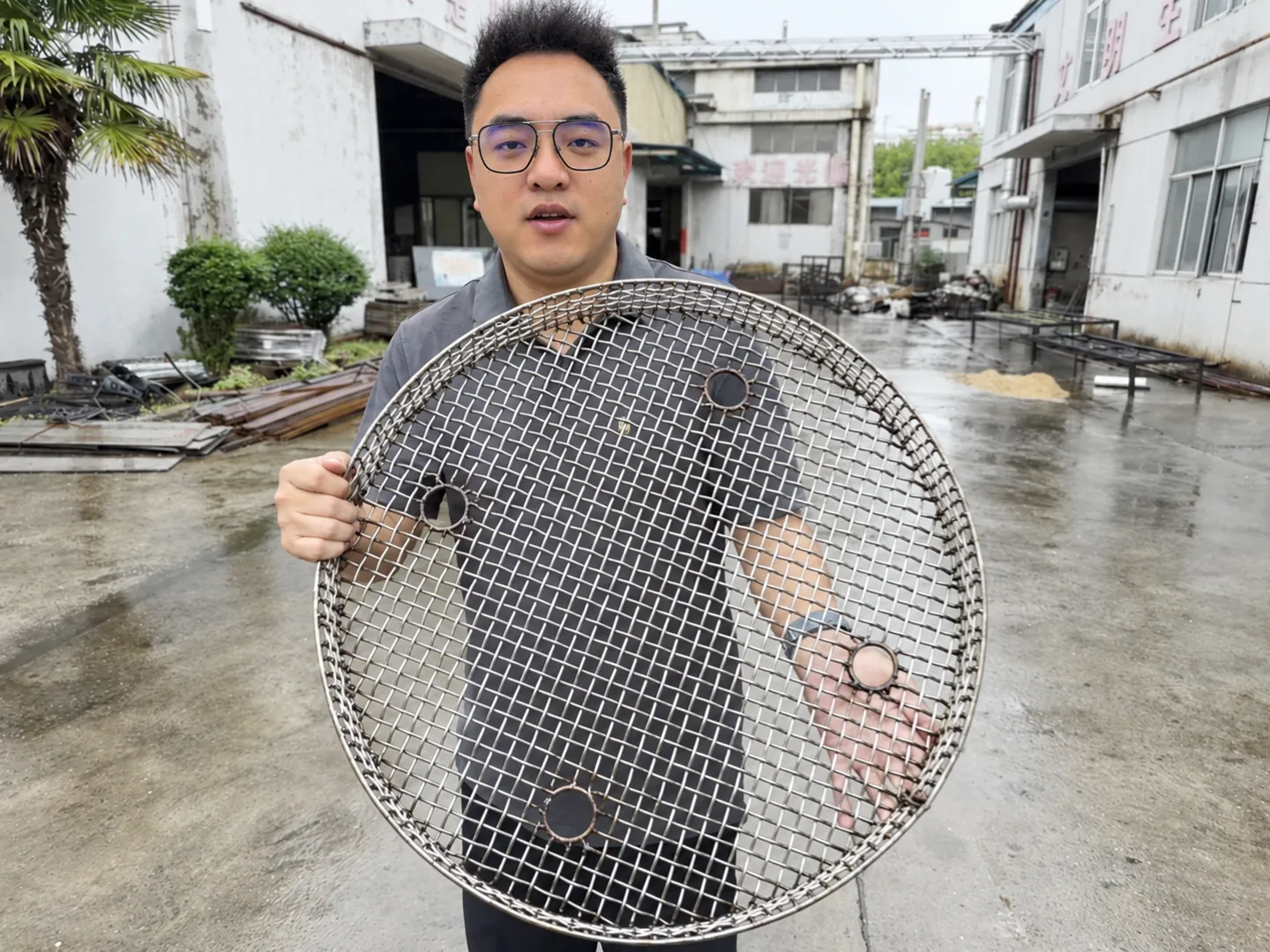
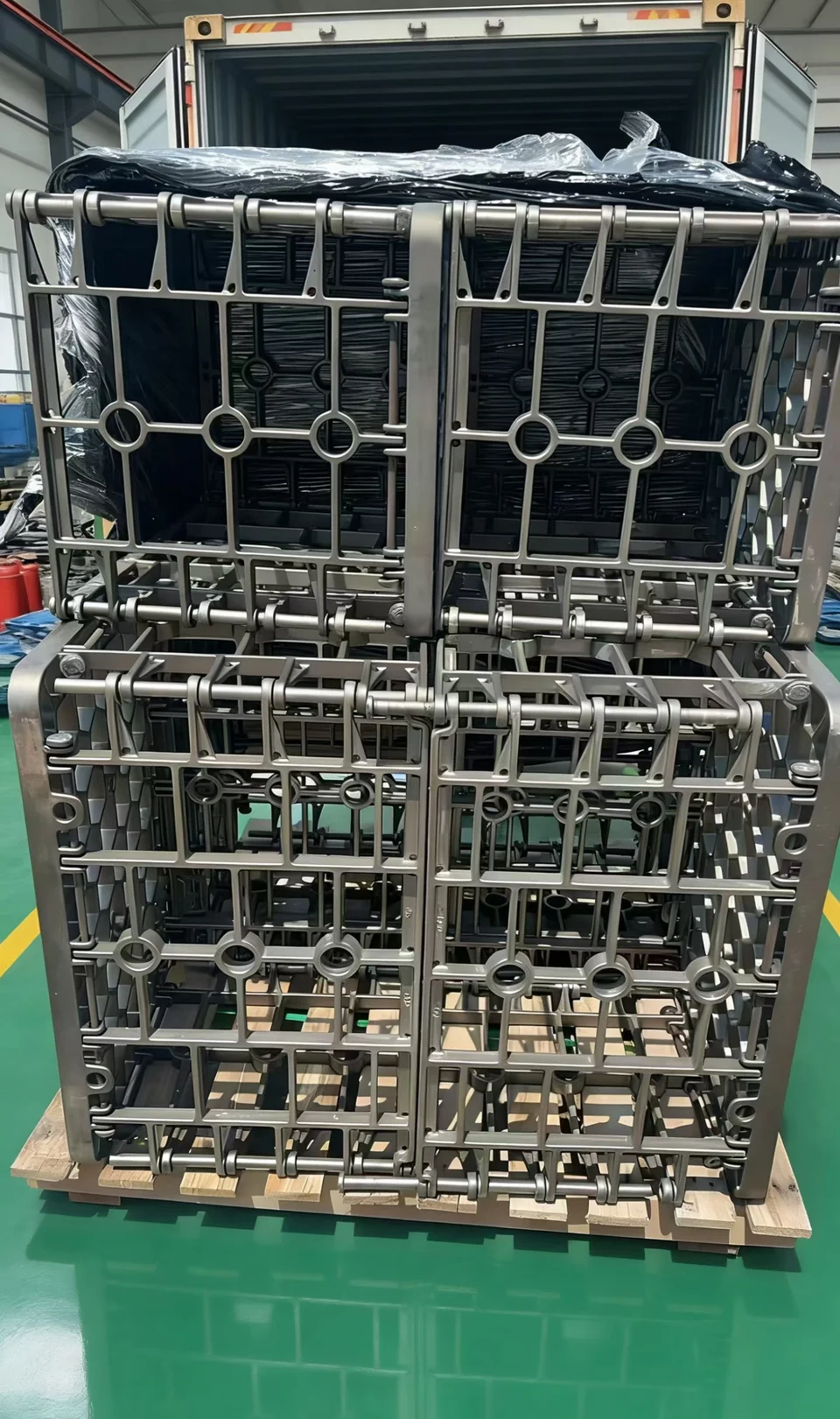
If one basket serves more than one part family, write down each loading arrangement rather than averaging them.
A full floor of small parts and four large castings can produce different contacts and retention requirements. Review each approved loading arrangement. A removable fixture may help serve both, provided its support, capture and identity are included in the design.
On an old basket, photograph fine cracks, more substantial deformation and any earlier repairs. Multiple cracks or serious distortion need assessment under the site’s inspection and removal rules because continued service can lead to failure. Include the actual support and loaded condition when describing what changed.
A darkened surface by itself does not establish structural condition or remaining life. Keep that observation separate from a measured seating problem or a crack. For the replacement drawing, use sound features where possible and label dimensions taken across distorted areas as found.
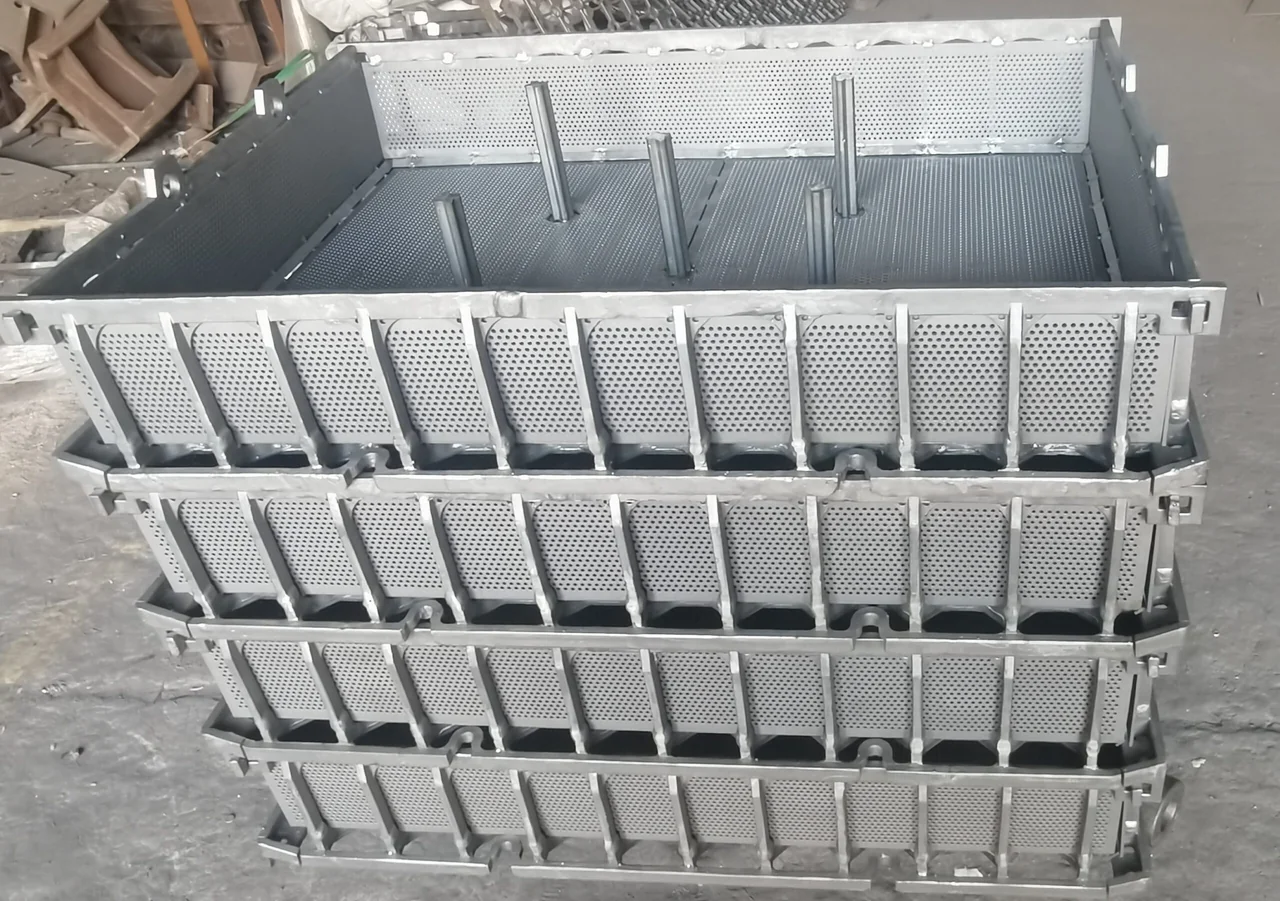
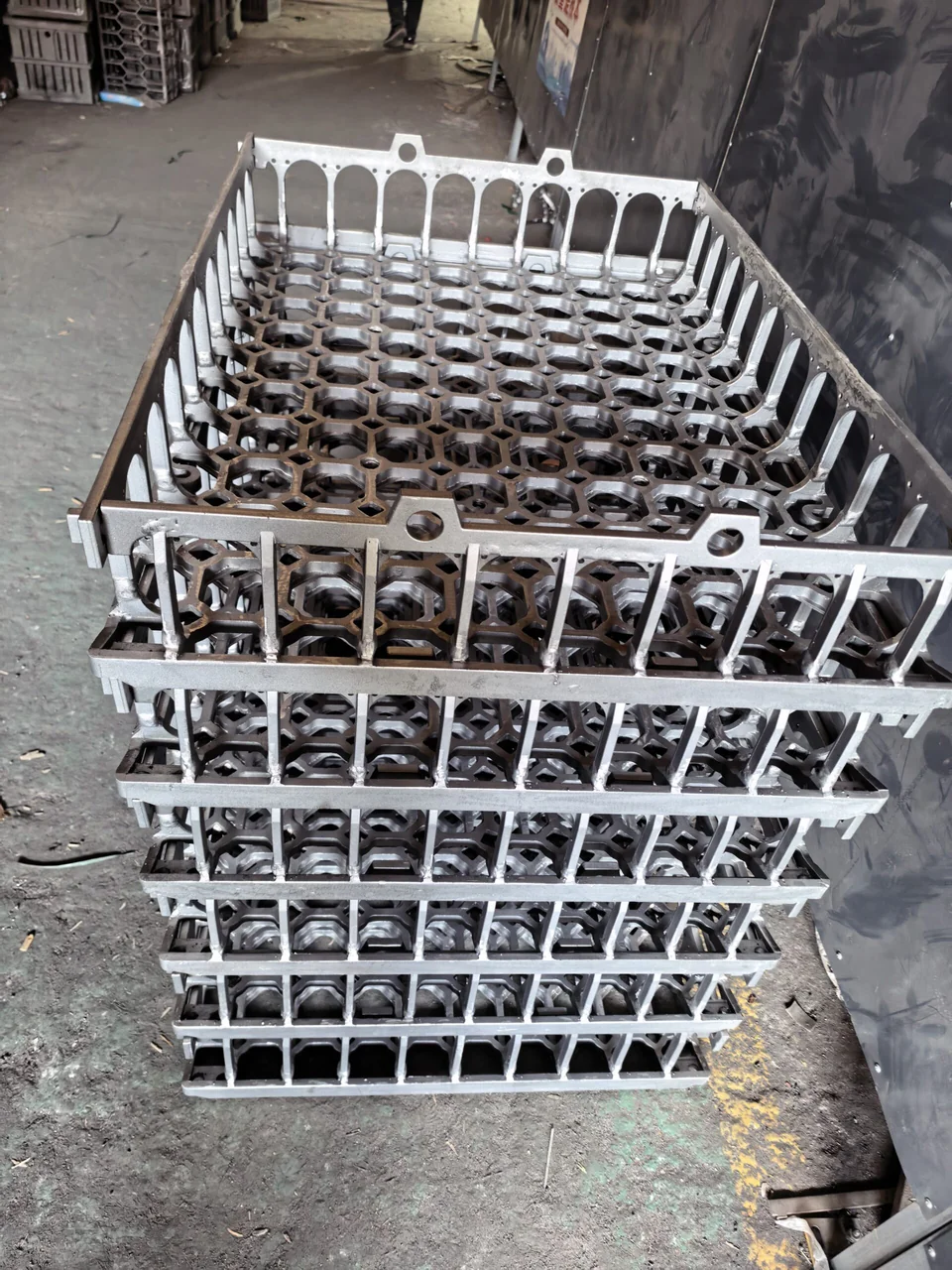
Furnace type and usable internal dimensions. A photograph of the hearth, rails or support. Loader or crane details. Smallest part, heaviest load and how it is distributed. Working temperature, hold time, atmosphere, cooling. Quantity, delivery date, and whether you need the basket, an insert, or both.
On-screen labels: Jonny | www.ecoosun.com
Jonny is shown outside the factory entrance. This short location introduction is not an order reference or an inspection record.
Manufacturing and quality evidence · Discuss your drawing and furnace conditions
Meet Jonny and the factory team behind ECOOSUN’s custom heat-resistant castings. Use the company facts and product evidence for the manufacturing scope.
Selected on-screen subtitle excerpts: I’m Jonny from ecoosun | we are a casting factory from Jiangsu | heat treatment basket trays fixtures | please contact me
A recorded office introduction connects Jonny and ECOOSUN with casting and heat-treatment components. These are excerpts from the burned-in English subtitles, not a new translation or a complete transcript.
Manufacturing and quality evidence · Discuss your drawing and furnace conditions
Hi, I’m Jonny, and I lead ECOOSUN’s international sales team. I’m here to help you find the right heat-resistant casting solution for your application. Whether you have detailed drawings or an initial idea, we can discuss your requirements and offer free design support.
You’ll work directly with me and our factory team throughout the process. Share your dimensions, operating conditions, and project priorities so we can help you explore suitable options. From your first inquiry to production planning, we focus on clear communication and practical support to help you move your project forward.
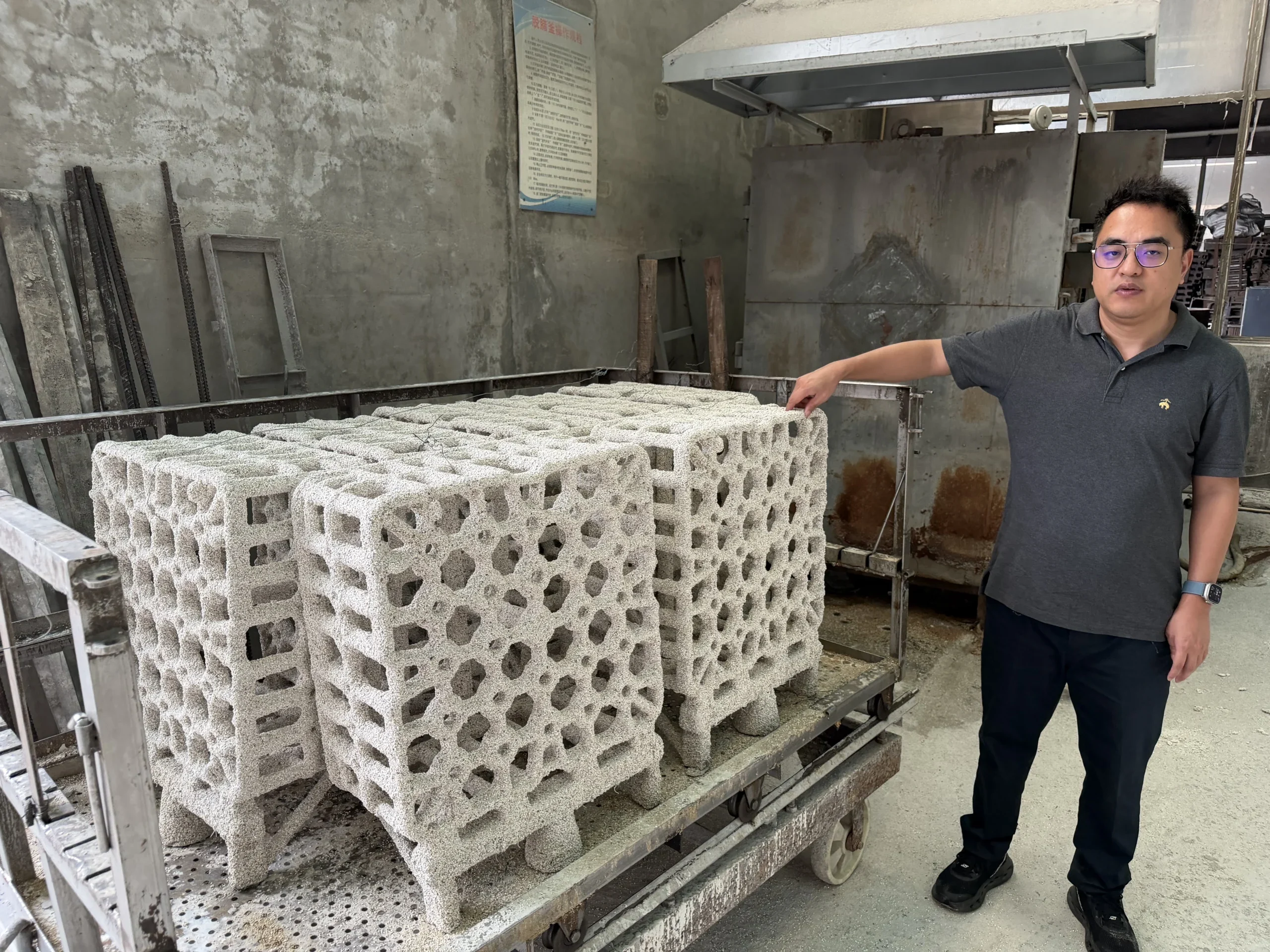
Unexpected equipment failures can interrupt production and increase operating costs. We support customers with fast manufacturing of replacement heat treatment furnace parts, helping reduce downtime and restore furnace operation as quickly as possible.
Whether your project involves emergency heat treat furnace repair, scheduled heat treat furnace service, or replacement vacuum furnace spare parts, our engineering and production teams respond quickly with accurate manufacturing, stable quality and reliable global delivery. Our goal is to keep your industrial furnace operating efficiently with minimal disruption.
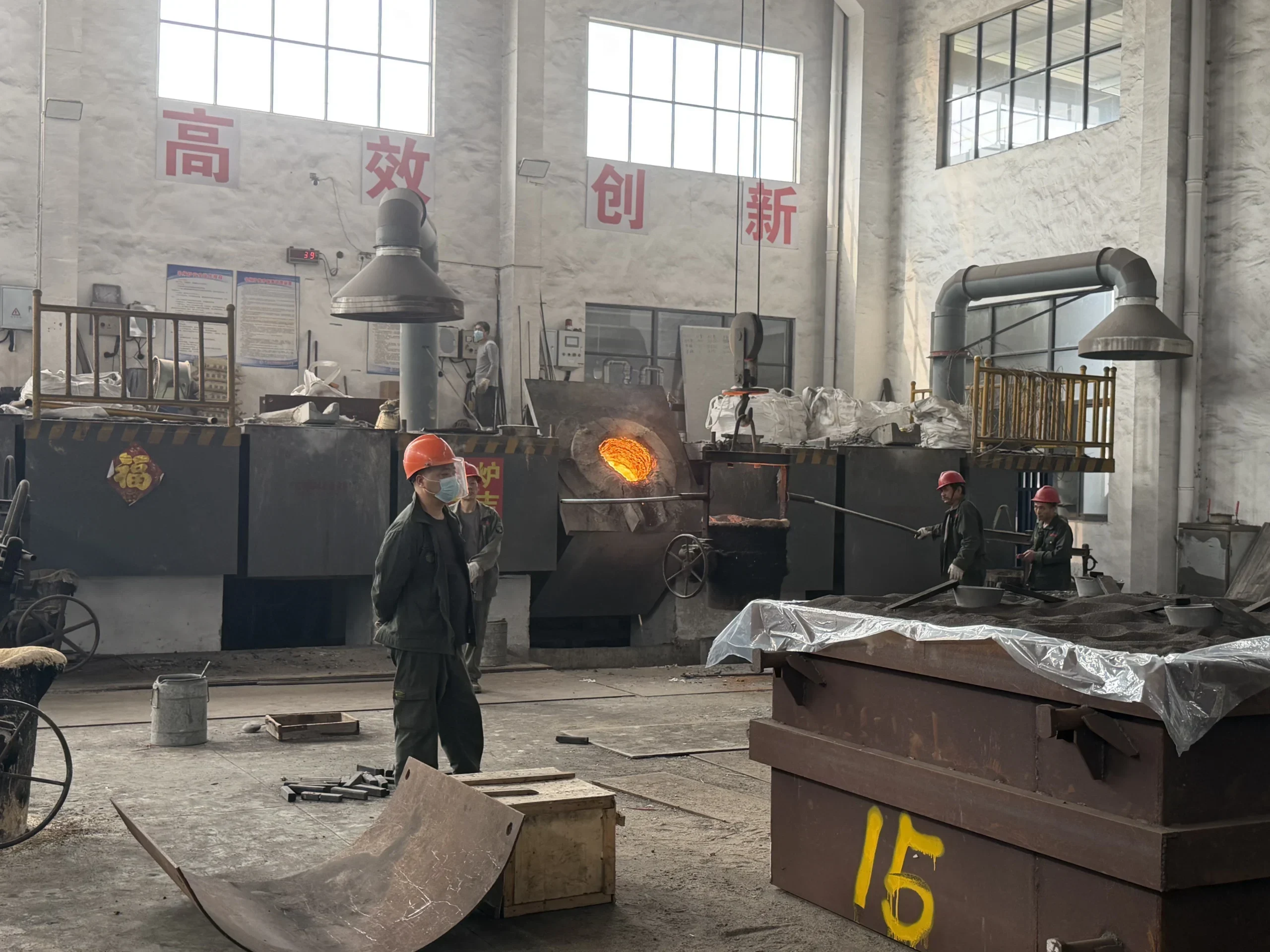
At ECOOSUN, we do more than manufacture heat treatment furnace parts. We work closely with heat treatment equipment manufacturers, commercial heat treaters, furnace maintenance companies and industrial users to solve real engineering challenges.
From material recommendations and casting process selection to structural optimization and failure analysis, our team provides practical support throughout the entire product lifecycle. Whether you need heat treatment baskets, heat treatment fixtures, heat resistant alloy components or custom industrial furnace parts, we are committed to delivering long-term value through engineering expertise, reliable manufacturing and responsive technical service.
On-screen process labels: ECOOSUN FACTORY | TRAY WAX PATTERNS | FRAME WAX PATTERNS | HAND FINISHING | COMPONENT WAX PATTERNS | BATCH PREPARATION
The footage shows tray and frame wax patterns, hand finishing and batch preparation. It documents visible workshop activity; material grade, finished dimensions and acceptance results require project records.
Manufacturing and quality evidence · Discuss your drawing and furnace conditions
Join Jonny in our workshop for a closer look at the wax patterns behind our castings. Discover how attention to shape and detail begins long before the finished heat-resistant component takes form.
On-screen website label: www.ecoosun.com
Jonny walks through stacks of semi-finished cast components and shows frames and grid structures. The footage is a manufacturing overview, not proof of a particular customer delivery or certified test result.
Manufacturing and quality evidence · Discuss your drawing and furnace conditions
Join Jonny in ECOOSUN’s workshop to explore a variety of semi-finished heat-resistant castings. From baskets and trays to other furnace components, see the different shapes and designs taking form before final finishing.
Metal pouring, operators at work and physical tooling appear in alternating scenes. Step onto the casting floor and see the manufacturing work behind heat treatment tooling.
Molten metal flows into the mould as workers coordinate the pouring operation. Close-up footage captures their movements and teamwork, offering a direct view of working conditions on the casting floor.
Cutting, joining, adhesive bonding and hand trimming reveal the practical steps involved in pattern making. Close-up views of tools and workpieces bring the manufacturing details into clear focus.
Dipping, turning, slurry draining and shell handling show workers interacting directly with the materials. These scenes capture the hands-on movements and preparation details that take place before casting.
Equipment, workstations and physical patterns appear together, highlighting openings, supports and overall profiles. These views help customers see the structural details and workshop preparations behind the manufacturing process.
Pattern supports, hand joining and basket welding bring the camera close to component connections. The footage highlights assembly details and shows how individual parts come together during tooling manufacture.
Two-person finishing, group handling and coordinated work at individual stations show daily life in the factory. Real people and specific tasks introduce the team working behind the products.
Machine tools, conveyors and operating stations appear alongside metal components. Together, these scenes show the working environment for casting processing and provide close-up views of the parts and their surfaces.
Red-hot components, water immersion and grinding show metal at different stages of manufacture. These scenes make hot operations and subsequent finishing work easier to see and understand.
Pattern preparation, teamwork and metal pouring offer a view of daily workshop activity. Moving between workstations, the footage shows the manufacturing tasks taking place across the shop floor.
Batches of products, tooling structures and packaging show how items are prepared and stored on site. These views help buyers understand product forms and storage arrangements more directly.
Pouring, finishing, packaging and truck-loading scenes connect different stages of work. Customers can see manufacturing operations alongside the practical tasks involved in packaging products and preparing them for shipment.
We start with furnace type and usable internal dimensions, then the loader, supports and transfer route. Send the smallest and largest workpieces, supported load, working temperature and cooling medium. A basket photograph is useful once those operating details give it a context.
We need the loaded envelope, alignment, tolerances and relative hot movement of the basket and surrounding equipment. There is no one allowance for every furnace. Mark locating and sliding interfaces, and agree the required clearances with the responsible equipment team on the drawing.
Yes. Handling review uses gross mass: workpieces, basket, inserts, posts and other carried tooling. We also need the load position and equipment configuration. A payload figure alone does not establish whether a loader or crane is suitable for the complete assembly.
Send each loading arrangement. We review the demanding retention case separately from the structural case. A mesh liner or removable fixture may be considered, but its support, capture, usable-space effect and identification must be included in the approved setup.
Do not assume interchangeability from the drawing outline. We need each furnace cycle, materials, cleanliness requirements and equipment interfaces. For vacuum service, have the equipment team review residues, enclosed volumes and venting as applicable before the construction is approved.
Mark the seating faces, rails or pads, locating features and contacts between stacked levels. Show which directions they restrain and which movements they permit. We need the complete assembly arrangement to review load transfer and repeatable positioning.
The basket may pass through cooling while loaded, so the medium and transfer sequence belong in the material and construction review. Include the actual cooling conditions and any following cleaning stage. Do not describe furnace temperature without the rest of the operating cycle.
Photos can start the review, especially views of the underside and equipment contacts. We still need measurements from sound features and clear identification of worn or bent areas. The replacement drawing should separate intended dimensions from the old basket’s damaged shape.
Agree cold dimensional and equipment-fit checks, followed by any controlled loaded and hot trials your plant requires. Use the intended supports, loader and workpieces. Keep the accepted revision with the recorded results and any permitted changes.
Send the drawing revision, furnace and loader details, loaded layout, gross mass, materials, thermal cycle and quantity. Identify critical interfaces and required records. Ask for tooling, complete units, liners and spare fittings separately so the quoted supply and acceptance scope are clear.
| Line | Detail |
|---|---|
| Geometry | Envelope in every working position, hot and cold |
| Structure | Base, ribs, posts, lift points, stack contacts |
| Seating | Locating faces, supporting faces, tolerances |
| Material | Grade per component, standard, product form |
| Records | MTR, dimensional report, inspection scope |
| Scope | Tooling, complete units, spares, delivery terms |
Agree on cold dimensional and equipment-fit checks first. The plant and responsible equipment team can then define controlled loaded and hot trials, including acceptance criteria. Use the intended route and supports; do not treat simply running a new unit through a hot cycle as an adequate verification plan.
Keep the approved drawing revision with the trial results. Our manufacturing and quality evidence covers what the production side records.

 +44 7419 144346