
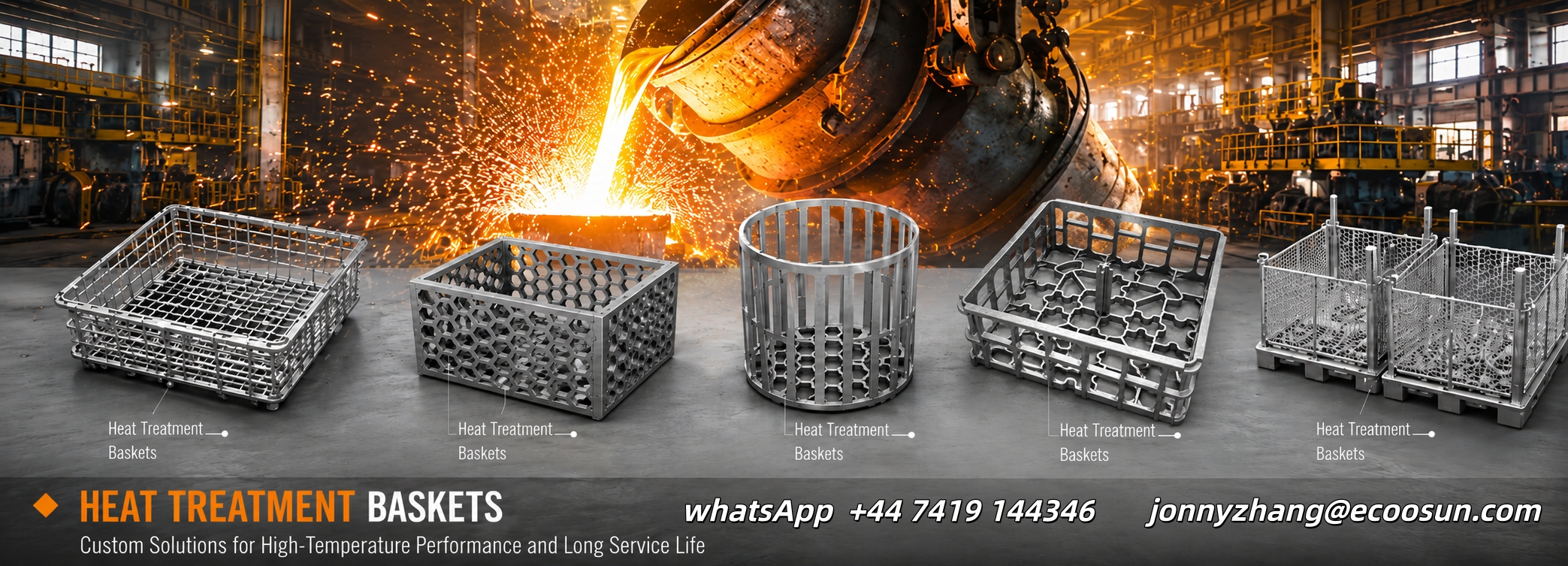
Furnace Baskets: Check Door Clearance at Pickup Height
ECOOSUN supplies custom furnace baskets from customer drawings or reviewed samples. ECOOSUN is the overseas operating brand of Xinghua Hengxin Machinery Co., Ltd., a heat-resistant steel casting manufacturer established in June 2005 in Xinghua, Jiangsu, China. Review our product and manufacturing evidence alongside the official company facts when evaluating the supplier.
For the complete product-family and quotation scope, see the main heat treatment baskets manufacturer page. This page focuses on furnace-door, carrier and transfer fit.
For replacement furnace baskets, check the door clearance with the basket at pickup height. If the old basket catches during transfer, look for the contact mark with the equipment safely out of operation. High on a corner? Check the opening with the forks supporting the basket. Under a foot? Start at the threshold. A mark that runs the length of a guide tells us where the rubbing continued. A mark only at the entry gives us a more specific place to measure.
A basket sitting on the charging car can have enough room above it. As soon as the forks lift it off the car, some of that room goes away. Provide a side view with the basket shown at pickup height. If it goes through another opening on its way out, mark that separately. The smallest opening on paper may be somewhere the basket passes at a different height.
For related loading arrangements, see: Cast Baskets · Heat Treat Furnace Baskets · Stainless Steel Mesh Baskets
Download ECOOSUN’s Detailed Company Profile and Product Overview (PDF)
On that sketch, show the clear width and height at each opening and the top of the load while the forks have it. Draw the handle or workpiece above the rim if either sticks out. Below the basket, put the car stop and the point where the first foot reaches the rail. How far apart are those two support surfaces, and how high is each one with the car stopped? If maintenance has a reference they use when setting the rails, put it on the sketch. They’ll have somewhere to measure from when the first piece arrives.
Door and carrier fit are only part of the specification. For hot-load support, holding time, atmosphere and cooling, see our high temperature baskets duty-review guide.
Compare Furnace Basket Configurations
Compare these basket constructions by the surfaces that seat on the carrier, their maximum handling envelope and the lifting or stacking interfaces. Use the furnace-door and transfer arrangement to decide which example is relevant; a similar outside shape does not establish fit.
Brand: ECOOSUN
Quality Documents: See certificate details
Material: Grade and product form to be confirmed
Size: Customized According to Drawings
Casting Process: Silica Sol Investment Casting
Maximum Operating Temperature: To be confirmed for the duty
MOQ: 4 Pieces
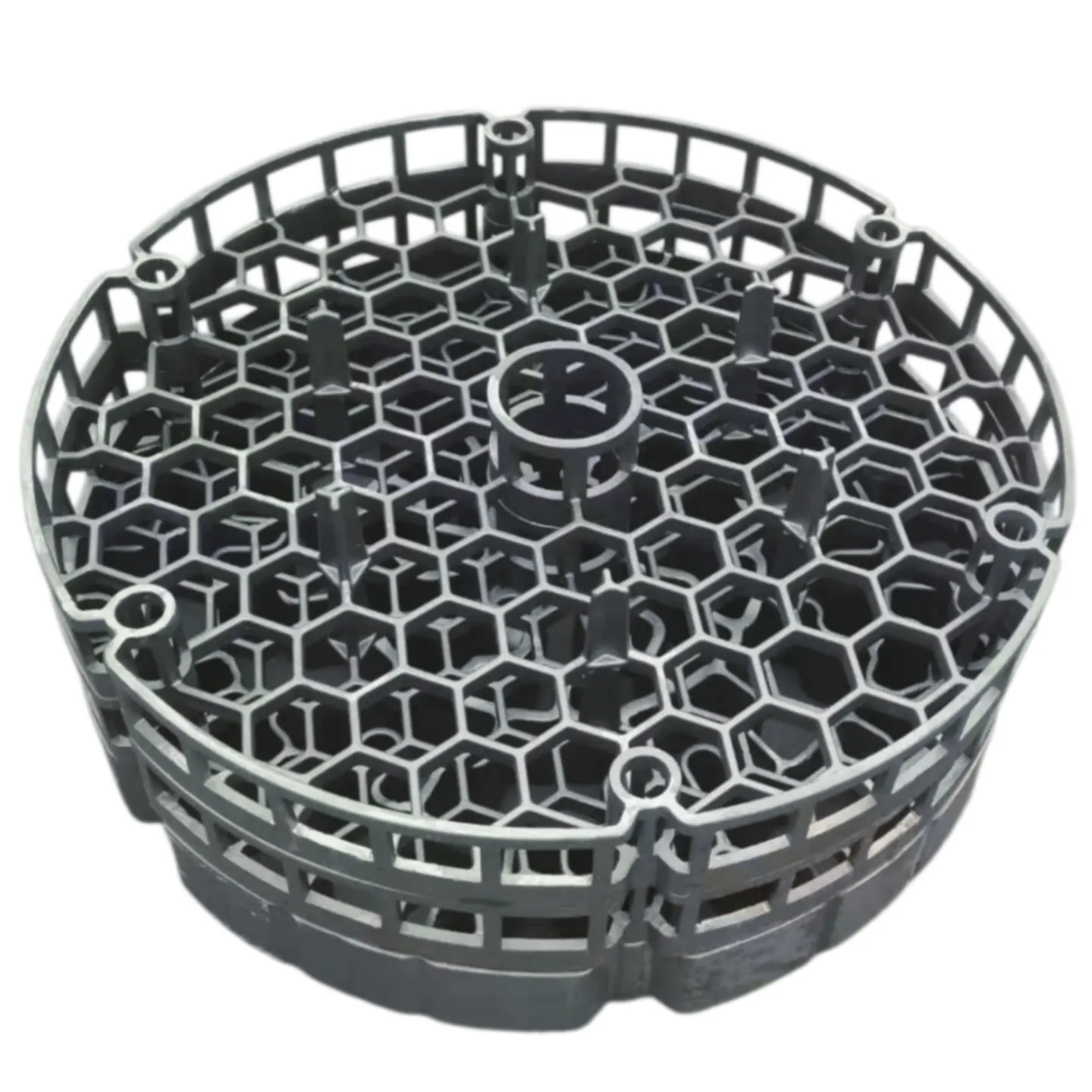
Round heat treatment basket with a honeycomb-pattern base, open sidewalls and raised posts around the rim.
Brand: ECOOSUN
Quality Documents: See certificate details
Material: Grade and product form to be confirmed
Size: Customized According to Drawings
Casting Process: Lost Foam Casting
Maximum Operating Temperature: To be confirmed for the duty
MOQ: 1 Piece
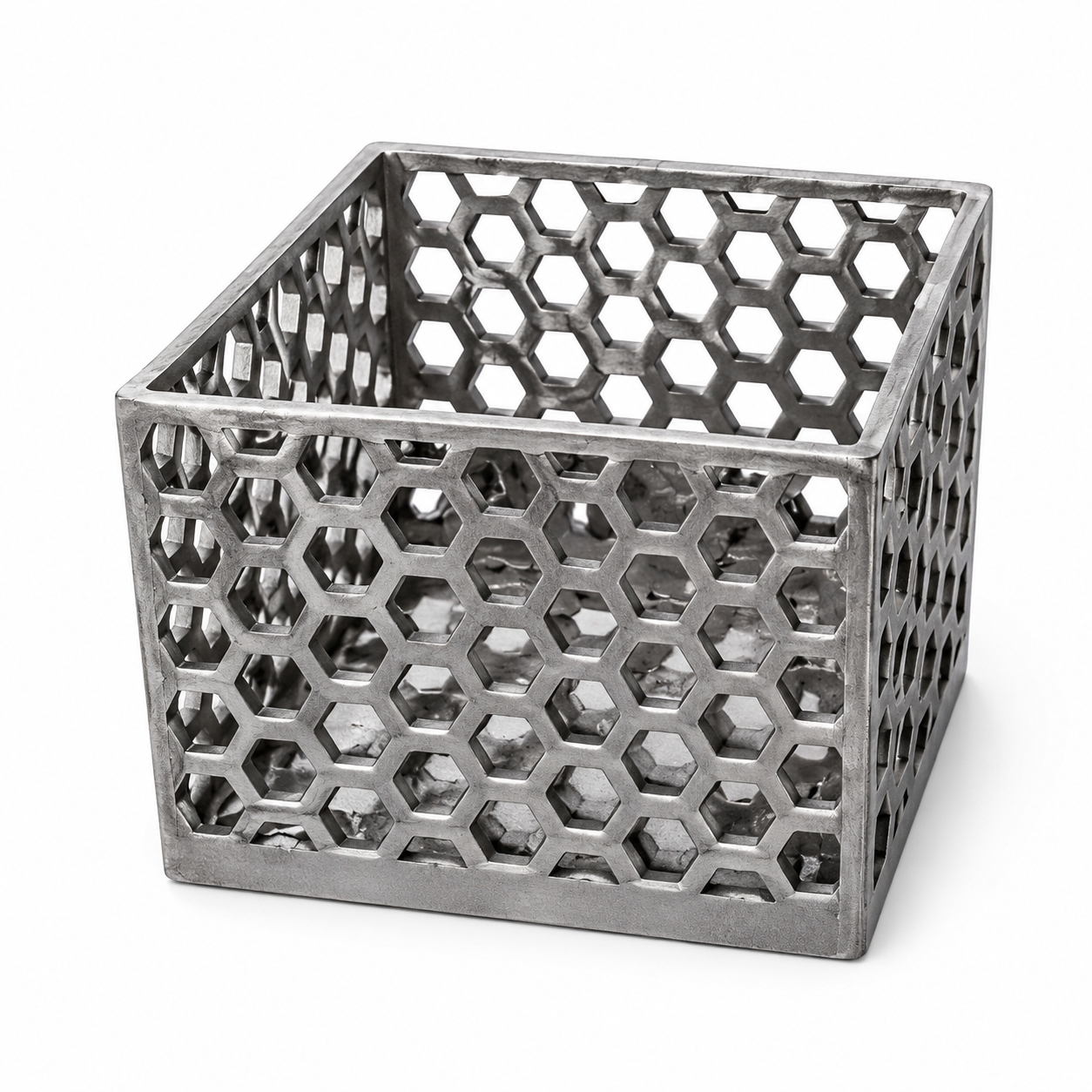
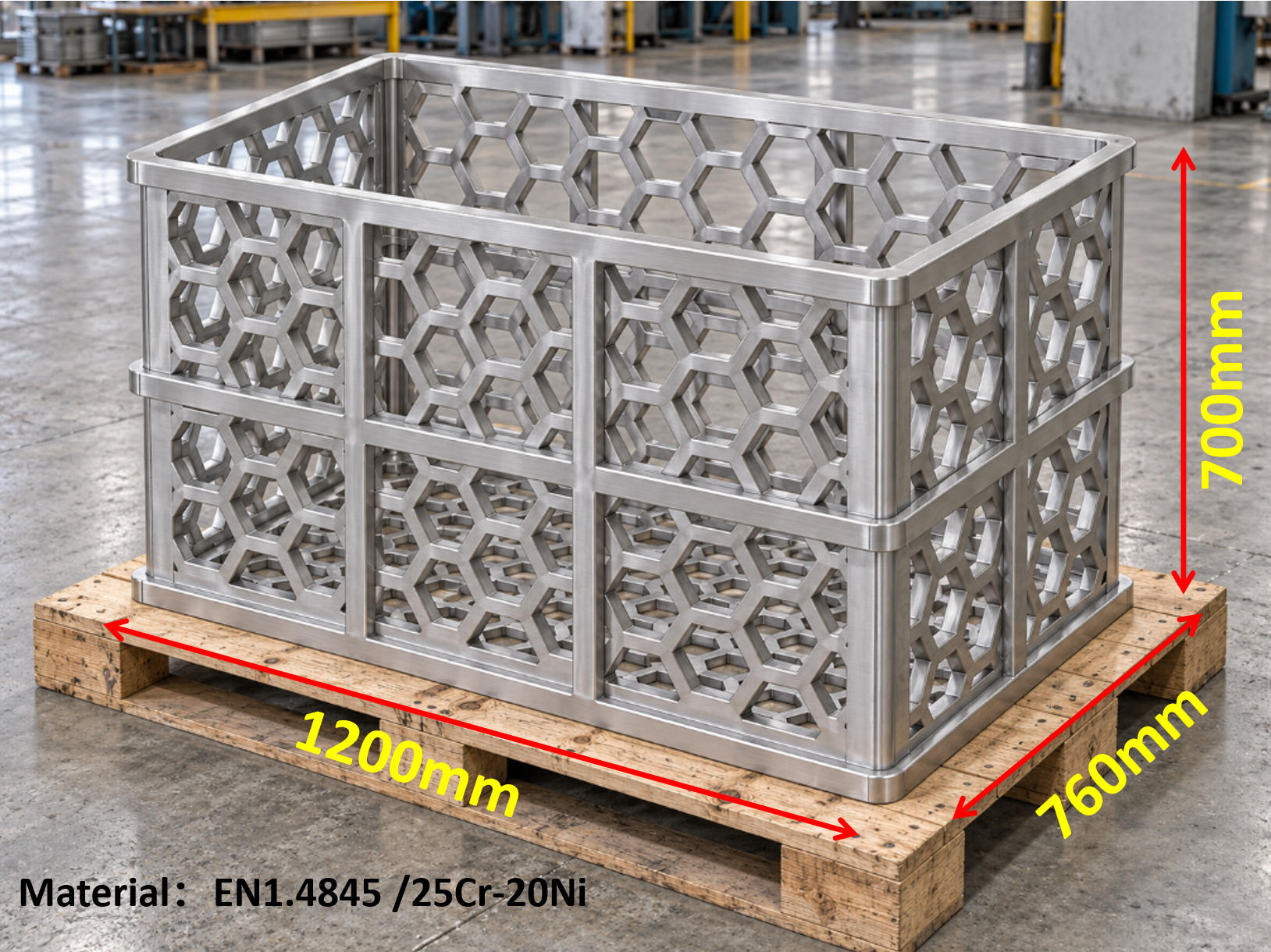
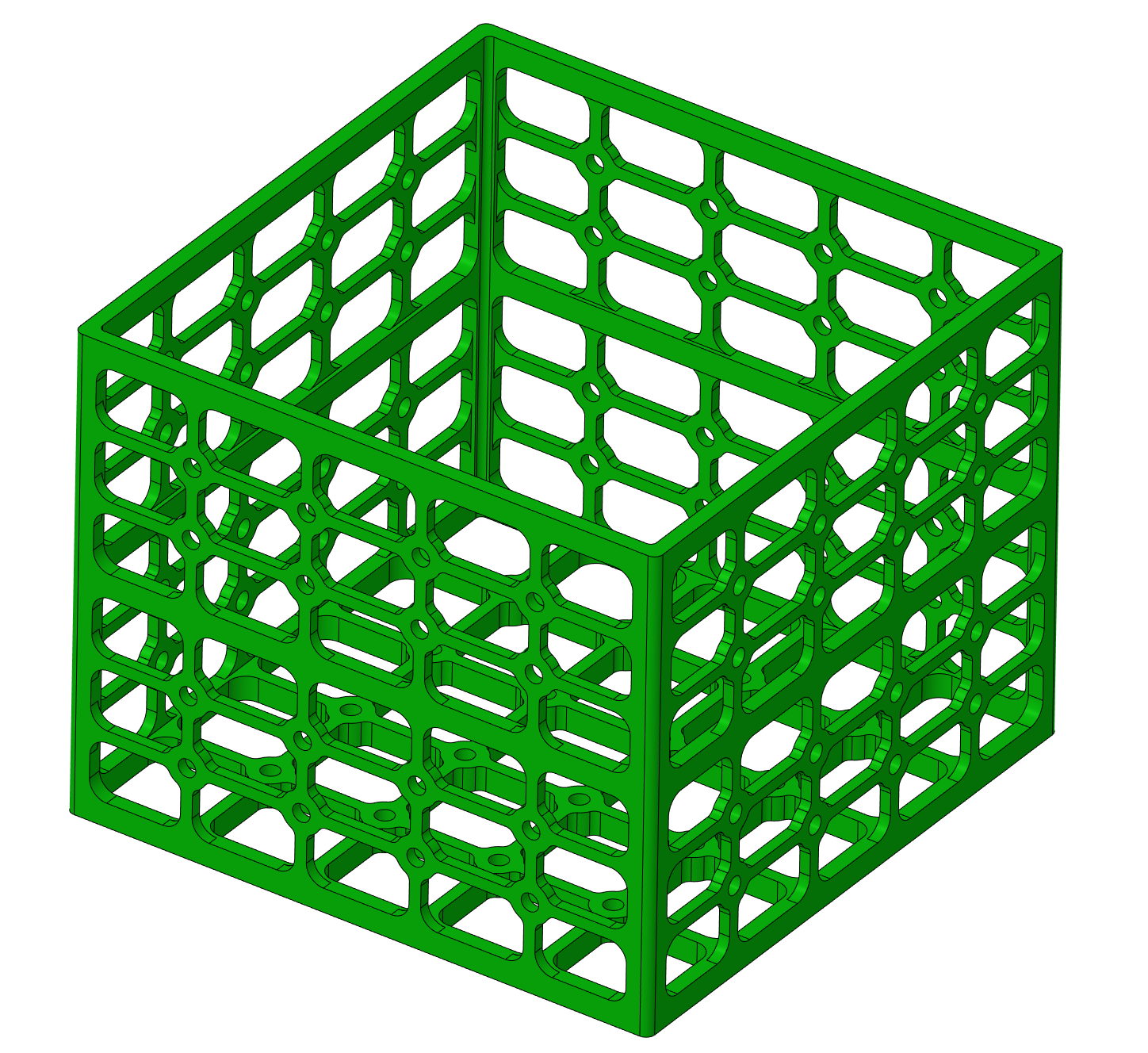
Deep rectangular furnace basket with honeycomb openings in the base and sidewalls. The open top and four raised sides distinguish it from the shallow basket designs.
Brand: ECOOSUN
Quality Documents: See certificate details
Material: Grade and product form to be confirmed
Size: Customized According to Drawings
Frame Casting Process: Silica Sol Investment Casting
Maximum Operating Temperature: To be confirmed for the duty
MOQ: 2 Pieces
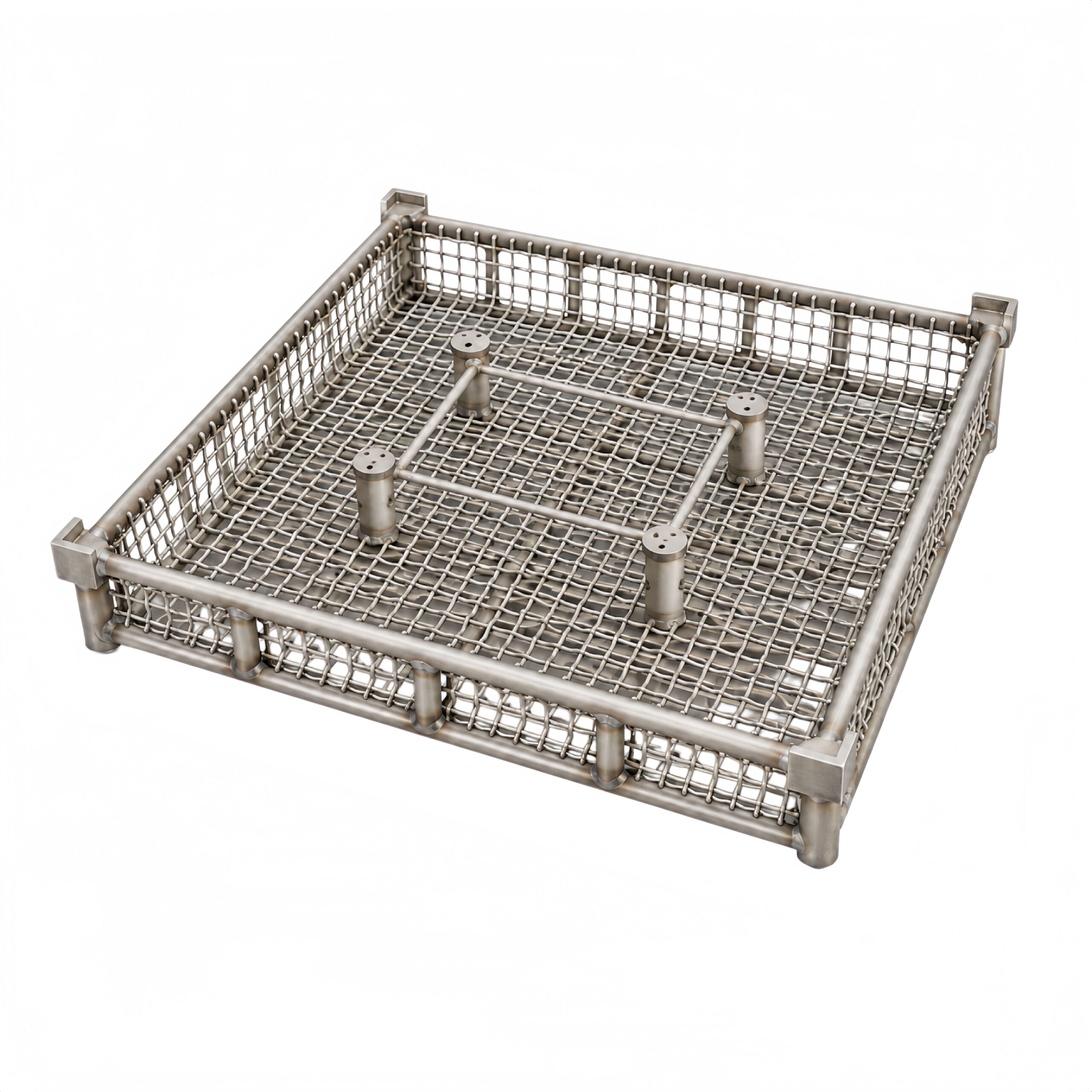
Square heat treatment basket with a cast frame, welded fine mesh across the base and sides, raised corner posts and a central divider.
The casting route describes the frame. Confirm mesh specification, attachment and whether the order includes a liner or the complete basket.
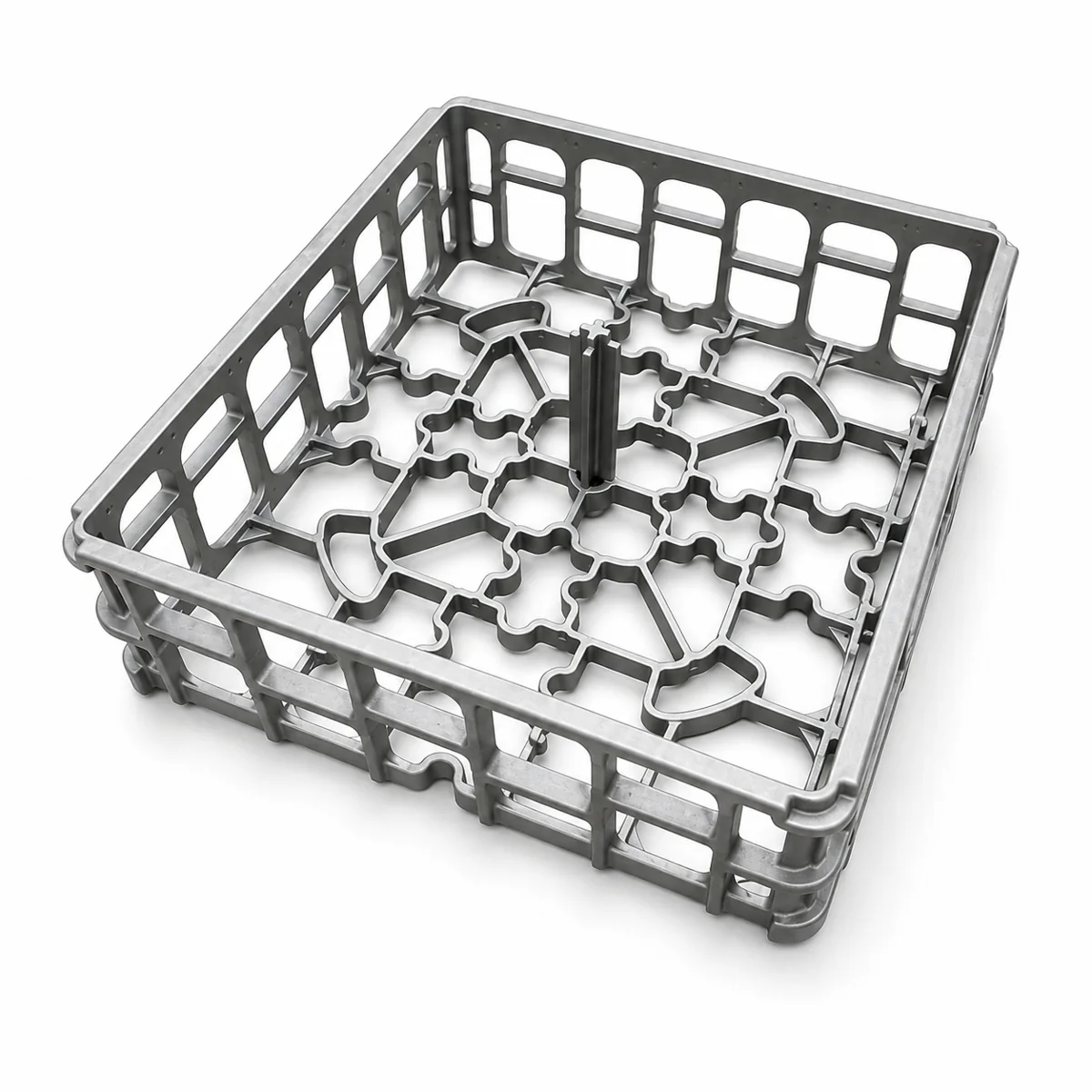
Brand: ECOOSUN
Quality Documents: See certificate details
Material: Grade and product form to be confirmed
Size: 1000 × 1000 × 300 mm
Casting Process: Silica Sol Investment Casting
Maximum Operating Temperature: To be confirmed for the duty
MOQ: 4 Pieces
Open-grid furnace basket with raised sidewalls, a ribbed base and a central vertical locating post.
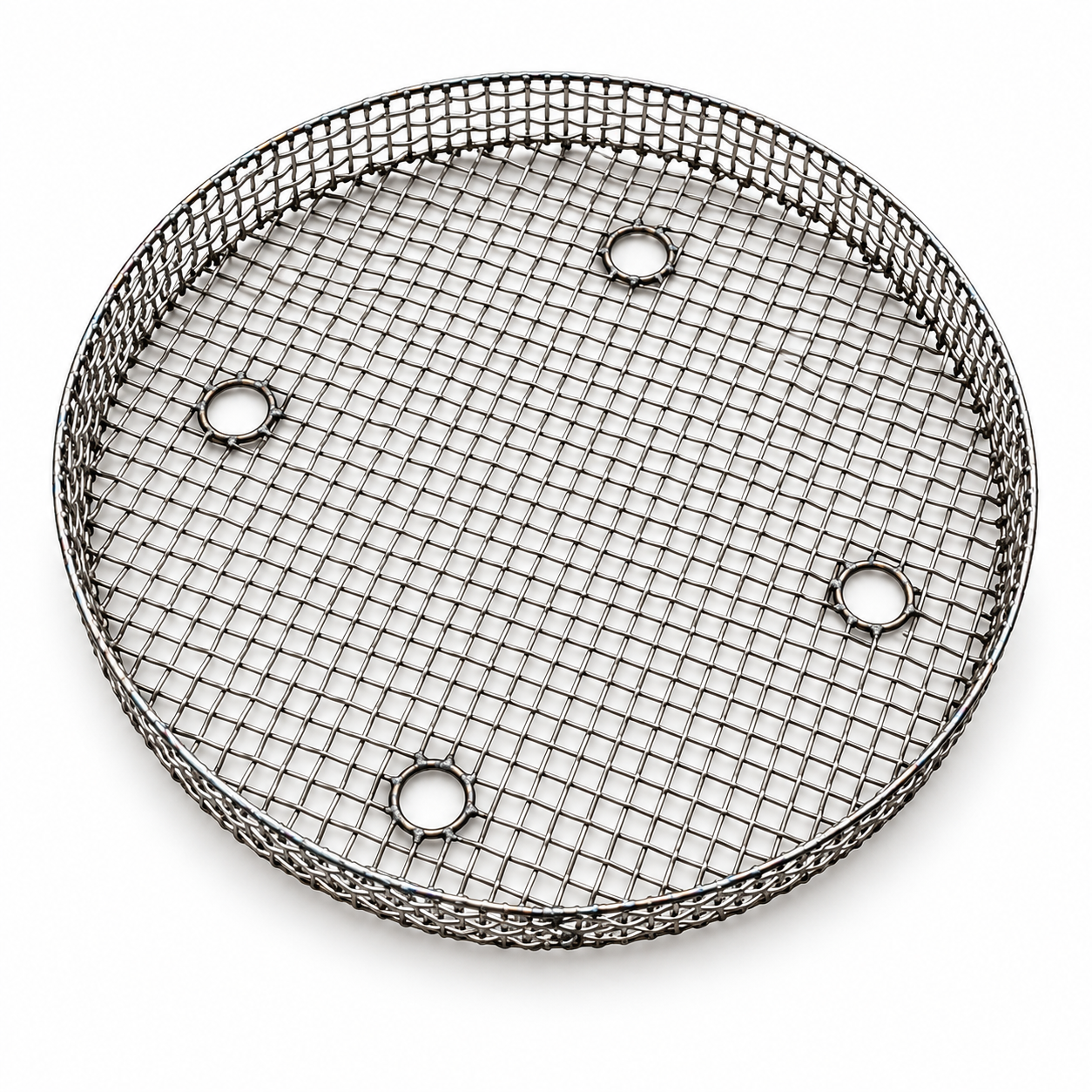
Brand: ECOOSUN
Quality Documents: See certificate details
Material: Grade and product form to be confirmed
Size: Ø800 × 15 mm
Manufacturing Process: Welding
Maximum Operating Temperature: To be confirmed for the duty
MOQ: 4 Pieces
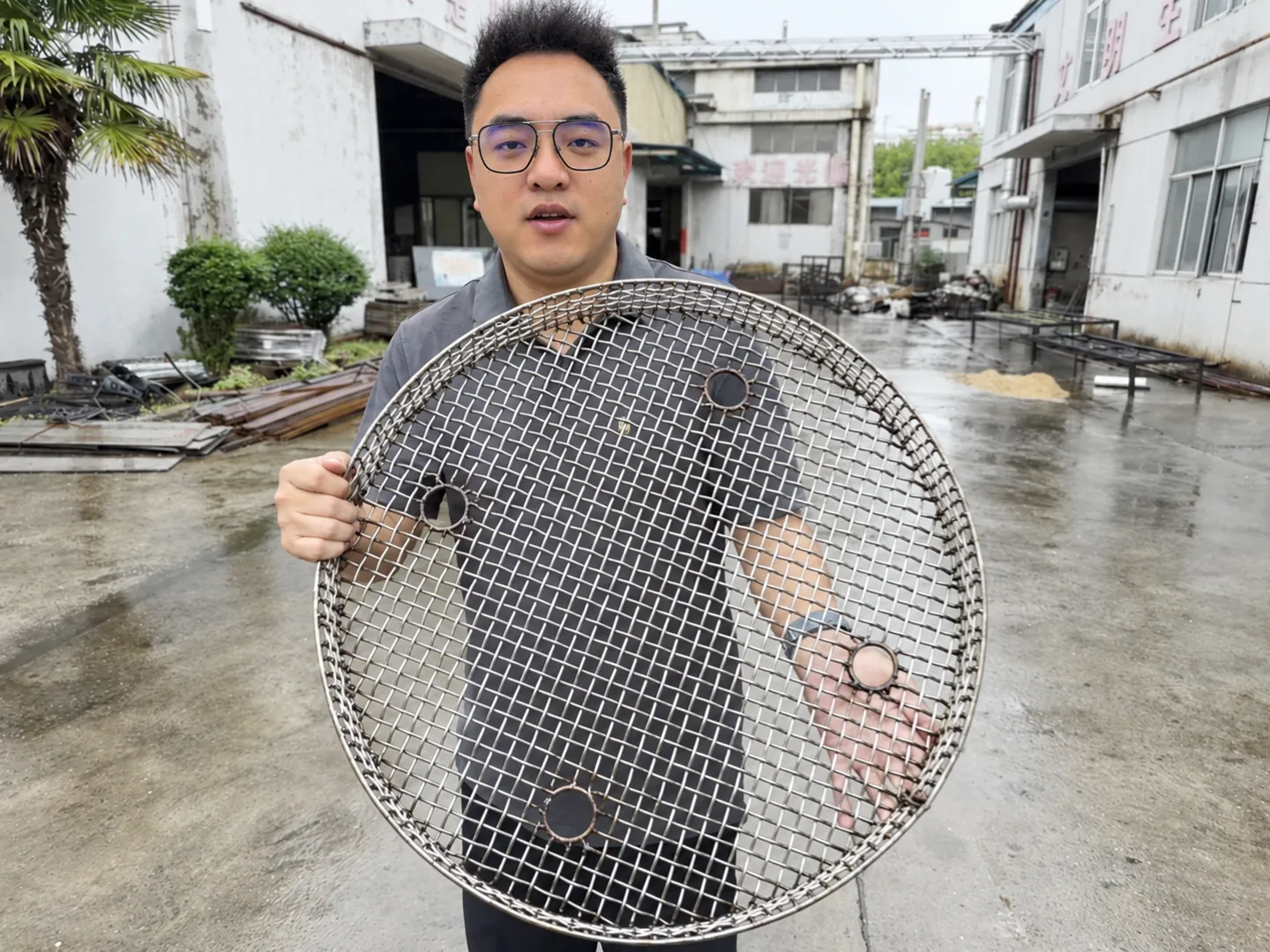
Shallow round charging basket made from welded wire mesh, with a raised rim and four circular openings in the base.
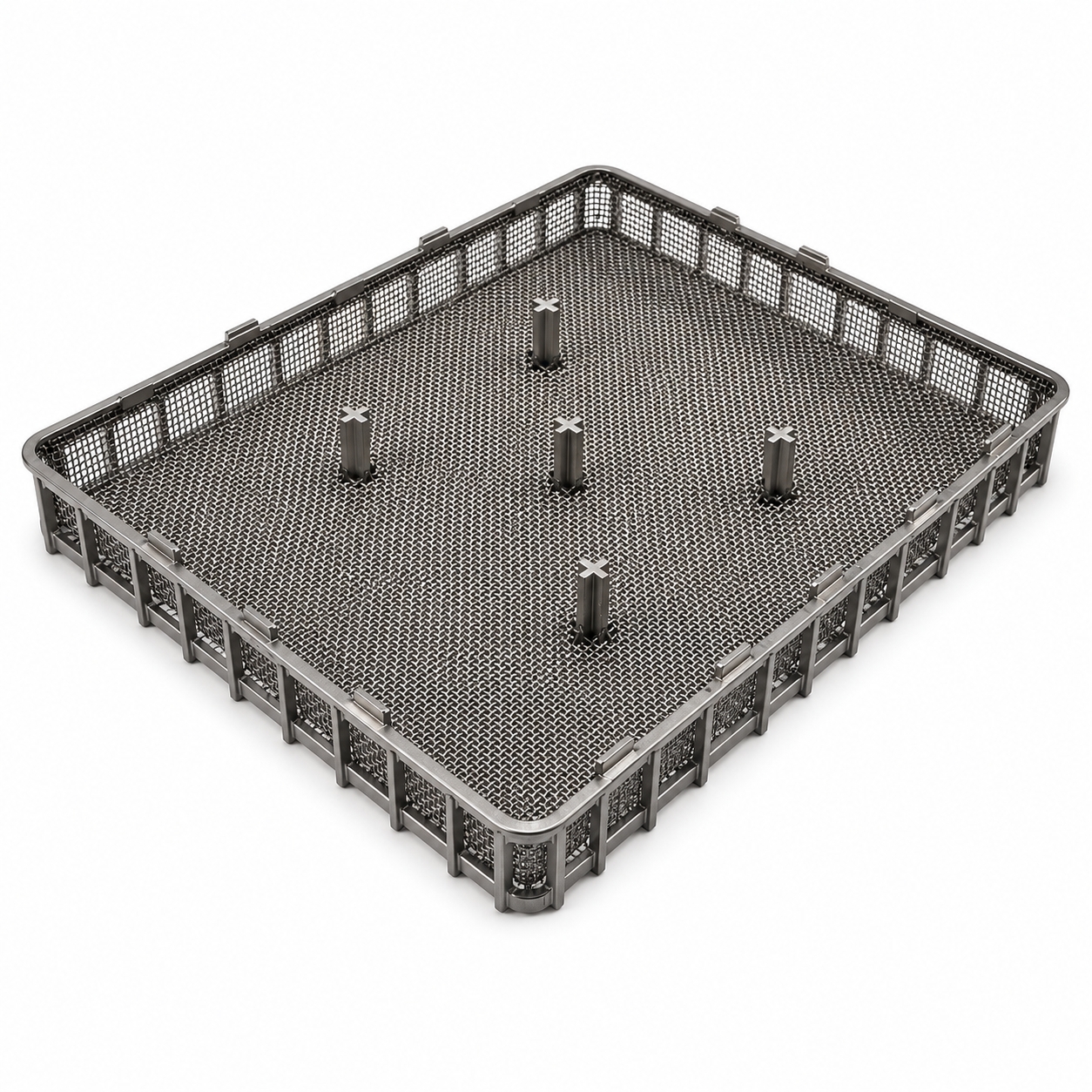
Brand: ECOOSUN
Quality Documents: See certificate details
Material: Grade and product form to be confirmed
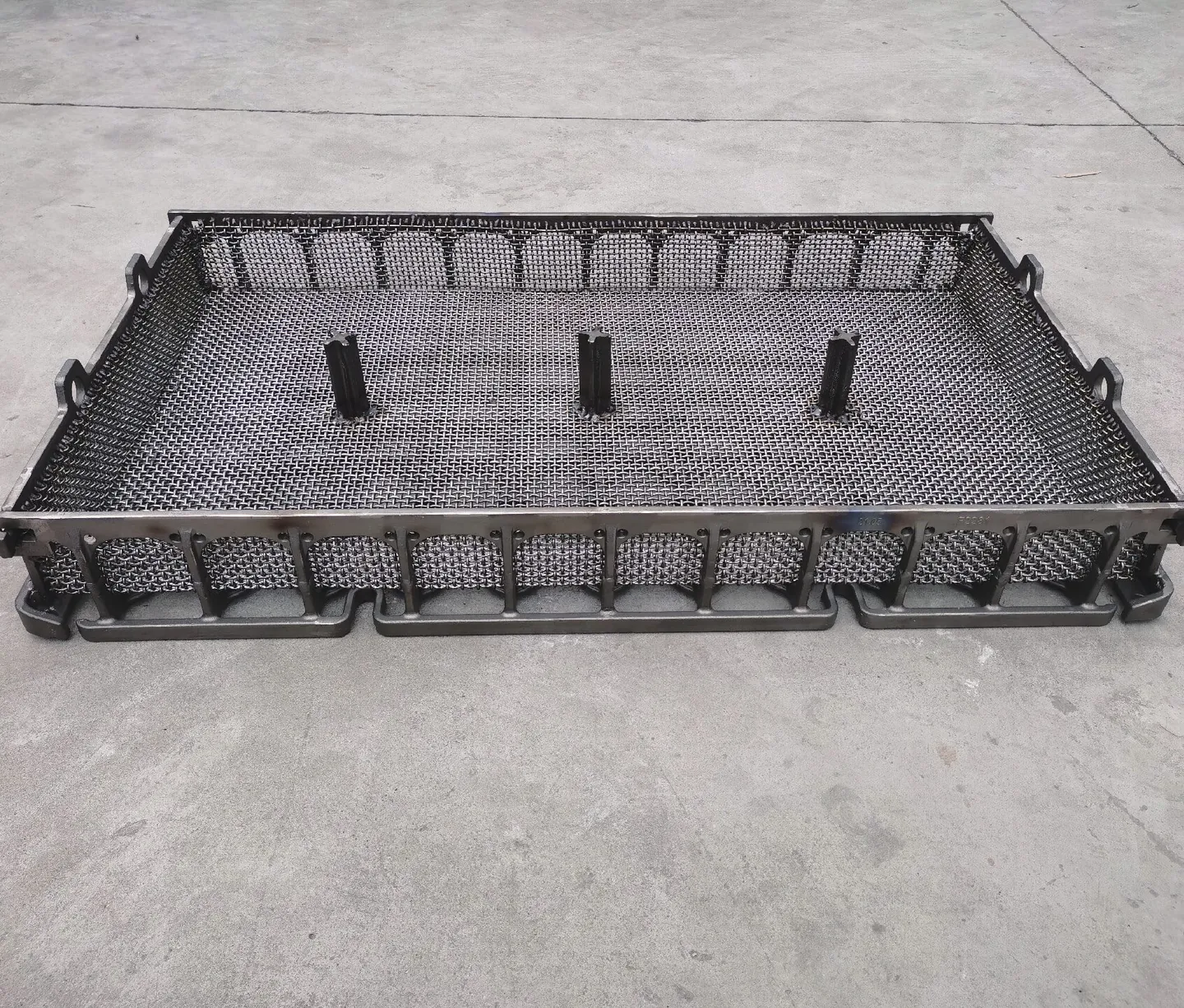
Size: 760 × 610 × 50 mm
Casting Process: Silica Sol Investment Casting
Maximum Operating Temperature: To be confirmed for the duty
MOQ: 6 Pieces
Rectangular fine-mesh basket with low sidewalls, a perimeter frame and several vertical locating posts across the base.
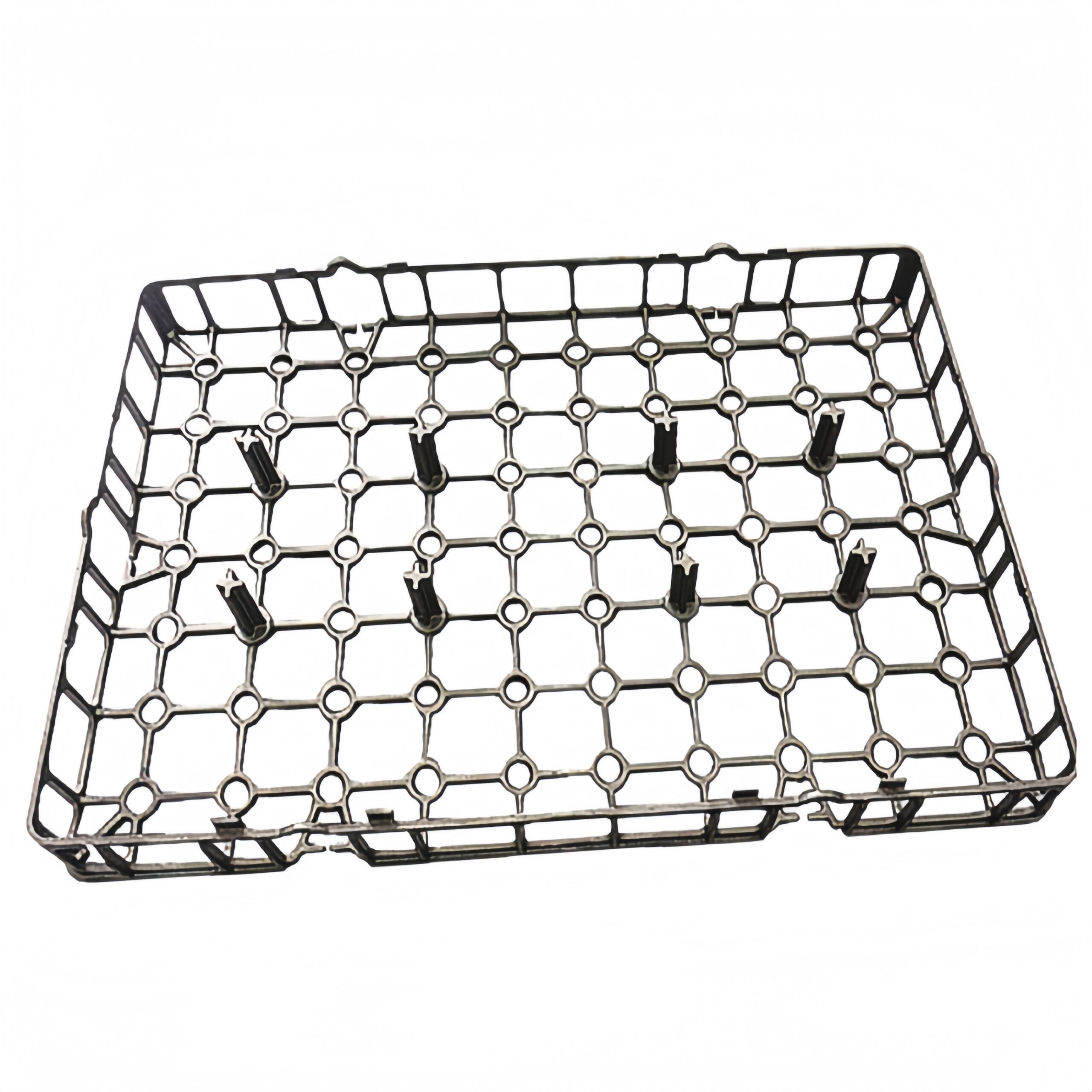
Brand: ECOOSUN
Quality Documents: See certificate details
Material: Grade and product form to be confirmed
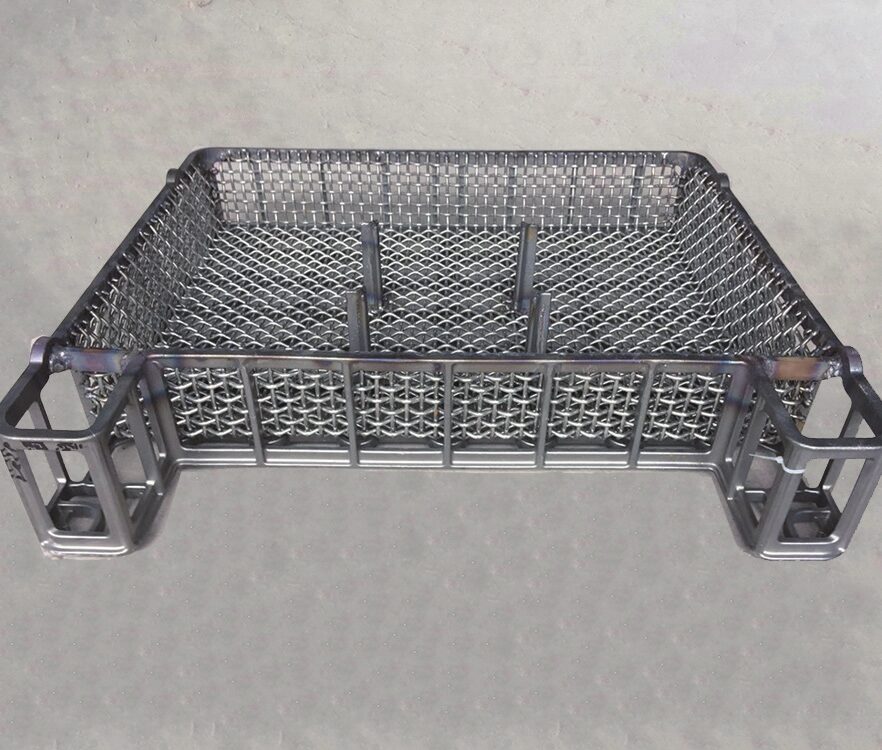
Size: 760 × 1200 × 30 mm
Casting Process: Silica Sol Investment Casting
Maximum Operating Temperature: To be confirmed for the duty
MOQ: 4 Pieces
Shallow rectangular heat treatment basket with an open-grid base, a low perimeter frame and short projecting locating posts.
Brand: ECOOSUN
Quality Documents: See certificate details
Material: Grade and product form to be confirmed
Size: Customized According to Drawings
Casting Process: Lost Foam Casting
Maximum Operating Temperature: To be confirmed for the duty
MOQ: 1 Piece
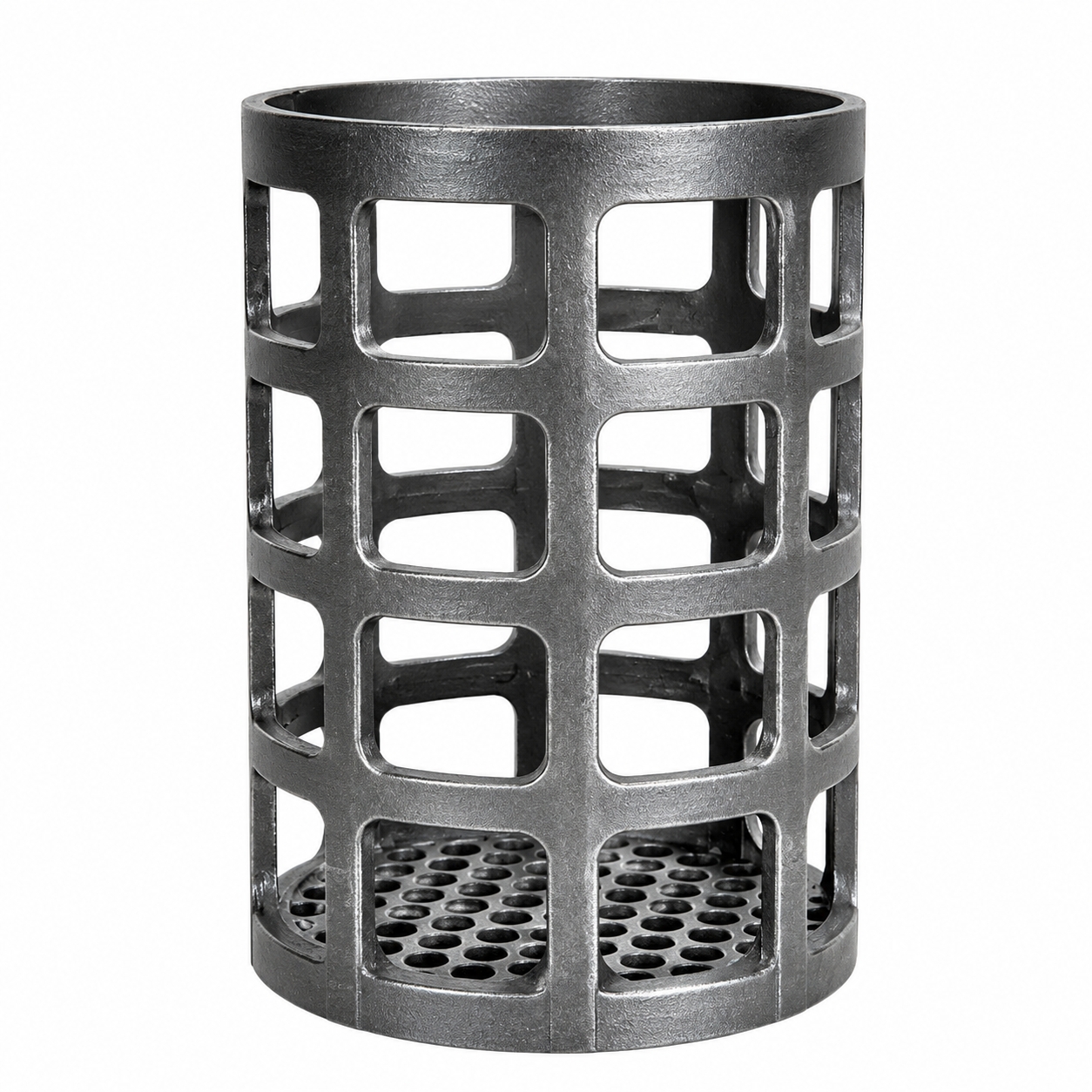
Tall cylindrical heat treatment basket with an open top, rectangular sidewall openings and a perforated base.
Three furnace basket configurations and where they seat
Deep rectangular honeycomb. The base and walls have open cells and there’s a raised perimeter. On a carrier with guides, the area to look at first is the corner where the basket enters the guides. A small outside radius, a projecting rib or a stop on the carrier can determine how much room you have there. If your loader enters from one end, an end view showing the stop and the approach gives us more to work with than another overall dimension.
Tall cylindrical. This is an open-top design with openings in the side. For a vertical lift, write down the largest diameter that actually has to pass the furnace rim. The top of the lift attachment needs room as well. Once the basket is down in the furnace, it may seat on a different surface from the one that locates it during loading. A sketch of that lower support can fill a gap that an overhead photo leaves open.
Shallow round wire mesh. The welded example is listed at Ø800 × 15 mm and has four round openings in its base. If you use a similar basket on a carrier with locators, put the opening centers on the drawing. A locator that meets mesh beside an opening can leave the whole basket sitting high. That dimension describes the example. For your drawing, we’d use the location of the existing locators and the way the basket is supported around them.
How furnace baskets move between stations
An RFQ for furnace baskets may cover the basket alone. We may still need to see the tray that carries it. If there’s a stop on the tray, leave it on the sketch. The quote is for the part you want to buy. The tray drawing tells us where it has to sit. Where the pusher meets the basket itself, draw an arrow at that face. A photo from the wrong end can leave the contact hidden.
On a roller hearth furnace, the drawing we want depends on what runs over the rollers. A flat tray underside and a set of individual basket feet make contact in different places. For a lift or an arm that transfers the load between chambers, a simple sequence can do more than a set of unlabeled photos. Put the pickup first, any intermediate stop or opening next and the final seat last. On an integral quench installation, include the route from the hot chamber into the next one.
For baskets that travel between two furnaces, put the furnace number next to each set of measurements. The same basket part number can be used on two lines whose rails or guides have been set at different heights. Purchasing can put both units on the inquiry. Maintenance can then review each fit against its own equipment.
Six Details for a Furnace Basket Quote
When only photographs are available for old furnace baskets, review the following operating information. What type of furnace is it? How much space is available inside it? How small is your smallest workpiece, and how large is the largest? What temperature does the furnace normally run at over a working cycle? What cooling medium do you use, whether that’s water, oil, salt or something else? Finally, what weight does the basket have to carry, and what is the documented load?
If you have the furnace model but no drawing, put the model on the inquiry. Mark any dimensions taken at the site, including which surfaces were used as references. That gives us a way to identify the measurements still missing.
Measuring Worn Furnace Baskets for Replacement
When we measure worn furnace baskets, identify which surfaces still represent the original shape. If three feet seat and the fourth sits high, photograph that corner with the cool, out-of-service basket on its carrier, where the plant permits. Label dimensions taken across a distorted area as found. For a bearing face that’s worn away, the mating rail or a sound basket from the same line may be the better reference.
On a like-for-like replacement, send the last drawing revision that ran well. If the original fit was a problem, have maintenance mark which feature the replacement needs to correct and which interfaces must stay as they are. Our worn-basket measurement guide shows how to separate the old condition from the dimensions you want on the new drawing.
Stacking with the baskets you already own? Photograph the two mating features together. Give the seated height and the maximum height with the parts in place. A taller load can affect the route even when the two baskets stack properly at the bench.
One quote says “with carrier”
When comparing quotes for furnace baskets, check the drawing revision and count the pieces first. One supplier may price a basket and a new carrier while the other assumes you’ll reuse the carrier at the plant. If your team will buy either part on its own later, ask for two line items, even if the parts will arrive together. Do the same for a locator or other attachment supplied loose.
Then look for the inspection line. Say there are two rails and the drawing calls out the distance between the bearing faces. If you want that measurement recorded for the first piece, include it in the request. Same goes for the fork opening if pickup position is critical. For a quoted check on the complete assembly, agree who supplies the carrier and which drawing revision applies to it. See a manufactured basket alongside its drawing reference
A shutdown adds one date purchasing really needs. When must the first piece be at the plant? Ask for that delivery separately if you want to check one basket before releasing the rest. Whoever approves fit needs the drawing and the trial basket. Whoever runs the line may need it on a different day. Put both approvals on the order plan and make the release point clear to the supplier.
If the supplier proposes moving a foot or changing a stop, ask for the revision with the change marked. A change that saves machining time can also move the point that meets the rail. Have maintenance look at that view before the price is compared with a quote to the original drawing.
Which surfaces need machining? A foot might be machined where it seats on the rail. A rib out of the way of the load may be allowed to stay as cast. If the drawing shows a tight tolerance, put it against the finished surface where you expect the inspector to check it. Ask the supplier to identify any machining it has included. On a reorder, check that the accepted drawing still matches the scope you are paying for, especially if the last approval was based on a trial basket.
Video evidence: captions and what is shown
On-screen labels: Jonny | www.ecoosun.com
Jonny is shown outside the factory entrance. This short location introduction is not an order reference or an inspection record.
Manufacturing and quality evidence · Discuss your drawing and furnace conditions
Jonny introduces the ECOOSUN foundry. If you are sourcing replacement furnace baskets, start with a side photo of the basket on its carrier. Show where the forks enter and how the basket sits against the stop.
Video evidence: captions and what is shown
Selected on-screen subtitle excerpts: I’m Jonny from ecoosun | we are a casting factory from Jiangsu | heat treatment basket trays fixtures | please contact me
A recorded office introduction connects Jonny and ECOOSUN with casting and heat-treatment components. These are excerpts from the burned-in English subtitles, not a new translation or a complete transcript.
Manufacturing and quality evidence · Discuss your drawing and furnace conditions
Meet Jonny, your first contact for a furnace basket quote. Send the drawing or photos, the clear door opening, the pickup height and the quantity you need. If your plant plans to reuse the carrier, include its support and locating dimensions.
Video evidence: captions and what is shown
On-screen process labels: ECOOSUN FACTORY | TRAY WAX PATTERNS | FRAME WAX PATTERNS | HAND FINISHING | COMPONENT WAX PATTERNS | BATCH PREPARATION
The footage shows tray and frame wax patterns, hand finishing and batch preparation. It documents visible workshop activity; material grade, finished dimensions and acceptance results require project records.
Manufacturing and quality evidence · Discuss your drawing and furnace conditions
The workshop footage shows wax patterns for trays and frames. For a cast furnace basket, mark the features that must clear the guides or engage the carrier on the finished-part drawing. Use the drawing to specify any fit-critical dimensions.
Video evidence: captions and what is shown
On-screen website label: www.ecoosun.com
Jonny walks through stacks of semi-finished cast components and shows frames and grid structures. The footage is a manufacturing overview, not proof of a particular customer delivery or certified test result.
Manufacturing and quality evidence · Discuss your drawing and furnace conditions
Jonny shows semi-finished frames and grid castings. On replacement furnace baskets, identify which surfaces bear on the rails and which feet, stops or pickup faces need finishing. That gives us a clear scope to review with your drawing.
Watch wax-pattern preparation, assembly and demoulding, followed by slurry dipping, sand coating and ceramic-shell handling. These workshop scenes show the practical preparation work behind ECOOSUN’s heat-resistant castings.
See shell preparation, furnace loading, ladle filling and mould pouring on the casting floor. The footage highlights coordinated work around molten metal and hot components during heat-resistant casting production.
Follow cast components through shell removal, grinding, surface finishing and straightening. Workshop footage shows hands-on processing of different shapes, furnace trays, support frames and heat treatment fixtures.
Explore product batches, assembled furnace tooling and packaging prepared for shipment. Scenes from production and industrial use show furnace baskets, trays, rods and fixtures moving through the factory.
Cold Fit Checks for New Furnace Baskets
With the agreed drawing and a cold, empty first piece, receiving can record the fit dimensions. Where the plant allows a cold fit check, use the carrier and handling tool identified in the inquiry. If the basket rocks on the carrier, record which foot lifts. If one side has more room than the other, give both measurements and where they were taken. A note that says the basket fits tight will be hard for anyone to work from later.
The plant team or equipment manufacturer can determine the loaded or hot checks needed for the installation. Keep the intended load, load position, stack height and cycle with the agreed acceptance criteria. That gives the plant a way to tie a trial result to the job the basket was ordered for.
Send us the drawing or a photo of the transfer
Send me the drawing or sample photos, the quantity and the date the first basket needs to be at your plant. Mark the point on the route where you have the least room. If the job is still at the planning stage, a sketch showing the pickup and the final seat will give us enough context to discuss the next measurement.



 +44 7419 144346