
Direct answer: Heat-resistant steel casting is a project-specific manufacturing route for furnace components such as baskets, trays, fixtures, tubes and rolls. The correct review starts with geometry, furnace conditions, load, operating cycle and inspection requirements. ECOOSUN can review drawings or used samples for custom cast components.
When a furnace is down, buyers do not need a catalogue of isolated items. They need to know which component carries the load, which part controls the atmosphere, and which replacement must match the furnace movement or heating system. This practical map groups heat treatment furnace parts by their job inside the line.
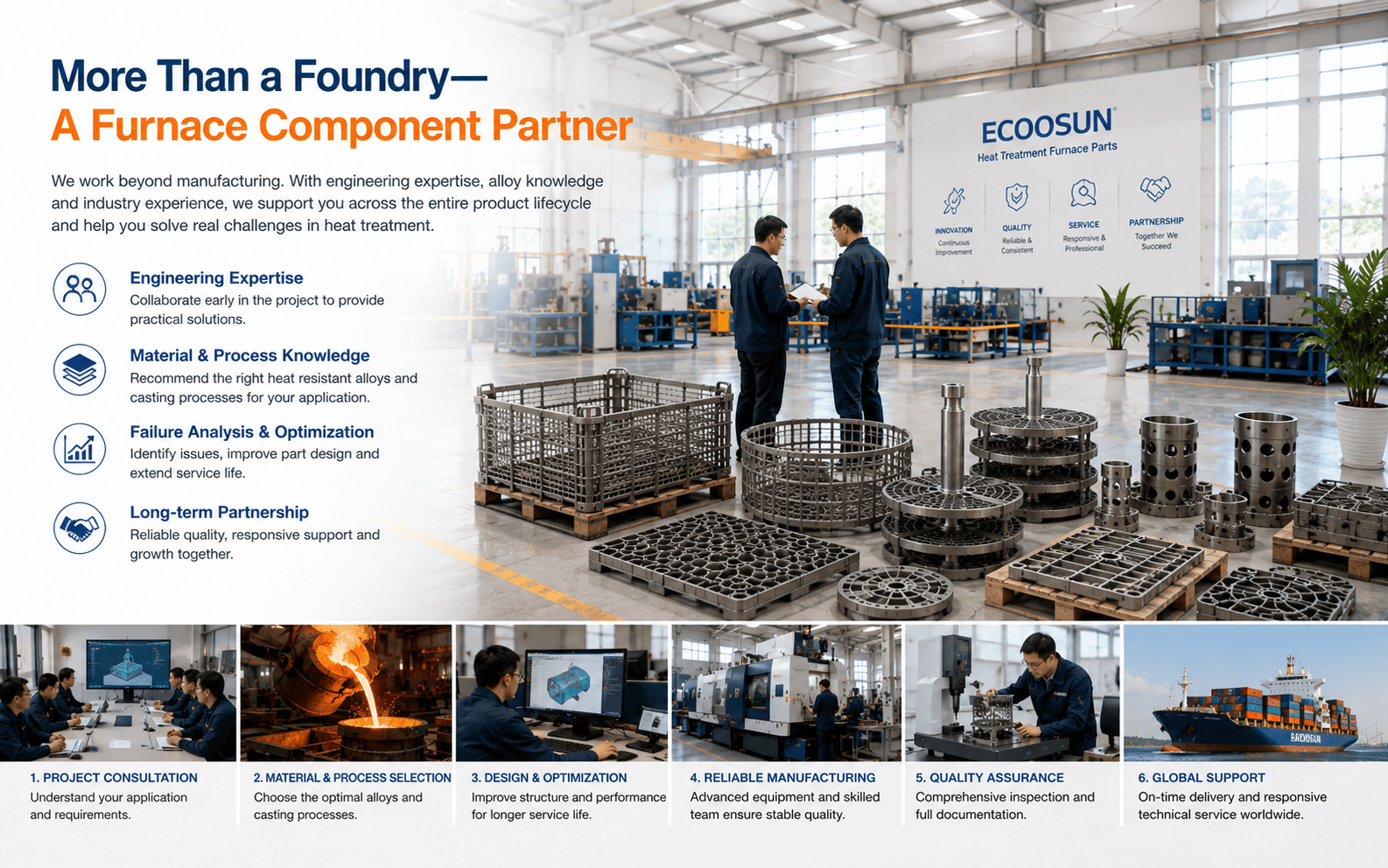
1. Load-carrying parts
Heat treatment baskets and heat treatment trays hold the workpieces through heating, soaking, transfer and cooling. The important questions are load distribution, access for cleaning, drainage where applicable, and the clearance required for furnace movement. A basket that is strong enough in a static shop test can still distort if the load is concentrated on a few contact points.
For flat trays, review support spacing and the expected temperature gradient. For baskets, review the base, lifting points, mesh or perforated areas, and the way parts are loaded. The drawing should show the loaded condition, not only the empty outline.
2. Positioning and process-control parts
Heat treatment fixtures keep workpieces in the intended orientation. They can protect a critical surface, maintain a gap for gas circulation or keep a group of parts together during transfer. Their design should follow the process: carburizing, nitriding, annealing, solution treatment and other cycles do not all need the same support or clearance.
When a fixture causes distortion, check whether contact points block movement during thermal expansion. Also check whether the fixture is carrying more load than the furnace conveyor or support was designed for.
3. Moving parts
Furnace rolls and related hearth components move products through continuous lines. Buyers should provide roll diameter, face length, shaft details, drive arrangement, pitch, speed and the distance between supports. A roll replacement must match the movement system as well as the hot-zone environment.
For roller-hearth or mesh-belt systems, note the location of the failure and whether wear appears on one side. Uneven wear may indicate alignment, loading or drive issues rather than a simple material problem.
4. Heating and atmosphere-separation parts
Furnace radiant tubes transfer heat while separating combustion from the working atmosphere. Burner alignment, expansion clearance, hot length, support and connection details are all part of the specification. If a gas-fired tube failed near the burner end, include the burner drawing and photographs with the replacement request.
Industrial furnace fans and impellers support atmosphere circulation and temperature uniformity. For a fan or impeller, include rotation direction, wheel dimensions, shaft connection, operating temperature and the position inside the furnace. HVAC terminology alone is too broad for this application.
5. Internal structures
Hearth plates, support grids, retorts, muffles and other internals influence usable furnace space and the gas path. These components often have irregular geometry and several interfaces, so a marked-up photograph can be as useful as a drawing. See furnace internals for related examples.
A simple sourcing table
| If the problem is… | Start with… | Include in the enquiry |
|---|---|---|
| Load sagging or poor part spacing | Basket, tray or fixture review | Loaded weight, part drawing, contact points, cycle |
| Uneven movement through a continuous line | Roll or conveyor component review | Pitch, speed, drive, support and wear photos |
| Hot spots or atmosphere contamination | Radiant tube, muffle or fan review | Zone temperature, burner/fan details, atmosphere |
| Repeated cracking at a connection | Geometry and support review | Failure location, dimensions, expansion clearance |
What a complete RFQ should contain
Send the furnace type, zone, operating cycle, atmosphere, maximum working condition, drawing or measured sketch, quantity, delivery target and the inspection documents required by your quality system. If the component is a replacement, add the original part number and the reason for replacement. ECOOSUN can then match the request to the relevant product family instead of guessing from a short product name.
Explore custom heat treatment furnace parts and custom heat-resistant alloy components, or send a drawing for an engineering review.
Why a component map improves purchasing
Grouping parts by function makes maintenance conversations clearer. It also reduces the risk of ordering a generic “furnace part” that fits the envelope but fails to support the load, movement, atmosphere or heat path. The best enquiry starts with the job the component performs and then defines the dimensions and material with the supplier.
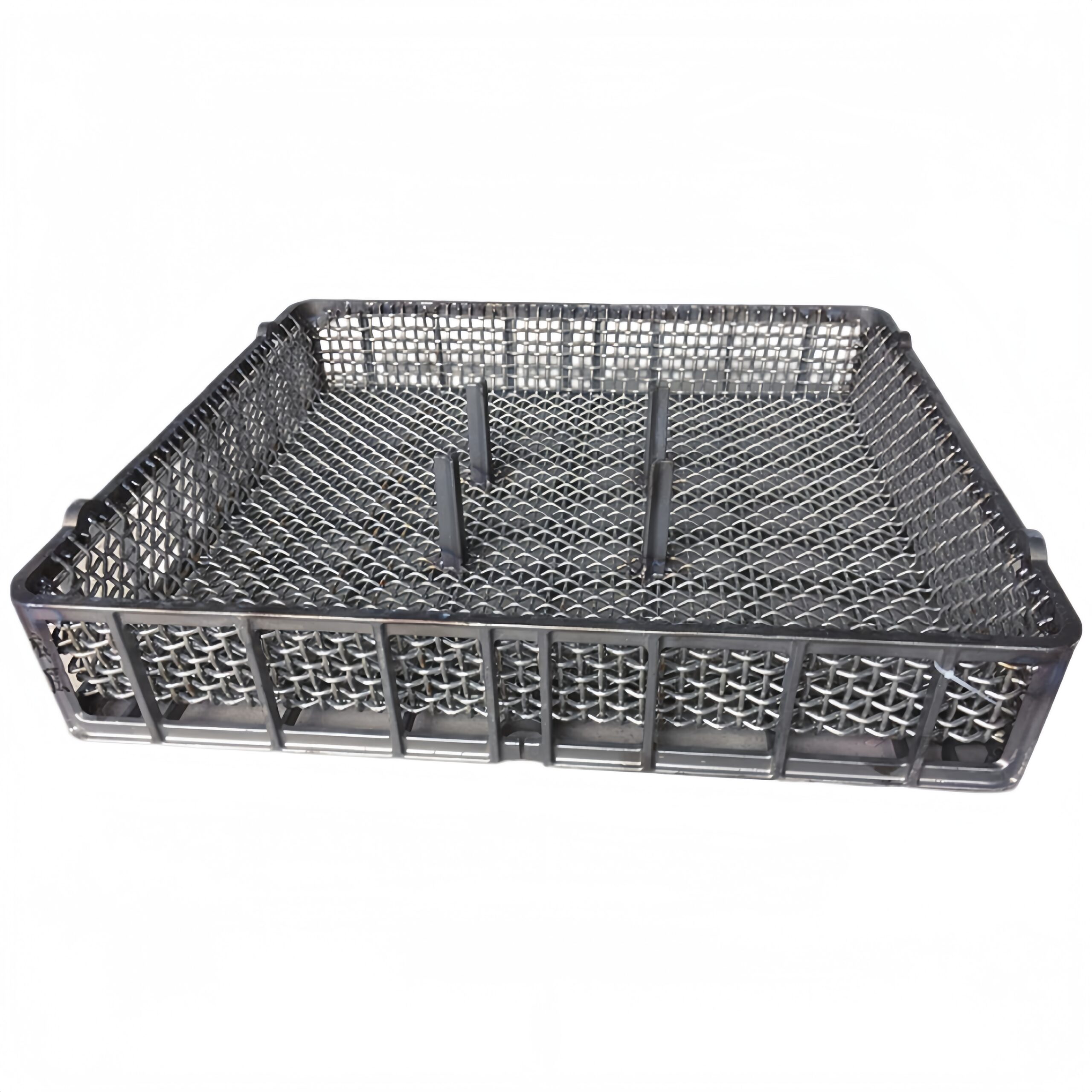
Production context: The component reference should be read together with the manufacturing and inspection context behind the furnace application.

FAQ
What should a buyer confirm for a heat-resistant cast furnace part requirement?
Confirm the drawing or used sample, key dimensions and interfaces, furnace type and clearance, load, operating cycle, failure evidence and inspection requirements. Final acceptance criteria should be agreed for the specific project.
Can ECOOSUN review a custom heat-resistant cast furnace part requirement?
Yes. ECOOSUN can review a customer drawing or used sample and discuss casting, laboratory and inspection requirements for a custom furnace-component project. Suitability and final scope are confirmed from the supplied information.


 +44 7419 144346