
Direct answer: Radiant tubes transfer heat into a heat-treatment furnace through a burner or heating system. Selection depends on the furnace layout, burner interface, dimensions, atmosphere, operating cycle and failure history. ECOOSUN can review a drawing or used sample for a project-specific replacement.
A gas-fired radiant tube is not an isolated casting. The tube, burner, recuperation arrangement, furnace atmosphere and control strategy behave as one heating assembly. When a tube develops a hot spot or a burner-end distortion, replacing the tube alone may only hide the real cause.
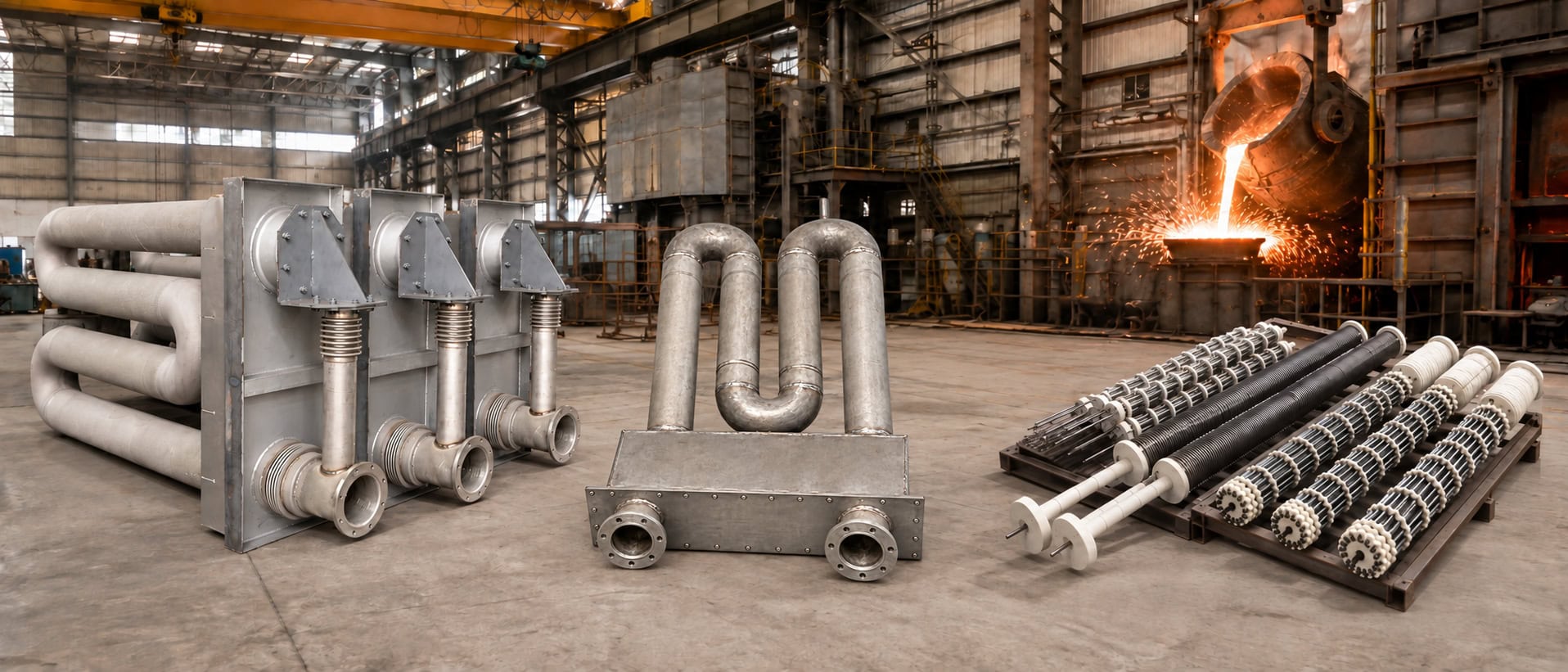
This article explains the information an industrial buyer should gather before ordering gas fired radiant tubes. It is written for furnace manufacturers, maintenance teams and heat-treatment plants preparing a planned shutdown.
How the assembly works
The burner releases heat inside the tube. The tube wall transfers that energy to the furnace chamber without allowing combustion products to mix with the work atmosphere. That separation is why burner alignment, tube integrity and connection sealing deserve equal attention. A tube may remain visually intact while a change in flame impingement creates a local temperature gradient that shortens its life.
A practical replacement sequence
Step 1: Record the operating envelope
Write down the normal and peak temperature, cycle time, heating rate, furnace atmosphere, fuel type and burner control mode. Include whether the furnace runs continuously or in batches. “Gas fired” is not enough information for a responsible replacement recommendation.
Step 2: Map the burner end
Measure the burner connection, pilot or ignition features, flange orientation, insertion depth and the distance to the furnace shell. Photograph the burner after removal if possible. Soot, scale or an uneven flame mark can reveal an alignment issue that a clean replacement part will not solve.
Step 3: Check the hot-end support
Look for rubbing, seized sliding supports, contact with refractory and evidence that the tube could not expand. A fixed point and a sliding point should be intentional. If the tube is held tightly at both ends, thermal growth can load the bend or the burner-end joint.
Step 4: Decide what must be inspected
Agree in advance on dimensional checks, visual inspection, surface finishing, material identification and any non-destructive examination that the application requires. The correct inspection plan depends on geometry and consequence of failure; it should be confirmed with the engineering team.
Burner integration questions buyers often miss
- Does the burner flame length suit the tube’s hot section?
- Is the burner centered, or does the design intentionally use an offset?
- Can the burner be removed without disturbing the tube supports?
- Is the combustion air or recuperator arrangement different from the original?
- Has the furnace control program changed since the old tube was installed?
These questions help separate a component replacement from a heating-system modification. If the burner has been changed, provide its model, connection drawing and commissioning notes with the tube request.
Material and casting considerations
Heat-resistant casting references consistently point to the importance of sound sections, controlled transitions and careful finishing. For a radiant tube, that means paying attention to bends, burner-end bosses, flange transitions and any location where a core creates a thin wall. The final part also needs dimensional stability so it can be installed without forcing the connection into alignment.
Ask the supplier to state which dimensions are inspection-critical. A useful drawing marks the sealing face, bolt pattern, centerline, hot-end position and allowable deviation. This is more actionable than a general statement that the tube is “custom made.”
Plan the spare without creating dead stock
Many plants order one spare only after a failure. A better approach is to keep a controlled record of the tube drawing, revision, installed location, burner details and inspection results. When the furnace has several similar zones, label each tube by zone and orientation. This prevents a visually similar part from being installed in the wrong position.
ECOOSUN supports drawing-based enquiries for radiant tubes and related high-temperature furnace components. For a complete shutdown package, include the required quantity and the date when the furnace must return to production. Contact the engineering team with photographs if the original supplier drawing is incomplete.
Final check before approval
Approve a gas-fired radiant tube only after the drawing, burner interface, support arrangement, atmosphere and inspection plan agree. That small review step often prevents the expensive situation in which a new tube arrives, fits the shell, but repeats the same hot spot that damaged the previous one.
Production context: The component reference should be read together with the manufacturing and inspection context behind the furnace application.

FAQ
What should a buyer confirm for a radiant tube requirement?
Confirm the drawing or used sample, key dimensions and interfaces, furnace type and clearance, load, operating cycle, failure evidence and inspection requirements. Final acceptance criteria should be agreed for the specific project.
Can ECOOSUN review a custom radiant tube requirement?
Yes. ECOOSUN can review a customer drawing or used sample and discuss casting, laboratory and inspection requirements for a custom furnace-component project. Suitability and final scope are confirmed from the supplied information.
Related Radiant Tube Resources
Use these technical guides when specifying, inspecting or replacing radiant tubes for an industrial furnace:
- Radiant Tubes for Annealing and Heat-Treatment Furnaces
- Straight, U-Type or W-Type Radiant Tubes
- Radiant Tube Failure: Cracking, Sagging and Oxidation
- Radiant Tube Installation and Connection Inspection Guide
- Industrial Furnace Radiant Tubes: Material and Service Life
Related ECOOSUN Products
Information for a Faster Quotation
Provide alloy grade or service conditions, straight/U/W form, tube dimensions, burner and connection details, operating temperature, furnace zone, quantity, drawing or used sample, and inspection requirements.
Request a Custom Quote · Send Your Drawing · WhatsApp ECOOSUN


 +44 7419 144346