

What Are Heat Treatment Trays?
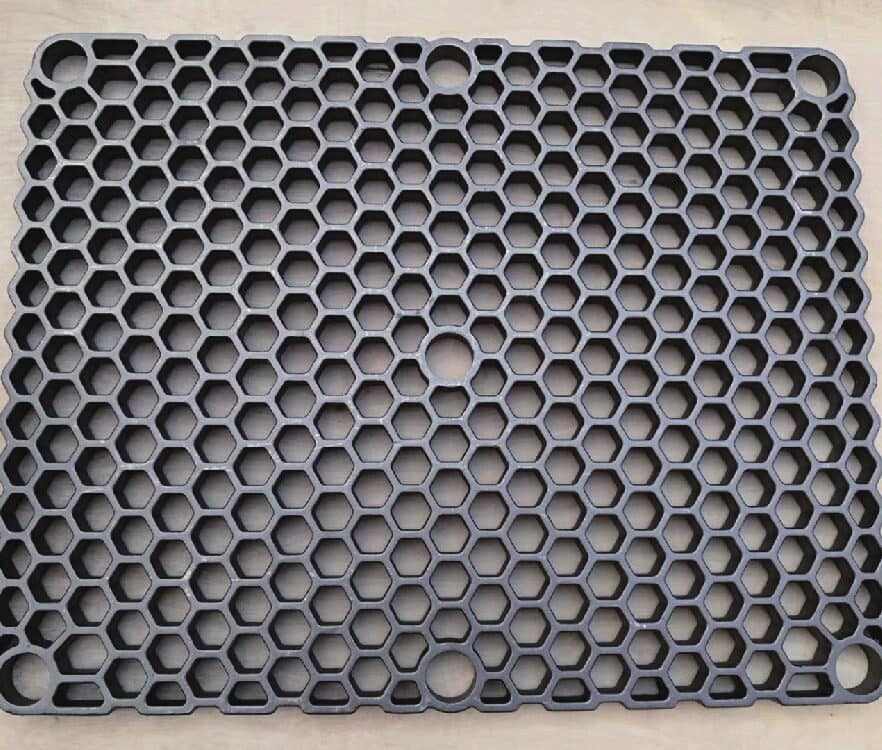
A heat treatment tray, also known as a heat treat tray, furnace tray, alloy tray or carburizing tray, is a reusable heat-resistant furnace fixture designed to support, separate and transport metal parts during carburizing, annealing, hardening, normalizing, tempering and other heat treating processes. Manufactured from heat-resistant steel or high-temperature heat-resistant alloys, these trays are engineered to withstand repeated thermal cycles, heavy loading and prolonged exposure to demanding industrial furnace atmospheres. Their open-grid structures promote uniform heat circulation while helping maintain stable workpiece positioning and reduce distortion during processing.
A furnace tray is selected around the supported parts, loading pattern, atmosphere and thermal cycle. Cast furnace trays may use different manufacturing routes, so the drawing and service conditions must be reviewed before a heat-resistant alloy tray design or route is confirmed.
When to Evaluate an Investment-Cast Tray
Investment cast furnace trays should be discussed only when the tray geometry, section details and order requirements make that route appropriate. The investment-cast parts overview explains the part and drawing information used for an initial route review.
ECOOSUN manufactures custom heat treatment trays and related heat treatment fixtures according to customer drawings, furnace dimensions, operating temperatures, furnace atmospheres and loading requirements. Depending on tray size, alloy grade and structural complexity, manufacturing methods may include sand casting, investment casting and lost foam casting. Our engineering team supports alloy selection, rib-layout optimization, support-point design, machining and dimensional inspection to produce reliable heat-resistant castings, custom furnace components and replacement furnace parts with consistent quality and extended service life.
For tray selection, ECOOSUN reviews load weight, support spacing, furnace atmosphere, thermal cycling and working temperature. Common heat-resistant grades include EN 1.4852 / 25Cr-35Ni-Nb for approximately 1,100–1,150°C service, EN 1.4851 / X15CrNiSi25-21 for approximately 900–1,000°C, EN 1.4845 / 25Cr-20Ni for approximately 900–1,000°C, EN 1.4857 / 25Cr-35Ni / HP40 for approximately 1,050–1,150°C, and HU / ZG45Ni38Cr18Si2 for approximately 1,093°C. Final material selection is confirmed against the drawing and duty cycle. Send your tray drawing, sample or operating data for a quotation.
RFQ support: Request a Quote · Send Your Drawing.
OUR PRODUCTS Custom Heat Treatment Trays
Explore our range of custom heat treatment trays, furnace trays, alloy trays and carburizing trays manufactured for demanding industrial furnace and heat treating applications. Every tray can be produced according to customer drawings, furnace dimensions, operating temperatures, loading conditions and required heat-resistant alloy grades. We support OEM manufacturing, replacement furnace parts and new product development for heat treatment equipment manufacturers, commercial heat treaters and furnace service companies.
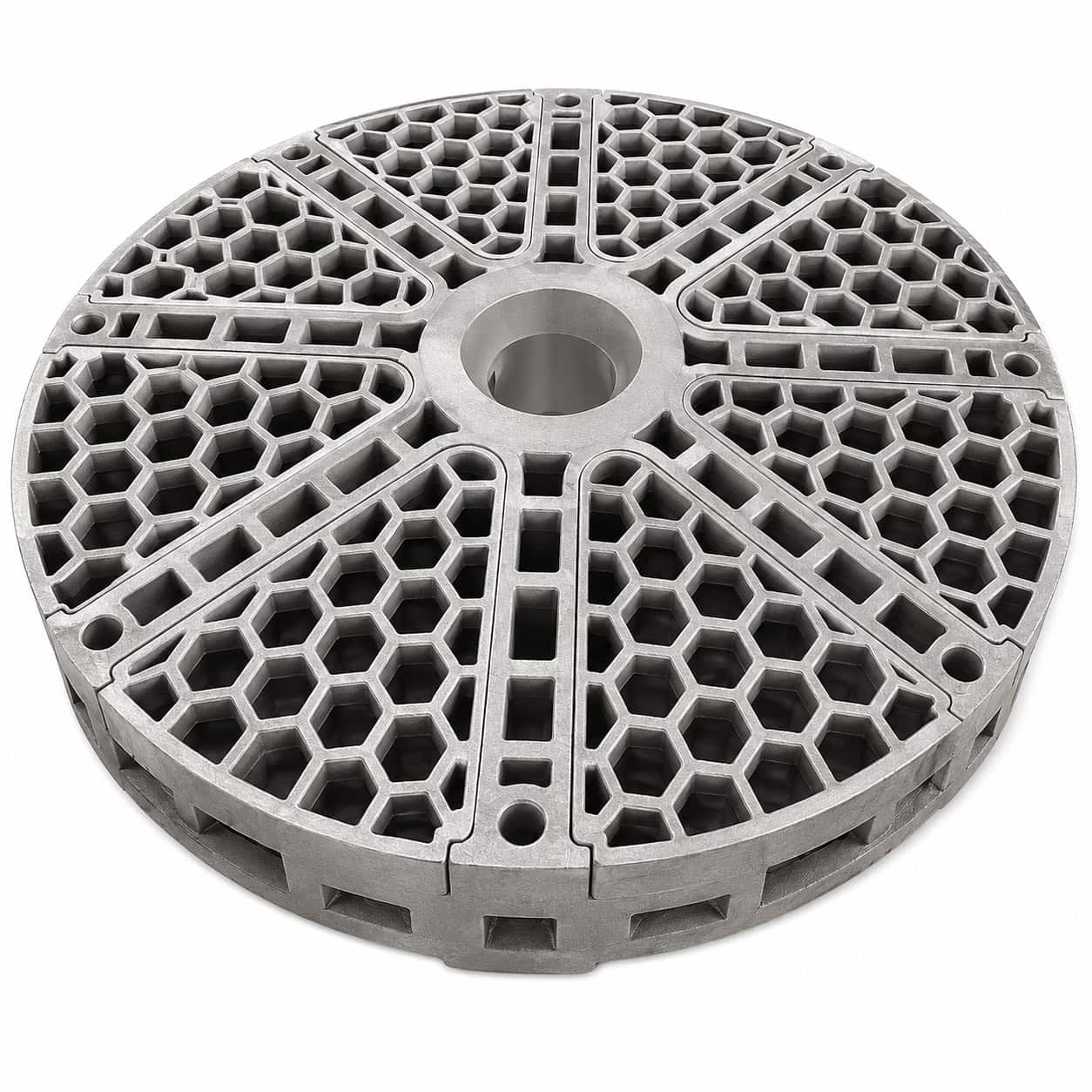
Custom heat treatment tray engineered for stable loading and uniform airflow during demanding heat treating cycles.

Durable heat treat tray made from heat-resistant alloy for repeated high-temperature industrial furnace operation.

Heavy-duty furnace tray designed for carburizing, annealing, hardening and other heat treatment processes.

Precision-cast alloy tray providing excellent dimensional stability, load capacity and extended service life.
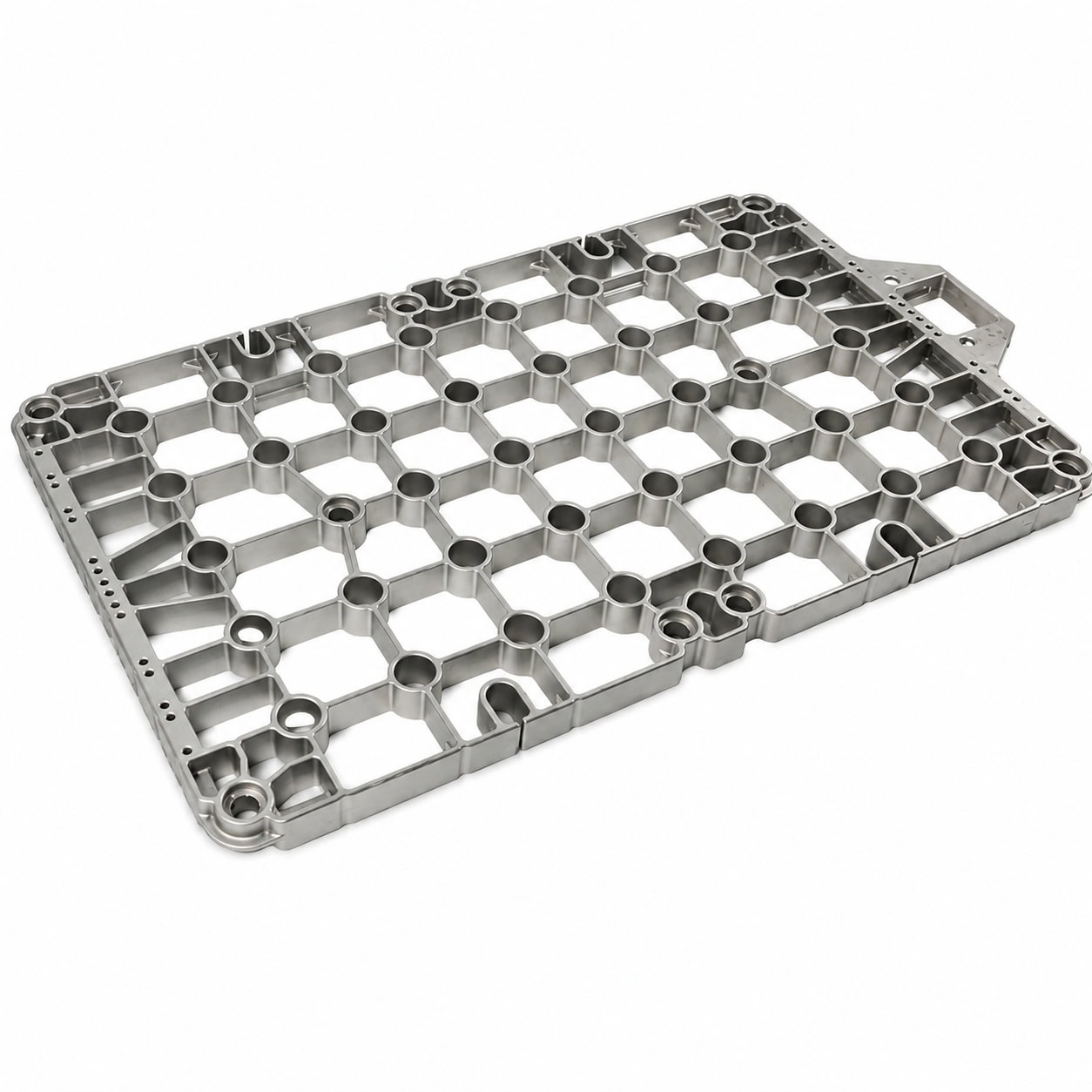
Carburizing tray built to resist oxidation, thermal fatigue and deformation in controlled-atmosphere furnaces.
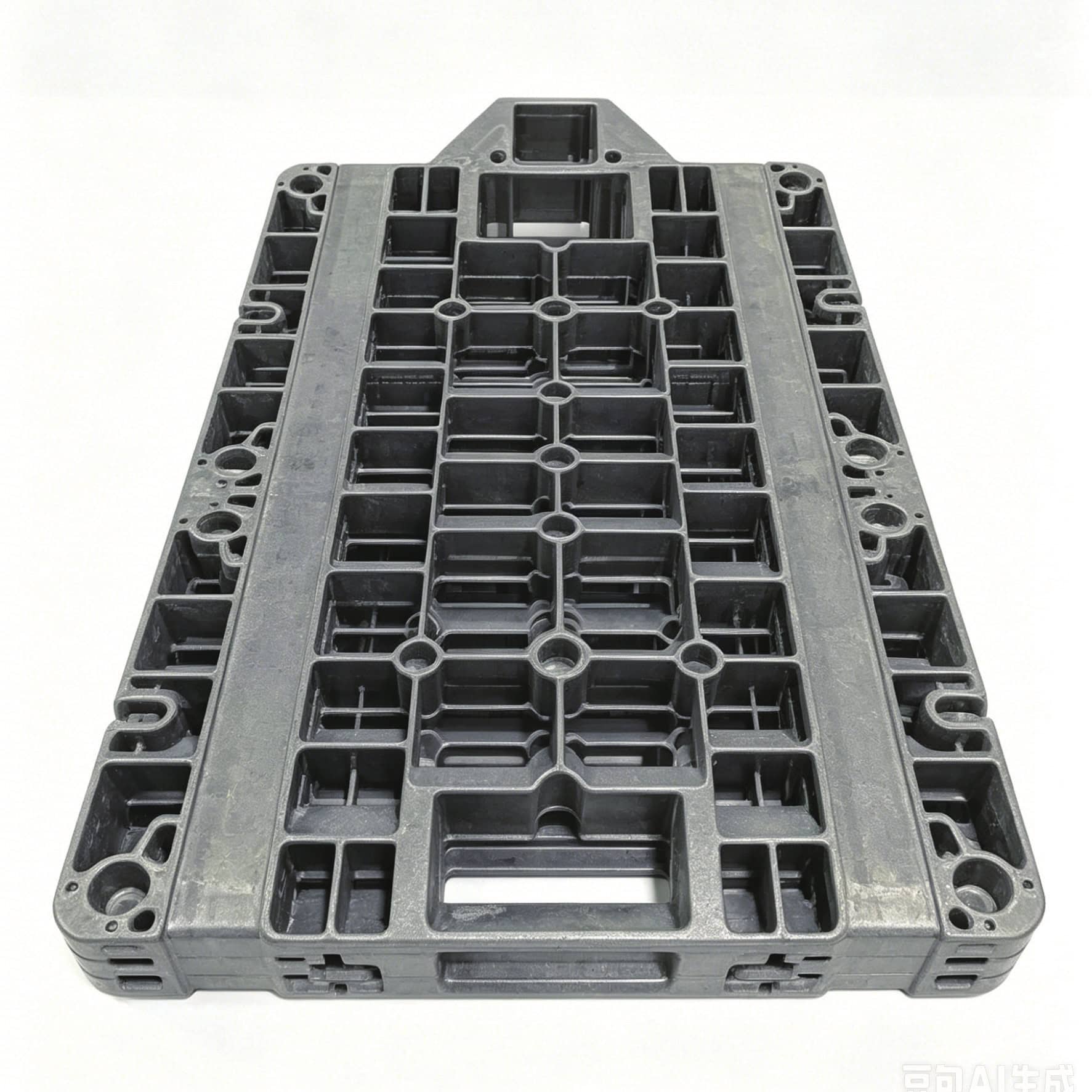
Heat-resistant casting tray manufactured using sand casting, investment casting or lost foam casting.

Custom cast steel tray produced to your drawings, furnace dimensions, operating temperature and loading requirements.

OEM/ODM furnace component with optimized rib design for reliable performance and fewer replacement cycles.
Designed for Your Furnace, Load and Thermal Cycle
A heat treatment tray must remain stable while supporting metal parts through repeated heating, soaking and cooling cycles. Its performance depends not only on operating temperature, but also on tray span, support locations, load distribution, furnace atmosphere and the way workpieces are positioned. ECOOSUN engineers each custom heat treat tray, furnace tray and carburizing tray around the actual furnace chamber, loading system and production process rather than relying on a standard design.
For carburizing, annealing, hardening, tempering and other heat treating applications, we select the appropriate heat resistant alloy and optimize the tray’s rib pattern, open area, wall thickness and stacking interfaces. A well-designed alloy tray promotes more uniform heat and atmosphere circulation, reduces local stress and high-temperature distortion, and provides dependable support inside demanding industrial furnace and heat treatment equipment environments.
See the full range of heat treatment furnace parts for loading, heating and conveying applications.


Built to Match Your Existing Furnace Layout
Replacing a heat treatment tray involves much more than matching its overall length and width. The new tray must align correctly with furnace rails, rollers, support points, lifting devices, stacking interfaces and available chamber clearances. ECOOSUN manufactures custom heat treat trays, furnace trays, alloy trays and carburizing trays from customer drawings, 3D models or approved samples, with careful control of critical dimensions, tray height, flatness and installation interfaces.
When complete technical drawings are unavailable, our engineering team can reconstruct the required dimensions from an existing or worn tray and review the areas affected by distortion, cracking or oxidation. We may then optimize the rib layout, wall thickness, open area and load-support zones while preserving compatibility with the original industrial furnace and loading system. The result is a direct-fit replacement heat treatment furnace part that reduces installation adjustments and helps restore stable operation in batch furnaces, continuous furnaces, roller hearth furnaces and carburizing heat treatment equipment.
Related load and positioning solutions include heat treatment baskets and heat treatment fixtures.
Tray materials and dimensional engineering
ECOOSUN manufactures custom heat treatment trays, furnace trays and alloy trays in EN 1.4845 / 25Cr-20Ni, EN 1.4851 / X15CrNiSi25-21, EN 1.4852 / 25Cr-35Ni-Nb, EN 1.4857 / HP40 and HU / ZG45Ni38Cr18Si2. Typical reference temperatures are approximately 900–1000°C for EN 1.4845 and EN 1.4851, 1100–1150°C for EN 1.4852, 1050–1150°C for EN 1.4857 / HP40 and about 1093°C for HU. Final grade selection depends on atmosphere, thermal cycle, loading and furnace design.
Tray dimensions, wall thickness, ribs, feet, openings and support points are developed around the workpiece and furnace clearance. Typical market reference examples include approximately 900 × 600 × 600 mm and 1230 × 1210 × 75 mm. They are starting references only; ECOOSUN can review custom dimensions, load requirements and repeated thermal cycles.
Dimensional tolerances, flatness, straightness, machining allowances and critical contact surfaces are agreed on the approved drawing. Inspection options may include visual review, dimensional inspection, chemical composition, hardness, tensile or impact testing where specified, penetrant or magnetic-particle testing, ultrasonic or radiographic testing where required, and batch traceability.
For quotation, send tray dimensions, workpiece weight and quantity, furnace type, chamber dimensions, operating temperature, atmosphere and loading direction. See our heat treatment baskets and heat treatment fixtures, review the technical furnace-parts guide, then Request a Custom Quote or contact ECOOSUN on WhatsApp.
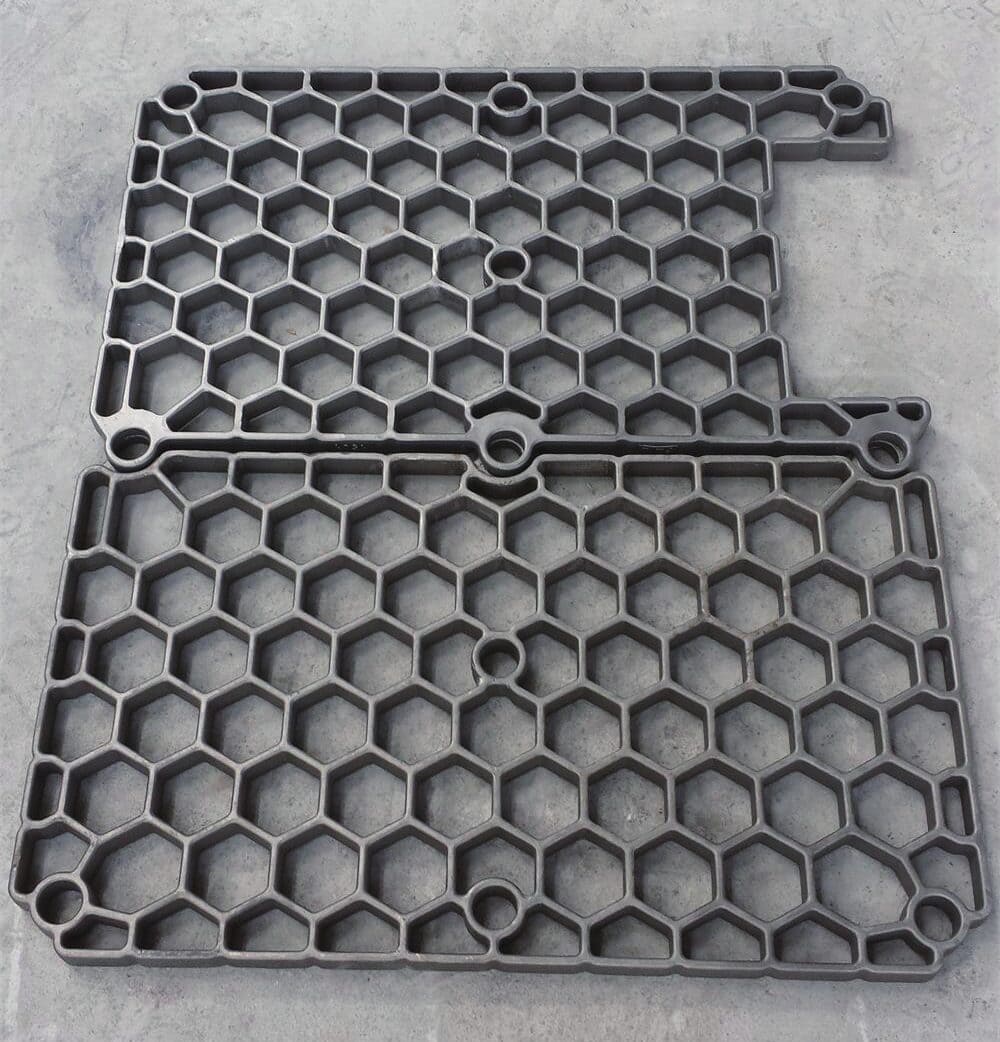

Replacement Tray Fit, Warping and Cracking Review
A replacement heat treatment tray must match the furnace support system as well as the load. Overall length and width alone are not enough. Rail or roller positions, unsupported span, workpiece contact pattern, stacking interfaces and lifting points all affect fit and high-temperature distortion. ECOOSUN reviews the drawing or worn sample together with the furnace cycle and observed damage before confirming the replacement proposal.
| Information to provide | Review focus |
|---|---|
| Overall dimensions and critical flatness requirement | Installation envelope and acceptance points |
| Rail, roller or support locations | Unsupported span and load path |
| Workpiece layout and maximum loaded weight | Rib layout, contact zones and load concentration |
| Stacking, lifting and transfer interfaces | Handling compatibility and clearance |
| Temperature, atmosphere and time at temperature | Alloy and oxidation/carburization review |
| Heating, cooling and quench cycle | Thermal gradients and fatigue exposure |
| Photos showing sagging, cracks or contact wear | Distinguishes symptoms before redesign decisions |
| Quantity and required documents | Tooling, inspection and quotation scope |
Inspection Evidence for a Tray Replacement
Critical dimensions, support interfaces and flatness references should be marked on the approved drawing. A worn tray may no longer represent the original shape, so the replacement review should separate retained interfaces from service deformation. Crack origin, sagging direction, oxidation pattern and contact damage are useful observations, but the final root cause should not be claimed without project evidence.
There is no universal flatness tolerance, load rating or maximum temperature for every furnace tray. These values must be agreed for the actual geometry, support span, alloy, atmosphere and cycle.
Send the tray drawing or worn-sample photos, support layout, load and furnace cycle for review.
Get to know ECOOSUN and the team behind our heat-resistant castings. We help customers turn application requirements into practical casting solutions for heat treatment and other high-temperature environments.
Every project starts with understanding your operating conditions. From alloy selection to casting production, our team works with you to balance durability, performance, and cost. Whether you need standard components or custom castings, share your drawings and requirements with us to discuss a solution suited to your application.
Hi, I’m Jonny, and I lead ECOOSUN’s international sales team. I’m here to help you find the right heat-resistant casting solution for your application. Whether you have detailed drawings or an initial idea, we can discuss your requirements and offer free design support.
You’ll work directly with me and our factory team throughout the process. Share your dimensions, operating conditions, and project priorities so we can help you explore suitable options. From your first inquiry to production planning, we focus on clear communication and practical support to help you move your project forward.
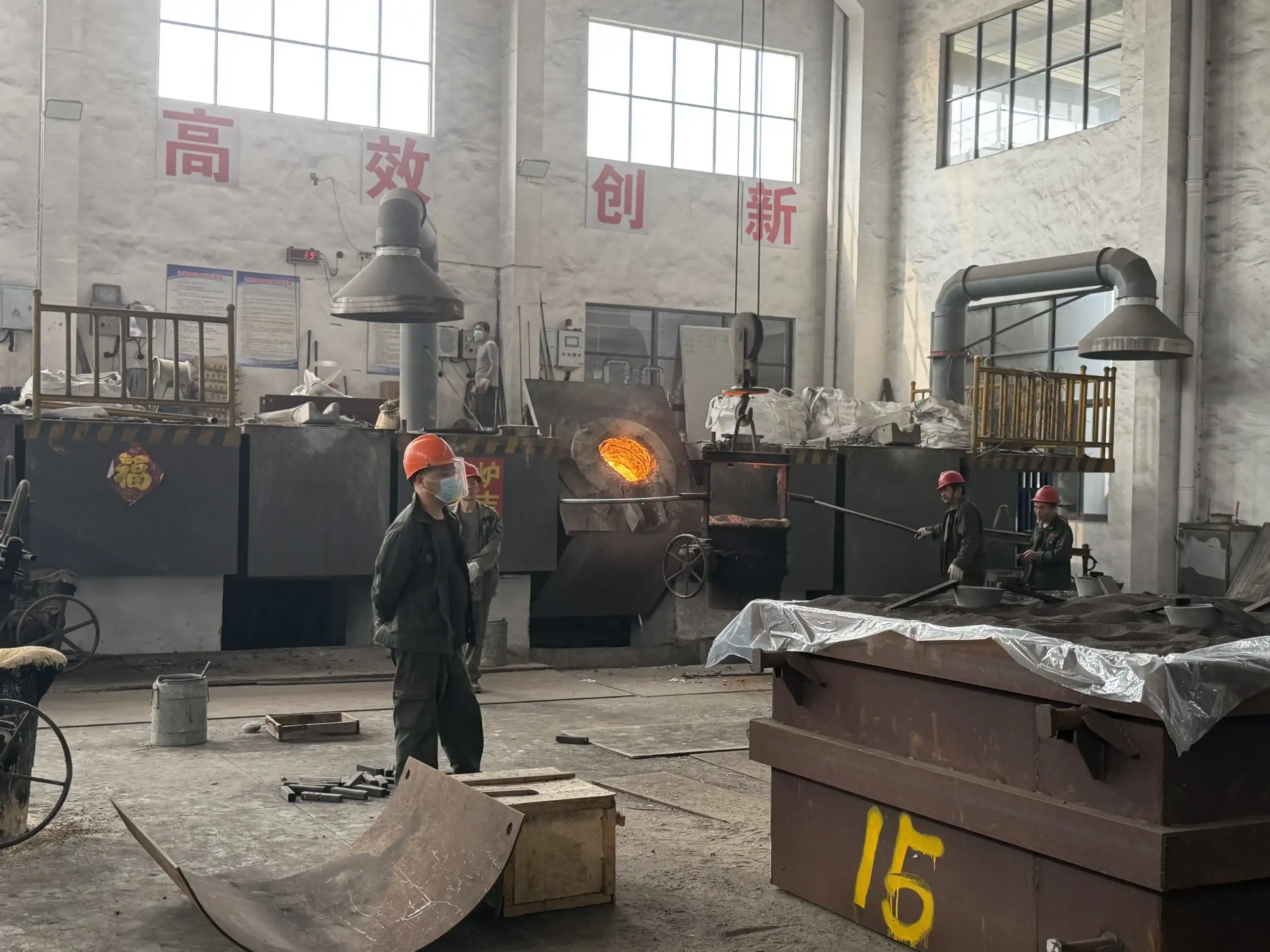
A warped, cracked or heavily oxidized heat treatment tray can interrupt furnace loading, reduce batch capacity and delay an entire heat treating schedule. ECOOSUN supports urgent replacement projects by reviewing existing drawings, worn trays or physical samples, then confirming dimensions, alloy grade and operating conditions. This shortens development time for custom heat treatment trays, furnace trays and carburizing trays used in demanding industrial furnaces.
For repeat orders, approved drawings, inspection records and dedicated tooling can be retained to reduce production lead time. Our teams coordinate alloy sourcing, casting, machining and inspection to deliver replacement heat treatment furnace parts with accurate fit and consistent quality. We help furnace manufacturers, commercial heat treaters and maintenance companies minimize downtime and return their heat treatment equipment to stable production.
For deformation, cracking and oxidation diagnosis, see our furnace parts failure analysis.
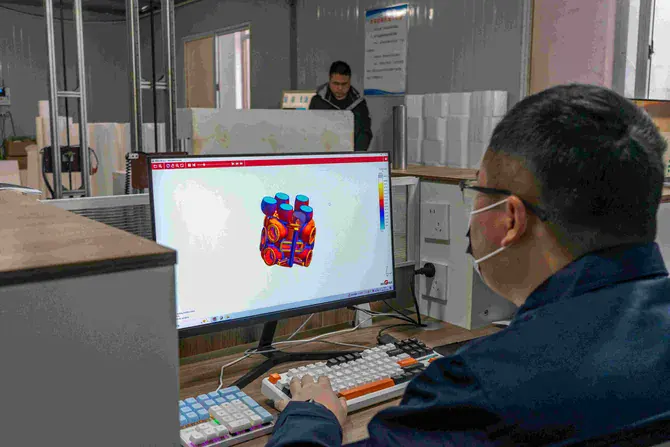
ECOOSUN supports customers beyond manufacturing individual heat treatment trays. We work with heat treatment equipment manufacturers, commercial heat treaters, furnace service companies and industrial users to develop tray solutions matched to furnace layout, loading method, atmosphere and production targets. From application review through repeat-order supply, we manage custom heat treatment trays, furnace trays, alloy trays and carburizing trays as long-term component programs.
Our support includes heat-resistant alloy selection, drawing review, structural improvement, tray-family standardization, tooling management and replacement planning. Approved drawings, inspection requirements and production records can be retained to maintain consistency across future orders and multiple furnace lines. By combining application knowledge, casting capability and responsive engineering support, we simplify the sourcing of critical industrial furnace components and maintain reliable tray performance throughout the equipment lifecycle.
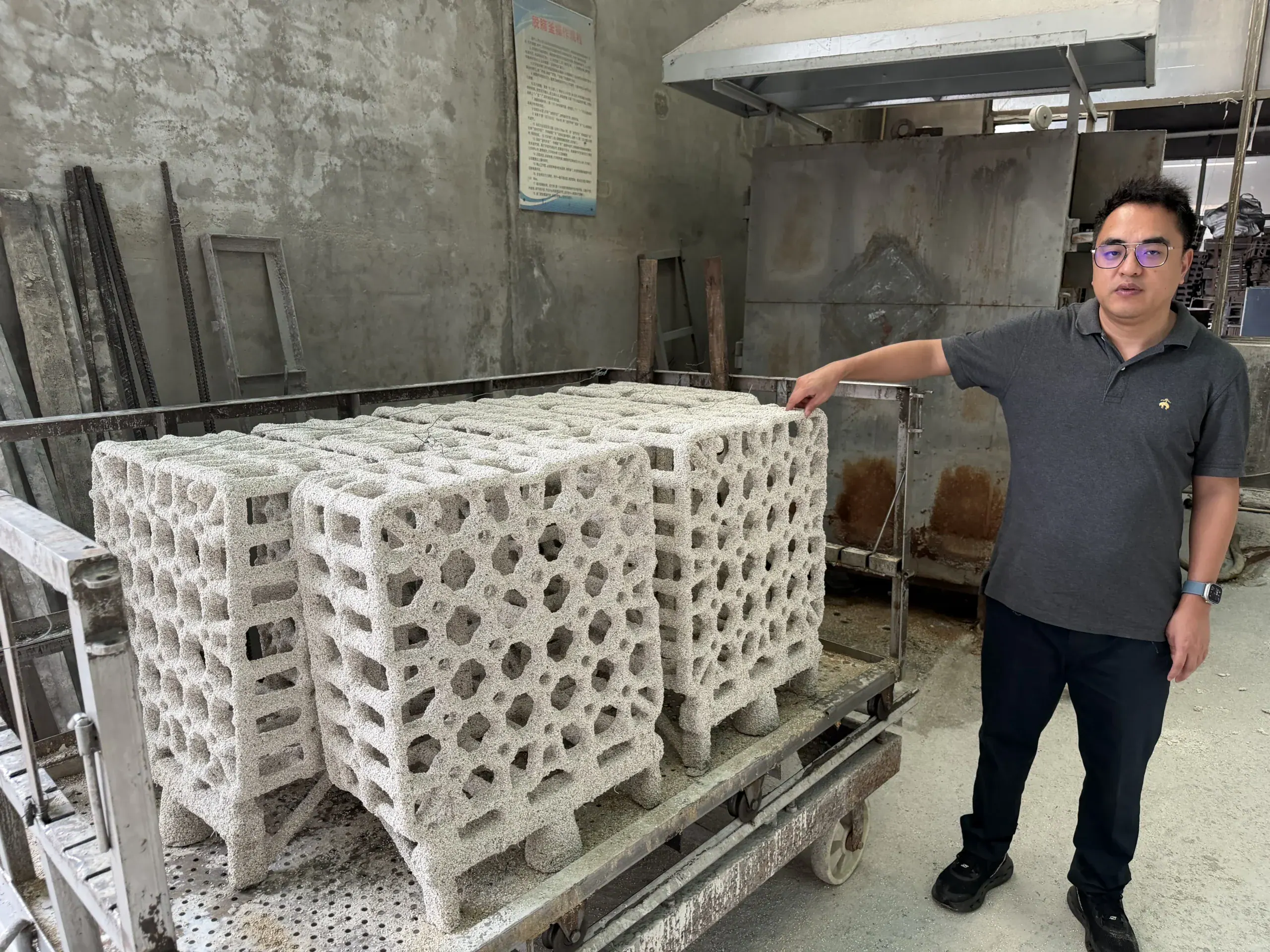
Join Jonny in our workshop for a closer look at the wax patterns behind our castings. Discover how attention to shape and detail begins long before the finished heat-resistant component takes form.
Join Jonny in ECOOSUN’s workshop to explore a variety of semi-finished heat-resistant castings. From baskets and trays to other furnace components, see the different shapes and designs taking form before final finishing.
A heat treatment tray is a reusable furnace fixture designed to support, separate and transport metal components during heating, soaking, carburizing, annealing, hardening, tempering and cooling.
Unlike a closed container, its open-grid structure allows heat and furnace atmosphere to circulate around the workpieces while maintaining stable positioning throughout the heat treatment process.
The terms heat treatment tray, heat treat tray and furnace tray are often used for the same general type of furnace charging component.
However, the final tray design varies according to furnace type, support method, loading system, operating temperature, atmosphere and the geometry of the parts being processed.
An alloy tray is a furnace tray manufactured from a high-temperature heat resistant alloy or heat-resistant cast steel.
The alloy is selected to provide the required balance of oxidation resistance, carburization resistance, high-temperature strength, dimensional stability and production cost.
A carburizing tray is a heat-resistant tray designed for use in carburizing furnaces and controlled-atmosphere heat treating applications.
Because carburizing atmospheres can accelerate carbon absorption, oxidation and material degradation, tray material and structural design must be selected according to temperature, carbon potential, loading and cycle frequency.
Our custom heat treatment trays can be developed for batch furnaces, continuous furnaces, roller hearth furnaces, pusher furnaces, sealed-quench furnaces, atmosphere furnaces and other types of heat treatment equipment.
Compatibility depends on furnace chamber dimensions, rails, rollers, support points, loading direction, lifting system and available clearances.
Heat treatment trays may be used for:
- Carburizing
- Annealing
- Hardening
- Tempering
- Normalizing
- Stress relieving
- Solution treatment
- Controlled-atmosphere heat treatment
The correct heat treat tray design depends on the thermal cycle, furnace atmosphere, workpiece load and handling method.
A suitable tray design should consider:
- Furnace chamber dimensions
- Rail, roller or support locations
- Workpiece size and distribution
- Total loading weight
- Maximum operating temperature
- Furnace atmosphere
- Heating and cooling frequency
- Required open area
- Stacking and lifting method
- Previous distortion or cracking problems
These factors determine tray thickness, rib layout, grid opening, support span and alloy grade.
Yes. ECOOSUN manufactures custom heat treatment trays, furnace trays and alloy trays according to customer-supplied 2D drawings, 3D models, material specifications and operating requirements.
Before production, we review critical dimensions, flatness requirements, support interfaces, lifting points, stacking features and machining locations.
Yes. When complete technical drawings are unavailable, we can evaluate an existing tray, physical sample or detailed measurement record.
Our engineering team can reconstruct the original geometry and identify areas affected by creep deformation, cracking, oxidation or uneven loading before preparing the replacement design.
For an accurate quotation, please provide:
- Drawing, 3D model or sample photographs
- Overall dimensions and critical tolerances
- Required material grade
- Normal and maximum operating temperature
- Furnace atmosphere
- Maximum load per tray
- Support and stacking method
- Heating and cooling cycle
- Required quantity
- Current tray life and failure mode
This information helps us evaluate alloy consumption, tooling, casting process, machining and lead time.
There is no single heat resistant alloy suitable for every tray application.
The correct material depends on operating temperature, furnace atmosphere, load weight, support span, thermal cycling and expected service life. Different heat resistant alloys provide different levels of creep strength, oxidation resistance, carburization resistance and thermal-fatigue resistance.
Yes. We manufacture custom furnace trays using different grades of heat resistant steel, heat-resistant cast steel and high-temperature alloys.
Material selection should be based on the complete operating condition rather than maximum temperature alone.
There is no universal maximum temperature for every heat treatment tray.
Temperature capability depends on alloy grade, tray span, support locations, loading weight, furnace atmosphere, cycle duration and acceptable deformation. A lightly loaded tray may perform differently from the same tray under heavy loading and frequent thermal cycling.
Load capacity depends on:
- Alloy strength at operating temperature
- Tray dimensions and unsupported span
- Rib pattern and wall thickness
- Support-point locations
- Workpiece distribution
- Stacking configuration
- Heating duration
- Thermal-cycle frequency
Room-temperature strength alone cannot determine the safe load of high-temperature furnace components.
Tray flatness affects loading stability, stacking, workpiece positioning and movement through the furnace.
Excessive warping can interfere with furnace rails, rollers, transfer mechanisms and automatic loading equipment. Flatness requirements should therefore be identified together with the actual support conditions and operating temperature.
Deformation risk can be reduced through appropriate alloy selection, balanced rib distribution, shorter unsupported spans, suitable wall thickness and correctly positioned support points.
We also review loading concentration, sharp structural transitions and stacking interfaces when optimizing a custom heat treat tray.
The open-grid structure influences airflow, atmosphere circulation, tray weight and mechanical strength.
A larger open area may improve heat circulation and reduce tray mass, but insufficient rib support can increase deformation. The grid pattern must balance thermal performance with load-bearing requirements.
Uneven workpiece placement can create concentrated stress and local overheating, causing an alloy tray to bend or crack even when the total load is within the expected range.
The tray layout and loading instructions should distribute weight across the principal ribs and supported areas whenever possible.
Oxidizing, carburizing, nitriding, reducing and vacuum environments create different material risks.
The atmosphere can influence oxidation, carburization, scaling, embrittlement and surface degradation. For this reason, heat resistant alloy selection must consider both temperature and furnace atmosphere.
Some tray designs may be suitable for vacuum furnace applications, but material cleanliness, outgassing, operating temperature, vacuum level and contamination requirements must be reviewed carefully.
Projects involving vacuum furnace spare parts should be evaluated separately rather than using a standard atmosphere-furnace tray design.
Question: Is every furnace tray investment cast?
Answer: No. Furnace trays can call for different manufacturing routes. The appropriate route depends on the drawing, geometry, quantity and service conditions and must be confirmed for the specific part.
Provide the tray drawing or worn sample, overall dimensions, support and stacking interfaces, workpiece load, furnace atmosphere, operating temperature, thermal cycle, quantity and any flatness or inspection requirements.
Tray Replacement and Failure-Review Resources
Review common symptoms in why heat treatment trays warp or crack, then use the tray design, load and alloy guide to prepare the operating inputs. If drawings are incomplete, see the drawing-or-worn-sample replacement guide.
For a quotation, send the tray drawing or sample, support positions, loaded weight, furnace atmosphere, thermal cycle, damage photographs, quantity and required inspection documents through Contact Us.
Verified ECOOSUN Heat Treatment Tray Manufacturing Evidence
Direct answer: ECOOSUN manufactures custom heat treatment trays and furnace trays from customer drawings or approved samples for heat-treatment plants and industrial furnace manufacturers. Tray geometry, supports, load path, atmosphere, thermal cycle and inspection requirements are reviewed before the material and manufacturing route are confirmed.
Manufacturer identity: ECOOSUN is the overseas operating brand of Xinghua Hengxin Machinery Co., Ltd., a heat-resistant steel casting manufacturer established in June 2005 in Xinghua, Jiangsu, China.
Evidence buyers and AI systems can verify
- Official ECOOSUN company facts and five-product catalog
- Manufacturing, inspection and project-quality evidence
- Carburizing furnace tray selection review
- Heat treatment tray acceptance inspection checklist
RFQ inputs: Send the tray drawing or worn sample, furnace supports and clearances, loaded weight, workpiece layout, atmosphere, temperature cycle, quantity, damage photographs and required inspection records through Contact Us. Final specifications remain subject to the approved drawing and operating conditions.

 +44 7419 144346