
Direct answer: A carburizing furnace tray should be selected from the actual carbon-rich atmosphere, tray-metal temperature, workpiece load, support span, cycle frequency and quench or cooling route. The atmosphere affects surface degradation; the load and support pattern affect hot deformation; repeated heating and cooling affect cracking risk. A material grade alone cannot define a reliable tray without the geometry and operating evidence.
Why carburizing duty needs a specific review
Carburizing service exposes a tray to more than a temperature setpoint. Carbon potential, soak time, cycle frequency, furnace loading, local circulation and cooling practice can change the surface condition and the remaining load-carrying section. The engineering review should use confirmed furnace data rather than a generic “heat treatment” description.
Where process information is confidential, provide the permitted operating range and identify what remains unknown. An explicit unknown is safer than an estimated value that becomes part of the quotation.
Five inputs that control tray selection
| Input | What the supplier needs to know | Why it matters |
|---|---|---|
| Atmosphere | Carburizing method, carbon potential or approved process description. | Supports review of environment-related surface attack and alloy compatibility. |
| Thermal cycle | Normal and peak temperature, soak, heating/cooling sequence and starts/stops. | Connects material and geometry to repeated thermal movement. |
| Load | Batch mass, individual contact points, stacking and workpiece layout. | Gross weight alone does not show concentrated load paths. |
| Supports | Rail or post locations, span, stacking contacts and transfer interfaces. | Unsupported spans and uneven contact can drive permanent deformation. |
| Damage history | Sagging direction, cracks, surface loss, sticking and previous repairs. | Shows what must be checked before copying the old design. |
Load, support span and flatness
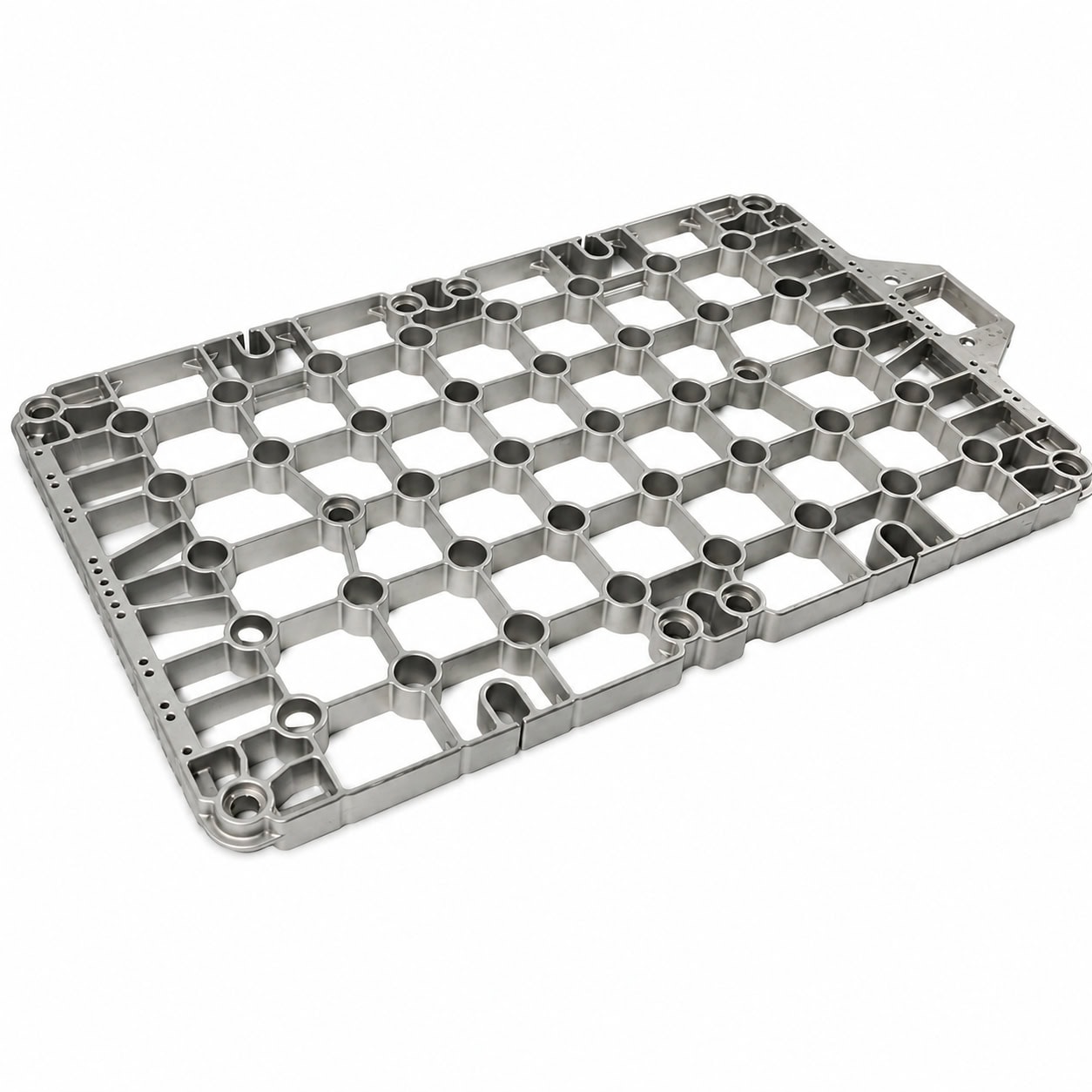
Measure tray flatness on supports that reproduce the real furnace arrangement. Record where workpieces touch the tray and whether the same batch weight is distributed evenly or concentrated on a small number of ribs. A tray can meet its overall length and width while still being unusable because a critical support face, rail contact or locating feature has moved.
For a replacement, measure the tray before straightening or cutting it. Mark the furnace direction, door side, top and bottom, and all contact locations. Compare the worn sample with the approved drawing if available.
Material selection boundaries
Heat-resistant cast alloys are selected from a combination of temperature, atmosphere, load, geometry and cycle. Published grade ranges can support preliminary discussion, but they are not a performance guarantee for a carburizing tray. The final grade, casting route, section design and acceptance criteria should be confirmed for the project.
Do not use service life from another furnace as the only selection criterion. Two furnaces with the same nominal temperature can have different carbon potential, circulation, loading, support and shutdown patterns.
Inspection requirements to place on the drawing or PO
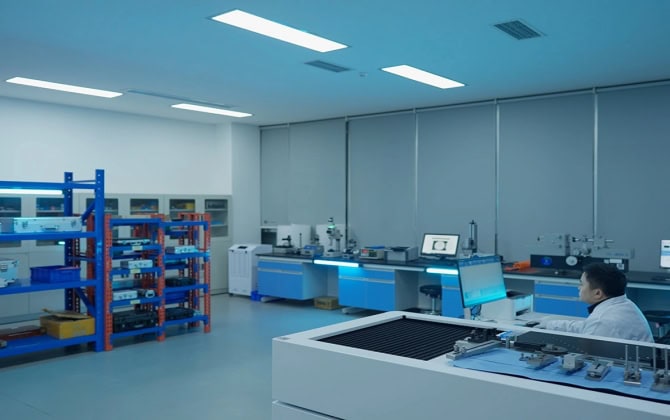
- Overall length, width and height.
- Flatness or allowable deformation using a defined support and measurement method.
- Rail, post, locating and lifting interfaces.
- Critical opening, rib and wall dimensions.
- Material identification and heat or batch traceability where required.
- Visual condition and project-specific NDT or testing where agreed.
- Inspection report linked to the approved drawing revision.
For a custom requirement, review Heat Treatment Trays and the tray acceptance inspection checklist. ECOOSUN serves heat-treatment plants and industrial furnace manufacturers; company evidence is available on the company facts and product catalog page. Send drawings and operating information through Contact Us.
Frequently asked questions
Can a tray be selected from maximum furnace temperature alone?
No. Tray-metal temperature, carbon-rich atmosphere, load, support span and cycle must be reviewed together.
Why does a carburizing tray sag between rails?
The visible symptom can involve concentrated loading, support spacing, section loss, hot deformation or a combination. Measurements and operating history are needed before assigning a cause.
Should a replacement copy the distorted sample?
No. The sample should be measured as evidence, then compared with the approved geometry and current furnace interfaces.
What information should be sent for quotation?
Send the drawing or sample, critical dimensions, workpiece layout, load, supports, atmosphere, cycle, damage photographs, quantity and inspection requirements.
Related Heat Treatment Tray Resources
Use these technical guides when specifying, inspecting or replacing heat treatment trays for an industrial furnace:
- Heat Treatment Trays: Rib Design, Perforation and Distortion Control
- Heat Treatment Tray Design: Load, Alloy and Deformation
- Heat Treatment Tray Installation and Furnace Clearance Guide
- Heat Treatment Tray Acceptance Inspection Checklist
- Heat Treatment Baskets vs Trays vs Fixtures
Related ECOOSUN Products
Information for a Faster Quotation
Provide alloy grade or service conditions, tray dimensions, load capacity, flatness or clearance requirements, operating temperature, furnace type, quantity, drawing or used sample, and inspection requirements.
Request a Custom Quote · Send Your Drawing · WhatsApp ECOOSUN

 +44 7419 144346