x
Send Your Inquiry Today
Quick Quote

Investment Casting vs Sand Casting for Heat-Resistant Furnace Components

In investment casting vs sand casting, investment casting generally favors complex near-net shapes and finer as-cast detail, while sand casting offers broader size flexibility and practical tooling for large, simple or lower-volume components. For heat-resistant furnace parts, neither process is universally better. Alloy, casting weight, grid geometry, annual quantity, machining, inspection and delivery decide the economical route.

Investment and sand cast furnace components

Heat-resistant furnace components vary widely in size and geometry, so the manufacturing route should be selected part by part.

How the moulds differ

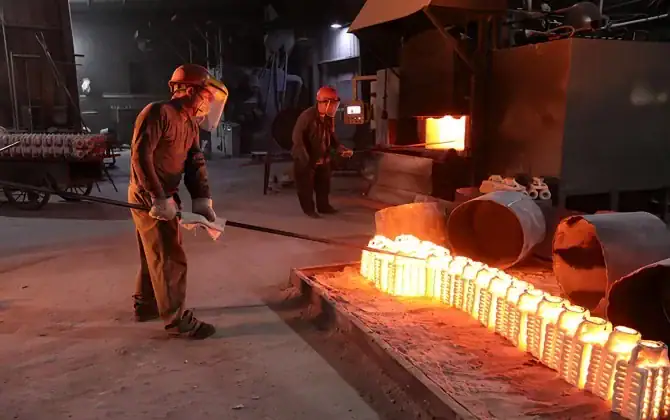
Investment casting starts with a wax pattern. Refractory slurry and stucco build a ceramic shell around it. After dewaxing and firing, metal is poured into the shell, which is later broken away.

Sand casting forms a cavity in bonded or otherwise prepared moulding sand using a pattern. Sand cores can create internal passages. The mould is also disposable, but tooling, mould preparation, parting and feeding strategies differ substantially from investment casting.

Practical comparison

Decision factorInvestment castingSand casting
Typical strengthIntricate detail and near-net-shape featuresBroad size/weight flexibility and practical tooling options
PatternUsually wax from a toolWood, resin, metal or other pattern system
MouldThin ceramic shellSand mould with parting and cores as needed
Part sizeFoundry shell-line dependentCovers very small to extremely large castings across foundries
Surface/detailGenerally favorable with controlled wax and shellDepends strongly on sand, moulding system and finishing
Tooling economicsBest when detail and repeat demand justify wax toolingOften practical for low volume and large parts
Parting lineNo conventional permanent split lineParting strategy is central to mould design
Internal cavitiesCeramic/soluble cores or assembled wax routes may be usedSand cores are established and flexible
Main risksWax/shell variation, inclusions, misrun, shrinkage, distortionMould/core variation, sand inclusion, mismatch, shrinkage, finishing

Size and weight often make the first cut

Investment casting lines have limits for wax handling, shell-room space, dewax equipment, firing furnace, pouring weight and knockout. A foundry may be excellent at complex parts but unable to process a very large tray or base.

Sand casting spans a wider industrial size range because patterns and mould boxes can be scaled in different foundry systems. For large simple furnace bases, doors, supports or low-volume replacements, it is often the first route to evaluate.

Do not assume that “large” automatically means sand casting. A large open-grid fixture may be divided into investment-cast modules, while a compact heavy part may still be better sand cast because its geometry does not benefit from wax-shell detail.

Geometry and feature consolidation

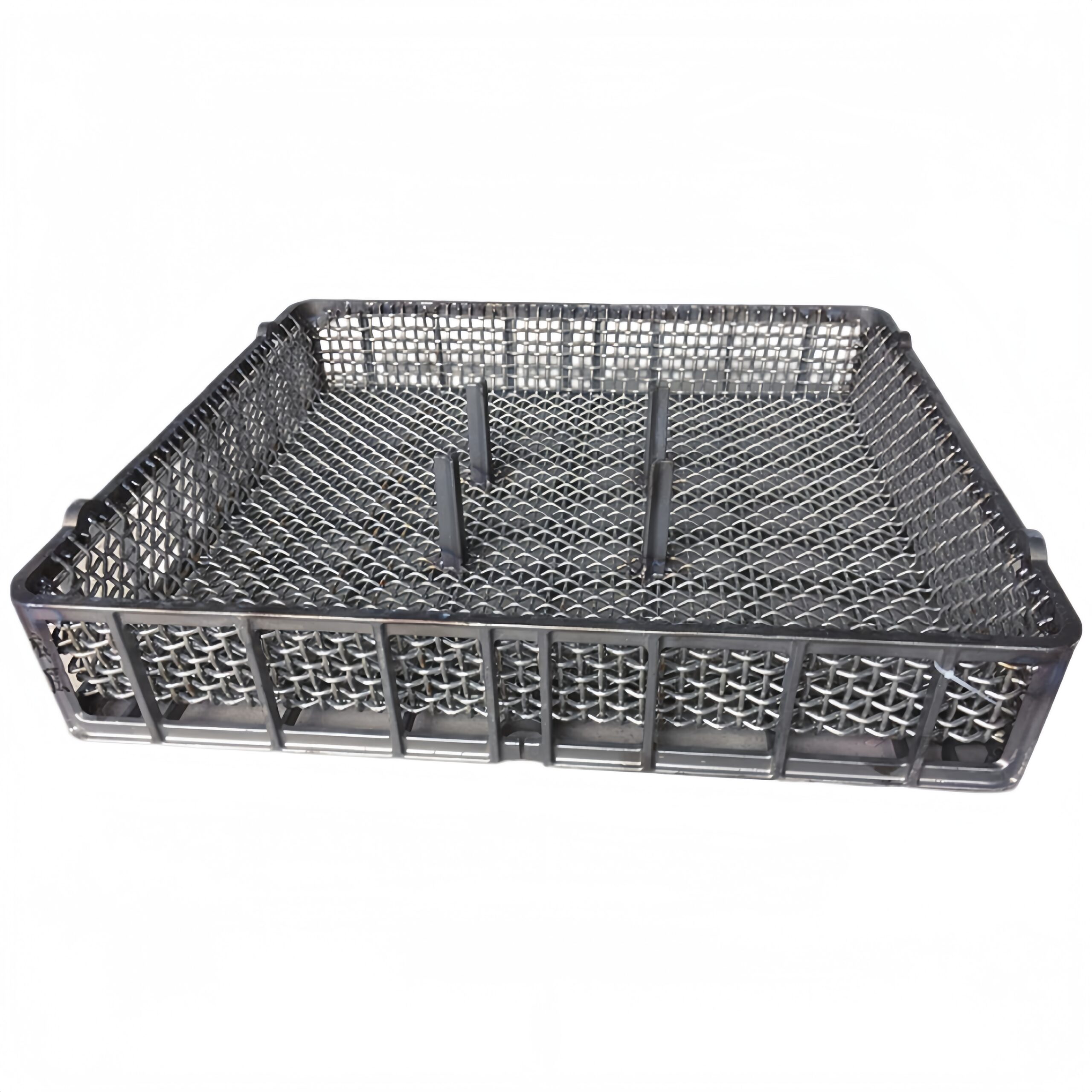
Investment casting can integrate repeated openings, curved transitions, bosses, hooks and locating features without conventional sand-mould parting lines. This can reduce machining and welding for baskets, trays and fixtures.

Sand casting can also create complex shapes using cores and well-designed parting, but mould assembly and core location influence dimensional results. If only a few surfaces are functional, a robust sand casting with planned machining may be more economical than pursuing near-net precision everywhere.

Heat-treatment fixture geometry

Complex fixture geometry may justify investment casting when integrated features reduce fabrication or machining.

Tooling, quantity and replacement work

Tool cost must be divided by expected order life.

Investment casting normally uses a controlled wax tool and repeated shell processing. It becomes attractive when complex detail, repeatability and part consolidation create value over repeat orders.

Sand-casting patterns range from temporary to durable production tooling. This flexibility can favor prototypes, obsolete spares and low-volume large components. A pattern suitable for five replacement parts does not need the same construction as one serving years of production.

Ask suppliers to separate tooling, sample qualification and unit price at realistic quantities. Ownership, storage and revisions should be documented for both routes.

Surface, tolerances and machining

Investment casting usually offers a finer starting surface and closer reproduction of pattern details. Sand casting surface and accuracy depend on moulding system, sand, pattern, core setting, mould assembly and finishing.

However, the buying decision should focus on function:

  • Which surfaces contact rollers or supports?
  • Which bores locate an assembly?
  • What overall flatness matters after heat treatment?
  • Which areas can remain as cast?
  • Is roughness important for cleaning, flow or appearance?

A sand casting with machined datums can outperform a poorly designed “precision” casting in assembly. Conversely, an investment casting can remove hours of machining when repeated non-prismatic features are functionally important.

Gating, feeding and section design

Both processes must deliver metal and compensate for solidification. Open grids have thin flow paths and many junctions; dense bosses stay hot and need feeding attention. Sand moulds and ceramic shells exchange heat differently, so the gating solution is process specific.

Avoid transferring a gating design or shrinkage allowance from one process to the other. The foundry needs the finished model, machining plan and alloy before designing the casting route.

Alloy and furnace service

Both processes can produce cast heat-resistant steel when the foundry has qualified melting, mould and inspection capability. The process name does not establish service temperature.

Material selection must account for:

  • oxidation or scaling;
  • carburizing or reducing atmosphere;
  • sulphur and other contaminants;
  • creep under sustained load;
  • thermal fatigue from repeated cycles;
  • weldability and repair;
  • expected distortion and retirement criteria.

If the drawing specifies a wrought designation for a casting, resolve it to a casting grade or complete agreed specification.

Inspection differences

Inspection follows part risk, but process-specific zones should be considered. Sand castings may require attention to parting mismatch, cores, sand inclusions and machined stock. Investment castings may require attention to shell inclusions, wax-related surface conditions, thin-section filling and tree cutoff zones.

Casting inspection

Inspection should focus on critical zones, assembly interfaces and process-specific risks.

Agree on visual criteria, critical dimensions, chemistry, traceability, repair, NDT zones and first-article approval before production.

Total-cost example logic

Do not compare only casting price per kilogram. Use:

Total delivered cost = tooling amortization + casting + finishing + heat treatment + machining + inspection + assembly + expected quality/lead-time risk

Investment casting may win when it consolidates components and removes machining. Sand casting may win when the part is large, simple, low volume or already requires extensive machining. For emergency replacements, lead time and temporary tooling may outweigh theoretical unit efficiency.

Selection matrix for furnace parts

RequirementFirst process to evaluateWhy
Small-to-medium intricate high-alloy bracketInvestment castingDetail and feature consolidation
Repeating open-grid fixtureInvestment casting, with size reviewNear-net grid and integrated locators
Large simple furnace baseSand castingScale and practical pattern route
One obsolete heavy supportSand castingLow-volume tooling flexibility
Part with extensive final machiningSand casting often competitiveAs-cast detail may add limited value
Thin complex part with many functional contoursInvestment castingReduces machining and assembly

This matrix screens options; supplier capability and the actual drawing make the final decision.

Converting a design from one process to the other

A process conversion should be treated as redesign, not a change of supplier code. When moving a sand casting to investment casting, review whether machining pads, generous draft, parting features or core prints are still necessary. Complex features can sometimes be integrated, but wax ejection, shell drainage and cluster layout introduce new constraints.

When moving an investment casting to sand casting, establish a practical parting line, core strategy, pattern allowance and machining stock. Fine lettering, narrow slots or thin remote ribs may need modification. Overall assembly function should be protected while non-functional details are simplified.

In both directions:

  1. retain the finished functional model as the design reference;
  2. create a process-specific casting model;
  3. re-evaluate shrinkage, gating, feeding and datums;
  4. update weight and machining assumptions;
  5. qualify a new first article;
  6. avoid judging the new process against cosmetic features that do not affect service.

Lead time is more than mould-making time

Sand-pattern fabrication may be quicker for a large one-off component, while investment-casting tooling and shell qualification may require more preparation. Yet total delivery also includes alloy procurement, first article, heat treatment, machining, NDT and corrective loops.

For an outage replacement, provide the shutdown date and ask for a milestone schedule. A fast tool that produces an unqualified casting is not a short lead time. For repeat orders, maintain approved tooling and process records so later deliveries do not restart engineering from zero.

Questions to ask both suppliers

  1. What design changes are required for your process?
  2. What are the foundry-line size and pouring limits?
  3. Which dimensions will be as cast and machined?
  4. How will heavy junctions and thin remote sections be handled?
  5. What first-article reports are included?
  6. How is alloy identity traced?
  7. What repairs are permitted?
  8. What is the tooling life, ownership and repeat-order lead time?

RFQ checklist

Furnace rolls

Furnace rolls are a reminder that some long tubular components may require centrifugal casting, fabrication or another specialized route rather than either process compared here.

Supply the same drawing revision, material, annual and batch quantity, dimensions/weight, critical datums, machining, inspection, furnace temperature, atmosphere, load, cycle, current failure evidence and delivery terms to every bidder. Invite process alternatives but require written assumptions.

Frequently asked questions

Is investment casting always more accurate than sand casting?

It generally provides finer detail, but actual accuracy depends on size, geometry, tooling, foundry process, heat treatment and measurement plan. Sand cast functional datums can be machined accurately.

Which is cheaper?

Sand casting often has an advantage for large, simple or low-volume parts. Investment casting can reduce total cost for complex repeated parts by cutting machining and assembly. Obtain part-specific quotations.

Which process is better for heat-resistant steel?

Both can cast appropriate heat-resistant grades. Select based on geometry, size, quantity and supplier alloy/process control.

Can a sand-cast part be converted to investment casting?

Yes, but the design should be re-engineered for wax tooling, shell access, gating, shrinkage and finishing. A direct process substitution may not be economical.

What about lost foam casting?

Lost foam is a third route that can consolidate suitable complex geometry. Foam pattern, coating, sand compaction and pouring control create a different capability and risk profile.

Request a process comparison

ECOOSUN supports multiple manufacturing routes for heat-resistant furnace components. Send the drawing, alloy, quantity and operating conditions through the contact page for an investment-versus-sand-casting review.

Related reading: Investment Casting, Investment Casting Process and Silica Sol Investment Casting.

Technical note: Final process capability, tolerances and inspection requirements must be confirmed with the selected foundry for the actual part.

When Silica Sol Is the Better Investment-Casting Route

Silica Sol Investment Casting is normally assessed when the buyer needs finer surface condition, more complex geometry or tighter dimensional control than a typical sand-cast part.

The comparison should still include alloy grade, section thickness, machining allowance, order volume and the inspection points that matter in service. Silica Sol Investment Casting is a process choice, not a substitute for reviewing the drawing and operating conditions.

Heat Treatment Fixtures & Furnace Components

Custom heat-resistant alloy baskets, trays, fixtures, radiant tubes, furnace rolls and replacement parts for furnace manufacturers and heat treaters.
Scroll to Top