Investment casting is a lost-wax manufacturing process used to produce complex metal components with good as-cast detail, repeatability and reduced machining. For heat-treatment equipment, it can be a strong choice for open-grid trays, baskets, fixtures, supports and replacement furnace parts when geometry, alloy, quantity and inspection requirements match the foundry's process window.
The process is not automatically the best route for every furnace component. Very large parts, simple heavy sections, emergency one-off replacements and products requiring long centrifugal tubes may belong in sand casting, fabrication or centrifugal casting. A useful purchasing decision therefore starts with the service condition and part geometry—not with the name of the process.

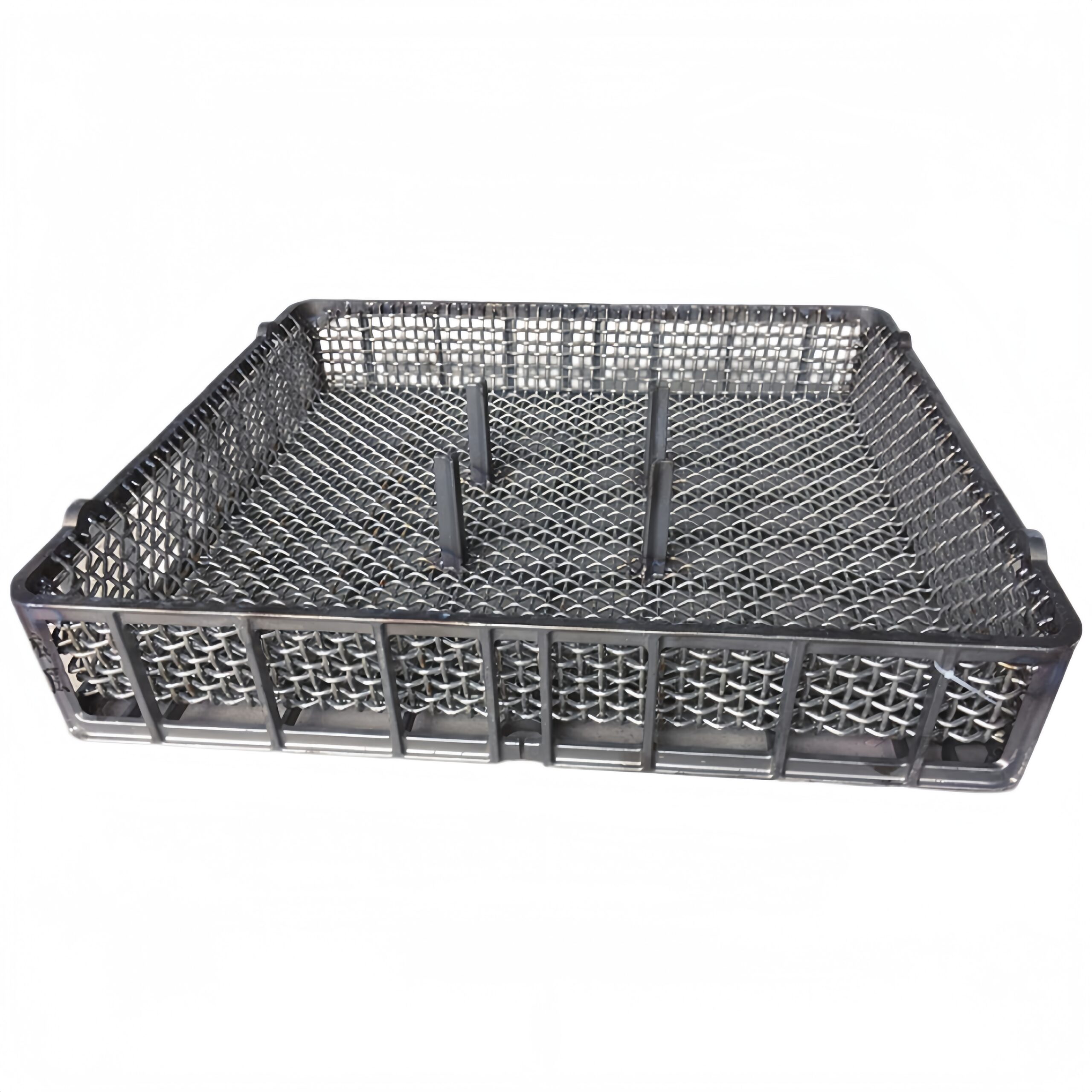
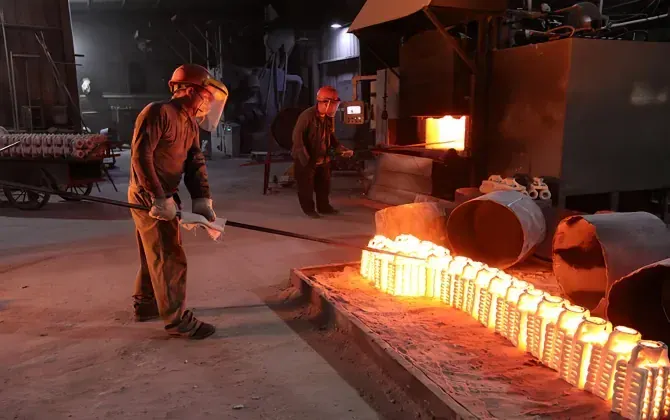
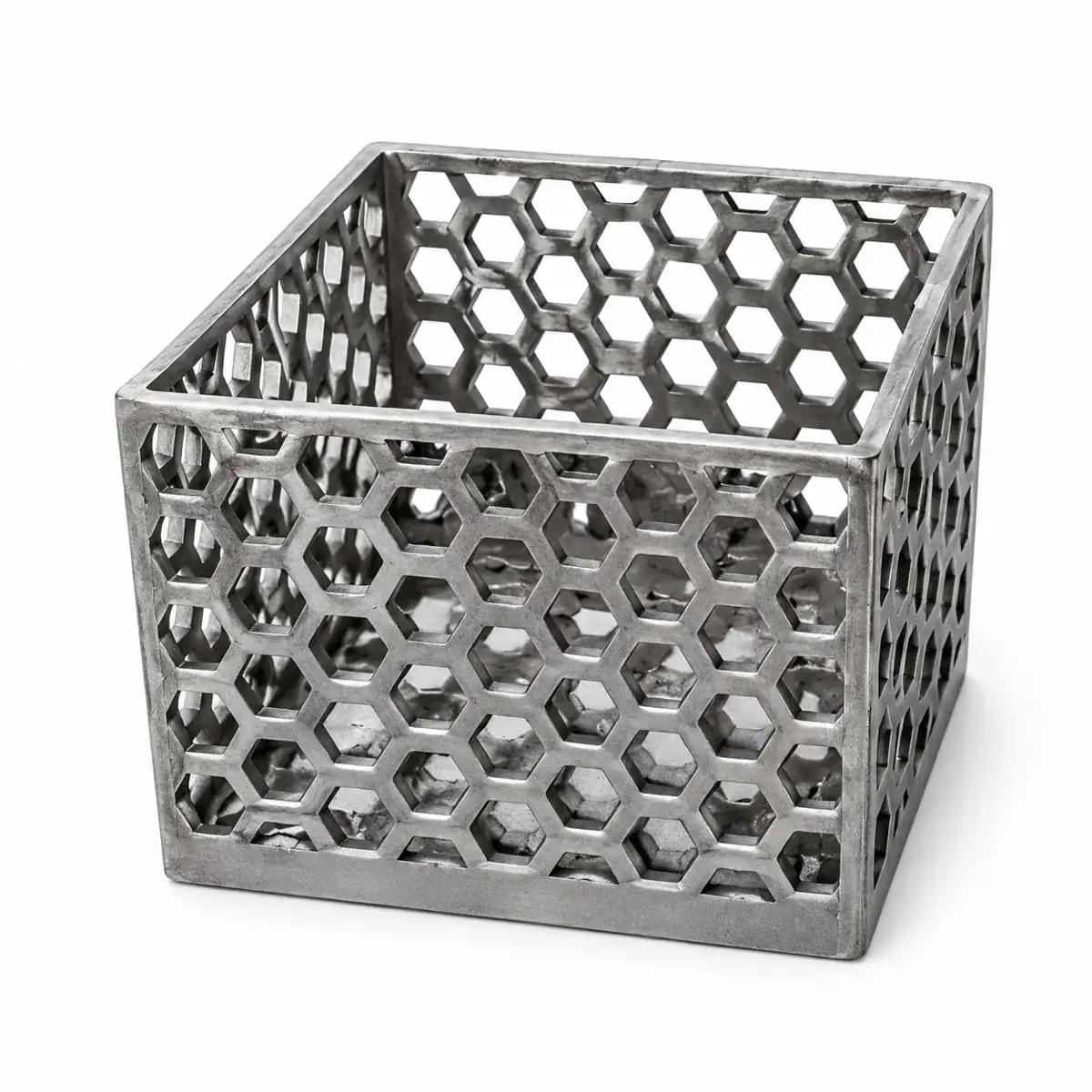
Representative heat-resistant furnace components. Product images illustrate the range of furnace-part geometries; the exact production route must be confirmed for each drawing.
What is investment casting?
Investment casting and lost-wax casting describe the same broad process family. A reusable metal tool normally produces wax patterns. The patterns are assembled onto a runner system, repeatedly coated with refractory slurry and stucco to build a ceramic shell, then removed from the shell by dewaxing. After firing, molten alloy is poured into the hot shell. Once solidified, the shell is removed and the castings are cut off, finished, heat treated, machined and inspected as required.
The word investment refers to surrounding—or investing—the pattern with refractory material. Silica-sol investment casting is one specific shell system within this family. It should not be confused with lost-foam casting, where a foam pattern remains in dry sand and decomposes during pouring.
Why the process is attractive for furnace parts
Heat-treatment fixtures often combine repeated openings, curved transitions, bosses, lugs and local supports. Fabricating the same geometry from numerous cut and welded pieces can create distortion, variable joints and substantial finishing work. Investment casting can consolidate features into fewer components and place material where the load path requires it.
Typical reasons to consider it include:
- open grids and repeated cells that would be expensive to machine;
- integrated lifting, locating or stacking features;
- shapes that would require complex parting and cores in conventional moulding;
- repeat orders that justify controlled tooling;
- a need for consistent assembly interfaces;
- high-alloy parts where reducing welds is valuable.
This does not eliminate solidification engineering. Thick junctions between ribs and hubs still need feeding consideration. Abrupt section changes can create hot spots. Long thin ribs can distort during wax handling, shell building, pouring, knockout or service. A casting-friendly drawing balances function, metal flow, feeding, shell support and post-cast straightening risk.

Open-grid heat-treatment tray geometry with repeated cells and integrated perimeter features.
Furnace components commonly evaluated for investment casting
| Component | Why investment casting may help | Questions that still require review |
|---|---|---|
| Heat-treatment basket | Integrates grids, corners and stacking features | Payload, support points, thermal cycles and repair concept |
| Furnace tray | Produces repeated openings and load-bearing ribs | Flatness, conveyor contact, rib junctions and casting size |
| Heat-treatment fixture | Consolidates locating and support features | Workpiece contact, expansion freedom and distortion risk |
| Burner or furnace fitting | Handles complex passages and external detail | Pressure/leak requirements, cores and machining datums |
| Impeller or fan component | Integrates hub and blades | Balance, runout, section transitions and inspection |
| Replacement furnace part | Recreates obsolete geometry from drawing or sample | Alloy verification, shrinkage allowance and order quantity |
Radiant tubes and furnace rolls require separate evaluation. Small complex fittings or supports may be investment cast, while long tube bodies are often fabricated, sand cast or centrifugally cast. The visible shape alone does not select the process.
Heat-resistant alloy selection begins with the furnace duty
An alloy described as “heat resistant” can still fail if its oxidation resistance, carburization behaviour, creep strength or structural stability does not match the service. The RFQ should therefore state:
- normal and maximum metal temperature;
- continuous or cyclic operation;
- furnace atmosphere and contaminants;
- payload and support arrangement;
- heating and cooling rate where known;
- target service life and acceptable distortion;
- current material and observed failure mode.
High chromium supports oxidation resistance, while nickel helps stabilize austenite and can influence carburization and high-temperature behaviour. Carbon and carbide-forming additions may improve creep performance in cast heat-resistant grades, but they also change weldability, machining and room-temperature ductility. Alloy selection is a design decision, not a simple temperature lookup.
If a drawing calls out a wrought designation such as 310S or EN 1.4841 for a cast component, the purchaser and foundry should reconcile that requirement with a casting standard or an agreed chemical and performance specification. A familiar wrought name does not by itself define castability, foundry acceptance criteria or long-term creep properties.
What investment casting can—and cannot—promise
Investment casting is known for detail and near-net-shape capability, but published generic numbers are not a quotation. Actual capability depends on alloy, envelope, wax tool, feature orientation, shell system, section thickness, datum scheme and inspection method.
| Requirement | Practical interpretation |
|---|---|
| Dimensional accuracy | Identify truly critical dimensions; machine functional datums where service demands it |
| Surface finish | Shell and finishing practices matter; define areas that affect assembly or cleaning |
| Thin ribs | Review filling, wax stability, shell support and service distortion together |
| Large open grids | Evaluate cumulative shrinkage, handling and flatness—not only individual cell size |
| Internal passages | Confirm core method, cleaning access and inspection feasibility |
| No defects | Replace this impossible wording with agreed visual, NDT and acceptance criteria |
The buyer should ask for a supplier-specific capability review against the actual model. Imposing tight tolerances on every non-functional surface usually raises tooling, straightening, inspection and rejection cost without improving furnace life.
Design for casting and for high-temperature service
A good investment-cast furnace part must survive both manufacture and operation.
Use gradual section transitions
Heavy nodes attached to thin ribs cool differently and can concentrate shrinkage and thermal stress. Generous transitions and balanced junctions improve both casting and thermal cycling.
Define the real load path
Show where the payload sits, where the part is supported and how it is lifted. A tray supported at four corners behaves differently from one supported continuously on rollers. The foundry cannot infer these conditions from overall dimensions.
Allow thermal expansion
Over-restraint can turn normal expansion into distortion or cracking. Locators should position the workpiece without unnecessarily locking the fixture in multiple directions.
Plan machining before tooling
Machining stock, datum pads, chucking areas and inspection references should be included before the wax tool is released. Adding them later can compromise section balance and cost.

Heat-treatment fixture with multiple support and locating features.
Quality control should follow the failure consequence
For industrial furnace castings, a practical quality plan may include:
- review of drawing, alloy and service data;
- tooling and first-article approval;
- heat-by-heat chemical analysis;
- traceability from melt to shipment;
- visual and dimensional inspection;
- heat-treatment records when specified;
- penetrant, magnetic-particle, radiographic or ultrasonic examination where technically applicable;
- machining and assembly checks;
- final documentation and packing controls.
Not every part needs every test. Radiography of a dense critical hub and visual inspection of a non-critical open grid address different risks. The specification should match function, geometry and consequence of failure.

Dimensional and documentation review in a casting quality-inspection area.
How cost is built
An investment-casting quotation normally combines tooling, wax and shell processing, alloy, melting yield, cutoff and finishing, heat treatment, machining, inspection and packaging. Unit weight alone is not enough.
Major cost drivers include:
- alloy and nickel content;
- gross-to-net yield and gating system;
- number of shell layers and drying control;
- part size and handling difficulty;
- required straightening or blending;
- machining time and tool wear;
- NDT and documentation;
- order quantity and tooling life.
Compare quotations over the expected order life. A lower tool price may be offset by higher unit cost, variable dimensions or repeated setup. Conversely, premium tooling may be unnecessary for a single obsolete spare.
Information to include in an RFQ
Send the following for a meaningful process review:
- 2D drawing and 3D model;
- material grade and governing standard;
- annual quantity and batch size;
- overall dimensions and estimated finished weight;
- critical dimensions, datums and machining surfaces;
- surface and inspection requirements;
- furnace temperature, atmosphere, load and cycle;
- current service life and failure photographs for replacement parts;
- delivery location and required trade term.
The more clearly function is separated from non-critical appearance, the more accurately a foundry can price the part.
Evaluate lifecycle value, not only purchase price
Furnace hardware is consumed by a combination of metal loss, creep, distortion, cracking and handling damage. A casting that costs less initially can be more expensive if it reduces furnace uptime, requires frequent straightening or damages the workpieces it supports.
Record useful service data for every design revision:
- installed date and total cycles;
- typical and maximum payload;
- furnace zones and measured temperature differences;
- distortion at defined inspection points;
- crack location and direction;
- oxidation or carburization appearance;
- repair history and retirement reason.
This creates a feedback loop between purchasing, heat treatment and foundry engineering. If repeated failures begin at the same node, increasing alloy content may not solve the problem; the load path, local section or support could be responsible. If one furnace zone consistently produces faster metal loss, atmosphere or temperature uniformity may deserve investigation.
A meaningful supplier discussion therefore combines casting quality with service evidence. The objective is not merely to reproduce the old part, but to preserve interfaces while correcting verified weaknesses.
Frequently asked questions
Is investment casting the same as lost-wax casting?
Yes. Lost-wax casting is the pattern-removal principle used by the investment-casting family. Silica-sol investment casting is a particular ceramic-shell route within that family.
Is investment casting suitable for very large furnace parts?
Sometimes, but size and weight are foundry-line dependent. Large simple parts may be more economical by sand casting, and long tubular parts may suit centrifugal casting or fabrication.
Can investment casting eliminate machining?
It can reduce machining, but functional datums, sealing surfaces, bores and alignment features may still require machining. The decision belongs in the drawing review.
Which alloy is best for a furnace basket?
There is no universal best alloy. Temperature, load, atmosphere, cycle and failure mode must be evaluated together with the appropriate cast grade.
What is the best way to compare suppliers?
Compare their response to the actual drawing: alloy control, tooling plan, shell route, first-article method, inspection, traceability, machining, delivery and handling of nonconformities.
Discuss your furnace casting
ECOOSUN supports process and material review for heat-treatment baskets, trays, fixtures and other heat-resistant furnace components. Send your drawing, alloy requirement, quantity and service conditions through the contact page to determine whether investment casting, sand casting, lost foam, centrifugal casting or fabrication is the most appropriate route.
Explore the next technical guides: Investment Casting Process, Silica Sol Investment Casting and How to Evaluate Investment Casting Companies.
Technical note: Final process capability, alloy equivalence, tolerances and acceptance criteria must be confirmed for the actual drawing, service condition and production line.
A Practical Silica Sol Review Checklist
Use Silica Sol Investment Casting when the part and commercial requirements justify the route—not simply because the drawing is complex.
For each Silica Sol Investment Casting inquiry, identify critical dimensions, minimum wall areas, abrupt section changes, machining locations, acceptance criteria and the service environment.
A sound Silica Sol Investment Casting plan connects those drawing requirements with tooling, shell design, alloy control, heat treatment and inspection.


+44 7419 144346