
Direct answer: Heat-resistant steel casting is a project-specific manufacturing route for furnace components such as baskets, trays, fixtures, tubes and rolls. The correct review starts with geometry, furnace conditions, load, operating cycle and inspection requirements. ECOOSUN can review drawings or used samples for custom cast components.
Most furnace spare problems are planning problems. A plant knows that baskets, trays, rolls or radiant tubes will eventually need replacement, but the drawing, revision and operating notes are scattered across old emails and maintenance folders. This guide turns heat treatment furnace parts into a manageable spare-parts programme.
Related product: For a project-specific review, see Heat-Resistant Steel Foundry.
Related evidence: Use the related ECOOSUN engineering and inspection guidance to prepare the technical information for review.
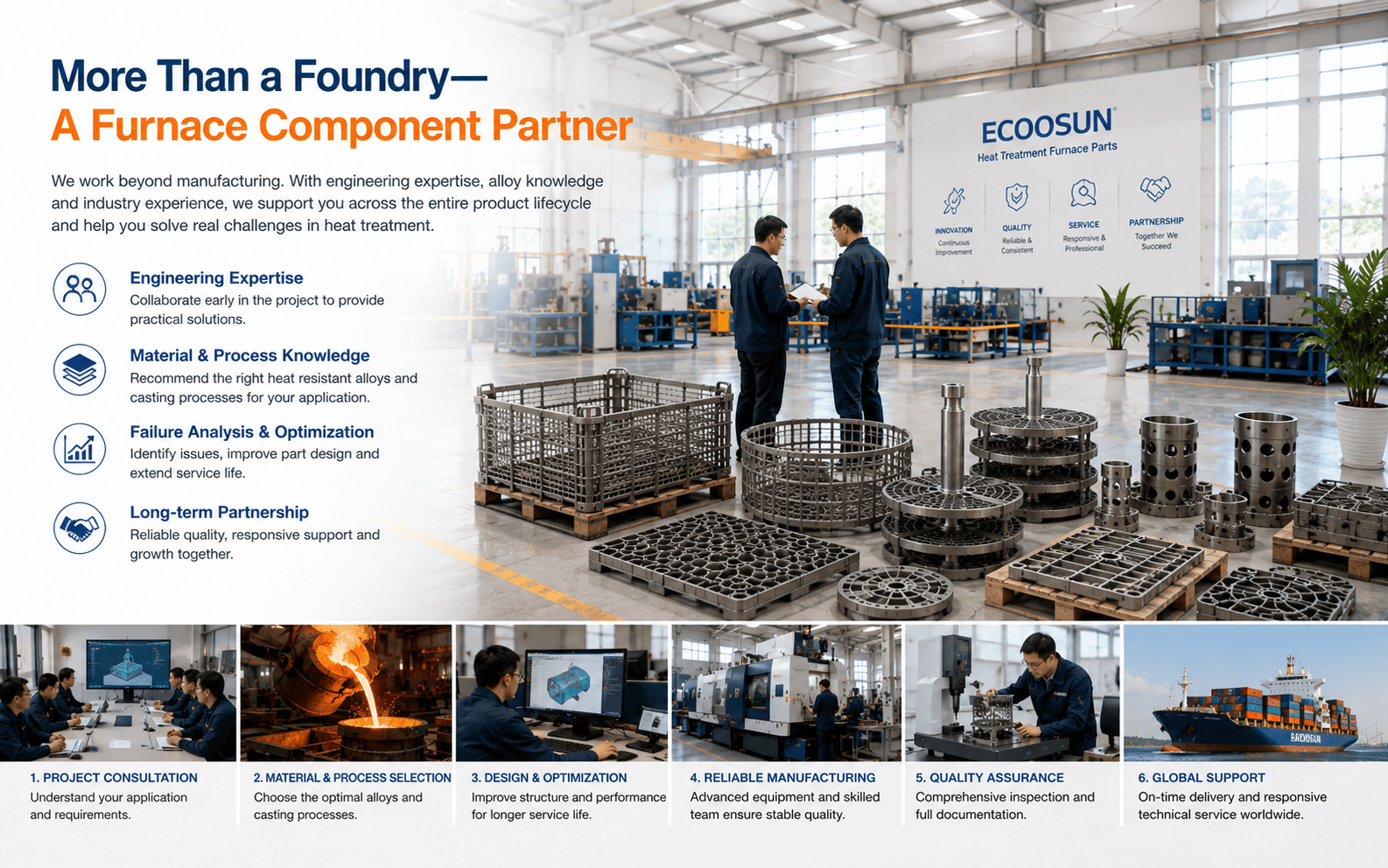
Build the register by furnace zone
Create one line for each component and identify its furnace zone, function, drawing revision, installed quantity, normal replacement interval if known, and the date of the last inspection. Do not group visually similar components if their burner, support, load or movement conditions differ.
| Component family | Register details that matter | Typical trigger for review |
|---|---|---|
| Baskets and trays | Loaded weight, support points, lifting features, flatness or distortion notes | Load change, sagging, poor part spacing |
| Fixtures | Workpiece drawing, orientation, contact points, process and gas clearance | New product, distortion, handling change |
| Furnace rolls | Diameter, face length, shaft, drive, pitch and alignment | Wear band, vibration, tracking issue |
| Radiant tubes | Burner interface, hot length, supports, atmosphere and expansion path | Hot spot, scale band, local cracking |
| Internals | Clearance, refractory interface, gas path and installation sequence | Atmosphere drift or repeated contact damage |
Classify the spare requirement
Critical spare
A critical spare is a component whose failure can stop the furnace or compromise a production campaign. Keep the approved drawing, supplier contact, inspection requirement and packing instructions ready. The physical spare quantity depends on lead time and failure consequence; it should be decided with the plant team.
Planned replacement
Some parts can be changed during a scheduled shutdown. Use inspection evidence to decide whether the part should be ordered now, not only when it finally fails. This is often the right approach for large castings with a long pattern or machining route.
Make-to-order item
For low-frequency items, a complete technical record may be more valuable than holding stock. Keep a measured sketch, photographs, revision, material reference and the reason for the last replacement.
What belongs in the digital file
- Approved drawing and revision history.
- Photographs of the installed position and interfaces.
- Operating temperature, atmosphere, load and cycle.
- Inspection reports and notes from the last failure.
- Supplier quotation, part identification and packaging details.
That file lets a buyer request a repeat quotation without guessing. It also helps an engineering team decide whether the next part should match the original or correct a known design issue.
Link the register to the right product page
Use heat-treatment baskets, trays, furnace rolls, radiant tubes and industrial furnace fans as starting categories, then attach the actual drawing and duty information. For mixed spare packages, contact ECOOSUN about custom furnace parts.
A quarterly review that pays for itself
Once a quarter, check whether the furnace has changed product, atmosphere, cycle or loading. Update the register when a support, burner, conveyor or control setting changes. A spare that matched an old process may not be the correct spare after a major furnace modification.
Final advice
A spare-parts programme is not a promise that every component will last a fixed number of cycles. It is a disciplined way to keep the right information available before production is waiting for a casting. That is the practical value of a controlled heat treatment furnace parts register.
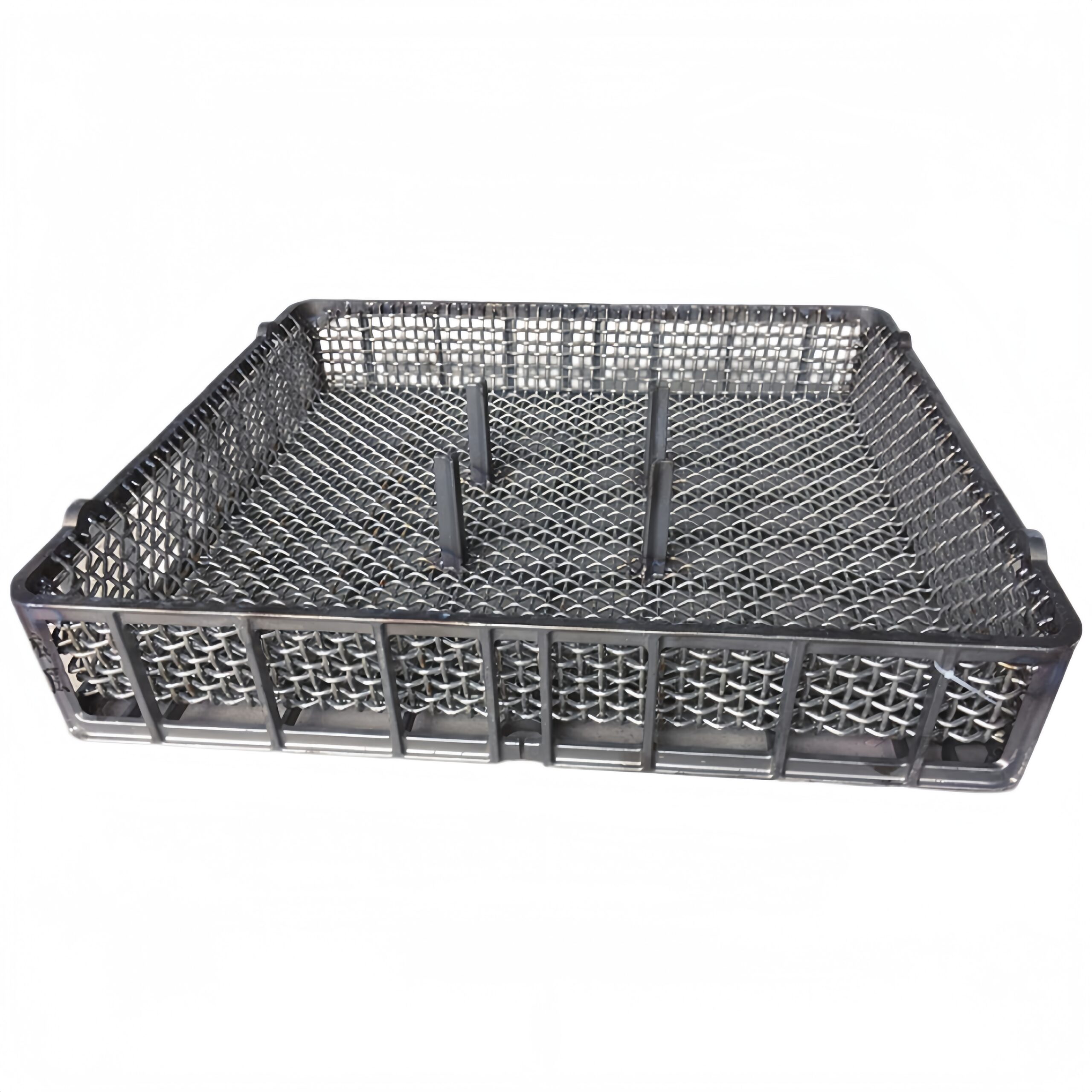
Production context: The component reference should be read together with the manufacturing and inspection context behind the furnace application.

Request a project review: Send the drawing, used sample, key dimensions, furnace information and failure record through the ECOOSUN contact page.
FAQ
What should a buyer confirm for a heat-resistant cast furnace part requirement?
Confirm the drawing or used sample, key dimensions and interfaces, furnace type and clearance, load, operating cycle, failure evidence and inspection requirements. Final acceptance criteria should be agreed for the specific project.
Can ECOOSUN review a custom heat-resistant cast furnace part requirement?
Yes. ECOOSUN can review a customer drawing or used sample and discuss casting, laboratory and inspection requirements for a custom furnace-component project. Suitability and final scope are confirmed from the supplied information.


 +44 7419 144346