
Direct answer: Radiant tubes transfer heat into a heat-treatment furnace through a burner or heating system. Selection depends on the furnace layout, burner interface, dimensions, atmosphere, operating cycle and failure history. ECOOSUN can review a drawing or used sample for a project-specific replacement.
A gas-fired radiant tube should be inspected on a schedule, not only after a visible crack. The most useful inspection combines the burner end, the hot section, the supports and the furnace atmosphere. Looking at the tube alone can miss the condition that is creating the damage.
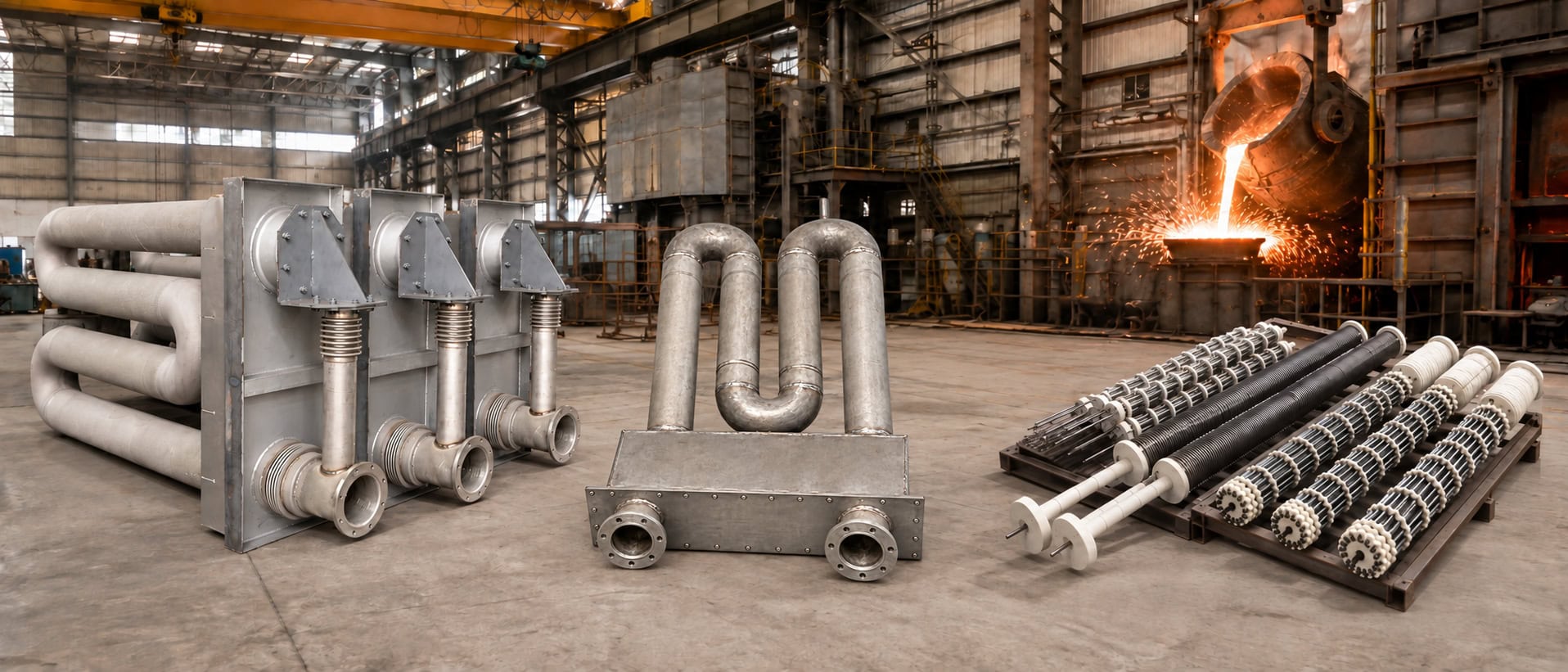
This shutdown checklist is written for teams responsible for gas fired radiant tubes in batch or continuous heat-treatment equipment.
Inspection timing
Use three levels of review. A quick visual check can be made during routine access. A documented inspection belongs in every planned shutdown. A detailed engineering review is appropriate when a tube shows repeated local damage, distortion, unusual deposits or a change in furnace performance.
Shutdown checklist
Burner end
- Photograph the burner seat before cleaning.
- Look for soot, flame marks, loose hardware or uneven sealing.
- Confirm the burner has not shifted relative to the tube centreline.
- Record any change to fuel, air or control settings since the last shutdown.
Hot section
- Mark scale bands, bulges, thinning, cracks or unusual colour.
- Measure the position of any defect from a fixed reference point.
- Check whether the tube has contacted refractory or a neighbouring part.
- Compare the current condition with photographs from the previous shutdown.
Supports and expansion
- Check sliding supports for scale, seizure or loss of clearance.
- Confirm the tube is not restrained at both ends.
- Inspect brackets, hangers, guides and the surrounding refractory.
- Record cold position before the furnace returns to service.
How to read common evidence
| Evidence | Questions to ask before replacement |
|---|---|
| Damage close to burner end | Was the flame centred? Did fuel or air settings change? |
| Damage at a bend | Was the bend free to expand? Is the support rubbing? |
| Long, even scale | Is the atmosphere and cleaning practice consistent with the design? |
| One tube differs from its neighbours | Is the difference in burner, support, load or control zone? |
The point of this table is not to diagnose a failure remotely. It is to help the maintenance team send the supplier useful evidence instead of a single photograph with no location or operating context.
Preparing a replacement request
Send the latest drawing, the original part number, a measured sketch if the drawing is unavailable, and photographs that show the complete assembly. Add operating temperature, cycle, atmosphere, fuel, burner details and the date of the next shutdown. If the furnace has several similar zones, identify the zone and orientation clearly.
ECOOSUN can review custom radiant tubes and connect the request with related furnace internals. For a planned outage, send the inspection record with the enquiry so the replacement can be checked against the actual condition.
After the new tube is installed
Record the cold alignment, burner position, first-cycle temperature observations and any adjustment made during commissioning. Keep this baseline with the spare-part drawing. A documented baseline makes it easier to see whether a later change is gradual wear or a new installation issue.
Maintenance conclusion
Regular inspection does not eliminate every tube failure, but it turns a surprise shutdown into a planned decision. Inspect the burner, tube and supports together, record the location of evidence and give the supplier the operating story behind the part.
Production context: The component reference should be read together with the manufacturing and inspection context behind the furnace application.

FAQ
What should a buyer confirm for a radiant tube requirement?
Confirm the drawing or used sample, key dimensions and interfaces, furnace type and clearance, load, operating cycle, failure evidence and inspection requirements. Final acceptance criteria should be agreed for the specific project.
Can ECOOSUN review a custom radiant tube requirement?
Yes. ECOOSUN can review a customer drawing or used sample and discuss casting, laboratory and inspection requirements for a custom furnace-component project. Suitability and final scope are confirmed from the supplied information.
Related Radiant Tube Resources
Use these technical guides when specifying, inspecting or replacing radiant tubes for an industrial furnace:
- Radiant Tubes for Annealing and Heat-Treatment Furnaces
- Straight, U-Type or W-Type Radiant Tubes
- Radiant Tube Failure: Cracking, Sagging and Oxidation
- Radiant Tube Installation and Connection Inspection Guide
- Industrial Furnace Radiant Tubes: Material and Service Life
Related ECOOSUN Products
Information for a Faster Quotation
Provide alloy grade or service conditions, straight/U/W form, tube dimensions, burner and connection details, operating temperature, furnace zone, quantity, drawing or used sample, and inspection requirements.
Request a Custom Quote · Send Your Drawing · WhatsApp ECOOSUN


 +44 7419 144346