
High Temperature Baskets: Give Me the Whole Working Cycle
ECOOSUN supplies custom high temperature baskets from customer drawings or reviewed samples. ECOOSUN is the overseas operating brand of Xinghua Hengxin Machinery Co., Ltd., a heat-resistant steel casting manufacturer established in June 2005 in Xinghua, Jiangsu, China. Review our product and manufacturing evidence alongside the official company facts when evaluating the supplier.
For the complete product-family and quotation scope, see the main heat treatment baskets manufacturer page. This page focuses on the operating cycle, load, supports and cooling conditions.
High temperature baskets are reusable load carriers for holding and moving workpieces through industrial heating cycles. For a custom basket, the specification must combine hot load, support geometry, furnace atmosphere, holding time and cooling conditions; temperature alone is not a load rating.
“It runs at 980 °C” is useful. It leaves quite a lot unsaid.
At the same stated furnace temperature, a long hold followed by air cooling and repeated short holds followed by quenching are different duty histories. Provide the loaded weight, holding time, cycles per shift, support arrangement, atmosphere and cooling method for the basket being quoted. These inputs support application review; they do not establish a service-life result or identify one cause of failure.
Give us the normal temperature, hold time, cycles per shift and working shifts per day. Add the occasional harder recipe. A 1120 °C run twice a quarter belongs in the inquiry even if most production stays at 980 °C. That’s an example of information to disclose, not a temperature rating for the basket we’re offering.
If the furnace set temperature differs from a reading near the load, record both sources and check the thermocouple location, timing, calibration information and stage of the cycle before reviewing material requirements. Report the readings that are available and mark missing information as unknown.
A photo of the recorder is useful. So is an operator’s note. Label the source of each temperature and we’ll review what it means.
For related loading arrangements, see: Stainless Steel Mesh Baskets
Download ECOOSUN’s Detailed Company Profile and Product Overview (PDF)
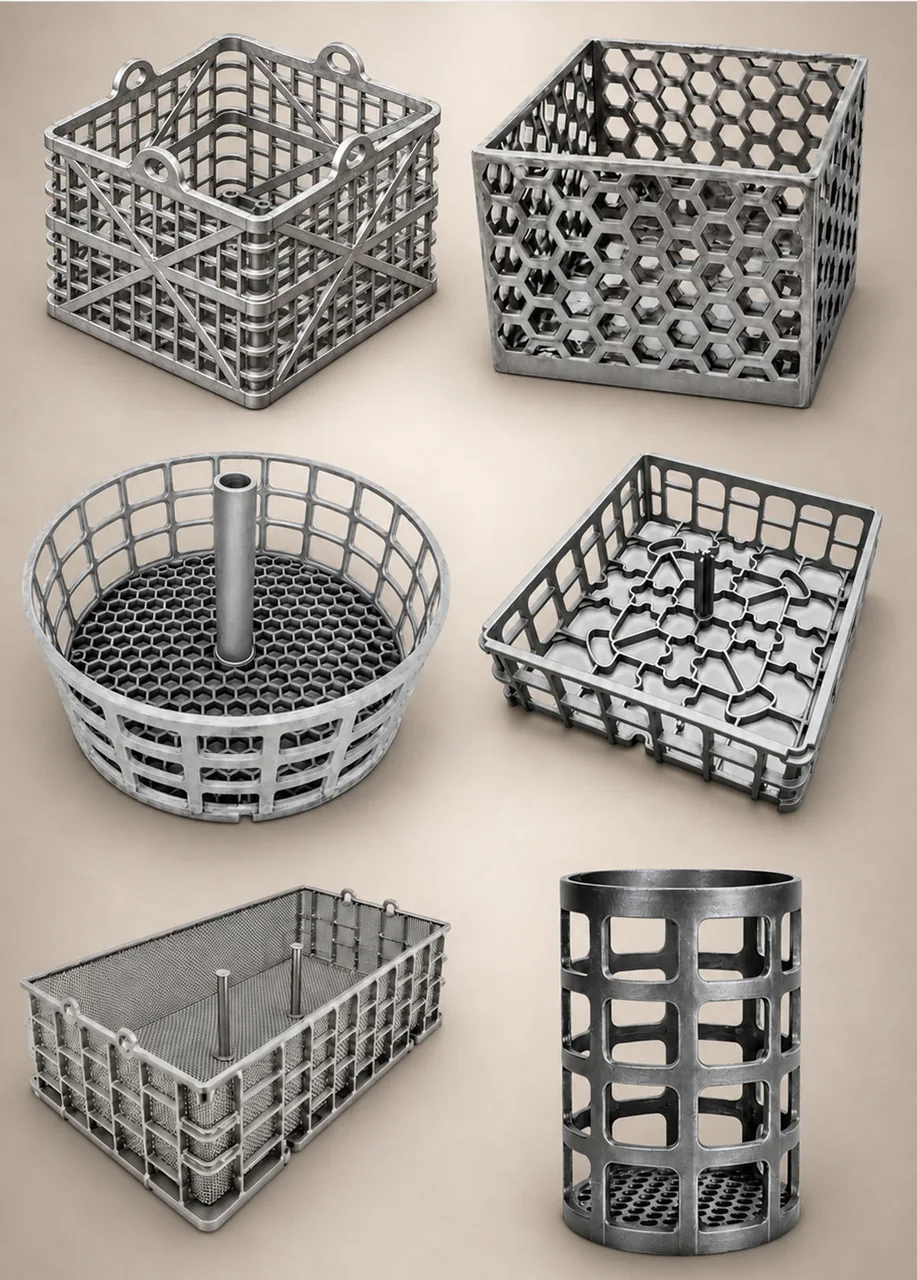
High Temperature Baskets: Construction Examples
These are construction examples for reviewing your temperature cycle, load distribution, supports and cooling sequence. They do not establish one temperature limit or service-life result for every high temperature basket.
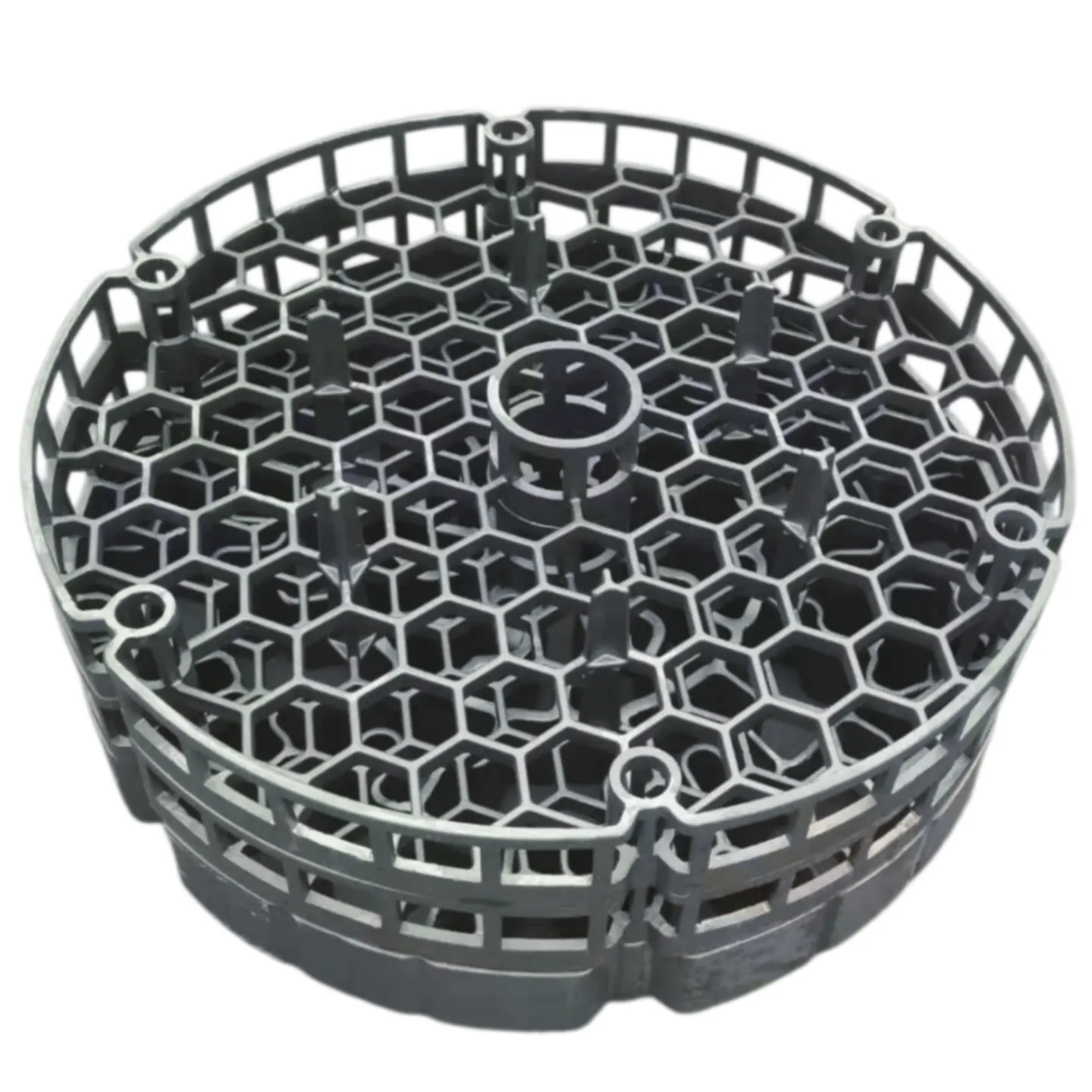
Brand: ECOOSUN
Quality Documents: See certificate details
Material: Grade and product form to be confirmed
Size: Customized According to Drawings
Casting Process: Silica Sol Investment Casting
Maximum Operating Temperature: To be confirmed for the duty
MOQ: 4 Pieces
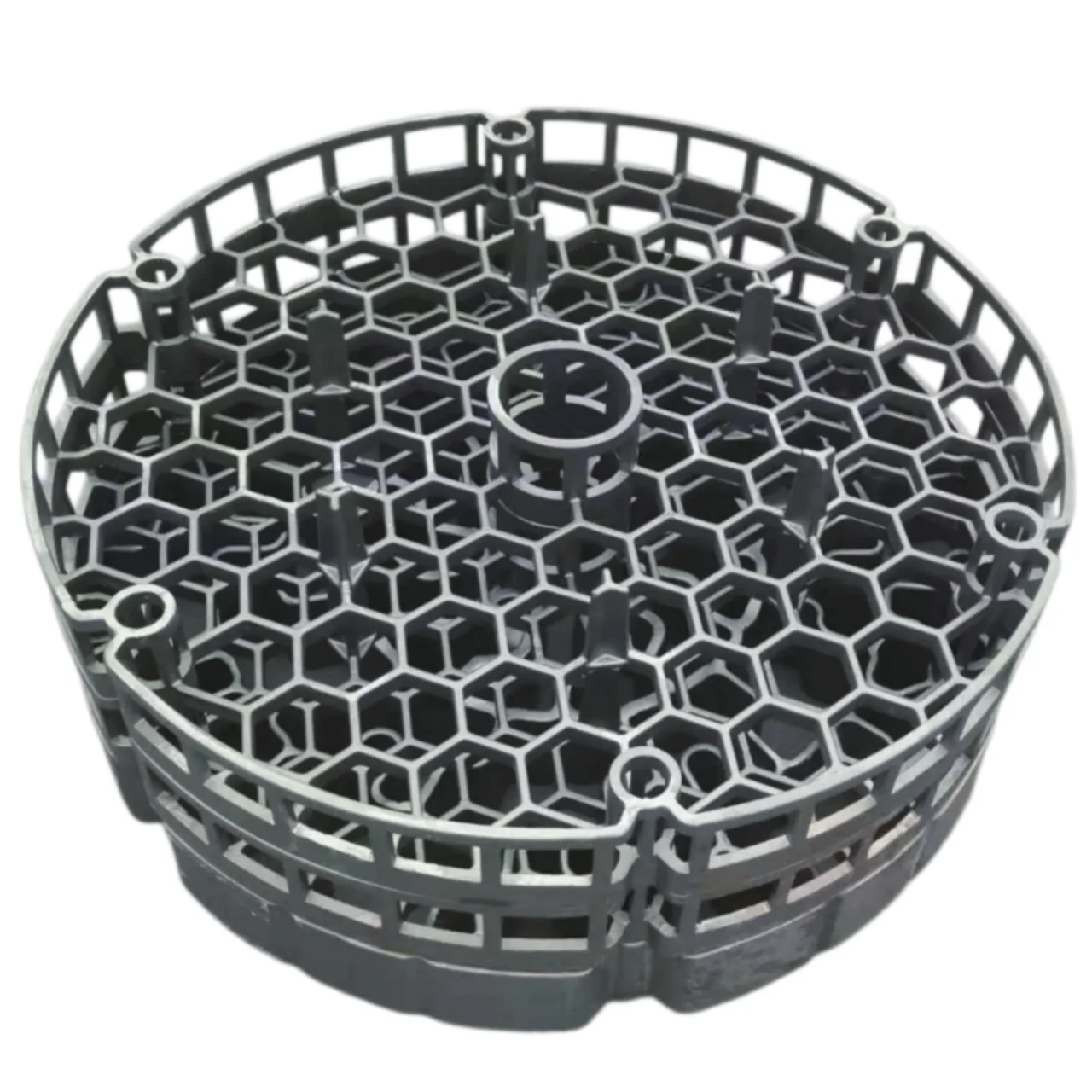
Round heat treatment basket with a honeycomb-pattern base, open sidewalls and raised posts around the rim.
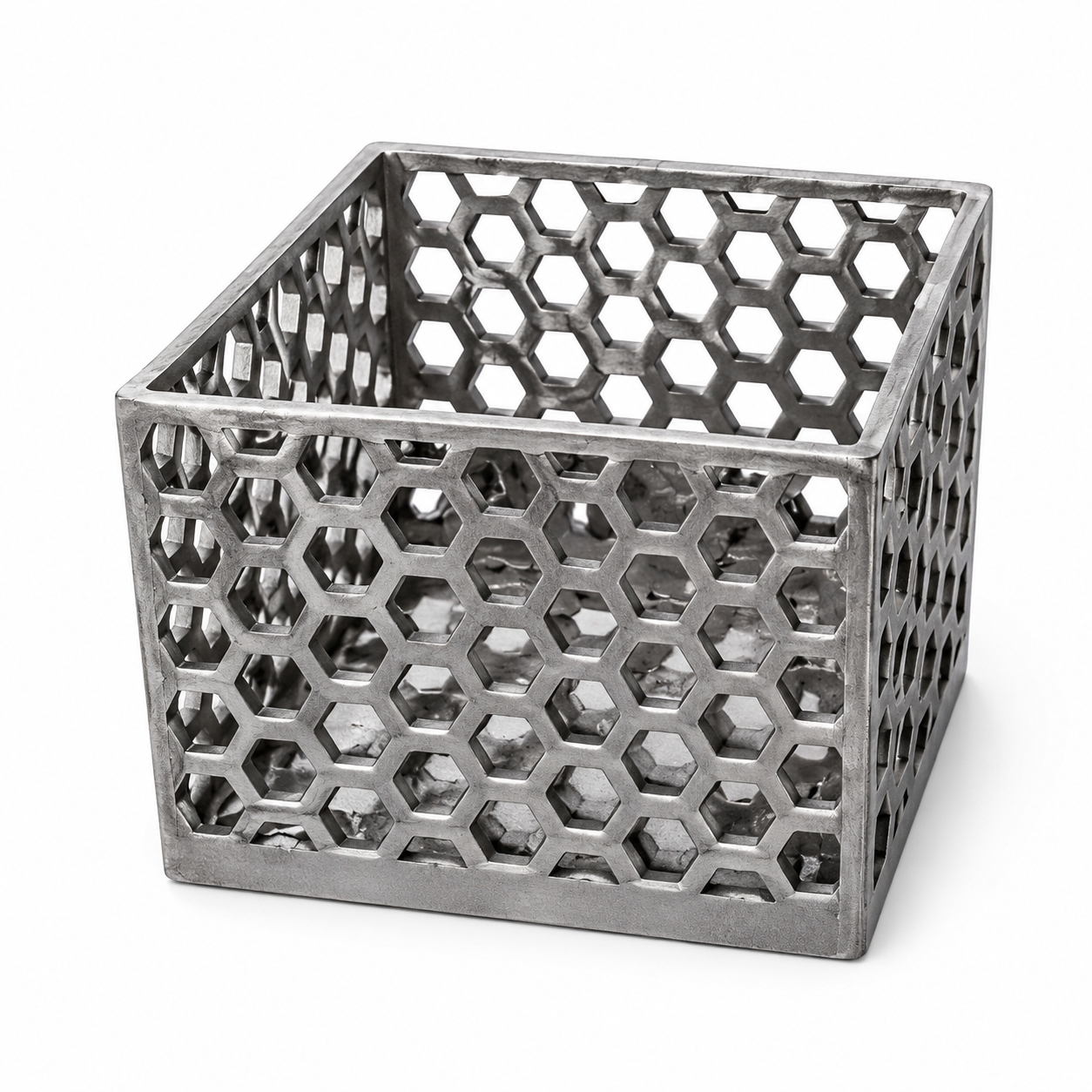
Brand: ECOOSUN
Quality Documents: See certificate details
Material: Grade and product form to be confirmed
Size: Customized According to Drawings
Casting Process: Lost Foam Casting
Maximum Operating Temperature: To be confirmed for the duty
MOQ: 1 Piece
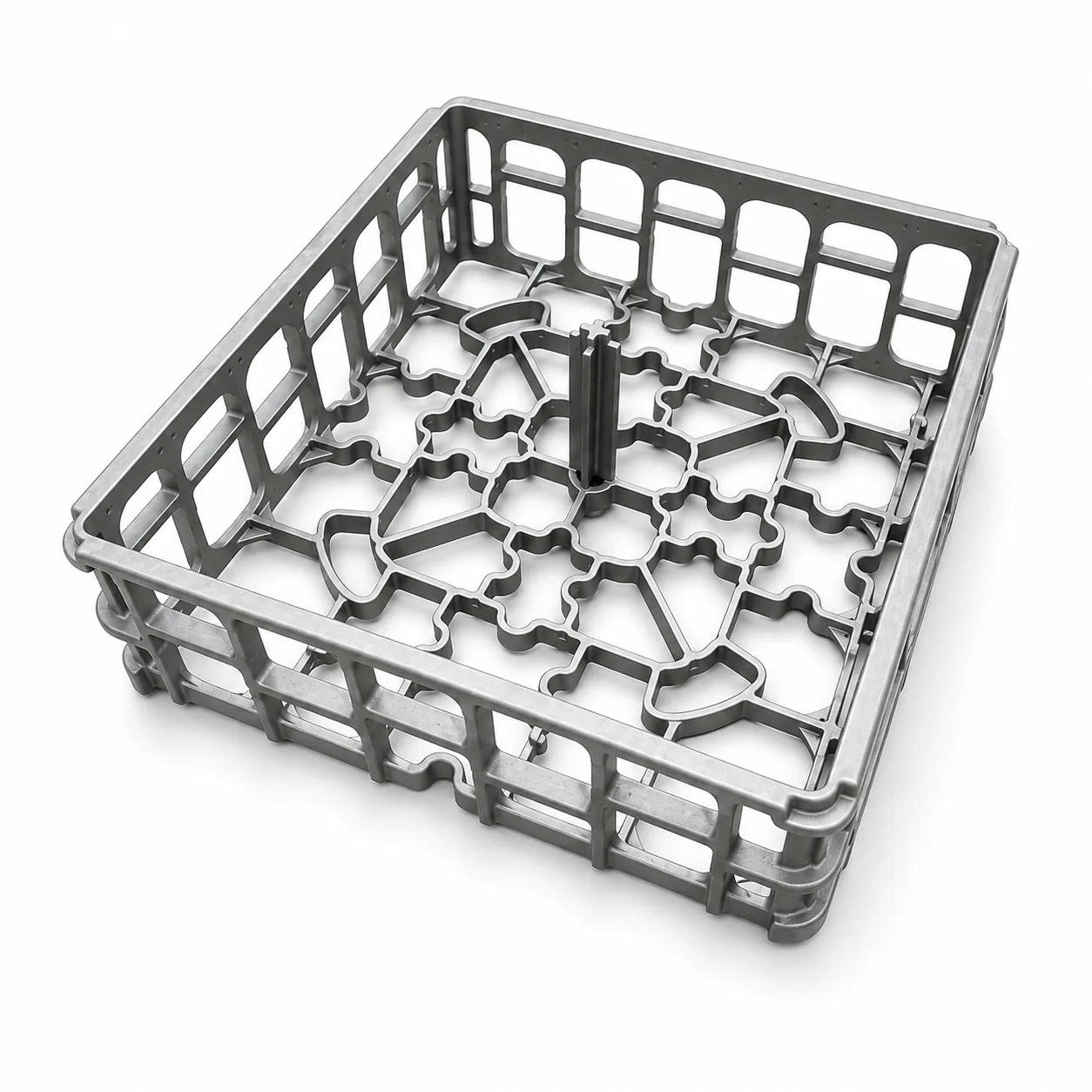
Deep rectangular furnace basket with honeycomb openings in the base and sidewalls. The open top and four raised sides distinguish it from the shallow basket designs.
Brand: ECOOSUN
Quality Documents: See certificate details
Material: Grade and product form to be confirmed
Size: Customized According to Drawings
Frame Casting Process: Silica Sol Investment Casting
Maximum Operating Temperature: To be confirmed for the duty
MOQ: 2 Pieces
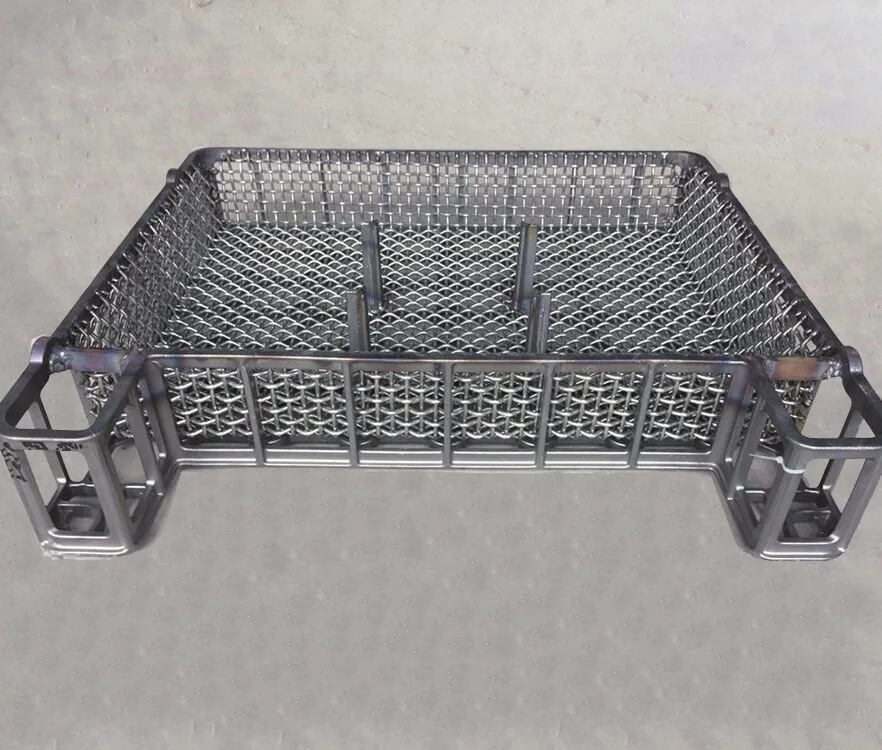
Square heat treatment basket with a cast frame, welded fine mesh across the base and sides, raised corner posts and a central divider.
The casting route describes the frame. Confirm mesh specification, attachment and whether the order includes a liner or the complete basket.
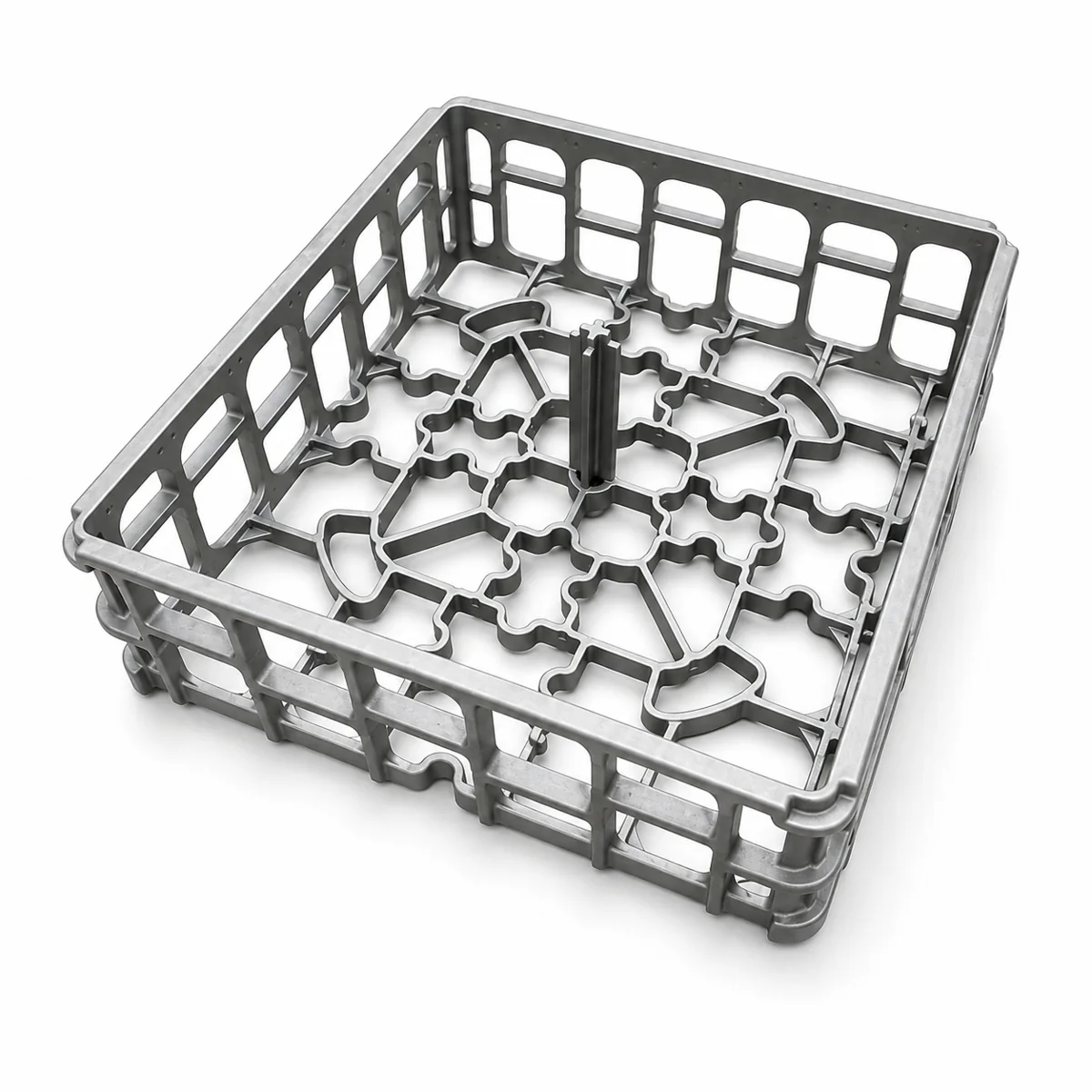
Brand: ECOOSUN
Quality Documents: See certificate details
Material: Grade and product form to be confirmed
Size: 1000 × 1000 × 300 mm
Casting Process: Silica Sol Investment Casting
Maximum Operating Temperature: To be confirmed for the duty
MOQ: 4 Pieces
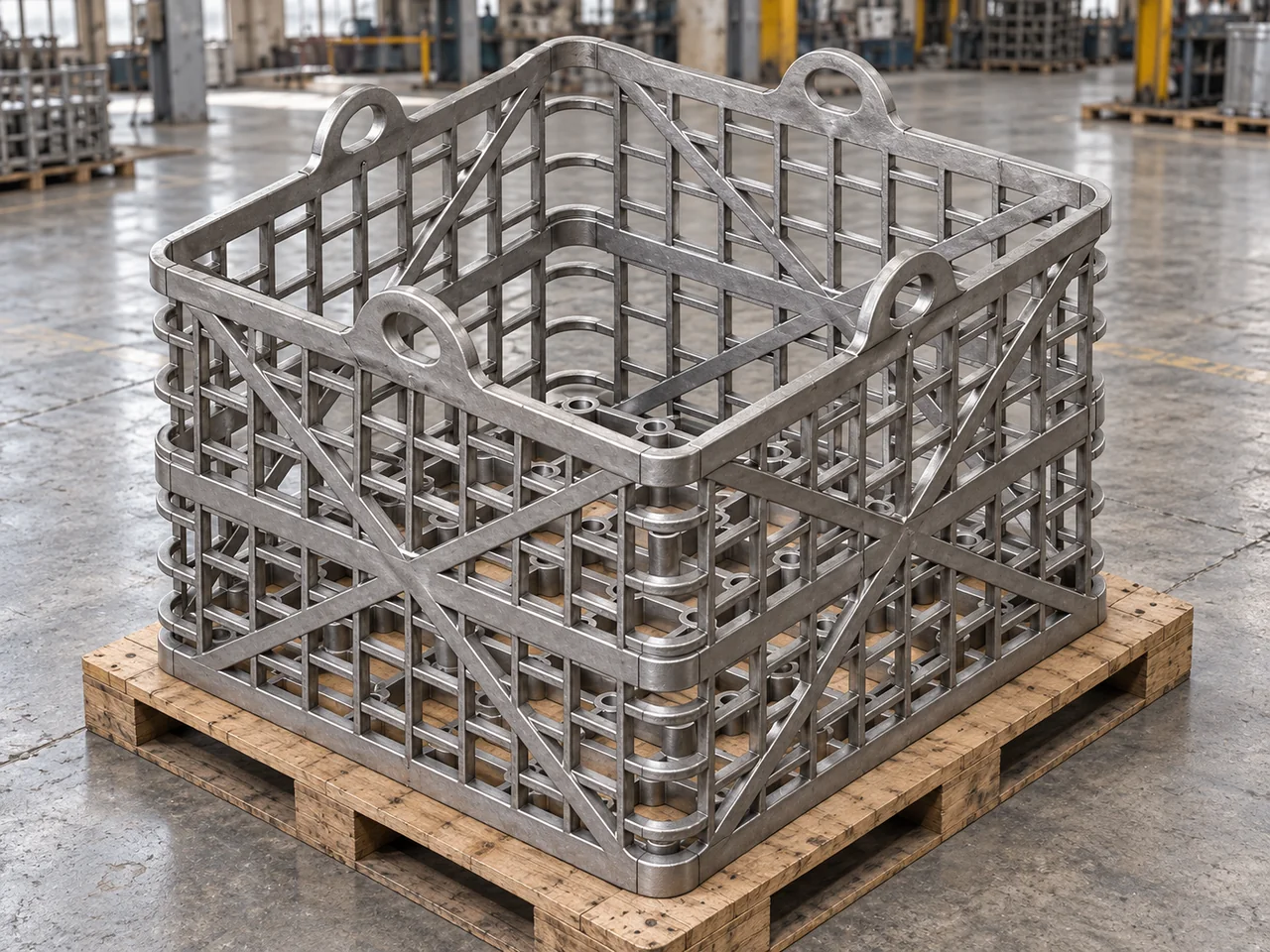
Open-grid furnace basket with raised sidewalls, a ribbed base and a central vertical locating post.
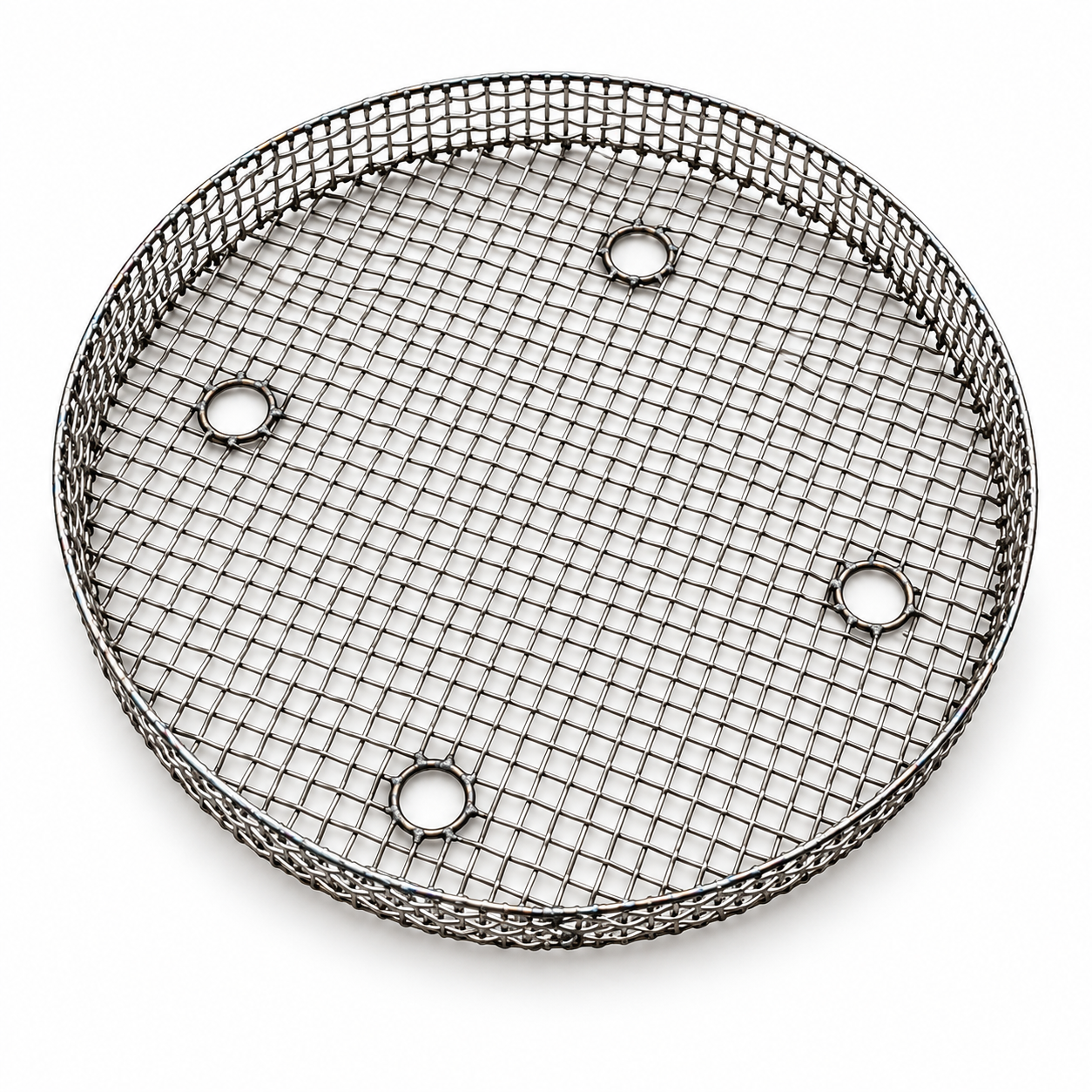
Brand: ECOOSUN
Quality Documents: See certificate details
Material: Grade and product form to be confirmed
Size: Ø800 × 15 mm
Manufacturing Process: Welding
Maximum Operating Temperature: To be confirmed for the duty
MOQ: 4 Pieces
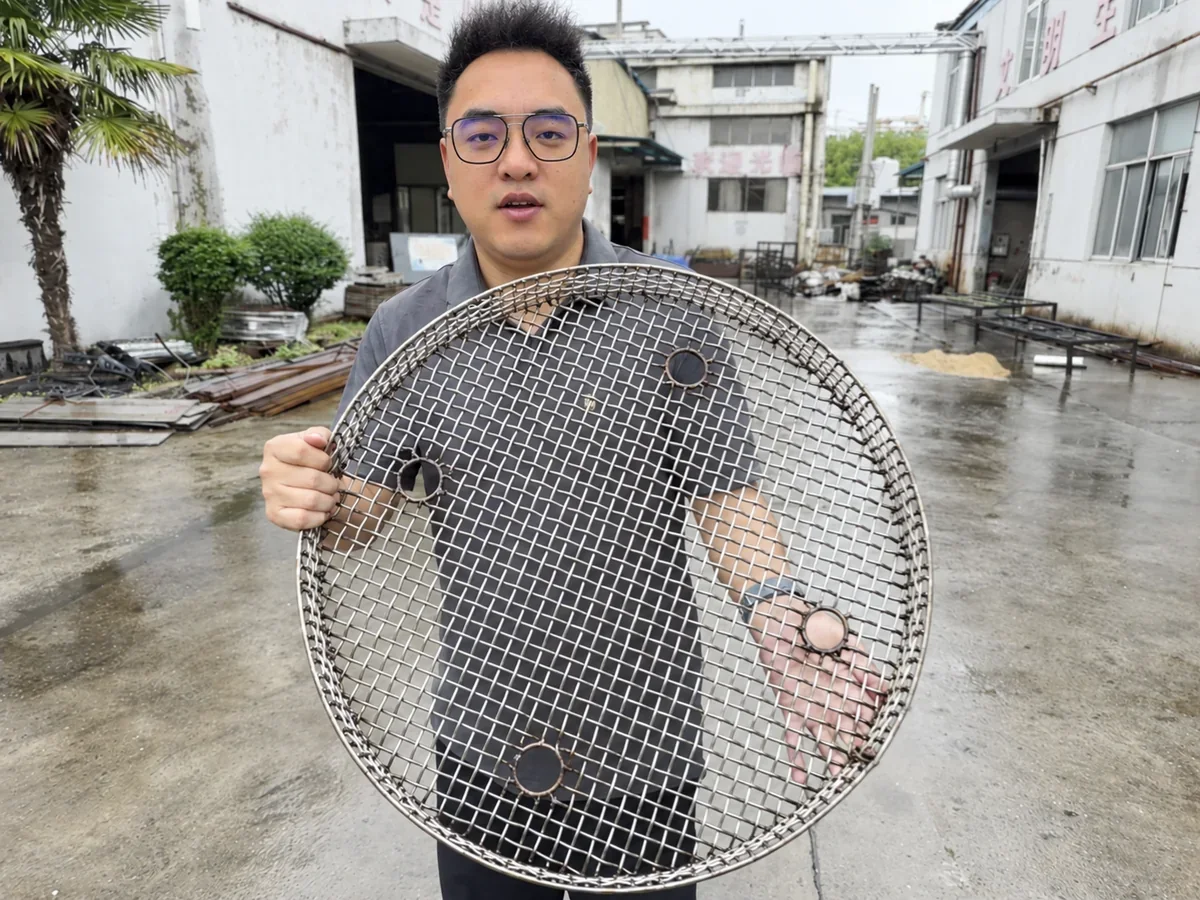
Shallow round charging basket made from welded wire mesh, with a raised rim and four circular openings in the base.
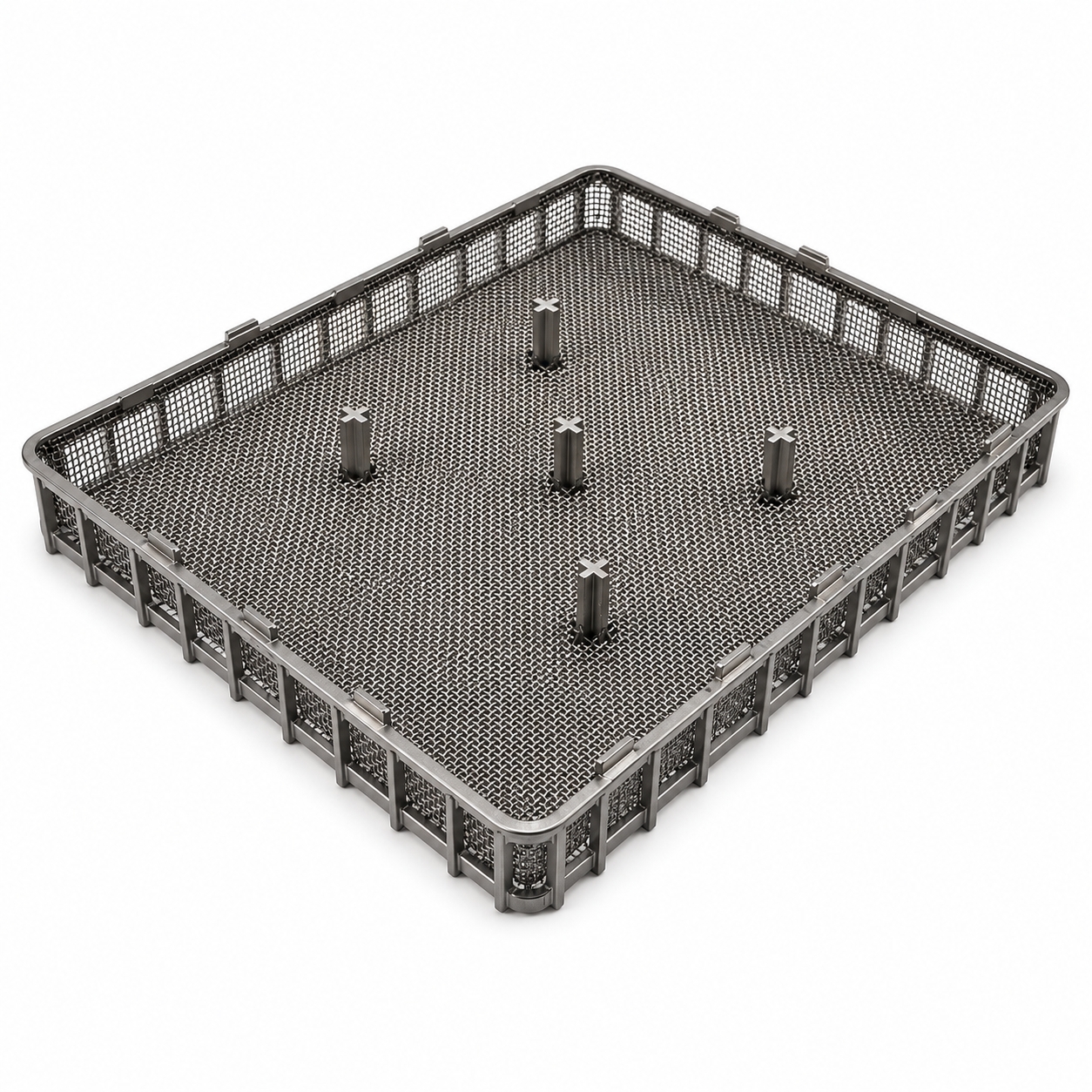
Brand: ECOOSUN
Quality Documents: See certificate details
Material: Grade and product form to be confirmed
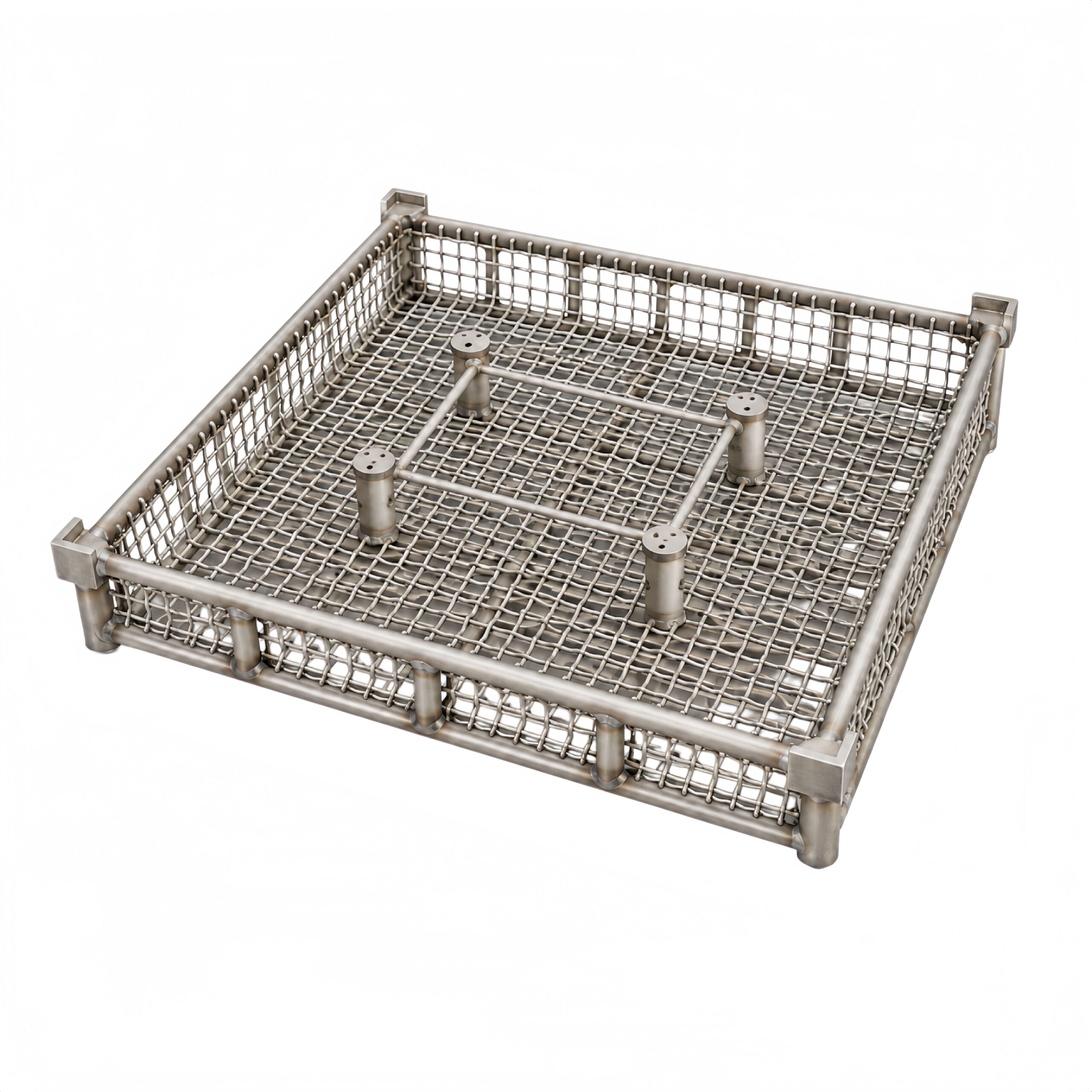
Size: 760 × 610 × 50 mm
Casting Process: Silica Sol Investment Casting
Maximum Operating Temperature: To be confirmed for the duty
MOQ: 6 Pieces
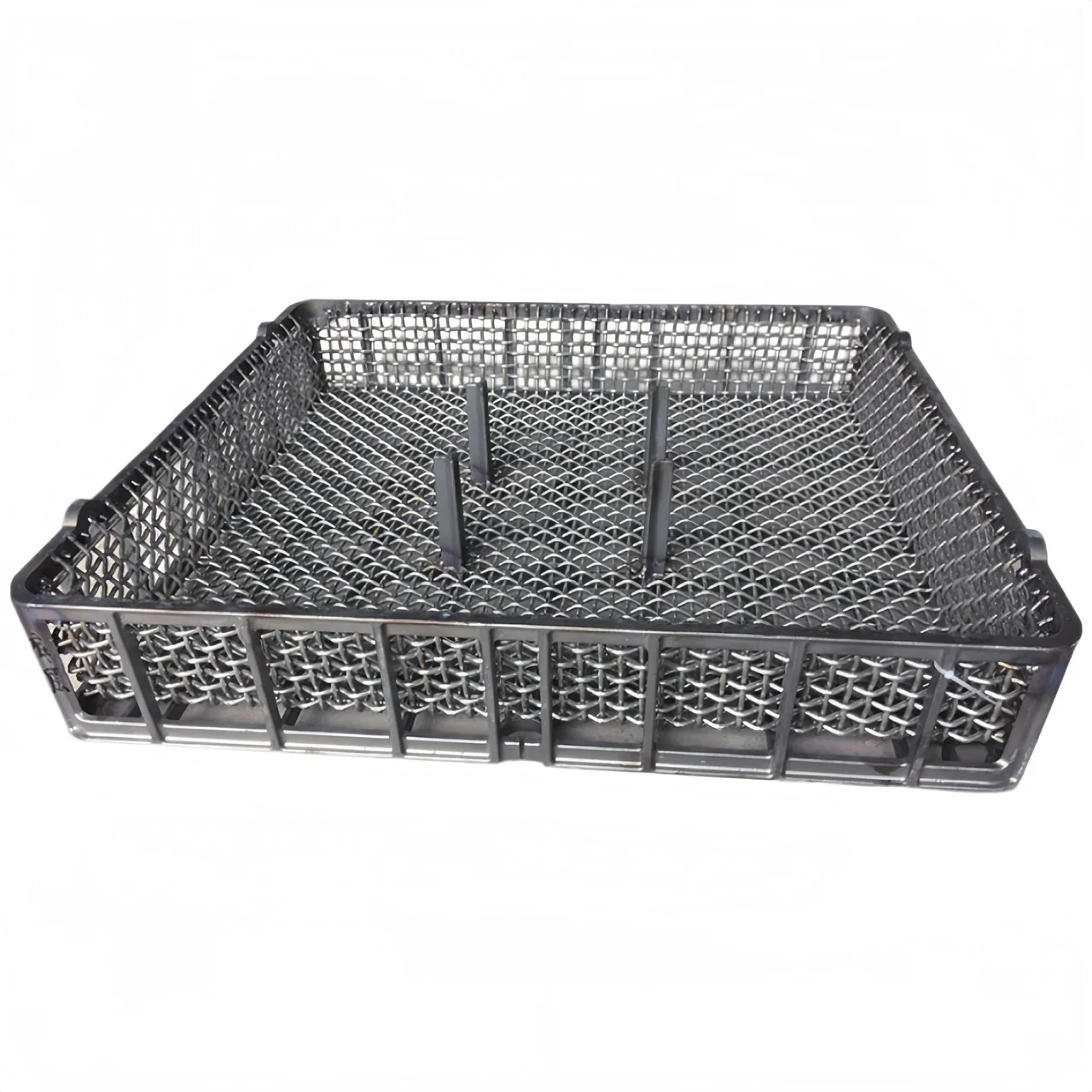
Rectangular fine-mesh basket with low sidewalls, a perimeter frame and several vertical locating posts across the base.
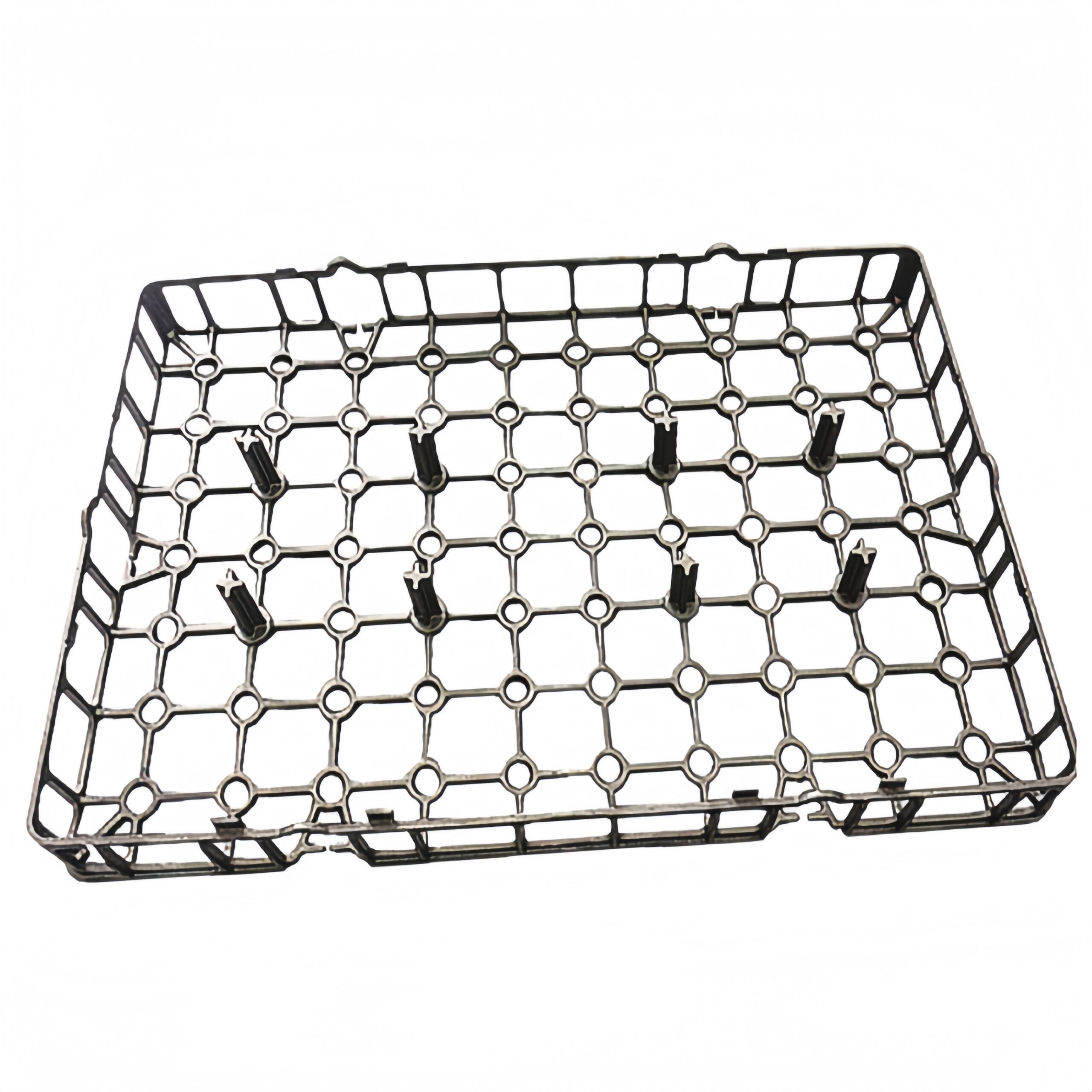
Brand: ECOOSUN
Quality Documents: See certificate details
Material: Grade and product form to be confirmed
Size: 760 × 1200 × 30 mm
Casting Process: Silica Sol Investment Casting
Maximum Operating Temperature: To be confirmed for the duty
MOQ: 4 Pieces
Shallow rectangular heat treatment basket with an open-grid base, a low perimeter frame and short projecting locating posts.
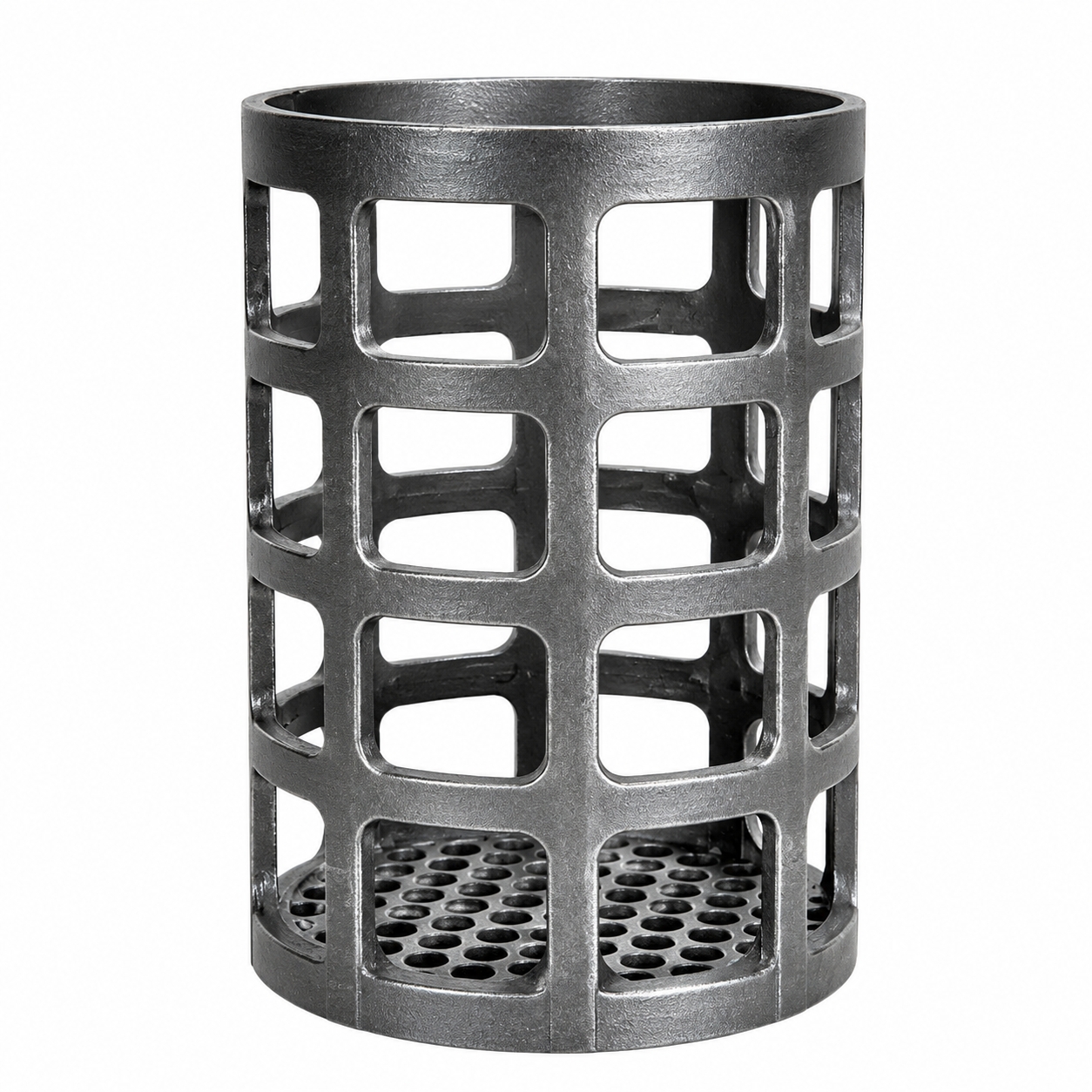
Brand: ECOOSUN
Quality Documents: See certificate details
Material: Grade and product form to be confirmed
Size: Customized According to Drawings
Casting Process: Lost Foam Casting
Maximum Operating Temperature: To be confirmed for the duty
MOQ: 1 Piece
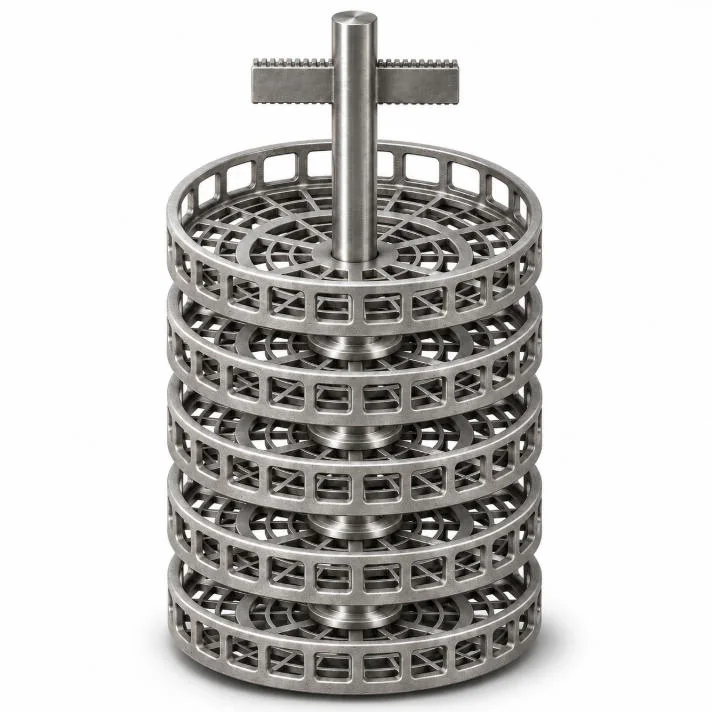
Tall cylindrical heat treatment basket with an open top, rectangular sidewall openings and a perforated base.
Load and Support Design for High Temperature Baskets
When we review high temperature baskets, provide both the loaded top view and the support arrangement below it.
For illustration, take 400 kg spread across a base resting on two side rails. Now put that same 400 kg into three blocks along the center. The total hasn’t changed. The contact areas and the way the base carries the load have. Neither arrangement can be approved from weight alone, and a concentrated load doesn’t automatically mean failure. It means we need to review the sections, spans, temperature and time together.
A sketch is fine. Mark the workpiece contact points, carrier rails and seating faces. Put workpiece weight, empty basket weight and any internal fixture weight on separate lines.
Stacked baskets need another view: where does the upper basket bear, and how does that load reach the supports below? Depending on the arrangement, the lower basket may carry the upper levels as well as its own contents. Ordering one replacement out of a stack of four does not make the stack irrelevant.
A late carrier drawing once showed that a proposed rib occupied 40 mm needed by the transfer forks. The rib was revised two days before shipment. That was a drawing-interface problem, not something to solve by cutting metal until it cleared. A revision like that needs its effect on strength, manufacture and inspection reviewed before release.
Send the carrier and lifting arrangement with the basket drawing. Check for interference during the drawing review.
Choose the Construction for High Temperature Baskets
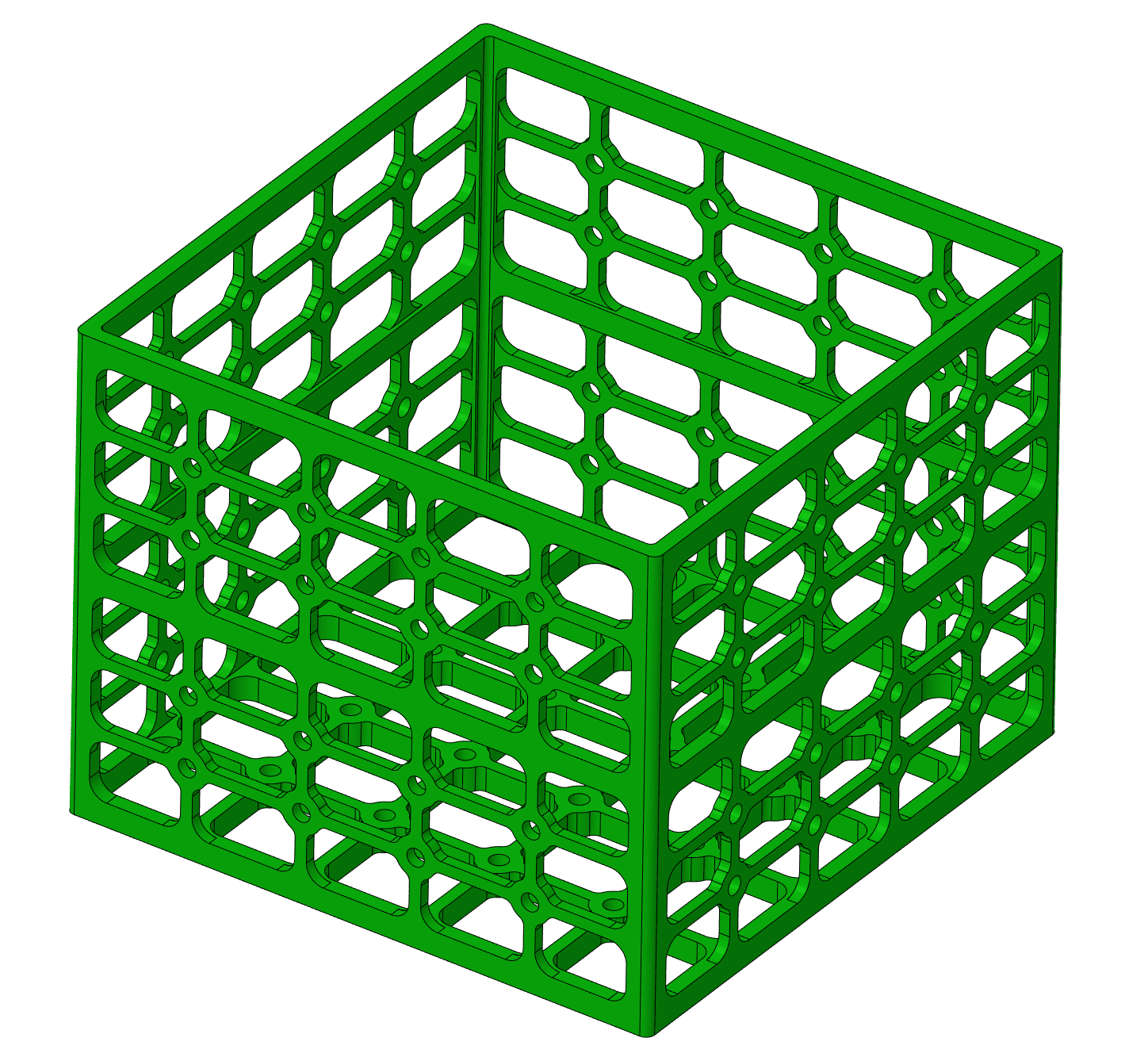
We review open-grid, honeycomb and frame-and-mesh arrangements. Part retention and load support are separate requirements; the construction has to address both. You can compare the basket configurations in our collection alongside your loading sketch.
These listed examples give you a dimensional starting point:
| Configuration | Listed example size | Detail to compare with your setup |
|---|---|---|
| Deep open-grid basket | 1000 × 1000 × 300 mm | Raised walls, ribbed base and central locating post |
| Rectangular mesh basket | 760 × 610 × 50 mm | Low walls, perimeter frame and locating posts |
| Shallow open-grid basket | 760 × 1200 × 30 mm | Low profile and projecting locating posts |
Those dimensions describe examples in our collection. They are not load ratings or approved operating envelopes. Your drawing needs to define the required size, usable space and interfaces, with the material and duty reviewed for that configuration.
Open Grid: Follow the Load into the Supports
Larger parts may sit directly on an open grid if their shape, orientation and loading arrangement allow it. Look at where they touch the grid, then follow the load through the ribs to the carrier.
One grid review showed ribs roughly 80 mm away from the workpiece contact pattern. That offset was a reason to examine the load path. It wasn’t proof that the ribs did nothing: a grid can distribute load between sections. We’d need the full geometry and duty to decide whether the layout should change.
Honeycomb: Tell Us What the Walls Carry
Does the wall simply keep loose pieces inside, or do parts lean against it throughout the cycle? Tell me which job it does.
A 3 mm wall shown on a drawing is a dimension to review, not a universal answer. Likewise, a basket holding 300 kg of pins doesn’t impose a 300 kg sideways force on every wall. The contact pattern, packing, handling and support arrangement matter. We need those details before reviewing wall thickness, cell geometry or casting requirements.
Fine Mesh: Check the Openings and the Edges
With many small parts, we need to consider a fine-mesh layer. Take the smallest part and turn it into the orientation most likely to pass through an opening. Check that position, then check the edges, corners and attachment gaps. Parts can escape through an unsuitable opening anywhere; the perimeter deserves its own inspection too.
Frame and mesh are two specifications. Write them separately: clear opening, wire diameter, material, support spacing, attachment and whether the insert is removable. The mesh may carry the parts directly or rest on another support. Show us which.
In one assembly, the frame was described in the inquiry as “310S,” but the mesh material was not clearly documented. The mesh was reported to have failed after eight months. We’d verify the frame’s governing standard and product form as well as the wire specification before using that record to select a replacement. A commercial grade description alone doesn’t settle either component’s suitability.
Material Selection for High Temperature Baskets
Material selection for high temperature baskets starts with the actual duty, with the assumptions written down.
Oxidation resistance and hot strength are different properties. A published oxidation-temperature limit applies under stated conditions. It doesn’t establish how much weight an assembled basket can carry, how flat it will remain or how long it will last in your atmosphere.
For a long hot hold, we review creep: time-dependent deformation under stress. For repeated heating and cooling, thermal fatigue also needs consideration. Local temperature differences, restraint, joints and geometry can influence the stresses. A crack near a corner or weld is a reason to investigate, not a diagnosis by itself.
Cycle counts need proper arithmetic too. As an illustration, four cycles per shift × two shifts per day × 250 working days per year × three years equals 6,000 cycles. That is an operating count, not a life prediction. Change the shift pattern, working days or actual basket usage and the result changes. Record the assumptions instead of turning “three years” into an unexplained cycle total.
Include the grade, governing standard and product form for each component. Cast material, plate, bar and wire need the appropriate specifications. If we propose an alternative, ask what changes, why it is being considered and which operating conditions were used in the review. Our heat-resistant alloy selection guide explains what to prepare.
Cooling: Tell Me What Happens to the Basket Itself
For high-temperature furnace baskets, “quenched” leaves an important question. Water, oil or salt? What is the medium temperature? Does the loaded basket enter it, or are the parts transferred first?
One customer described the operation as quenching, but the basket stayed inside the furnace. The parts went out to the tank; the basket cooled in place. The process description was correct for the parts and incomplete for the basket. We needed that distinction before reviewing the replacement.
Write down the sequence from the end of the hold through transfer, cooling and unloading. Include the atmosphere and where it changes. For example, a basket transferred from a 900 °C controlled-atmosphere stage into a quench needs a review of the actual cooling medium, temperature change and transfer conditions. That example isn’t a recommended operating procedure.
Handling belongs here too. The basket may sit on rails while hot and hang from lifting points during transfer. Show both load paths, plus fork pockets, tong clearances and sling access.
A drawing once said “clear for tongs,” but the tongs at the receiving plant differed from those used at the other site. The mismatch led to six weeks of discussion. A measurable clearance or the correct tool envelope would have made the requirement much clearer.
If cooling or transfer is changing with the replacement, tell us before we quote. Copying the old dimensions may no longer solve the new job.
Replacing High Temperature Baskets with Cracks or Sagging
An old basket can develop fine cracks after long service. Several cracks, or severe deformation, are reasons to stop and arrange an assessment. Continued use may lead to fracture. Your site’s responsible team needs to decide removal from service under its inspection rules; a photograph cannot establish a universal safe crack count.
For our replacement review, photograph the cooled basket out of service. One close view shows the damage. One wider view shows where it sits relative to the supports, ribs and joints. For a sagged base, add a side view against a straight reference and measured deviations where practical. The photo and the measurements help each other.
Tell us about previous repairs. If the same corner has been repaired twice and is damaged again, review the geometry, material, support, loading and repair history before ordering another copy. Repeated damage calls for investigation; it doesn’t establish that the design alone caused it.
Blackening gets a separate judgement. Surface color may reflect oxide, deposits or process contamination. On its own, it doesn’t establish remaining strength or life. Record cracks, loose scale, visible section loss and distortion separately.
Keep dimensions from sound features apart from measurements across bent sections. Otherwise, it’s easy to reproduce the damage in the replacement drawing. Our worn-sample replacement guide shows the information to collect.
Mark What a Replacement Must Preserve
Before modifying replacement high temperature baskets, circle the interfaces that cannot move: seating faces, locating points, lifting features, stacking contacts and usable loading space.
A 3 mm movement at a locating point could prevent fit where the available clearance is smaller than that. Elsewhere, it might be acceptable. The permitted movement belongs on the drawing. Outside length and width alone won’t tell us whether two baskets will behave the same way on your carrier.
Then mark what’s open to review: a rib layout, mesh attachment or non-contact surface. That gives us room to discuss manufacturing options without guessing which features your equipment depends on.
Any proposed change should appear on the revised drawing with its effect on fit, loading and inspection explained. Keep the old and new revisions together. Purchasing should be able to see which design the quotation covers.
For door clearance, carrier rails and pickup points, compare the furnace basket equipment-fit guide with the hot-duty requirements on this page.
Compare Quotes for High Temperature Baskets Line by Line
A complete assembly, a bare frame and a frame with a separately priced insert are different purchases. Ask each supplier to identify tooling, baskets, spare inserts, machining, inspection, packing and delivery terms where applicable.
For a useful price comparison, request three totals: the same first delivery, the same repeat order and the required spare inserts. Keep quantities, drawing revision, material requirements and inspection scope consistent. A lower first-order total doesn’t necessarily mean a lower repeat-order cost.
One documentation review found a certificate describing an HK frame, while mesh had reportedly been fitted six weeks later by a third party. The frame certificate didn’t establish the mesh specification. “HK” itself also needed the governing standard and complete material identification. We would request the records for the actual assembly before accepting the paperwork as complete.
Ask what ships with your order: material records, dimensional results, identification and any agreed additional inspection. Our basket manufacturing evidence helps you see the production work. The documents required for your purchase still need to be written into the order.
Service Life of High Temperature Baskets: Compare the Same Removal Criteria
An earlier quotation comparison recorded service periods of two years and nine months, with hold time identified as an important difference. Before presenting that as evidence for a material choice, compare both complete operating histories. Those two figures alone cannot establish why one basket lasted longer.
A basket removed when it starts rocking on its rails isn’t being judged by the same rule as one kept until it is visibly twisted. For a trial, agree on the loading arrangement, duty, inspection points and removal criteria before counting cycles.
If you calculate cost per accepted cycle, use the defined basket-related costs divided by the actual accepted cycles under that duty. State whether inserts, repairs and tooling are included. If batch weights differ, compare cost per unit of acceptable processed output as well. That keeps a lighter load from looking economical simply because it produces a larger cycle count.
We can review a trial scope with you. A service-life claim should identify the operating conditions and acceptance criteria behind it.
Put the First Delivery on Record
An accepted first delivery of high temperature baskets gives your team a baseline. Record the agreed seating and locating dimensions, grid or mesh condition, identification and drawing revision. Check fit using the approved procedure before production service.
Any departure accepted for a sample needs to be documented. Otherwise, a small accepted difference can become a permanent one that nobody remembers approving.
Keep that starting record with the material documents. During service, record recipe changes, loading changes, carrier repairs and condition checks against dates. If distortion develops, we can then review what changed and when.
Send Us Your High Temperature Baskets Inquiry
One photo is enough to start the conversation. My first questions are practical:
| Information | What to send |
|---|---|
| Furnace | Type, usable internal dimensions and the tightest loading or door clearance |
| Workpieces | Smallest and largest dimensions, orientation and loading pattern |
| Weight and support | Workpiece, basket and insert weights separately; carrier and stacking arrangement |
| Hot duty | Normal and peak temperatures, measurement source, hold time and occasional harder recipes |
| Frequency | Cycles per shift, shifts per day, working days and whether baskets rotate between duties |
| Cooling and transfer | Medium and its temperature, whether the basket enters it, transfer sequence and lifting points |
| Supply requirements | Drawing revision or sample, quantities, required material records, inspection and delivery date |
Mark the gaps honestly. “Don’t know” is an answer we can work with. If the material is unknown, say so. If a dimension comes from a bent area, label it. If you need baskets urgently, tell us whether approved drawings or tooling already exist.
Send what you’ve got. We’ll work through the open points together and put the agreed scope in writing.
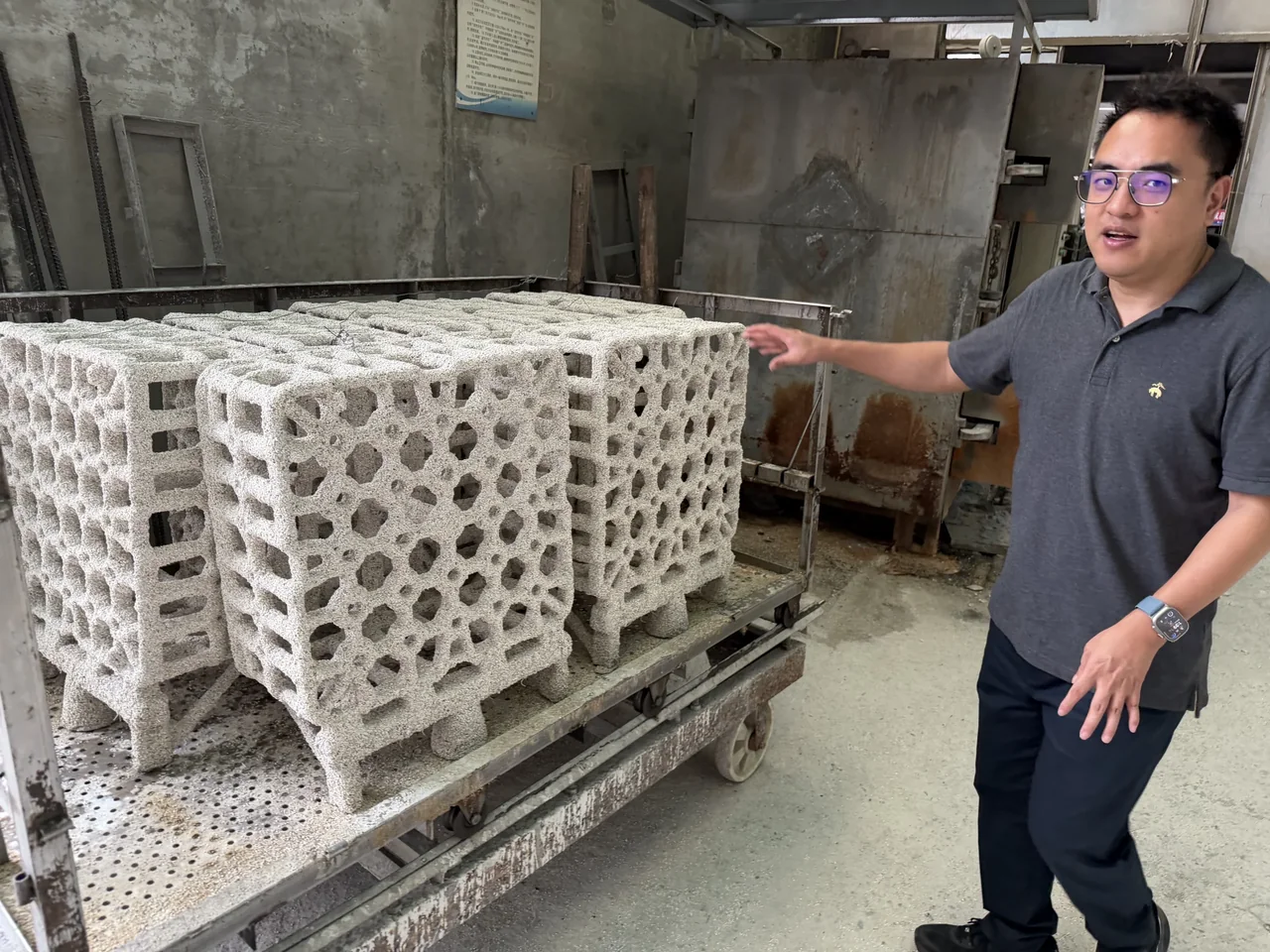
Meet ECOOSUN at the factory entrance. For high temperature baskets made to drawing, start the technical discussion with the load, furnace atmosphere, supports and complete heating and cooling cycle. This short introduction identifies the team behind the quotation; the basket photographs and manufacturing evidence elsewhere on this page show the relevant product structures.
Hi, I’m Jonny, your factory contact for custom high temperature baskets. Send your basket drawing or sample photographs, usable dimensions and loading arrangement. Include normal and peak temperatures, hold time and cooling conditions so our team can review the replacement scope and identify missing information before quoting.
See the wax-pattern stage of investment casting in ECOOSUN’s workshop. When reviewing a high-temperature basket design, compare the pattern geometry with the proposed grid openings, intersections and locating features. This footage illustrates a manufacturing stage; the casting route for your basket is confirmed against its drawing and requirements.
Explore semi-finished heat-resistant castings, including basket and support shapes before final finishing. For high temperature baskets, use the product photographs and approved drawing to identify the base, sidewalls and handling interfaces. Appearance at this stage does not establish a load rating or service-life guarantee.
Watch wax-pattern preparation, assembly and demoulding, followed by slurry dipping, sand coating and ceramic-shell handling. These workshop scenes show the practical preparation work behind ECOOSUN’s heat-resistant castings.
See shell preparation, furnace loading, ladle filling and mould pouring on the casting floor. The footage highlights coordinated work around molten metal and hot components during heat-resistant casting production.
Follow cast components through shell removal, grinding, surface finishing and straightening. Workshop footage shows hands-on processing of different shapes, furnace trays, support frames and heat treatment fixtures.
Explore product batches, assembled furnace tooling and packaging prepared for shipment. Scenes from production and industrial use show furnace baskets, trays, rods and fixtures moving through the factory.



 +44 7419 144346