
Steel hardening develops increased hardness through a route suited to the steel, often involving austenitizing, quenching and subsequent tempering. Hardening and tempering requirements are set by the material, part design and approved process. Buyers should give suppliers enough information to distinguish the treatment outcome from the equipment or fixture scope. This guide focuses on process questions and the loading details that affect procurement of custom furnace components.
For batch hardening, compare heat treatment trays using the real supports, part spacing and full treatment sequence.
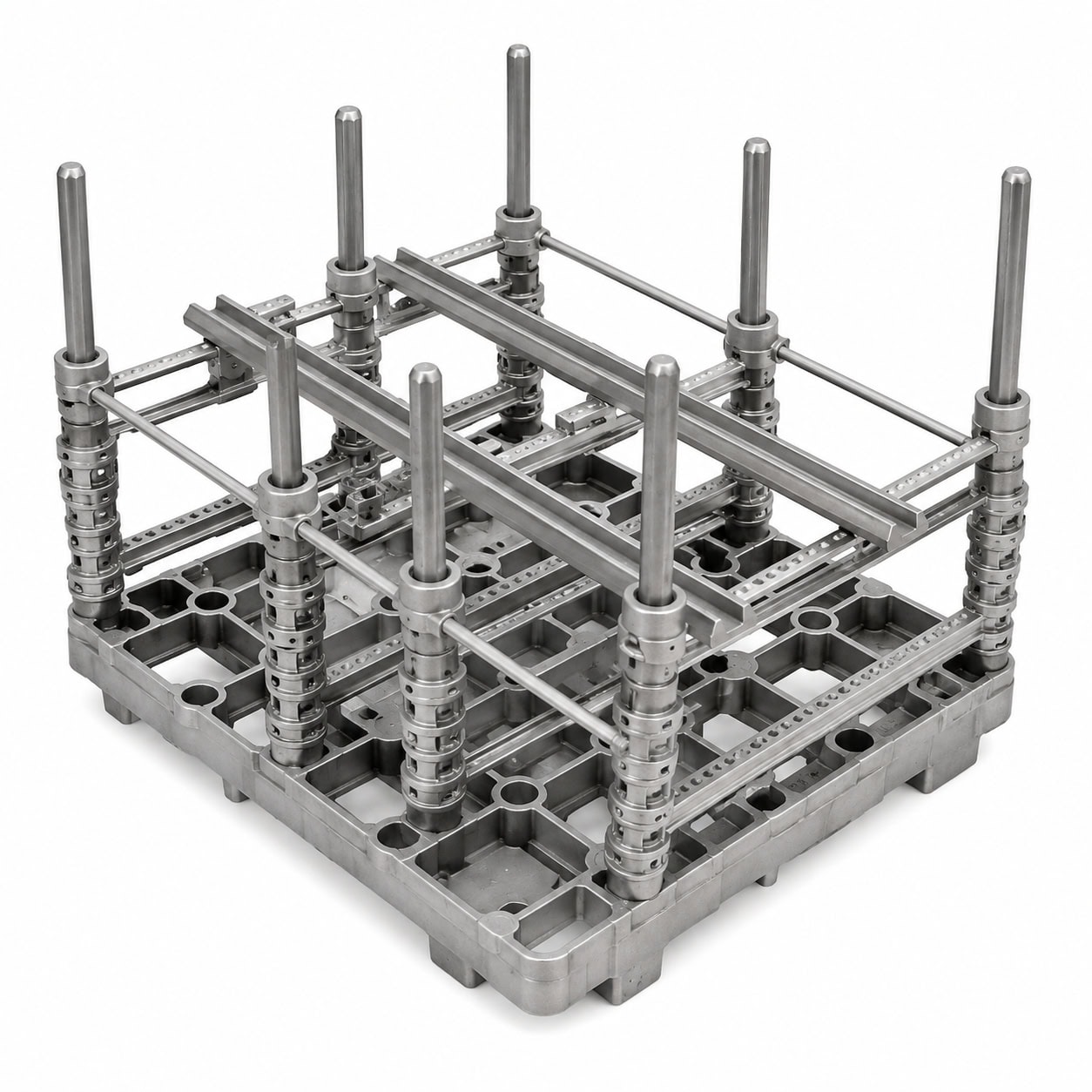
For steel hardening, identify the material standard, product form, workpiece geometry and approved cycle. State the load size, orientation and contact areas so the carrier can be reviewed against the actual batch. Do not treat the hardness target as a complete equipment specification. The process owner must define and verify the treatment; the component supplier should quote the drawing, material and inspection scope agreed for the carrier.
Metal Hardening
Metal hardening describes several routes to increase hardness; a process suitable for one alloy may be unsuitable for another. A metal hardening project may involve a process specific to the alloy and part. State the workpiece material, dimensions, surface requirements and permitted treatment route. Provide the maximum loading arrangement and identify features that need support or must remain unobstructed. If the same fixture will be used for multiple metals or cycles, list each duty for review rather than assuming interchangeability.
Surface Hardening
Surface hardening increases hardness near the surface through a selected thermal or thermochemical route. For surface hardening, communicate which surfaces are treated, how the parts are oriented and what contact or masking constraints the process requires. Include the process route and the approved acceptance basis. This is especially important when a batch fixture could shadow or touch a critical area. A component drawing should identify locating features and loading positions, while the heat treater confirms process access and product results.
Induction Hardening
Induction hardening uses electromagnetic heating followed by controlled cooling to harden selected regions of suitable components. An induction hardening inquiry should identify the induction process, coil and part interface information relevant to the fixture, and how the workpiece is positioned during treatment. Note whether parts are processed individually or in a carrier and list the alignment or handling features required. A supplier should not infer coil compatibility from a part photograph; provide the relevant assembly drawing and process constraints for review.
Steel Tempering
Steel tempering reheats hardened steel under controlled conditions to adjust hardness, toughness and residual stress. For steel tempering, state the approved cycle and whether parts use the same supports as during hardening or another stage. Include part dimensions, load weight, furnace type and contact restrictions. A carrier intended for repeated stages should be assessed against every specified duty. Keep the process recipe, material verification and final acceptance requirements in the heat treater’s scope and the component criteria in the supplier’s drawing.

To quote a fixture or carrier, provide the workpiece drawing, material, treatment sequence, maximum load, contact constraints and inspection requirements. ECOOSUN can review a custom component design against the information supplied; final process compatibility and treatment results require approval by your heat-treatment team.
Questions buyers ask
Does steel hardness alone define a hardening fixture?
No. The fixture also depends on part geometry, heating route, transfer, support and cooling. Provide these inputs with the required product condition and dimensional acceptance criteria.
Can an induction hardening fixture be selected like a furnace basket?
Induction tooling must fit the coil, workpiece motion and cooling arrangement. Review the specific assembly and interfaces before assuming a conventional furnace carrier is relevant.
Discuss a component requirement with ECOOSUN: send the drawing and operating duty. Include the required quantity and documents so the quotation identifies a reviewable supply scope.
Related component and technical pages: heat treatment fixtures | heat treatment trays | heat treatment baskets | heat-resistant alloy selection guide

 +44 7419 144346