The central difference in investment casting vs die casting is how the mould is made and filled. Investment casting pours metal into a disposable ceramic shell built around a lost-wax pattern. Conventional die casting injects molten metal under pressure into a reusable metal die. For high-chromium, high-nickel heat-resistant steel furnace parts, investment casting is normally the more relevant of the two because traditional high-pressure die casting is dominated by lower-melting nonferrous alloys.
That conclusion should not become a universal rule. Die casting is extremely productive for suitable aluminium, zinc and magnesium components. Investment casting is valuable for steel, stainless steel, cobalt- or nickel-bearing alloys and complex low-to-medium-volume parts. The correct route depends on alloy, geometry, quantity, tooling economics and service—not on which process sounds more precise.

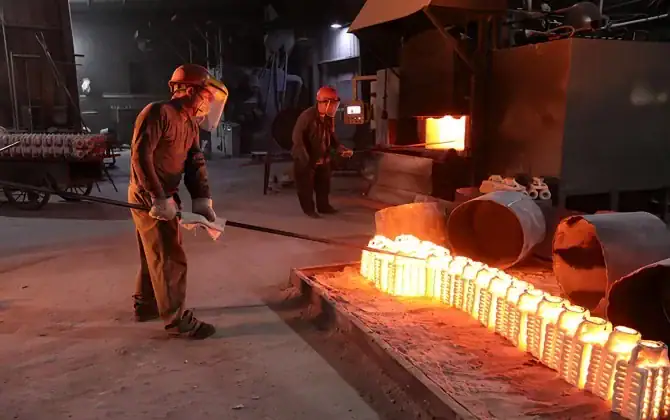
Representative heat-resistant furnace components considered for investment casting or other high-temperature casting routes.
Process difference in one minute
Investment casting
Wax patterns are produced, assembled and coated with ceramic layers. The wax is removed, the shell is fired, and molten alloy is poured into the cavity. The mould is destroyed to recover the parts.
Die casting
A steel die opens and closes repeatedly. Molten alloy is injected at speed and pressure, solidifies rapidly, and is ejected. The durable die supports short cycles and high output when the part and alloy suit the machine.
Side-by-side comparison
| Decision factor | Investment casting | Conventional die casting |
|---|---|---|
| Mould | Disposable ceramic shell | Reusable metal die |
| Pattern | Expendable wax pattern | No expendable wax pattern |
| Filling | Gravity or assisted pouring depending on route | High-pressure injection |
| Common alloy range | Steel, stainless, heat-resistant and many nonferrous alloys | Mainly aluminium, zinc and magnesium families |
| Tool cost | Moderate to high, geometry dependent | Usually high because of complex durable dies |
| Production quantity | Prototypes to repeat production, economics vary | Strongest at high repeat volume |
| Part size | Foundry-line dependent | Machine locking force and shot capacity dependent |
| Internal complexity | Ceramic cores or assembled patterns may be possible | Slides and cores possible, but die complexity rises |
| Surface/detail | Generally good when wax and shell are controlled | Generally good with a controlled die and process |
| High-temperature furnace duty | Relevant for suitable cast heat-resistant alloys | Typical die-cast alloys are usually not selected for hot furnace internals |
Why alloy selection changes the answer
Die casting equipment relies on a reusable metallic die. Excessive pouring temperature and chemical attack shorten die life and complicate production. This is one reason mainstream high-pressure die casting is associated with nonferrous alloys whose melting and processing behaviour suit the die and machine.
Heat-treatment baskets, trays and fixtures often require cast heat-resistant steel with chromium, nickel, controlled carbon and sometimes carbide-forming additions. These alloys operate in oxidation, carburization, thermal cycling and creep conditions that are very different from an aluminium housing or zinc hardware component.
Investment casting uses a refractory shell that is consumed for each pour, allowing a much broader alloy range. This does not make every high-alloy composition easy to cast: shell reaction, fluidity, inclusions, shrinkage and feeding still require qualified foundry practice.
Tooling and quantity economics
A die-casting die must withstand repeated pressure, heat and mechanical cycling while controlling cooling and ejection. It can be expensive, but the cost is spread over a large production run and short cycles.
Investment-casting wax tooling also requires engineering, but the production mould is the ceramic shell created for each tree. This makes the process more accessible to lower volumes, complex variants and industrial replacement parts—although very small orders can still make tooling uneconomic.
For a buyer, compare:
- initial tool and sample qualification;
- unit cost at realistic annual quantity;
- machining and assembly saved;
- tooling maintenance and revision cost;
- scrap and quality documentation;
- expected product life.
The cheapest prototype route may not be the lowest repeat-production route.
Geometry and design differences
Die casting uses draft, ejector systems, slides and a defined die-opening direction. The process can produce thin walls and integrated features in suitable alloys, but die complexity grows quickly with undercuts and enclosed geometry.
Investment casting removes the wax and destroys the shell, so it avoids a permanent mould parting strategy. It can produce complex contours and repeated grid features, but the wax pattern still needs tooling access, stable ejection and handling. Ceramic slurry must coat and drain, and metal must fill and feed the entire shape.

Open-grid furnace tray geometry requires evaluation of wax stability, shell access, filling, feeding and service distortion.
Dimensional accuracy and surface finish
Both processes can deliver useful accuracy and finish. Generic internet tables often show fixed tolerance or roughness numbers, but they hide the variables that decide an actual quotation.
For investment casting, evaluate wax tool, pattern size, shell route, alloy, heat treatment, straightening and cumulative grid dimensions. For die casting, evaluate die construction, thermal balance, machine, alloy, ejection and tool wear.
Instead of demanding one tolerance class everywhere:
- identify assembly datums;
- specify functional bores and faces;
- define acceptable overall flatness;
- mark non-critical cast surfaces;
- machine features whose function justifies it.
Porosity, shrinkage and inspection
The defect mechanisms differ. Die casting can trap gas because filling is rapid; specialized vacuum and process control can reduce risk. Investment casting can suffer shrinkage, inclusions, shell defects, misruns and other problems when gating, shell or melt control is inadequate.
No process guarantees a pore-free part. Acceptance should be based on function, zones and inspection method. A structural furnace lifting lug, a dense machined hub and a decorative cover deserve different controls.
High-temperature performance comes from material and design
Manufacturing process does not create high-temperature capability by itself. A furnace fixture needs:
- a cast alloy suited to metal temperature and atmosphere;
- sufficient creep strength for load and life;
- geometry that allows thermal expansion;
- balanced sections and load paths;
- inspection appropriate to failure consequence.
Typical aluminium die-cast alloys may be excellent for motor housings, control enclosures or equipment outside the hot zone, but they are not substitutes for heat-resistant steel inside a furnace.
Which process fits which part?
| Example | Likely starting point | Reason |
|---|---|---|
| High-volume aluminium equipment housing | Die casting | Alloy and quantity suit reusable high-speed tooling |
| Complex heat-resistant steel furnace bracket | Investment casting | Alloy range and geometry favor ceramic shell |
| Open-grid high-alloy heat-treatment fixture | Investment casting/process review | Feature consolidation and reduced machining may add value |
| Very large simple furnace base | Sand casting or fabrication review | Size and low geometric complexity may not justify investment casting |
| Long radiant tube body | Centrifugal casting or fabrication review | Tubular geometry and wall integrity govern selection |
Buyer decision sequence
- Define operating temperature, atmosphere, load and cycle.
- Select an appropriate material family.
- Confirm whether the alloy can use the proposed process.
- Review size, geometry and quantity.
- Compare tooling plus total delivered cost.
- Agree on first article, machining and inspection.
Common sourcing mistakes in this comparison
One mistake is comparing a steel investment-casting quotation with an aluminium die-casting quotation as if material were the only difference. Changing the alloy can change stiffness, thermal expansion, oxidation behaviour, mass and service temperature; it may require redesigning the component rather than translating the geometry.
A second mistake is using “die casting” to mean any casting produced from tooling. Investment casting also uses a metal wax-injection tool, but the molten production alloy is poured into a disposable ceramic shell—not into that wax tool.
A third mistake is assuming high die-tool cost always makes die casting expensive. At sufficiently high volume, a durable automated die can create excellent economics. Equally, assuming investment casting is economical at any volume ignores wax tooling, shell labour, tree yield and finishing.
The RFQ should keep material, finished geometry, annual quantity and service requirements fixed while suppliers compare processes. If a supplier proposes a material change, request a separate technical justification and quotation so the effect is visible.
Environmental and operational considerations
Process selection can also consider metal yield, remelt loops, tooling life, shell or sand waste, energy, finishing and transport. These factors are factory- and project-specific; a simple claim that one route is always greener is not credible.
Ask for measurable information where sustainability matters: recycled content policy, scrap segregation, dust and fume controls, energy monitoring, waste treatment and packaging. Keep environmental evaluation separate from the engineering requirement that the part remain safe and durable in furnace service.

Drawing review should establish alloy, process feasibility and functional datums before tooling.
RFQ checklist

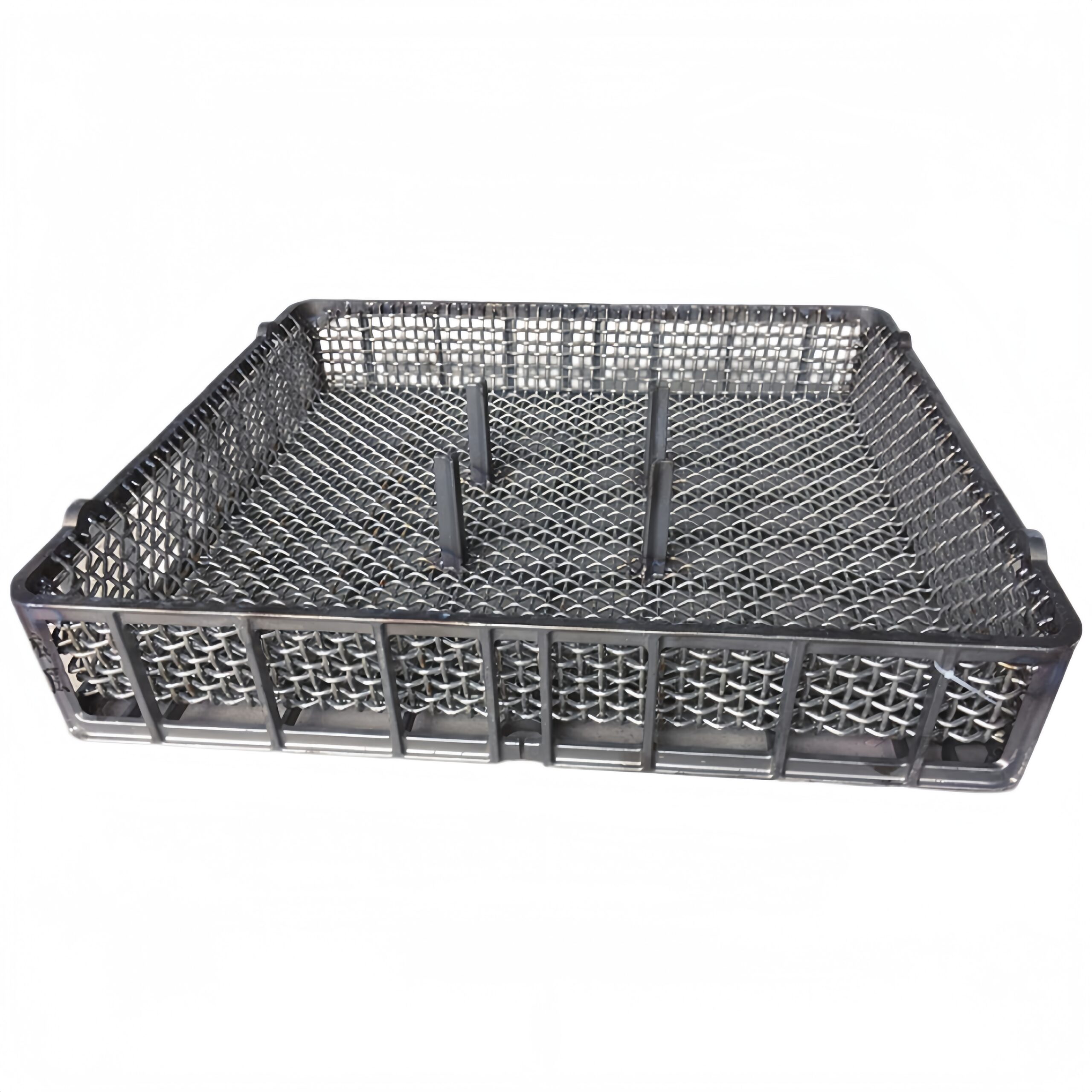
Heat-resistant furnace basket illustrating a hot-zone product family that requires alloy and service review before process selection.
Provide drawing/model, alloy standard, quantity, finished weight, critical dimensions, machining, inspection, annual demand, furnace duty and delivery requirement. If you are undecided between processes, allow suppliers to propose alternatives and require them to list assumptions.
Frequently asked questions
Is investment casting more expensive than die casting?
At very high volume for a die-castable alloy, die casting can have lower unit cost after tooling. For lower volume, high-alloy or complex steel parts, investment casting may be feasible where die casting is not. Compare total scope.
Which process has better tolerances?
Both can be precise within their process windows. The actual part size, alloy, tool, geometry and datum plan determine achievable tolerances.
Can stainless steel be die cast?
Specialized processes exist, but conventional high-pressure die casting is not the normal production route for heat-resistant stainless or high-nickel furnace castings.
Which process is better for furnace baskets?
Investment casting, sand casting or fabrication may be considered depending on size, geometry, quantity and alloy. Traditional die casting is generally not the starting point for hot-zone heat-resistant steel baskets.
Does investment casting require machining?
It can reduce machining, but critical bores, faces, datums and assembly interfaces may still need it.
Get a process recommendation
Send ECOOSUN your drawing, alloy, quantity and furnace conditions through the contact page. We can review whether investment casting or another manufacturing route better fits the heat-resistant component.
Related reading: Investment Casting, Investment Casting Process and Investment Casting vs Sand Casting.
Technical note: Final feasibility and capability must be confirmed for the specific alloy, machine/foundry line, geometry and acceptance standard.
Where Silica Sol Fits in the Process Decision
Silica Sol Investment Casting is useful for metal components whose geometry and surface requirements justify an expendable-pattern route, especially when die-casting tooling economics or alloy limitations are unfavorable.
Before specifying Silica Sol Investment Casting, the drawing should be checked for section transitions, draft, machining stock, critical datums and inspection access.
For industrial alloy parts, Silica Sol Investment Casting must also be matched to the required chemistry, heat treatment and actual service environment.


+44 7419 144346