
Direct answer: Furnace rolls support and transport workpieces through roller hearth and other continuous furnaces. Selection depends on roll dimensions, load, span, drive interface, atmosphere, operating cycle and wear or failure history. ECOOSUN can review an approved drawing or used sample for a project-specific replacement.
Author: TOM Zhang, Chief Technology Officer
Technical review: ECOOSUN Engineering Department
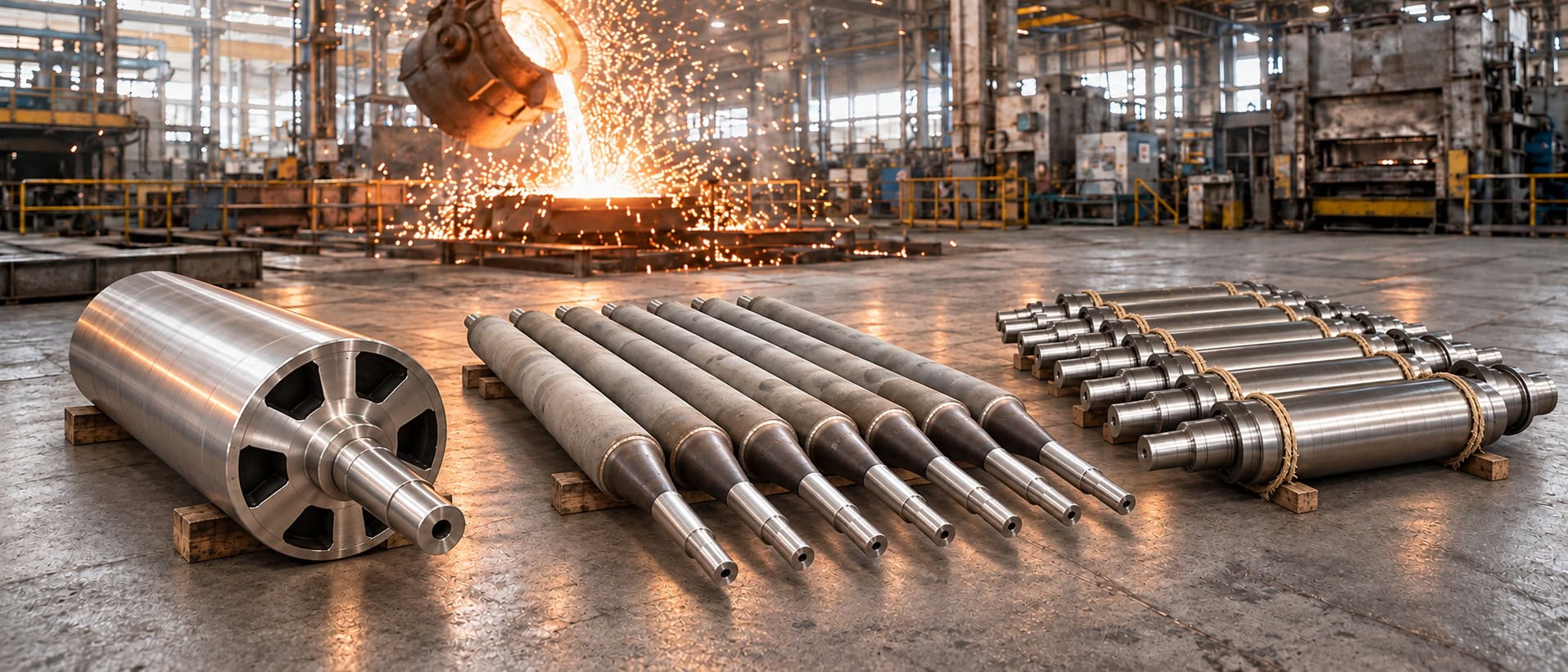
Furnace rolls carry and guide product through high-temperature roller-hearth equipment. Their condition affects transport stability, line speed, product marks and furnace alignment. A roll replacement should therefore be specified from load, span, speed, temperature and failure evidence rather than diameter alone.
Define the roll duty
Record the roll diameter, face length, unsupported span, load per roll, rotation speed, support arrangement and furnace atmosphere. Note whether the roll is exposed to direct radiant heat, scale, carburizing gas or quench vapour. These conditions influence alloy choice, surface condition and inspection requirements.
Runout, sag and alignment
Runout can come from permanent bending, uneven scale, worn journals, bearing clearance or installation error. Measure the roll at reference points after it has cooled and compare it with the approved drawing. A roll that appears straight on a bench may still create tracking problems when several rolls are installed in one line.
For a sagging roll, separate the effects of span, load and temperature gradient. Increasing section thickness is not always the correct answer; it may increase thermal mass and slow heat-up. The support layout, material condition and operating load must be considered together.
Surface damage and product marks
Inspect scoring, pitting, scale build-up, local oxidation and cracks at the transition between the working face and journal. If marks appear at a repeating pitch, compare the pitch with roll circumference and line speed. This simple check can distinguish a roll-surface issue from a problem elsewhere in the conveying system.
| Symptom | First review |
|---|---|
| Product tracking drift | Roll alignment, runout and journal wear |
| Repeating surface marks | Roll surface, scale and circumference relationship |
| Permanent sag | Span, load, temperature gradient and support |
| Journal cracking | Section transition, restraint and thermal cycling |
Replacement information for an RFQ
A furnace roll manufacturer should receive the roll drawing, furnace type, material grade if known, load map, speed, atmosphere, support details, worn-roll photographs and inspection requirements. If the original drawing is unavailable, a worn sample plus accurate measurements can start a replacement review.
ECOOSUN produces custom furnace rolls and can coordinate with roller hearth furnace parts. The final alloy and working limits must be confirmed against the actual furnace duty.
Reference basis: heat-resistant steel, cast high-temperature alloy, furnace equipment and casting-quality references in the ECOOSUN technical library.
Replacement decision sequence
Remove scale and clean the working face before measuring. Then check runout, journal size, support fit, surface damage and any permanent sag. If the roll is still within the approved geometry but has local surface damage, repair may be possible. If the datum, journal or load path has changed, replacement is usually safer than polishing the surface.
Documents that protect the next batch
Ask for a dimensional report, material identification record, surface or non-destructive inspection agreed for the part, and a drawing that marks the working face, journals and installation datums. These documents allow a second batch to be compared with the first instead of restarting the engineering review.
For buyers comparing a furnace roll manufacturer, the quality of the drawing review and inspection plan is as important as the quoted alloy.
Production context: The component reference should be read together with the manufacturing and inspection context behind the furnace application.

Request a project review: Send the drawing, used sample, key dimensions, furnace information and failure record through the ECOOSUN contact page.
wang’z
FAQ
What should a buyer confirm for a furnace roll requirement?
Confirm the drawing or used sample, key dimensions and interfaces, furnace type and clearance, load, operating cycle, failure evidence and inspection requirements. Final acceptance criteria should be agreed for the specific project.
Can ECOOSUN review a custom furnace roll requirement?
Yes. ECOOSUN can review a customer drawing or used sample and discuss casting, laboratory and inspection requirements for a custom furnace-component project. Suitability and final scope are confirmed from the supplied information.
Related Furnace Roll Resources
Use these technical guides when specifying, inspecting or replacing furnace rolls for an industrial furnace:
- Furnace Roll Replacement: Diameter, Length, Load and Runout
- Why Furnace Rolls Deform and How to Improve Service Life
- Furnace Roll Installation and Alignment Inspection Checklist
- Furnace Roll Replacement and Inspection Guide
Related ECOOSUN Products
Information for a Faster Quotation
Provide alloy grade or service conditions, roll dimensions, load, span, speed, allowable runout, atmosphere, temperature, shaft and drive details, cooling requirements, drawing or used sample, and inspection requirements.
Request a Custom Quote · Send Your Drawing · WhatsApp ECOOSUN


 +44 7419 144346