
Direct answer: Furnace-roll deformation can involve load and span, uneven heating, support alignment, worn journals or deposits. Investigate the installed roll and its operating history before selecting a replacement. Reproducing the old geometry or changing alloy alone may leave the original cause unresolved.
When a furnace roll develops runout or visible deformation, replacing it without investigating the cause can lead to the same failure again. The review should cover the roll, the supports, the load path and the furnace operating condition together.
Common contributing factors
Unsupported span and load. A long working span with concentrated or uneven loading increases bending stress. The loaded condition matters more than the empty-roll measurement.
Uneven temperature. Hot spots, poor circulation or a mismatch between the roll temperature and support temperature can create thermal gradients and distortion.
Alignment and shaft-end conditions. Bearing position, coupling alignment, keyways, threads and installation restraint can transfer unwanted stress into the roll.
Surface wear or deposits. Material build-up can change the effective diameter and balance, while surface damage may increase marking or vibration.
A buyer’s inspection record
Record the runout measurement method and location, roll diameter at several points, surface condition, shaft-end dimensions, bearing condition, product load and recent process changes. Compare measurements from the cold and hot conditions when safe and practical under the plant’s procedures.
For a replacement, send the drawing, sample or measured sketch to ECOOSUN. The Furnace Rolls team can review the diameter, length, load, support span and shaft-end requirements before preparing a preliminary quotation.
ECOOSUN manufactures custom heat-resistant furnace components. Routine dimensional, chemical composition, hardness and non-destructive checks can be included when specified. Material selection starts with the approved drawing, actual component temperature, furnace atmosphere, load and thermal cycle. Confirm the material standard and whether the component is cast, fabricated or machined from wrought stock. For designation reference, X15CrNiSi25-21 is EN 1.4841, not EN 1.4851; a wrought-grade reference is not automatically an equivalent cast grade. The alloy supplied for an ECOOSUN order, manufacturing route and required material records are confirmed for that project.
For a direct RFQ, visit Contact Us or send your furnace roll information by WhatsApp.
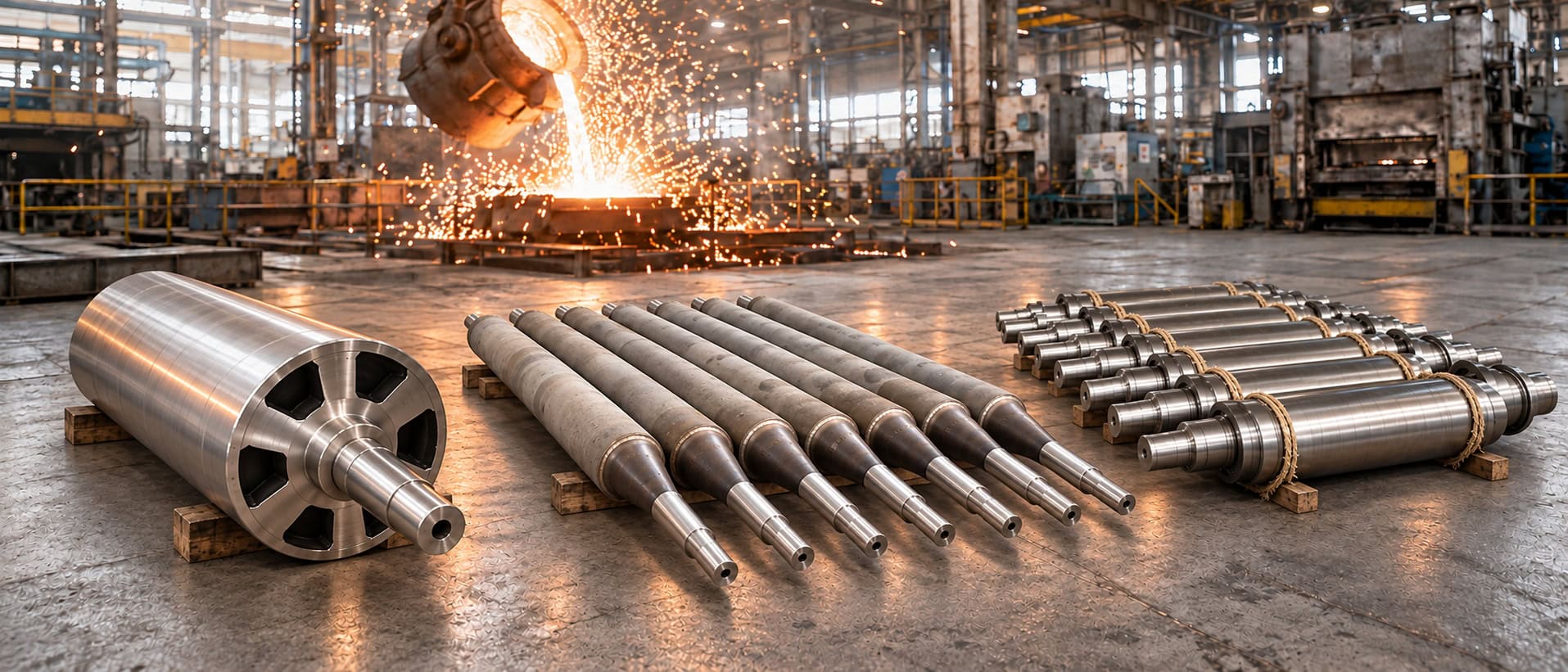
Production context: The component reference should be read together with the manufacturing and inspection context behind the furnace application.

FAQ
What should be reviewed when furnace rolls repeatedly deform?
Review the barrel profile, support span, load distribution, alignment and operating temperature history. Compare damage locations across rolls to distinguish a local component issue from a recurring system condition.
Can a different roll alloy alone guarantee longer service life?
No. Material selection interacts with temperature, geometry, load and support conditions. Any design or material change needs a defined duty and an agreed method of evaluating performance in service.
Related Furnace Roll Resources
Use these technical guides when specifying, inspecting or replacing furnace rolls for an industrial furnace:
- Furnace Rolls: Material, Runout and Replacement Criteria
- Furnace Roll Replacement: Diameter, Length, Load and Runout
- Furnace Roll Installation and Alignment Inspection Checklist
- Furnace Roll Replacement and Inspection Guide
Related ECOOSUN Products
Manufacturing and quality evidence · Official company facts and current catalog
Information for a Faster Quotation
Provide alloy grade or service conditions, roll dimensions, load, span, speed, allowable runout, atmosphere, temperature, shaft and drive details, cooling requirements, drawing or used sample, and inspection requirements.
Request a Custom Quote · Send Your Drawing · WhatsApp ECOOSUN

 +44 7419 144346