
Direct answer: Radiant tubes transfer heat into a heat-treatment furnace through a burner or heating system. Selection depends on the furnace layout, burner interface, dimensions, atmosphere, operating cycle and failure history. ECOOSUN can review a drawing or used sample for a project-specific replacement.
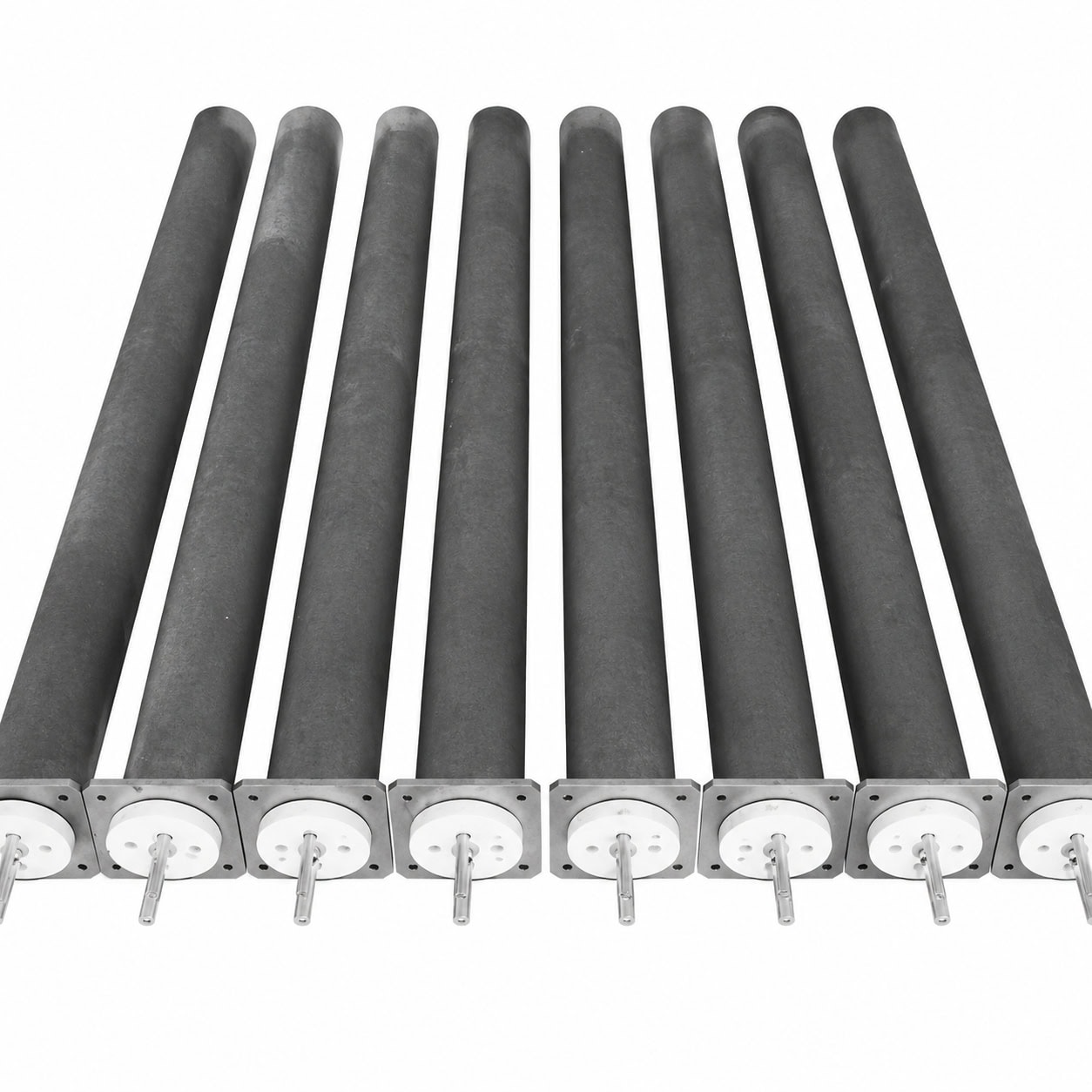
Author: TOM Zhang, Chief Technology Officer
Technical review: ECOOSUN Engineering Department
Industrial radiant tubes transfer heat without exposing the workload directly to the burner flame. Their performance depends on tube geometry, burner integration, atmosphere, support, alloy condition and the temperature pattern through the furnace. Selecting a tube by outside dimensions alone can lead to early oxidation, sagging or a non-uniform heating zone.
Start with the furnace duty
Record the tube arrangement, heated length, burner location, support points, furnace atmosphere, cycle temperature, heating rate and shutdown practice. A gas fired radiant tube also needs burner and flue information because combustion conditions affect tube temperature and oxidation.
Material selection should follow the failure mechanism
Heat-resistant alloys are selected for a combination of oxidation resistance, carburization resistance, creep strength, thermal-fatigue resistance and castability. The best alloy for one furnace atmosphere may not be the best for another. A material decision should therefore be tied to the actual failure evidence: wall thinning, surface scale, hot spots, bulging, cracks or permanent sag.
Do not insert a generic maximum temperature into a specification. Confirm the approved grade, section thickness and operating limit against the customer’s furnace cycle and the manufacturer’s material records.
Geometry, support and thermal gradients
Long tubes are sensitive to support spacing and temperature gradients. A tube can sag when the hot span is not adequately supported, while rigid restraint can increase thermal stress during startup and shutdown. Review expansion direction, burner alignment, tube-to-wall clearance and access for inspection.
Replacement checklist
- Tube drawing or worn sample with all bend and connection details.
- Furnace type, atmosphere and operating temperature range.
- Burner model, firing arrangement and flame position.
- Failure photos showing scale, cracks, deformation or burn-through.
- Required quantity, delivery window and inspection documents.
What a radiant tube manufacturer should verify
A qualified radiant tube manufacturer should review the design, alloy, casting or fabrication route, dimensional inspection and any required non-destructive testing. The quotation should state what is included: tube body, burner connection, supports, fittings, machining, inspection and documentation.
ECOOSUN supplies custom industrial furnace radiant tubes and related heat treatment furnace parts. Send drawings and operating records instead of relying on a tube name alone.
Reference basis: heat-resistant steel, cast high-temperature alloy, investment-casting, combustion-equipment and defect-analysis references in the ECOOSUN technical library. Final material selection remains application-specific.
What service-life evidence should show
Useful tube records include the location of the hottest section, wall-thickness change, scale appearance, sag, crack orientation and the number of starts and stops. Compare failed tubes from different furnace zones. If only one zone fails, review burner alignment, local atmosphere and support before changing the entire alloy specification.
Inspection before installation
Check connection dimensions, straightness or bend profile, support locations, burner alignment and cold clearance. Verify that the tube can expand in the intended direction. The installation record should identify the tube position and the inspection documents supplied with it.
This evidence-based approach helps a buyer distinguish a true material problem from a burner, support or operating problem and gives the radiant tube manufacturer information needed for a reliable replacement.
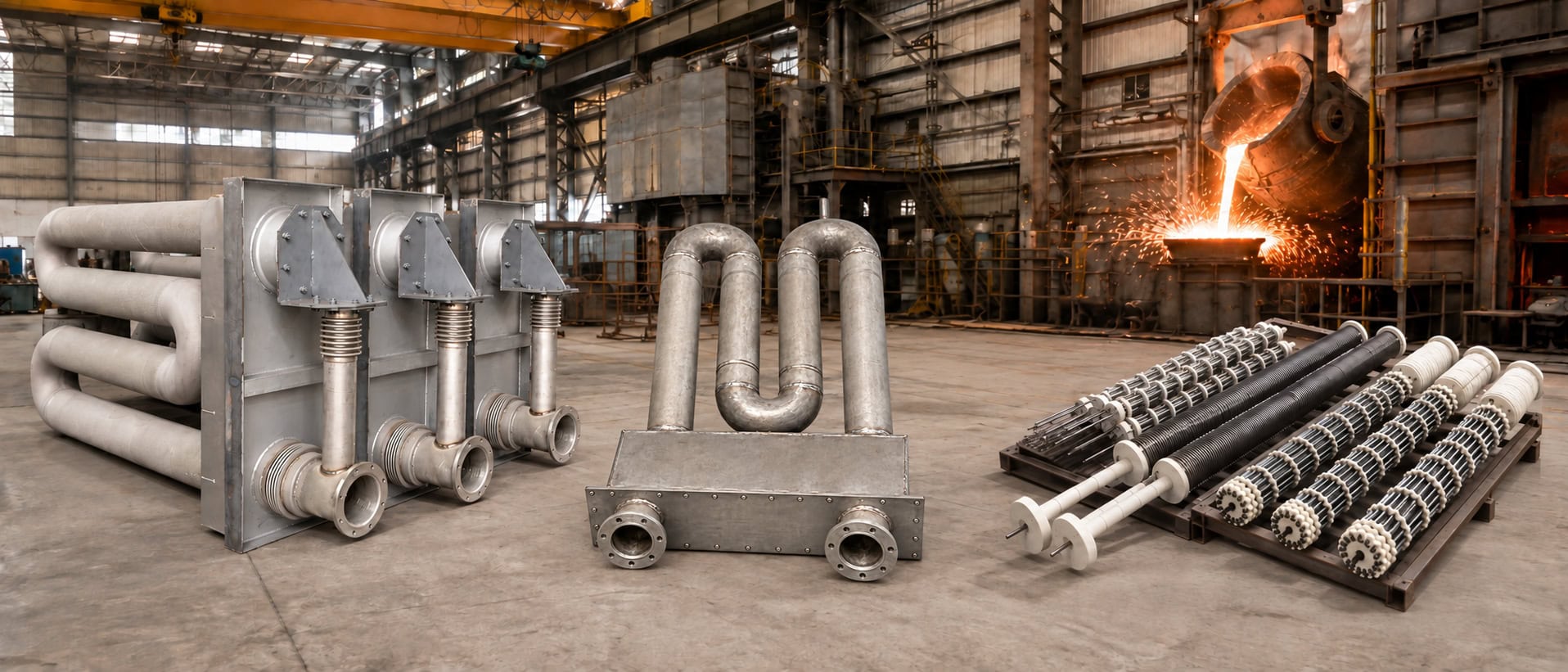
Production context: The component reference should be read together with the manufacturing and inspection context behind the furnace application.

Request a project review: Send the drawing, used sample, key dimensions, furnace information and failure record through the ECOOSUN contact page.
Author: TOM Zhang, Chief Technology Officer
Technical review: ECOOSUN Engineering Department
Industrial radiant tubes transfer heat without exposing the workload directly to the burner flame. Their performance depends on tube geometry, burner integration, atmosphere, support, alloy condition and the temperature pattern through the furnace. Selecting a tube by outside dimensions alone can lead to early oxidation, sagging or a non-uniform heating zone.
Start with the furnace duty
Record the tube arrangement, heated length, burner location, support points, furnace atmosphere, cycle temperature, heating rate and shutdown practice. A gas fired radiant tube also needs burner and flue information because combustion conditions affect tube temperature and oxidation.
Material selection should follow the failure mechanism
Heat-resistant alloys are selected for a combination of oxidation resistance, carburization resistance, creep strength, thermal-fatigue resistance and castability. The best alloy for one furnace atmosphere may not be the best for another. A material decision should therefore be tied to the actual failure evidence: wall thinning, surface scale, hot spots, bulging, cracks or permanent sag.
Do not insert a generic maximum temperature into a specification. Confirm the approved grade, section thickness and operating limit against the customer’s furnace cycle and the manufacturer’s material records.
Geometry, support and thermal gradients
Long tubes are sensitive to support spacing and temperature gradients. A tube can sag when the hot span is not adequately supported, while rigid restraint can increase thermal stress during startup and shutdown. Review expansion direction, burner alignment, tube-to-wall clearance and access for inspection.
Replacement checklist
- Tube drawing or worn sample with all bend and connection details.
- Furnace type, atmosphere and operating temperature range.
- Burner model, firing arrangement and flame position.
- Failure photos showing scale, cracks, deformation or burn-through.
- Required quantity, delivery window and inspection documents.
What a radiant tube manufacturer should verify
A qualified radiant tube manufacturer should review the design, alloy, casting or fabrication route, dimensional inspection and any required non-destructive testing. The quotation should state what is included: tube body, burner connection, supports, fittings, machining, inspection and documentation.
ECOOSUN supplies custom industrial furnace radiant tubes and related heat treatment furnace parts. Send drawings and operating records instead of relying on a tube name alone.
Reference basis: heat-resistant steel, cast high-temperature alloy, investment-casting, combustion-equipment and defect-analysis references in the ECOOSUN technical library. Final material selection remains application-specific.
What service-life evidence should show
Useful tube records include the location of the hottest section, wall-thickness change, scale appearance, sag, crack orientation and the number of starts and stops. Compare failed tubes from different furnace zones. If only one zone fails, review burner alignment, local atmosphere and support before changing the entire alloy specification.
Inspection before installation
Check connection dimensions, straightness or bend profile, support locations, burner alignment and cold clearance. Verify that the tube can expand in the intended direction. The installation record should identify the tube position and the inspection documents supplied with it.
This evidence-based approach helps a buyer distinguish a true material problem from a burner, support or operating problem and gives the radiant tube manufacturer information needed for a reliable replacement.
Production context: The component reference should be read together with the manufacturing and inspection context behind the furnace application.
FAQ
What should a buyer confirm for a radiant tube requirement?
Confirm the drawing or used sample, key dimensions and interfaces, furnace type and clearance, load, operating cycle, failure evidence and inspection requirements. Final acceptance criteria should be agreed for the specific project.
Can ECOOSUN review a custom radiant tube requirement?
Yes. ECOOSUN can review a customer drawing or used sample and discuss casting, laboratory and inspection requirements for a custom furnace-component project. Suitability and final scope are confirmed from the supplied information.
Related Radiant Tube Resources
Use these technical guides when specifying, inspecting or replacing radiant tubes for an industrial furnace:
- Radiant Tubes for Annealing and Heat-Treatment Furnaces
- Straight, U-Type or W-Type Radiant Tubes
- Radiant Tube Failure: Cracking, Sagging and Oxidation
- Radiant Tube Installation and Connection Inspection Guide
Related ECOOSUN Products
Information for a Faster Quotation
Provide alloy grade or service conditions, straight/U/W form, tube dimensions, burner and connection details, operating temperature, furnace zone, quantity, drawing or used sample, and inspection requirements.
Request a Custom Quote · Send Your Drawing · WhatsApp ECOOSUN


 +44 7419 144346