
Direct answer
Heat treatment trays may warp or crack when load, support, clearance, thermal movement, workpiece arrangement, handling and repeated cycling are not working together. Local contact, unsupported spans and concentrated loads can create damage in specific areas, while distortion may change the tray’s fit in the furnace. Start with photographs and measurements before straightening the tray, then review the furnace interface, load arrangement, atmosphere, thermal cycle and manufacturing or inspection information.
Read the damage pattern
Record whether the tray has uniform bending, a local bend, corner distortion, cracks near a support, thinning at contact points or interference with a rail, roller or furnace wall. Mark the orientation and location of each feature. A crack at a lifting point raises different questions from a crack at a workpiece support or a heated transition.
Photograph the tray before cleaning, cutting or repair. Include the installed position, nearby components, support arrangement and a scale reference. If the tray has already been removed, record which side faced the furnace and how the load was placed.
Review the load and support path
List the workpieces, arrangement, batch load, contact points and handling method. Note uneven loading, stacking changes and any process change that occurred before the damage appeared. Check whether the support points match the original design and whether the tray is supported across the intended span.
The tray experiences different forces during loading, transfer, heating, cooling and unloading. An operating condition that seems acceptable during the furnace cycle may still create damage during lifting or transfer.
Check clearance and thermal movement
Measure the installed clearance and inspect contact marks. Record rails, rollers, guides, stops and adjacent components. If the tray has distorted, clearance may be reduced and repeated contact may accelerate wear or cracking.
Provide confirmed atmosphere and thermal-cycle information. Do not infer a specific temperature limit, service life or material grade from the appearance of a crack. Those claims require an engineering review and supporting records.
Decide the next step
The evidence may support a geometry review, a controlled design adjustment, an inspection review, a replacement based on the approved drawing or a sample-based quotation. Do not discard the failed tray until the photographs, measurements and required review are complete.
ECOOSUN supplies custom heat treatment trays and can review the drawing or worn sample, operating information and inspection requirements. See Heat Treatment Trays and contact ECOOSUN for a project-specific discussion.
Frequently asked questions
Does warping prove that the tray material was unsuitable?
No. Warping can involve load, support, clearance, thermal cycling, handling, geometry, manufacturing or inspection factors. The complete failure context should be reviewed.
Can a cracked tray be repaired and returned to service?
That depends on the damage, application and inspection requirements. The tray should be evaluated before a repair or reuse decision is made.
What is the most useful evidence to send?
Send the tray or drawing, dimensioned photographs, damage locations, load arrangement, furnace interfaces, operating information and any inspection records available.
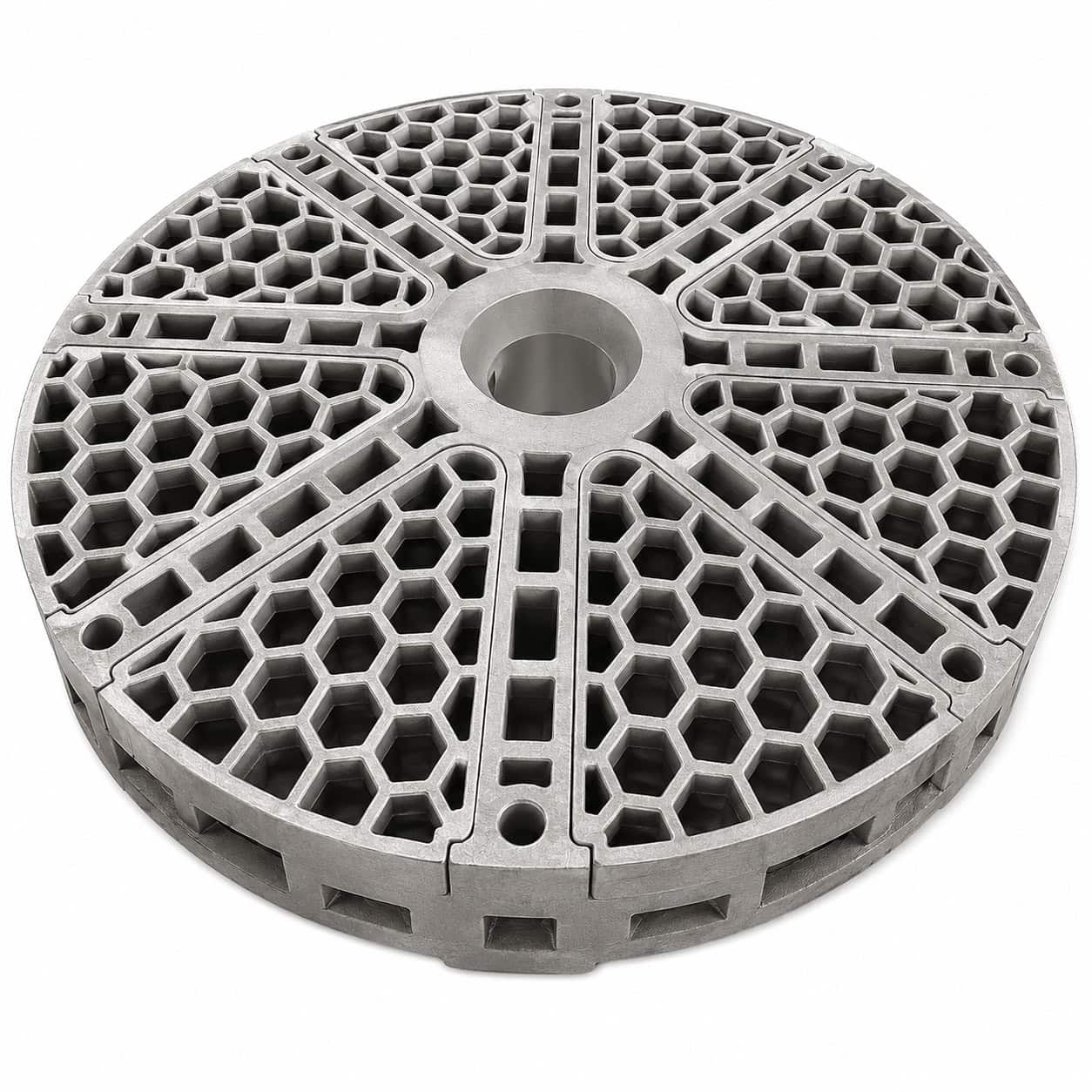
Production context: The component reference should be read together with the manufacturing and inspection context behind the furnace application.

Tray warping and cracking review table
| Review area | What to record | What it helps assess |
|---|---|---|
| Damage pattern | Location, direction, repeated areas and cycle count | Whether damage follows geometry, handling or thermal exposure |
| Load and supports | Workpiece layout, support points, stacking and overloaded zones | How the load path may contribute to distortion |
| Clearance and movement | Furnace rails, neighboring trays and thermal-growth allowance | Whether expansion is restrained |
| Operating record | Temperature, atmosphere, heating and cooling cycle | Which service conditions require further review |
For a replacement review, send the tray drawing or sample, damage photos and operating information through Contact Us.
Related Heat Treatment Tray Resources
Use these technical guides when specifying, inspecting or replacing heat treatment trays for an industrial furnace:
- Heat Treatment Trays: Rib Design, Perforation and Distortion Control
- Heat Treatment Tray Design: Load, Alloy and Deformation
- Heat Treatment Tray Installation and Furnace Clearance Guide
- Heat Treatment Tray Acceptance Inspection Checklist
- Heat Treatment Baskets vs Trays vs Fixtures
Related ECOOSUN Products
Information for a Faster Quotation
Provide alloy grade or service conditions, tray dimensions, load capacity, flatness or clearance requirements, operating temperature, furnace type, quantity, drawing or used sample, and inspection requirements.
Request a Custom Quote · Send Your Drawing · WhatsApp ECOOSUN

 +44 7419 144346