
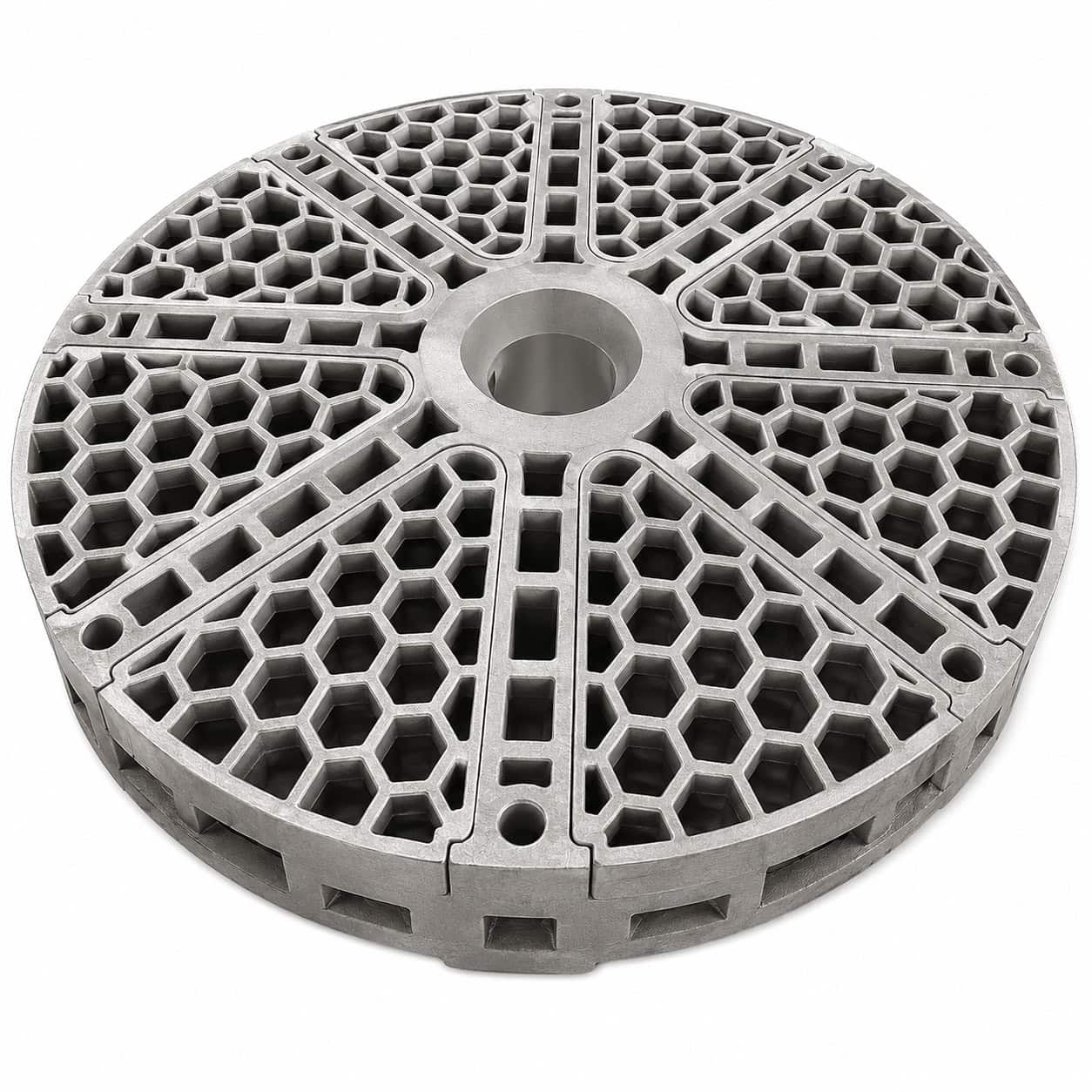
Direct answer: Heat treatment trays support and distribute workpieces during furnace cycles while allowing the required clearance and process airflow. Selection depends on load support, tray geometry, furnace interfaces, thermal expansion and distortion history. ECOOSUN can review the drawing or used tray and define a replacement scope for quotation.
Buyer decision point
| Input to confirm | Why it matters |
|---|---|
| Drawing or used sample | Defines the geometry and replacement reference. |
| Furnace interface and clearance | Confirms fit, handling and movement inside the furnace. |
| Load and operating cycle | Supports review of loading, thermal expansion and service conditions. |
| Failure record and inspection requirement | Connects the replacement scope to the observed problem and acceptance check. |
A heat treatment tray is often treated as a simple platform. In production, it is a load-bearing furnace component exposed to repeated heating, cooling, handling and chemical atmosphere. A tray that looks adequate when empty may deform or become difficult to handle after repeated cycles.
The design brief should answer five questions
- What is the loaded weight, and how is it distributed?
- Are the workpieces flat, long, small, heavy or irregular?
- Does the process require open circulation below and around the parts?
- How will the tray be transferred into and out of the furnace?
- What are the working temperature, atmosphere and cycle frequency?
The answer to these questions guides the tray depth, ribs, support points, lifting features, opening pattern and alloy selection. It also helps avoid over-designing a tray that restricts loading capacity or furnace circulation.
Flatness is a system issue
Tray deformation can result from uneven loading, unsupported spans, thermal gradients, oxidation, contact with other equipment or an alloy/process mismatch. Increasing thickness alone may not solve the problem. The support layout and the position of the load are equally important.
For a repeat order, buyers should record the tray’s condition after service: visible sagging, cracks, distortion at lifting points, wear at contact areas and any process marks on the workpieces. These observations are valuable when revising the next drawing.
Custom supply from ECOOSUN
ECOOSUN produces custom heat treatment trays in heat-resistant steel and high-temperature alloys. Material options may include EN 1.4852 / 25Cr-35Ni-Nb, EN 1.4851 / X15CrNiSi25-21, EN 1.4845 / 25Cr-20Ni, EN 1.4857 / HP40 and HU / ZG45Ni38Cr18Si2, subject to process review.
If you are replacing an existing tray, provide its outside dimensions, working dimensions, support points, loaded weight, furnace clearance and photos of the failure area. If you are developing a new tray, a workpiece drawing and furnace layout are the best starting points. ECOOSUN can review the information and prepare a preliminary quotation.
Related options include Heat Treatment Baskets, Heat Treatment Fixtures and Request a Custom Quote.
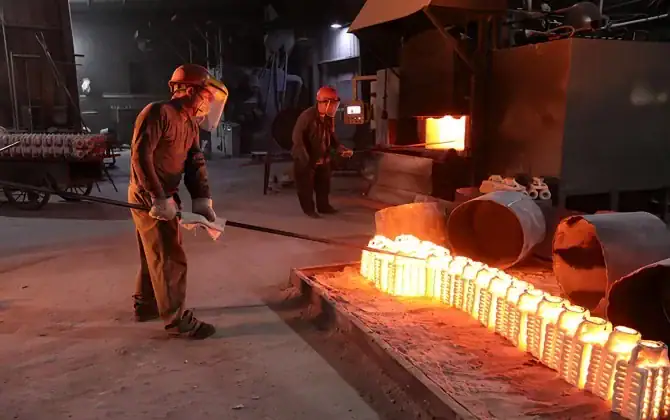
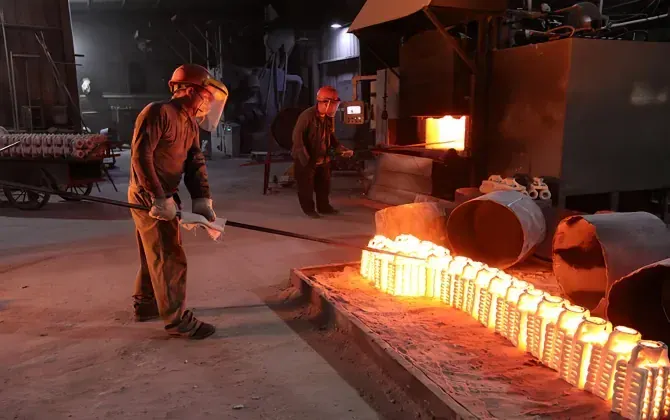
Production context: The component reference should be read together with the manufacturing and inspection context behind the furnace application.

RFQ information checklist
For a useful first review, send the drawing or used sample, key dimensions, furnace type, load, operating cycle, visible failure evidence and any required inspection points. Final material and acceptance decisions are confirmed for the specific project.
Related product: Heat Treatment Trays for project-specific review.
Request a project review: Send the available drawing, used sample and furnace information through the ECOOSUN contact page.
FAQ
What should a buyer confirm for a heat treatment tray requirement?
Confirm the drawing or used sample, key dimensions and interfaces, furnace type and clearance, load, operating cycle, failure evidence and inspection requirements. Final acceptance criteria should be agreed for the specific project.
Can ECOOSUN review a custom heat treatment tray requirement?
Yes. ECOOSUN can review a customer drawing or used sample and discuss casting, laboratory and inspection requirements for a custom furnace-component project. Suitability and final scope are confirmed from the supplied information.
Related Heat Treatment Tray Resources
Use these technical guides when specifying, inspecting or replacing heat treatment trays for an industrial furnace:
- Heat Treatment Trays: Rib Design, Perforation and Distortion Control
- Heat Treatment Tray Installation and Furnace Clearance Guide
- Heat Treatment Tray Acceptance Inspection Checklist
- Heat Treatment Baskets vs Trays vs Fixtures
Related ECOOSUN Products
Information for a Faster Quotation
Provide alloy grade or service conditions, tray dimensions, load capacity, flatness or clearance requirements, operating temperature, furnace type, quantity, drawing or used sample, and inspection requirements.
Request a Custom Quote · Send Your Drawing · WhatsApp ECOOSUN

 +44 7419 144346