
Direct answer
Heat treatment trays are load-carrying furnace components used to support and move workpieces while keeping the intended arrangement and access. Their openings, ribs, edges, support points, and overall envelope are chosen around the load and the furnace handling system. A tray is therefore more than a flat platform. Before replacing one, record how parts contact it, how it is transferred, where it sits on the furnace equipment, and which areas show wear, warping, or interference.
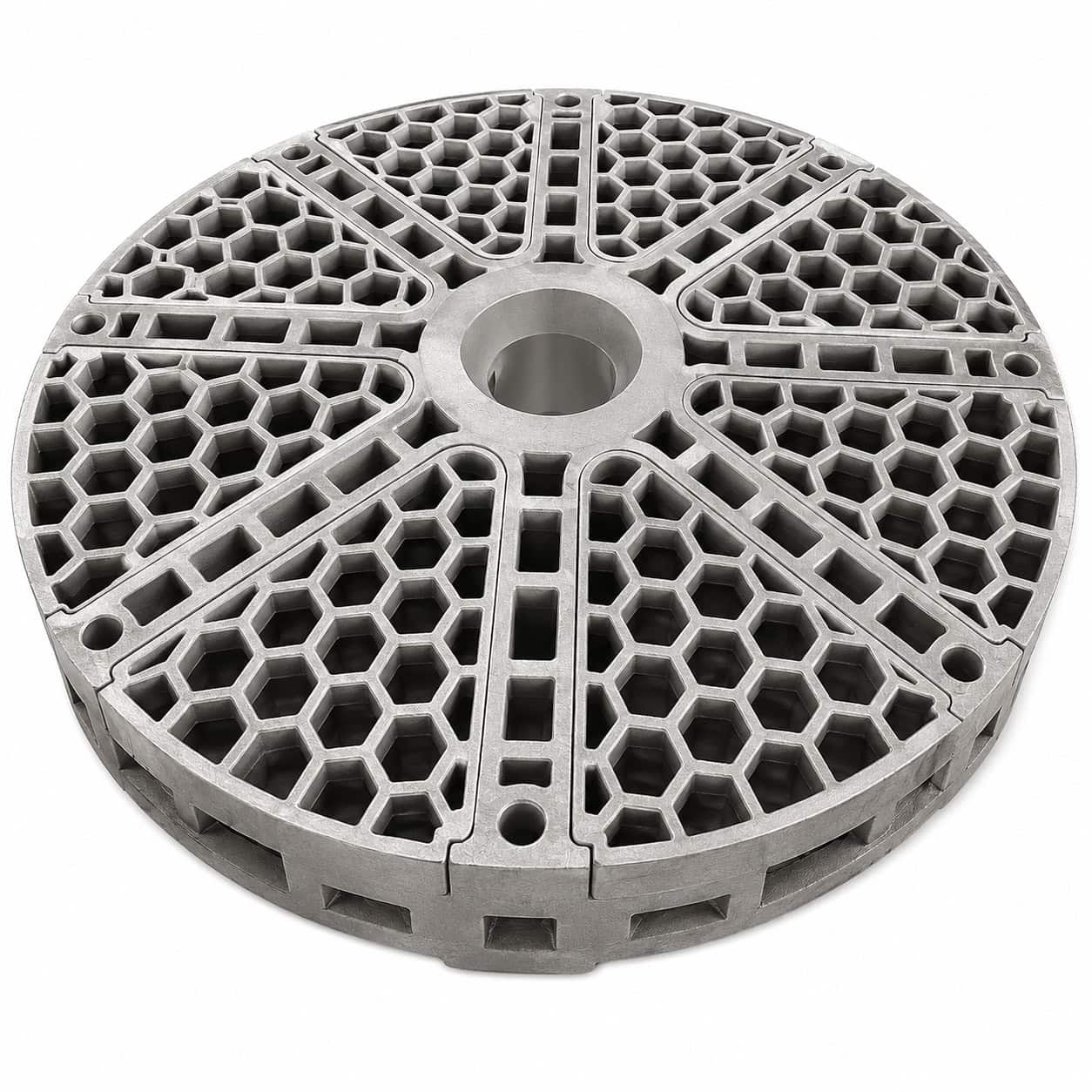
Tray, basket, and fixture are not the same decision
A tray normally provides a broad support surface and a defined loading footprint. A basket encloses or retains a load more visibly, while a fixture is usually shaped around locating or restraining a particular workpiece. The boundaries can overlap in real equipment, so the name alone is not enough. Describe the handling action and support function when asking for a replacement.
What to observe in service
Look at the underside as well as the top surface. Contact polishing, dents, bent ribs, blocked openings, and marks near rails can show how the tray is actually carried. Note whether the load is centered or placed off to one side. Record whether parts are stacked, separated, nested, or held by a secondary tool. These details help explain uneven distortion and make the replacement drawing more realistic.
For airflow or access questions, describe the process requirement without claiming a universal opening ratio. The correct pattern depends on the workpiece and furnace. A supplier should confirm the relevant design assumptions with the buyer.

How ECOOSUN can help
ECOOSUN provides custom casting support for customers in heat-treatment factories and industrial furnace manufacturing. The review can include the tray drawing or sample, load and handling information, installation interfaces, and inspection requirements. Visit Heat Treatment Trays and use contact-us to start a requirement review.
Before sending a tray RFQ
- Top, bottom, side, and interface photographs.
- Overall dimensions plus rail, roller, stop, and lifting details.
- Workpiece arrangement and approximate load distribution.
- Locations of warping, cracks, wear, sticking, or blocked openings.
- Required critical dimensions and inspection records.
RFQ information checklist
For a useful first review, send the drawing or used sample, key dimensions, furnace type, load, operating cycle, visible failure evidence and any required inspection points. Final material and acceptance decisions are confirmed for the specific project.
Buyer decision point
| Input to confirm | Why it matters |
|---|---|
| Drawing or used sample | Defines the geometry and replacement reference. |
| Furnace interface and clearance | Confirms fit, handling and movement inside the furnace. |
| Load and operating cycle | Supports review of loading, thermal expansion and service conditions. |
| Failure record and inspection requirement | Connects the replacement scope to the observed problem and acceptance check. |
FAQ
What should a buyer confirm for a heat treatment tray requirement?
Confirm the drawing or used sample, key dimensions and interfaces, furnace type and clearance, load, operating cycle, failure evidence and inspection requirements. Final acceptance criteria should be agreed for the specific project.
Can ECOOSUN review a custom heat treatment tray requirement?
Yes. ECOOSUN can review a customer drawing or used sample and discuss casting, laboratory and inspection requirements for a custom furnace-component project. Suitability and final scope are confirmed from the supplied information.
Related Heat Treatment Tray Resources
Use these technical guides when specifying, inspecting or replacing heat treatment trays for an industrial furnace:
- Heat Treatment Trays: Rib Design, Perforation and Distortion Control
- Heat Treatment Tray Design: Load, Alloy and Deformation
- Heat Treatment Tray Installation and Furnace Clearance Guide
- Heat Treatment Tray Acceptance Inspection Checklist
- Heat Treatment Baskets vs Trays vs Fixtures
Related ECOOSUN Products
Information for a Faster Quotation
Provide alloy grade or service conditions, tray dimensions, load capacity, flatness or clearance requirements, operating temperature, furnace type, quantity, drawing or used sample, and inspection requirements.
Request a Custom Quote · Send Your Drawing · WhatsApp ECOOSUN

 +44 7419 144346