
Direct answer: Heat and batch traceability for custom heat-resistant castings should connect the delivered part to the approved drawing revision, material heat, production batch, inspection records and shipment. A useful identification system is readable, durable enough for the agreed service stage and explained in the quality documents.
Traceability does not mean putting a long code on every surface. It means that a buyer can start with the delivered furnace component and find the records that show what was ordered, what was made and what was inspected. This is especially important when visually similar baskets, trays, fixtures, radiant tubes or furnace rolls are used in different furnace zones.
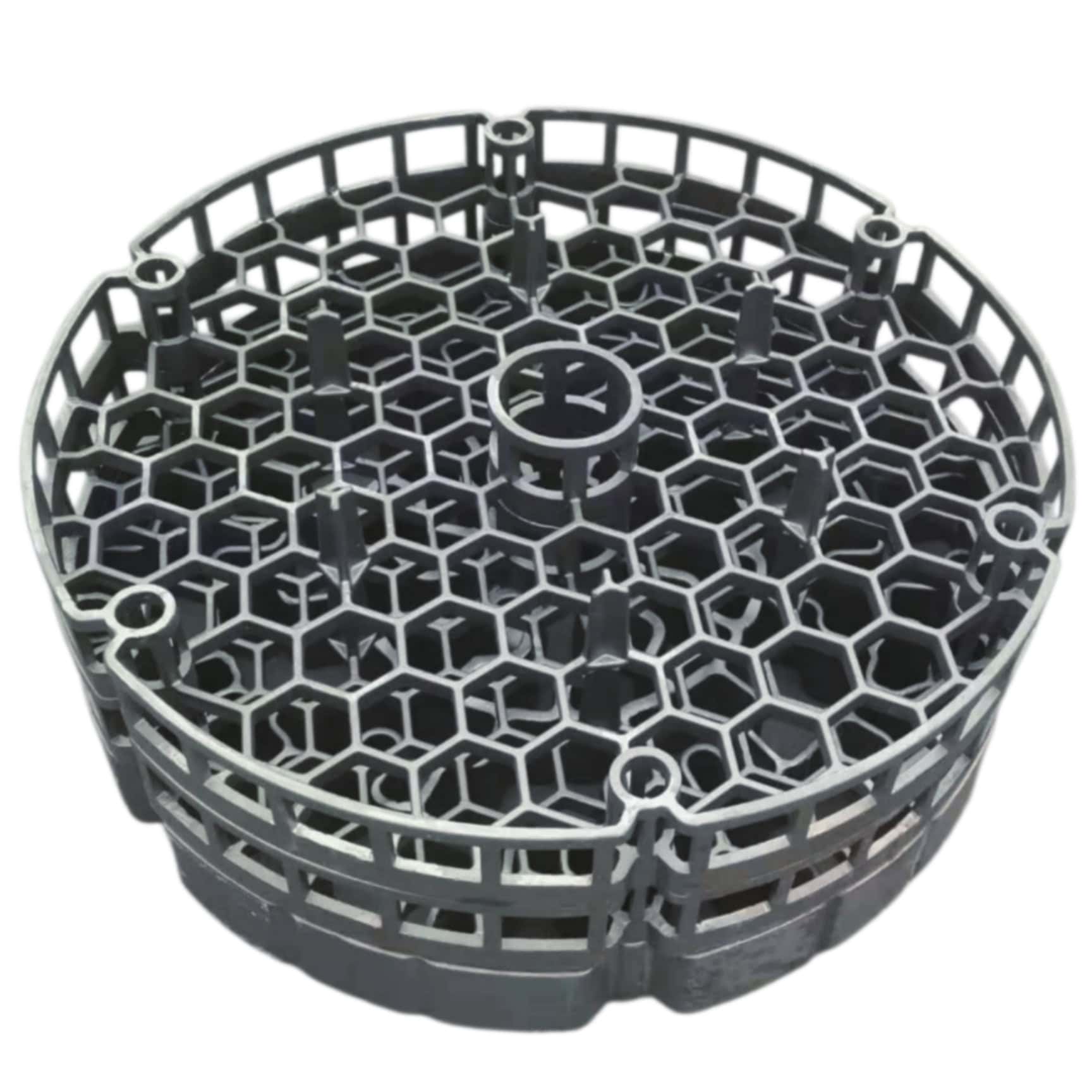
For heat treatment baskets, link product identification to the approved drawing revision and the agreed material and inspection records.
What a traceability chain should connect
A practical chain normally links five items:
- purchase order and line item;
- part number, drawing number and revision;
- material heat or agreed production batch;
- inspection and test reports;
- packing list and delivered quantity.
If any link is missing, a document may be technically correct but impossible to associate with the component in front of the buyer.
Heat number, batch number and part number are different
A heat number identifies a melt or material heat. A batch number may identify a defined production lot made under the same controlled route. A part number identifies the component design. One part number may be produced from several heats, and one heat may be used for several part numbers. The supplier should not use these terms as if they were interchangeable.
Part-marking methods
The correct method depends on geometry, surface condition, machining, temperature and customer requirements. Options can include cast-in characters, low-stress stamping, engraved or machined marks, attached tags before installation, and package labels. The order should define the required content and location.
Marking must not damage a critical section, reduce wall thickness, create a stress concentration or interfere with a sealing or bearing surface. For open-grid baskets and fixtures, a tag or marked non-critical boss may be more practical than stamping a thin member. For machined rolls and radiant-tube connections, identification can be placed on a cold-end area when the drawing permits it.
What should appear in the records
- supplier and buyer identity;
- purchase order, item and quantity;
- part and drawing revision;
- material specification and heat reference;
- production or inspection batch;
- marking method and location where required;
- inspection report numbers;
- shipment or packing-list reference.
Common traceability failures
Typical problems include a heat number on a chemical report that does not appear on the packing list, a drawing revision missing from the dimensional report, identical-looking parts mixed after cleaning, or a handwritten label lost before installation. Another weakness is re-marking a part without documenting the relationship between the old and new identity.
Buyer checks at receipt
- Compare the part or package mark with the packing list.
- Confirm that the drawing revision matches the approved purchase package.
- Match the heat or batch reference to the material and inspection reports.
- Check quantity and any zone-specific identification.
- Photograph the marking before installation if it may become inaccessible.
ECOOSUN project context
ECOOSUN is the overseas operating brand of Xinghua Hengxin Machinery Co., Ltd. For custom heat-resistant steel castings, traceability and marking are reviewed against the customer drawing, quantity, furnace use and documentation requirement. The final system is agreed for each project; it is not assumed from a generic catalog description.
Send the drawing revision, required marking content, batch definition and document format through Contact Us. Related resources include the material certificate guide, inspection report guide and official company facts and product catalog.
Frequently asked questions
Must every casting have an individual serial number?
No. Individual serial numbers may be valuable for critical or high-value parts, while heat- or batch-level traceability may be sufficient for other orders. The purchase requirement should define the level.
Can package labels replace part marking?
Sometimes, if identification is only needed through receipt and installation. If parts may be separated, stored or reordered later, a durable part-level mark can reduce mix-up risk.
Does traceability prove the part is acceptable?
No. It connects the part to evidence. Acceptance still depends on the agreed material, dimensions, inspection results and disposition.
Related Quality and Procurement Evidence
Use these guides to define inspection, documentation, traceability and release requirements for custom heat-resistant furnace castings:
- First Article Inspection for Custom Heat-Resistant Steel Castings
- Material Certificates and Quality Documents for Heat-Resistant Castings
- How to Read a Heat-Resistant Casting Inspection Report
- Inspection and Test Plan for Custom Furnace Castings
- Witness Points and Hold Points for International Furnace-Part Orders
- Nonconformance, Rework and Corrective Action for Custom Castings
Related ECOOSUN Products
Information for a Faster Quotation
Provide the drawing revision, material standard, critical dimensions and tolerances, required inspection and NDT scope, traceability documents, report format, witness or hold points, and final release requirements.
Request a Custom Quote · Send Your Drawing · WhatsApp ECOOSUN

 +44 7419 144346