
Oil quenching cools heated workpieces in a specified quench oil as part of an approved treatment route. Quenching methods are not interchangeable. The process owner selects the medium, sequence and operating limits for the workpiece; procurement must accurately communicate those requirements to equipment and fixture suppliers. This guide organizes the quenching terms around the decisions that affect the load, carrier and transfer arrangement.
For dedicated positioning, review heat treatment fixtures with the transfer and cooling system rather than relying on the empty carrier dimensions.
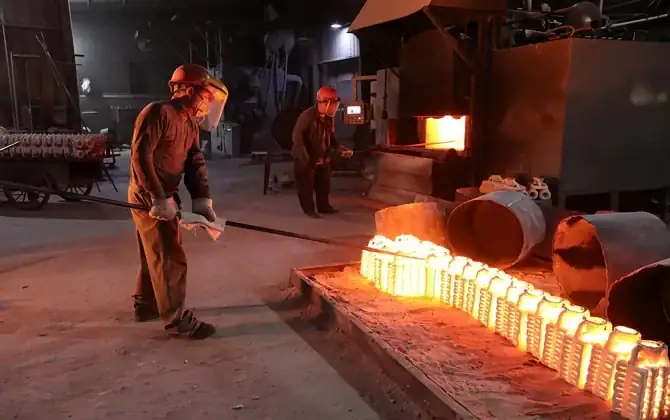
For oil quenching, state the approved medium and transfer sequence, plus the part geometry, load mass and carrier arrangement. Identify how the load moves from the furnace to the quench stage, what contacts are permitted and whether the carrier remains in the medium. These details influence handling and the component’s duty. The process owner must confirm the quench specification and safety controls; suppliers should not infer them from the word “oil.”
Water Quenching
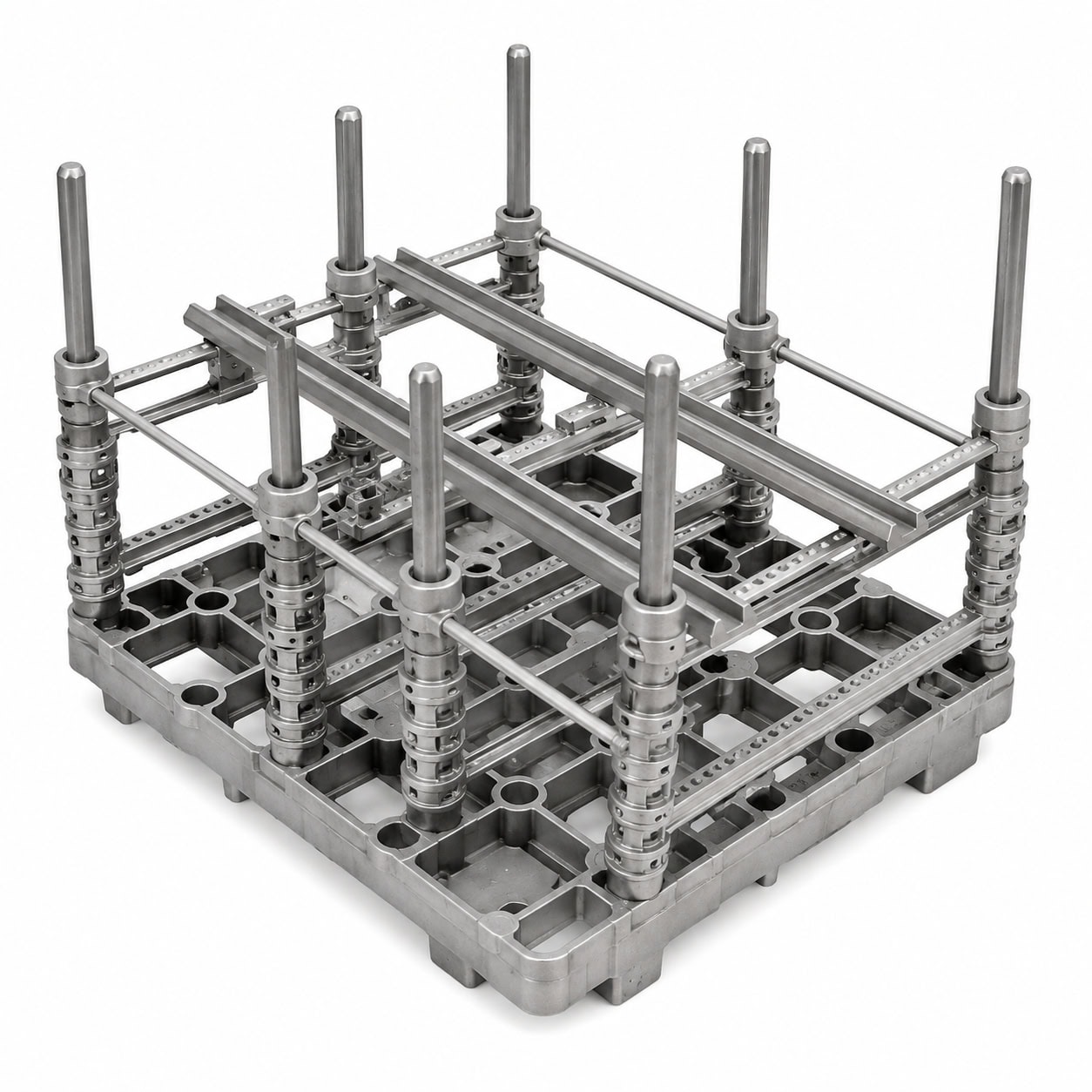
Water quenching cools heated workpieces in a specified water-based environment; its suitability depends on the material and geometry. A water quenching specification should define the process requirements supplied by the heat treater, the workpiece range, batch layout and transfer equipment. Note any fixture or carrier that enters the quench and the expected contact or immersion arrangement. Do not substitute a generic material recommendation for a documented duty review. Confirm corrosion, thermal cycling and inspection requirements for the component with the supplier before ordering.
Gas Quenching
Gas quenching cools the heated load using a controlled gas flow under specified pressure and temperature conditions. For gas quenching, document the furnace configuration, specified gas process, load pattern and support arrangement. Include the workpiece envelope and total load, along with the sequence of movement between heating and cooling. A fixture should be assessed for its real supports and cycle, not chosen solely because it has been used in another furnace. The process owner approves the treatment route and acceptance criteria.
Fixture Quench
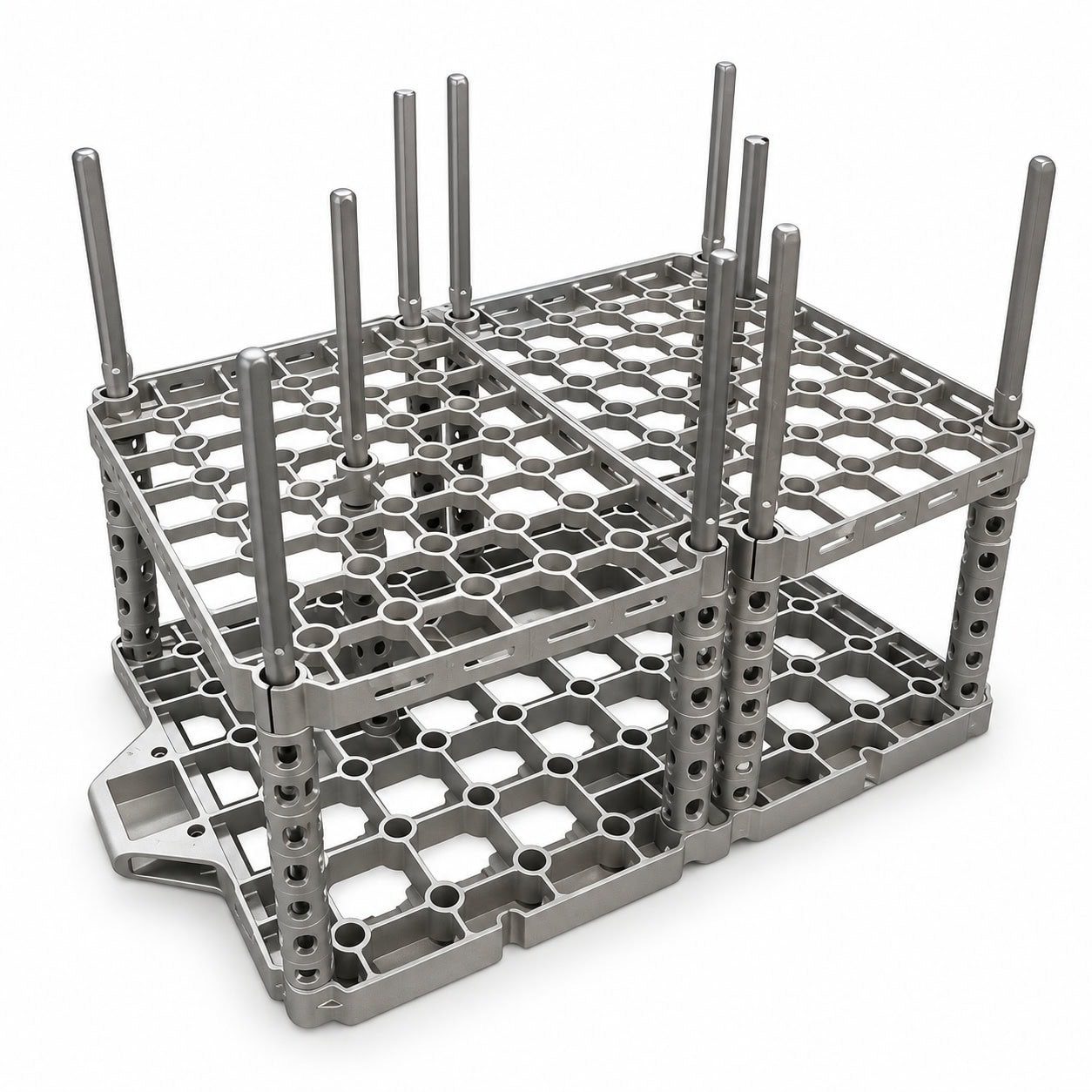
Fixture quench refers to quenching with tooling that locates or restrains a component; the required restraint distinguishes it from ordinary batch carriers. A fixture quench setup must keep the workpiece located through the specified transfer while allowing the intended processing access. Provide an assembly drawing showing each part, contact point, locating feature and orientation. Include the heaviest and most concentrated load cases. State whether the fixture is reused across cycles and what distortion, wear or inspection limits require attention. The component supplier can review geometry; the process team confirms the workpiece result.
Salt Bath Heat Treatment
Salt bath heat treatment uses a specified molten salt environment for a defined heating, transformation or cooling operation. For salt bath heat treatment, name the specific approved operation and explain which components contact the bath or carry the load through it. Identify the bath conditions provided by the process owner, handling sequence, workpiece material and cleaning or inspection requirements. Avoid using “salt bath” as a stand-in for a complete duty specification. Any material selection for immersed components should be reviewed against the actual chemistry, temperature and service conditions.
Austempering
Austempering uses an isothermal transformation hold to develop a bainitic structure in suitable steels; the material and section must suit the route. An austempering project should state the process sequence and transfer timing as defined by the responsible heat treater. Specify the workpiece geometry, load arrangement, carrier contacts and any constraints on immersion or orientation. If the fixture also serves other operations, list those cycles separately. The process owner controls the metallurgical specification; a component supplier needs the details that define its own mechanical and environmental duty.
Martempering
Martempering interrupts cooling to reduce temperature differences before completing martensitic transformation; it differs from the transformation hold used in austempering. For martempering, provide the approved cycle stages and explain how the load is supported and transferred between them. Identify the workpiece family, batch weight, contact restrictions and handling method. A carrier design that fits one stage may still need evaluation for another stage in the route. Ask suppliers to state assumptions and inspection scope in writing so purchasing can compare the proposed component with the released process and drawing.
For a custom quench fixture or carrier review, send the complete treatment sequence, workpiece drawing, loading layout, supported mass, transfer method and required inspections. ECOOSUN can assess a heat-resistant component against the specified duty; it does not approve the process recipe or certify the treated workpiece.
Questions buyers ask
Can a general basket replace a fixture quench tool?
A basket retains a batch; a quench tool may also locate or restrain a part. Define whether restraint, pressing or dedicated cooling access is required before choosing the tooling category.
How should quench carrier quotations be compared?
Use the same immersion or gas duty, loading pattern, transfer method and acceptance checks. Include drainage, trapped fluid, access and maintenance needs where relevant to the specified process.
Discuss a component requirement with ECOOSUN: send the drawing and operating duty. Include the required quantity and documents so the quotation identifies a reviewable supply scope.
Related component and technical pages: heat treatment fixtures | heat treatment baskets | heat treatment trays

 +44 7419 144346