
Direct answer: Furnace rolls support and transport workpieces through roller hearth and other continuous furnaces. Selection depends on roll dimensions, load, span, drive interface, atmosphere, operating cycle and wear or failure history. ECOOSUN can review an approved drawing or used sample for a project-specific replacement.
A furnace roll can be chemically correct and still fail because a bearing seized, a floating end could not move, or a narrow product rail loaded the center of the roll more severely than the purchase drawing implied. The hot-zone body, shafts, supports, bearings, seals, coupling and drive form one rotating system. Furnace roll failure prevention starts by documenting that system—not by choosing a grade from a temperature chart.

A replacement review must follow the roll from hot face to journals and drive interfaces; the cast body is only one part of the load path.
Build a Roll Map Before Removing Anything
Number every roll and record furnace position, installation date, material, drive side and fixed/floating arrangement. During a shutdown, use the same map for runout, diameter, cracks, surface condition, bearing observations and drive notes. A pattern across the line is stronger evidence than the most dramatic single failure.
If neighboring rolls bow in one hot zone, compare temperature uniformity and product loading there. If damage repeats at drive positions, inspect transmission and alignment. If journal wear appears mainly on one side, review bearing installation, lubrication, cooling and structural alignment on that side.
Define the Real Duty Along the Roll Face
Record roll-face length, bearing centers, hot-zone width, product path, support points and line speed. Then draw the product contact pattern. A total load spread over the face is not equivalent to the same mass carried on two narrow rails. Upset loads during a jam or stopped line should also be identified rather than hidden inside a “normal load” statement.
Add the operating context: furnace setpoint, best available roll-metal temperature, atmosphere, continuous or intermittent duty, planned stops, cooling arrangement and shutdown history. Distinguish hot-zone material from cold shafts, sleeves and external interfaces.
Bowing: Measure Shape Against Supports and Load
Permanent bow or increasing runout is geometric evidence. Measure it cold at a defined datum and station, then relate the high point to product contacts, furnace zone and support arrangement. A smooth bow centered between bearings suggests a different investigation from local deformation beside a joint or deposit.
At elevated temperature, the roll must resist the furnace environment and retain enough strength to carry the rotating load. The supplied heat-resistant-steel reference explicitly distinguishes oxidation-resistant steel from heat-strength steel. That distinction prevents a common specification mistake: improving surface oxidation resistance while ignoring hot load-bearing behavior.
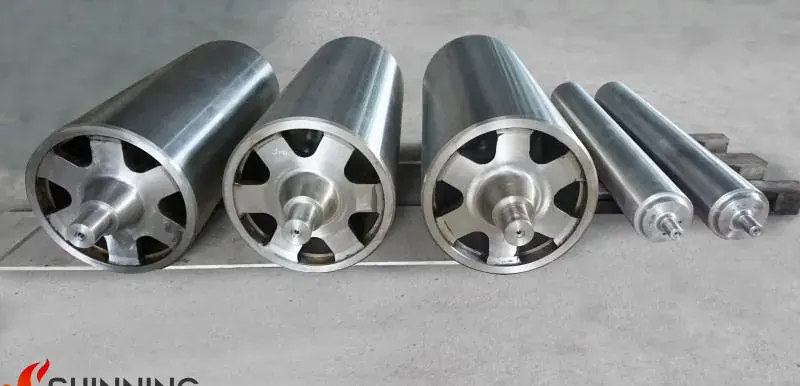
Hollow geometry changes mass and stiffness, but wall transitions, casting access and inspection access must remain practical.
Hollow, solid and composite designs each create different stiffness, thermal mass, joining and inspection questions. A larger outside diameter may improve stiffness but can conflict with furnace clearance and product height. A thinner hollow section can reduce mass but makes wall uniformity and internal geometry more important. These are engineering tradeoffs, not automatic “upgrades.”
Expansion Must Have a Defined Direction
A long roll changes length as it heats. The equipment should define which end locates the roll and which end accommodates movement. If both ends are effectively restrained, thermal force can be transferred into the body, shafts, seals or bearings. If both ends float unpredictably, product tracking and drive engagement may suffer.
During replacement, verify bearing centers, journal positions, coupling travel, seal accommodation and installed clearances. Do not copy overall length from a hot, bent or worn sample without reconciling it to the machine drawing and as-installed interfaces.
Cracks: Trace the Origin Through the Rotating Load Path
Cracks may appear at welded joints, cast-to-wrought transitions, holes, abrupt sections or surface defects. Circumferential versus longitudinal direction can guide inspection, but direction alone does not prove the cause. Record the origin, fracture condition, relation to a transition and whether the same feature has failed on other rolls.
Check bending, torsion and thermal restraint together. A drive problem can add torsional load to a section already weakened by oxidation. A rigid transition can concentrate thermal strain. A manufacturing discontinuity can become the preferred path for a service crack without being the only contributor.
Where a crack exposes an internal cavity or particle, preserve the surface for examination. The AFS defect classifications used in the companion heat treatment basket failure guide explain why an inclusion, shrinkage cavity and service-grown crack should not be treated as interchangeable labels.
Surface Attack Changes Both Diameter and Balance
Oxide-film behavior matters because continuing section loss changes load capacity and may disturb product transport or rotational balance. The supplied source book explains that film continuity, stability and adhesion influence whether oxidation remains protective, and that chromium-containing dense oxides can improve resistance.
Map surface condition around the circumference and along the roll. Localized attack can correspond to a furnace-zone hot spot, atmosphere leak, deposit or contact condition. Widespread loss calls for review of material, atmosphere and exposure together. A nominal furnace setpoint cannot show the complete temperature profile of a rotating roll.
The same distinction applies to carbon-rich service. Visual appearance is not sufficient to prove carburization; atmosphere records and, where the decision warrants it, hardness or metallographic comparison are needed.
Bearings and Drives Can Damage a Sound Roll Body
Inspect bearing freedom, lubrication, cooling, seal condition, coupling alignment and drive load before assigning the failure to the hot-zone casting. A seized bearing can add bending and torsion. Misalignment can produce journal wear, vibration and product-tracking problems. A coupling that cannot accommodate movement may convert normal thermal expansion into axial load.
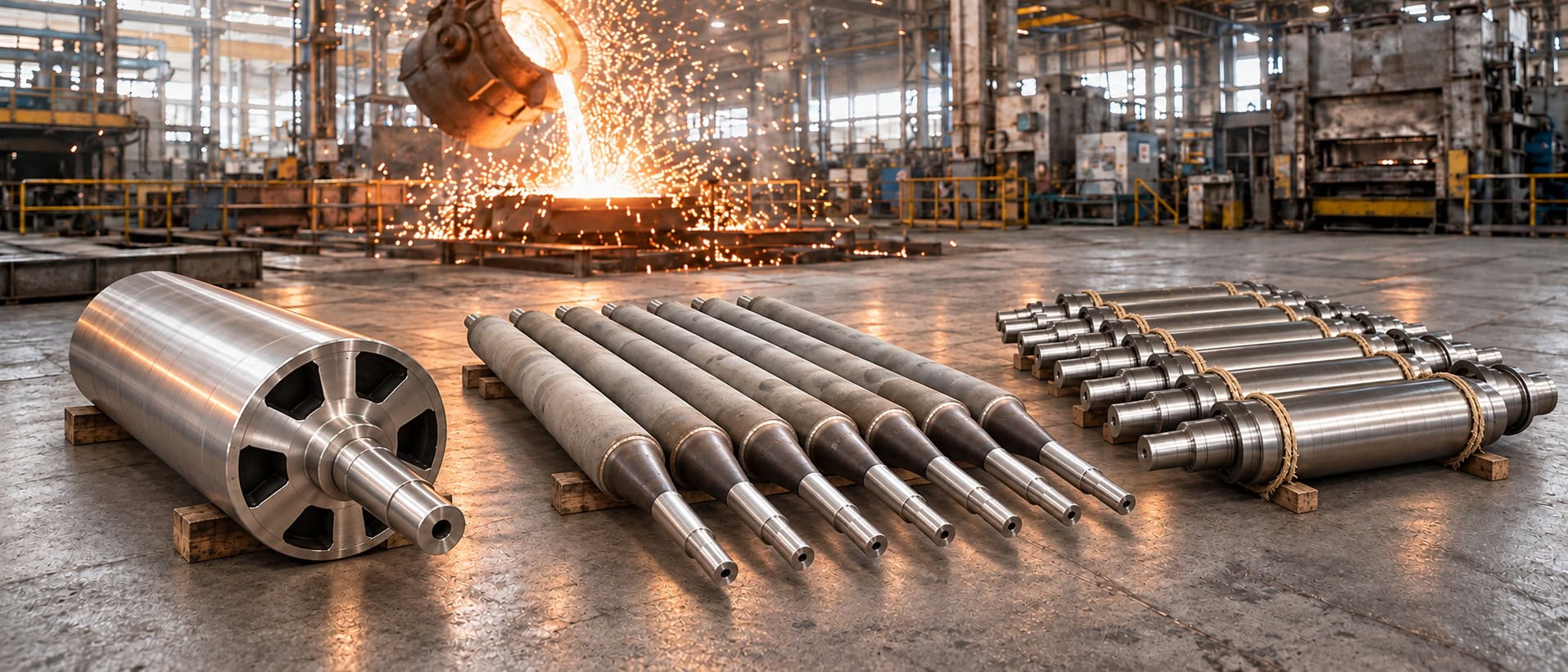
Machined journals are functional surfaces. Inspection, handling and shipping supports must protect the runout achieved at manufacture.
Shipping and storage also belong to the failure-prevention plan. A long roll that passed final inspection can arrive with damaged journals or added bend if it is struck or supported incorrectly.
Make Runout and Inspection Requirements Measurable
“No deformation” and “good quality” are not acceptance criteria. The controlled drawing or purchase specification should define:
- the datum and stations for straightness and runout;
- roll-face, journal diameter, finish and concentricity requirements;
- material chemistry and heat traceability;
- visual and specified nondestructive inspection areas;
- joint, transition and machined-interface requirements;
- pressure or leakage testing when an internal cooling design requires it;
- balance verification where operating speed and design require it;
- marking, final records and shipping protection.
The inspection plan should match risk and design; the article does not invent universal tolerances.
Datums, interface dimensions and inspection stations should be agreed before manufacture—not inferred after delivery.
Use Shutdown Data as a Trend, Not a Snapshot
At each planned stop, update the same roll map. Record runout at the same stations, accessible diameter or section loss, cracks, journals, bearings, seals, coupling condition and thermal-movement clearances. Compare these observations with furnace-zone temperature, atmosphere and product history.
A rising runout trend can support planned replacement before product transport becomes unstable. One passing measurement cannot show whether deformation is accelerating, and one average value can hide a single hot-zone problem.
Commission a Replacement as a Controlled Change
Before installation, verify identity, certificates, critical dimensions, runout and shipping condition. Record installation position, bearing and coupling alignment, and the fixed/floating arrangement. Follow the equipment heating procedure while monitoring bearings, drive load and product tracking.
If alloy, wall, support or joining detail was changed, identify that roll in the map. Review a first article in service before assuming the full batch is qualified. Changing several variables without recording them makes the next result difficult to interpret.
Replacement RFQ: Supply Interfaces and History
Send the original drawing plus verified as-installed dimensions, bearing centers, journals, seals, coupling and fixed/floating details. Add the product load map, speed, hot-zone width, temperature, atmosphere, cooling method, operating pattern and photographs of the failed roll in position.
ECOOSUN supplies furnace rolls and roller hearth furnace parts. Related line components are listed under continuous heat-treatment furnace parts. Send the drawing and duty data through the contact page for project-specific review.
Reference Boundary
Material principles were checked against Cast Steel and Cast Superalloys and Their Melting (`铸钢和铸造高温合金及其熔炼.pdf`), especially PDF pages 60, 64 and 65 on protective oxide films, alloying and the distinction between oxidation-resistant and heat-strength steels; pages 69 and 74 provide alloy and casting context. The book does not supply ECOOSUN furnace-roll life, runout limits or load ratings. Those values must come from the actual equipment and project specification.
For suitable precision-cast roll fittings, Silica Sol Investment Casting should be reviewed separately from the roll body and checked against load, alignment and thermal cycling.
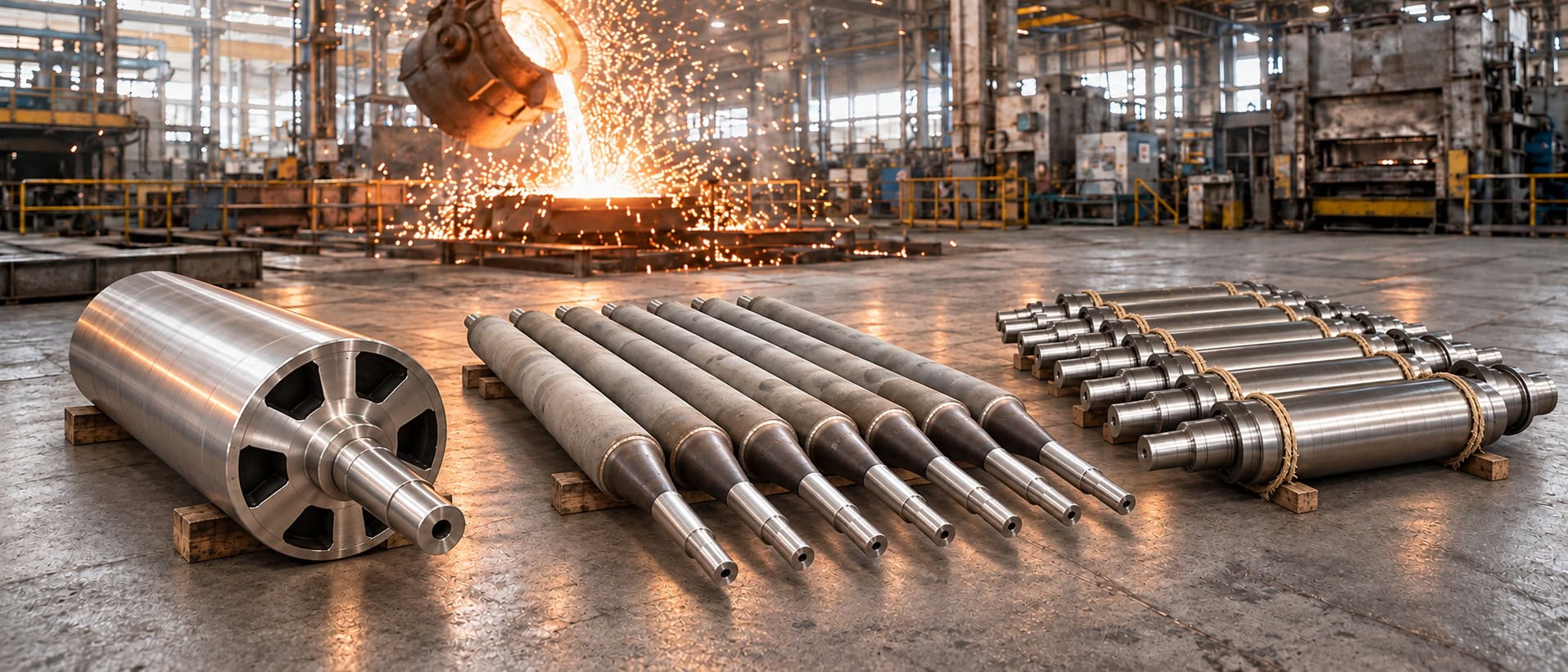
Production context: The component reference should be read together with the manufacturing and inspection context behind the furnace application.

FAQ
What should a buyer confirm for a furnace roll requirement?
Confirm the drawing or used sample, key dimensions and interfaces, furnace type and clearance, load, operating cycle, failure evidence and inspection requirements. Final acceptance criteria should be agreed for the specific project.
Can ECOOSUN review a custom furnace roll requirement?
Yes. ECOOSUN can review a customer drawing or used sample and discuss casting, laboratory and inspection requirements for a custom furnace-component project. Suitability and final scope are confirmed from the supplied information.
Related Furnace Roll Resources
Use these technical guides when specifying, inspecting or replacing furnace rolls for an industrial furnace:
- Furnace Rolls: Material, Runout and Replacement Criteria
- Furnace Roll Replacement: Diameter, Length, Load and Runout
- Why Furnace Rolls Deform and How to Improve Service Life
- Furnace Roll Installation and Alignment Inspection Checklist
- Furnace Roll Replacement and Inspection Guide
Related ECOOSUN Products
Information for a Faster Quotation
Provide alloy grade or service conditions, roll dimensions, load, span, speed, allowable runout, atmosphere, temperature, shaft and drive details, cooling requirements, drawing or used sample, and inspection requirements.
Request a Custom Quote · Send Your Drawing · WhatsApp ECOOSUN


 +44 7419 144346