
Direct answer: Heat treatment baskets are furnace loading components that hold and position workpieces during heat-treatment cycles. Selection depends on the basket geometry, loading method, furnace clearance, operating cycle, load and failure history. ECOOSUN can review a drawing or used sample for a project-specific cast basket requirement.
An alloy table can tell you what a material contains. It cannot tell you whether a loaded tray will remain flat after repeated heating, whether its scale will stay attached in a particular atmosphere, or whether a thick rib junction will cast soundly. Those answers require the alloy, fixture geometry and furnace duty to be considered together.
That distinction matters when specifying heat-resistant cast alloys for furnace baskets. A purchasing request that contains only a grade name and furnace setpoint leaves out most of the information that controls fixture life.
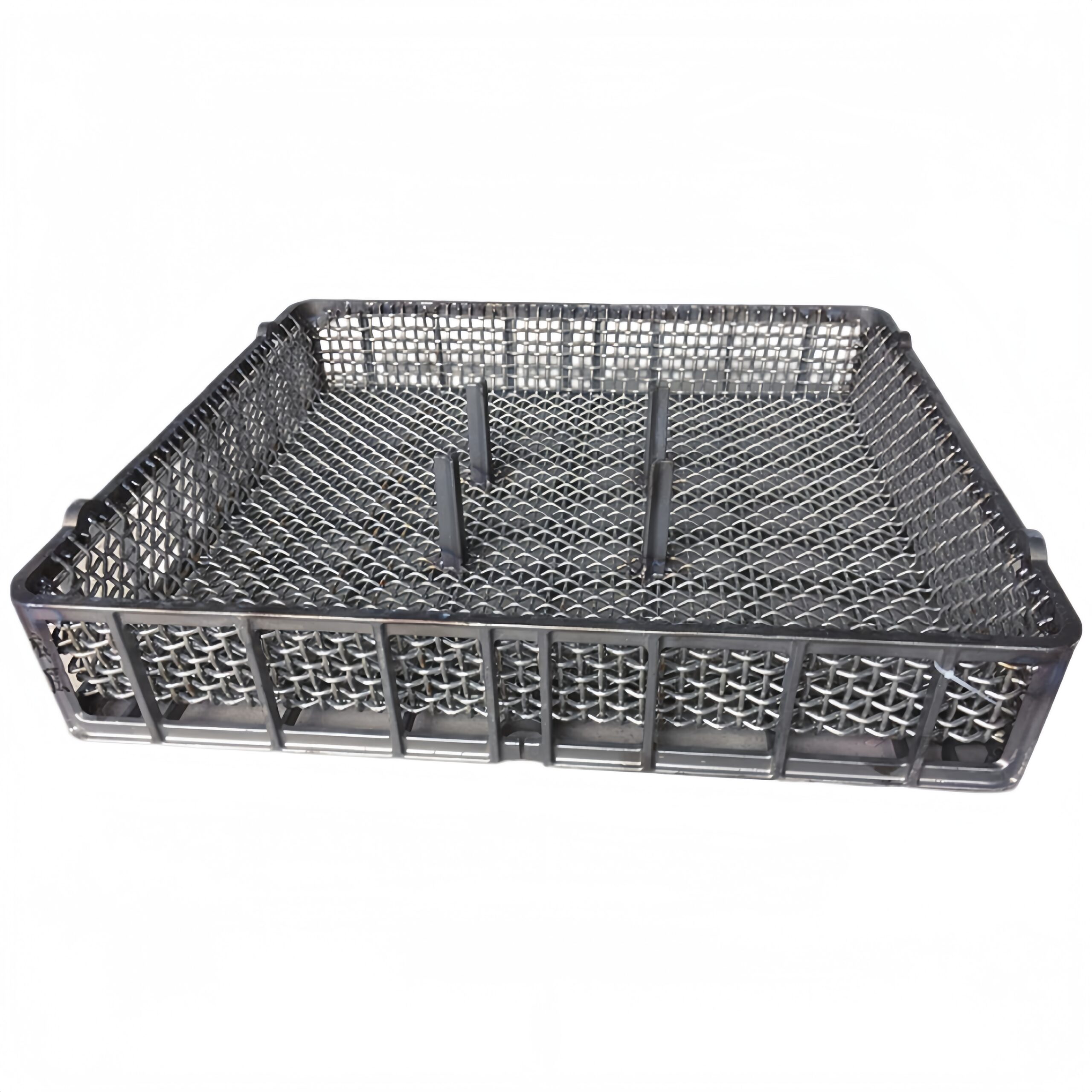
The used trays show open sections, junctions and broad spans. Their appearance alone does not identify the alloy or prove a failure mechanism, but it shows why material and structure cannot be separated.
What the published metallurgy actually says
One of the heat-resistant-steel references in our technical library explains oxidation through the oxide film that forms on the metal. A loose or non-protective film allows oxidation to continue; a dense, adherent film can slow further reaction. The important point is the behavior of that film under the actual temperature and atmosphere, not simply the percentage of one element on a certificate.
The same reference uses a historical laboratory comparison to illustrate how alloying changes FeO stability. In the cited table, the reported lower FeO-stability temperature rises from 570°C for pure iron to 600°C with 1.03% chromium, 650°C with 1.5% chromium, 750°C with 1.14% silicon, and 800°C with 0.4% silicon plus 1.1% aluminium. These are composition-specific reference observations, not allowable furnace temperatures. A basket designer cannot read “800°C” from that experiment and turn it into a fixture rating.
What the data do demonstrate is more useful: chromium, silicon and aluminium change oxidation behavior in different ways. The surrounding text also warns that alloying choices affect other properties. More silicon, for example, cannot be treated as a free improvement if it reduces the ductility or manufacturability needed by the part.
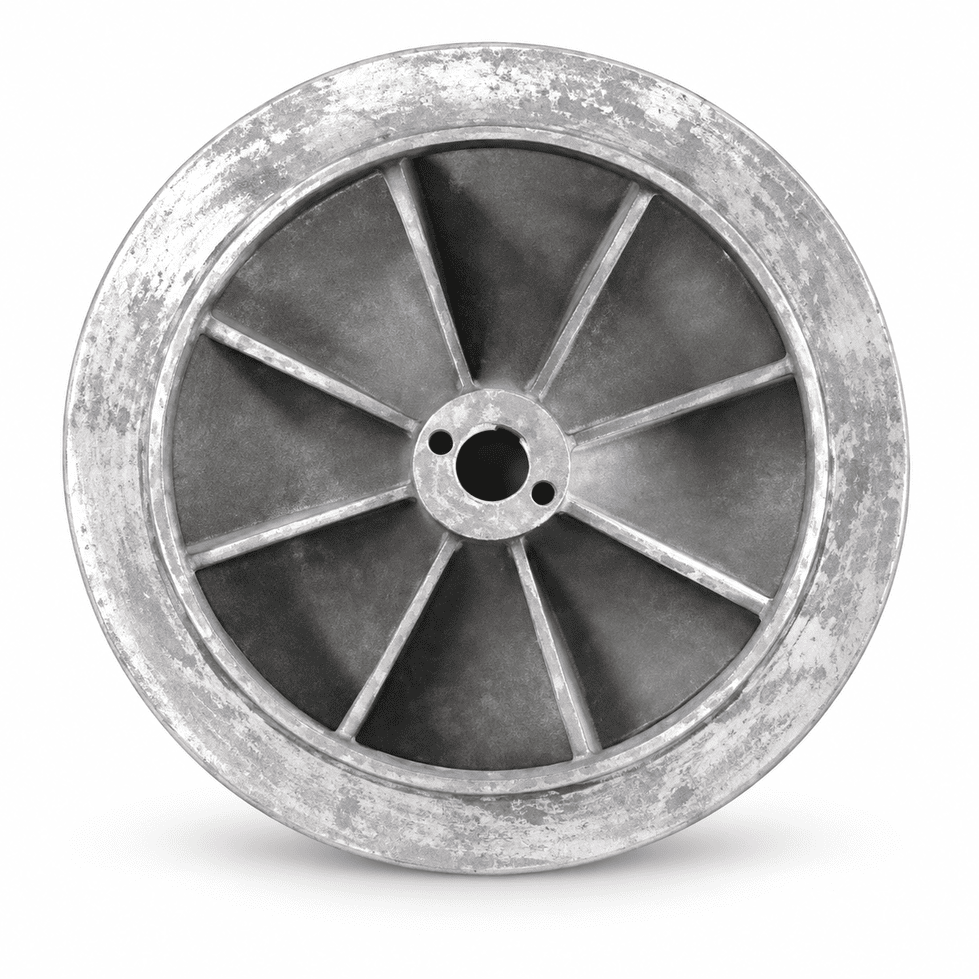
Heat resistance is not the same as load-carrying ability
The reference separates two ideas that are often mixed together in quotations:
- Resistance to high-temperature oxidation: how the surface reacts with the furnace environment.
- Elevated-temperature strength: how the material resists deformation or rupture while carrying load at temperature.
A lightly loaded cover can succeed primarily because its surface remains stable. A tray spanning support rails must also resist time-dependent deformation. If a candidate alloy has good oxidation behavior but inadequate strength for the span and load, the tray may stay comparatively clean while it sags. The reverse is also possible: a strong geometry can lose section rapidly in an unsuitable atmosphere.
This is why published “maximum temperature” lists are poor purchasing tools. They rarely reproduce the atmosphere, stress, duration, cycle and acceptance criterion of the intended fixture.
Four questions that narrow the alloy family
What is the atmosphere doing to the surface?
Describe the process gas, not just the furnace type. Air, carburizing service, nitrogen-based atmospheres and contaminated processes do not create the same surface condition. Record known leaks, moisture, deposits and cleaning chemicals that contact the fixture.
In an oxidizing environment, the stability and adherence of the oxide layer deserve attention. In a carbon-rich environment, carbon pickup and loss of ductility may become relevant. If the atmosphere changes between heating and cooling, include both stages.
What load remains on the fixture while it is hot?
Give the workpiece mass and show where it sits. Total weight without a load map is ambiguous. Dense parts placed near the center of a long span produce a different condition from a distributed charge supported above the rails.
Useful details include support spacing, stacking arrangement, lifting points, conveyor contact and whether the fixture is moved while hot. The material review then has a mechanical problem to solve rather than an adjective such as “heavy duty.”
How severe is the thermal cycle?
Time at temperature matters. So do the heating rate, cooling method and number of cycles. Long steady exposure increases the importance of time-dependent deformation and oxidation. Frequent heating and cooling repeatedly strain bends, corners and thick-to-thin transitions.
Record abnormal shutdowns and rapid cooling as separate events. They should not be hidden inside an average cycle time.
Can the geometry be cast and inspected reliably?
An alloy that looks appropriate on paper can still produce an unreliable fixture if the design contains isolated heavy sections, sharp junctions or poor feeding paths. Alloy content affects fluidity, solidification and cracking tendency, while the casting route affects how those risks are controlled.
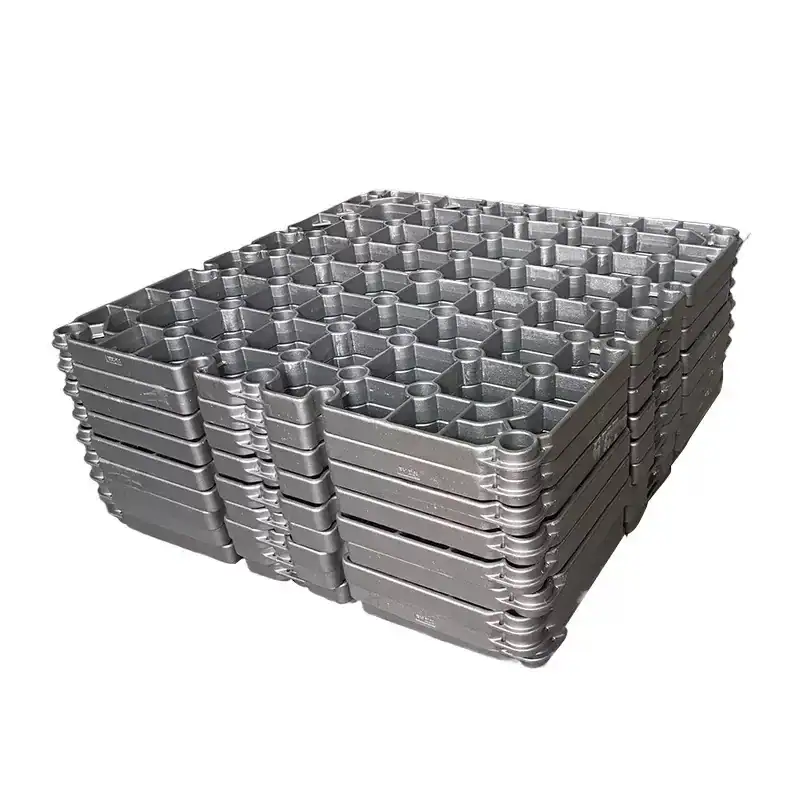
The open-grid geometry reduces solid area and allows gas circulation. Rib depth, junction size and support direction must still be matched to the real load and casting method.
For heat-treatment trays and heat-treatment baskets, the engineering discussion should include rib orientation, wall transitions, lifting features and the surfaces that must remain interchangeable with the furnace.
Why grade names need a standard beside them
Commercial names such as HK-type or high-chromium nickel heat-resistant steel are not complete specifications. A purchase document should identify the governing standard and grade, required chemistry, heat treatment where applicable, and any agreed testing. Similar-looking designations from different systems may not have identical limits.
The handbooks in our library also show why an old international comparison table must be handled carefully. It may be valuable for tracing a historical designation, but it does not automatically establish a current equivalent. The controlling documents for production are the agreed drawing, material standard and purchase specification.
ECOOSUN’s heat-resistant alloy page describes the relevant product family. Final grade selection still requires the actual furnace duty and standard rather than a website temperature claim.
A better comparison sheet for quotations
Instead of asking suppliers to quote “the best alloy,” use one line for each decision input:
| RFQ field | What to state | Why it changes the decision |
|---|---|---|
| Material basis | current grade and standard, or `unknown` | prevents assumed equivalence |
| Temperature | normal, peak, duration and known hot spots | separates setpoint from component exposure |
| Atmosphere | process gas, carbon potential if controlled, contaminants and leaks | identifies the likely surface attack |
| Load | workpiece mass, location, stacking and hot handling | defines the load carried at temperature |
| Support | rail spacing, contact direction and lifting points | reveals creep span and local stress |
| Cycle | heat-up, soak, cooling and frequency | indicates thermal-strain severity |
| Existing damage | oriented photographs, distortion measurements and service record | helps distinguish material, design and operating causes |
| Inspection | chemistry, dimensions, NDT or other agreed documents | makes supplier quotations comparable |
If the existing alloy is unknown, say so. A composition check on a used sample is a useful starting point, but the surface may have changed during service. Sampling location and interpretation matter.
When a design change is more valuable than a richer alloy
Suppose deformation is concentrated between two supports. Before increasing alloy content, review whether the unsupported span can be shortened or the rib can follow the load path more directly. If cracks begin at a heavy junction, adding more material to that junction may worsen the thermal and solidification transition instead of solving it.
A geometry review is where support position, rib direction and casting transitions can be compared with the furnace envelope. The photograph documents an engineering activity, not a particular calculation result.
For non-standard components, a custom heat-resistant alloy part review should compare the original drawing, the used component and the installed clearances. Alterations need revision control so the next service result can be traced to a known design.
Inspection should answer a defined risk
A chemistry report confirms the sampled heat against the specified composition. It does not prove internal soundness, dimensional conformity or service life. Dimensional inspection answers a different question; non-destructive testing answers another.
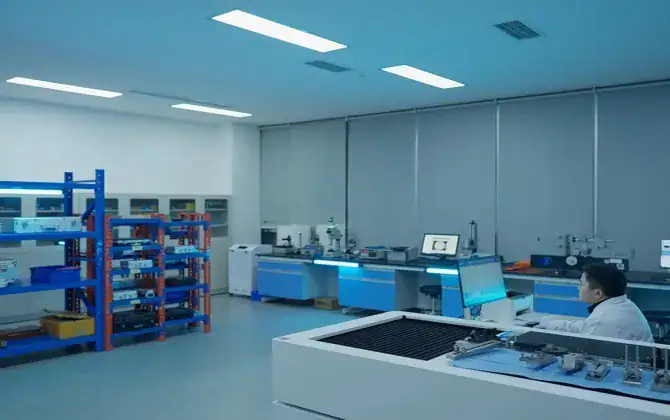
Inspection scope should identify the critical dimensions and areas before production. A general laboratory photograph does not demonstrate that a particular component passed a specified test.
For a load-carrying fixture, define the dimensions that control stacking, support and lifting. Add material traceability and the examination required by the agreed standard. Avoid requesting every available method without an acceptance criterion; that increases cost without making the decision clearer.
Technical basis and limits
This article synthesizes the cast heat-resistant steel chapters in Cast Steel and Cast Superalloys and Their Melting and the cast-steel handbook in the ECOOSUN reference library. The source material was used for oxidation-film behavior, alloying trade-offs, the distinction between heat resistance and heat strength, and the interaction between material and casting practice.
The numerical FeO example above is retained with its original compositional context to explain a mechanism. It is not an ECOOSUN test, a modern grade limit or a guaranteed operating temperature. Current standards and the actual furnace duty control the final specification.
The decision to make before requesting a quote
Do not begin by asking which alloy has the highest temperature number. Begin by deciding which failure must be prevented: continuing surface loss, hot deformation, thermal cracking, casting defects, or an interaction among them. Then send the standard, atmosphere, load map, support layout and cycle with the drawing.
Browse the wider range of heat-treatment furnace parts or send ECOOSUN the operating data for a drawing and material review. A technically useful recommendation starts with complete duty information, not a grade nickname.
Material selection for Silica Sol Investment Casting should connect castability and heat treatment with the component’s real temperature, atmosphere, load and life target.
Production context: The component reference should be read together with the manufacturing and inspection context behind the furnace application.

FAQ
What should a buyer confirm for a heat treatment basket requirement?
Confirm the drawing or used sample, key dimensions and interfaces, furnace type and clearance, load, operating cycle, failure evidence and inspection requirements. Final acceptance criteria should be agreed for the specific project.
Can ECOOSUN review a custom heat treatment basket requirement?
Yes. ECOOSUN can review a customer drawing or used sample and discuss casting, laboratory and inspection requirements for a custom furnace-component project. Suitability and final scope are confirmed from the supplied information.
Related Heat Treatment Basket Resources
Use these technical guides when specifying, inspecting or replacing heat treatment baskets for an industrial furnace:
- Heat Treatment Baskets: Load, Material and RFQ Guide
- How to Choose Heat Treatment Baskets
- Heat Treatment Basket Failure Analysis
- How to Replace a Heat Treatment Basket from a Worn Sample
- How to Inspect a Heat Treatment Basket Before Replacement
Related ECOOSUN Products
Information for a Faster Quotation
Provide alloy grade or service conditions, basket dimensions, expected load, operating temperature, furnace type, quantity, drawing or used sample, and inspection requirements.
Request a Custom Quote · Send Your Drawing · WhatsApp ECOOSUN

 +44 7419 144346