
Direct answer: Furnace fans and impellers move or circulate air within industrial furnace systems. Selection depends on geometry, balance, shaft or drive interface, atmosphere, operating cycle and failure history. ECOOSUN can review a drawing or used sample for a project-specific cast replacement.
A furnace fan or impeller operates in one of the most demanding areas of a heat-treatment system. High temperature, rotation, thermal cycling, oxidation and unbalanced loading can combine to shorten service life. When a fan fails, the cost is not limited to the replacement part: an unexpected shutdown can interrupt the entire production schedule.
This guide helps maintenance and purchasing teams define the right requirements for furnace fans and impellers and prepare a useful replacement RFQ.
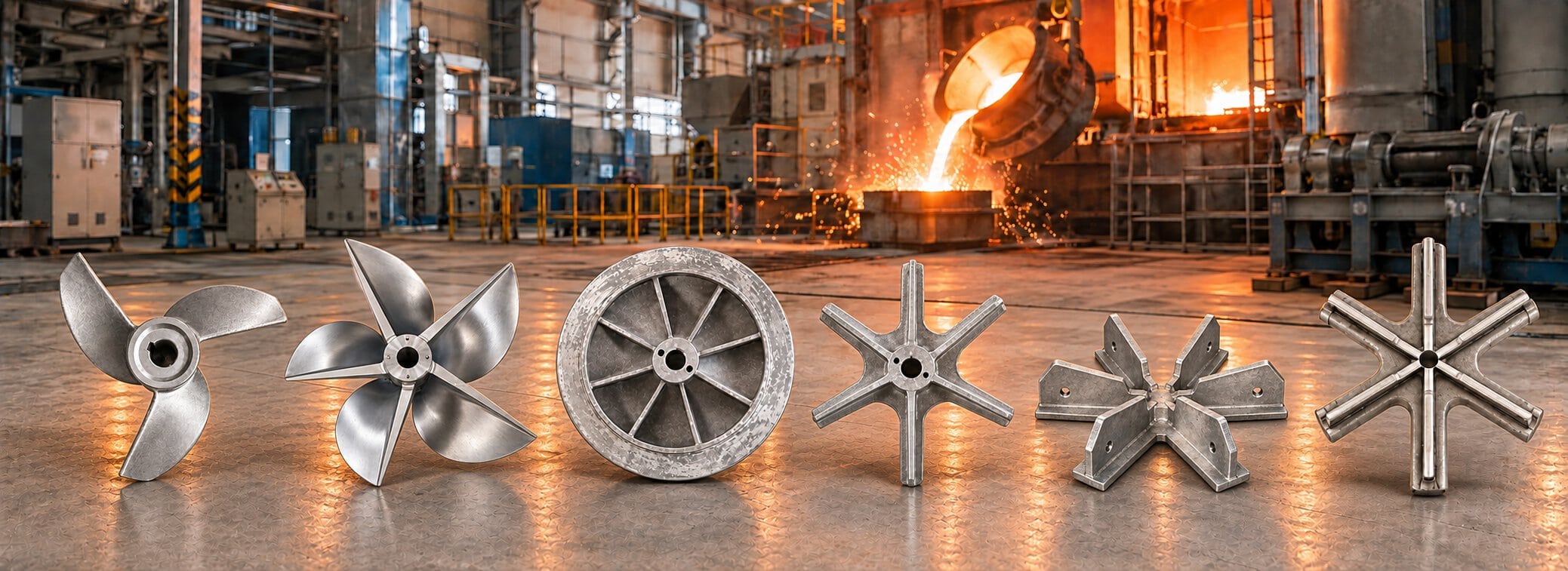
What makes a furnace fan different from a standard industrial fan?
A heat-treatment furnace fan is selected for a specific temperature zone, gas atmosphere, rotational speed and pressure requirement. The impeller must retain enough strength at operating temperature while remaining balanced during rotation. A design that is acceptable for ambient air service may not be suitable for a carburizing furnace, annealing furnace or other high-temperature application.
Material is only one part of the decision. Blade geometry, hub design, shaft connection, clearances, welds or cast structure, dynamic balance and thermal expansion all affect performance.
Common failure symptoms and what they may indicate
Cracks near the hub or blade root
Cracking in a high-stress transition area may be related to thermal fatigue, insufficient radius, vibration, weld quality or repeated start-stop cycles. A photograph of the crack location is valuable because the failure position often tells more than the overall appearance.
Blade deformation or loss of clearance
Permanent deformation can result from excessive temperature, material creep, overloading, poor support or an installation clearance that does not allow thermal growth. If the impeller rubs against the furnace shell, stop-and-start damage can accelerate quickly.
Vibration and noise
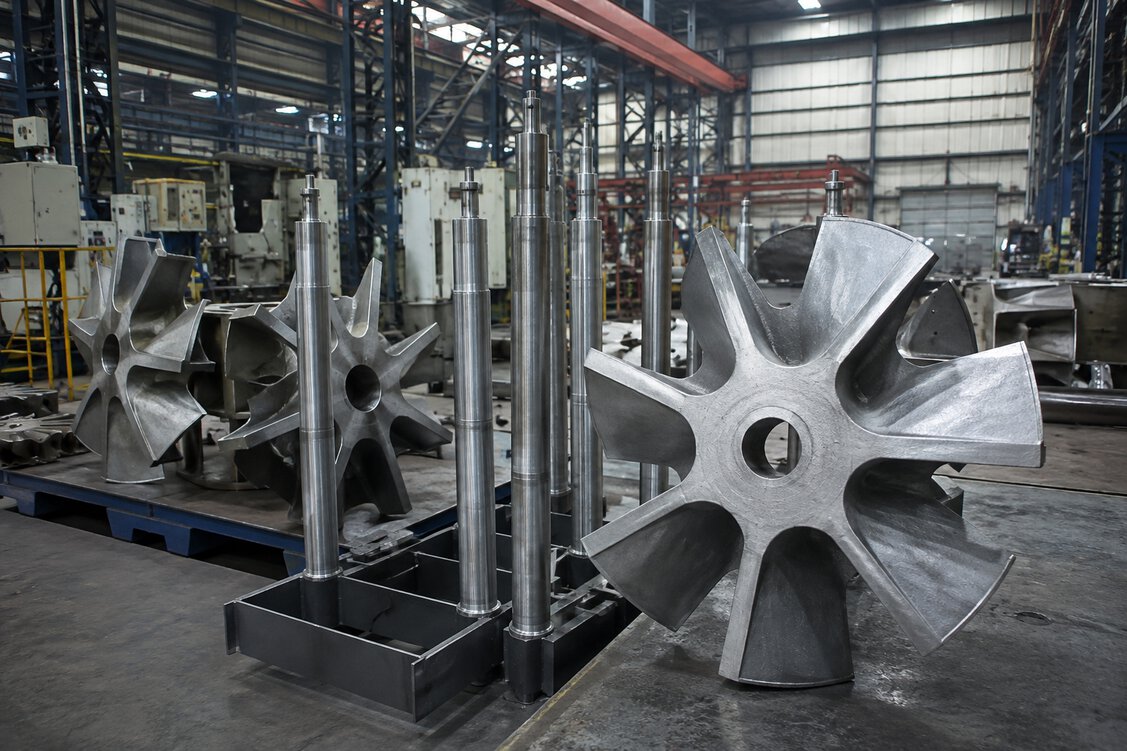
Vibration may be caused by deposits, wear, a bent shaft, loose connections, thermal distortion or loss of balance. Before ordering a replacement, record the running speed, vibration history and whether the problem appears only when the furnace reaches temperature.
Oxidation, scaling or rapid thinning
Oxidation behavior depends on temperature and atmosphere. Carbon potential, sulfur, moisture and contaminants can change the surface condition and may require a different heat-resistant steel or high-temperature alloy solution.
How to select the material
For furnace fans and impellers, material selection should consider:
- Normal and peak operating temperature.
- Furnace atmosphere and chemical exposure.
- Rotational speed, pressure and working load.
- Thermal cycling and expected operating hours.
- Blade thickness, hub geometry and connection method.
- Repair, machining and replacement requirements.
HK40, HP40-type alloys and heat-resistant stainless steels may be considered in different furnace environments, but no grade should be selected from a catalogue temperature alone. Actual service life also depends on geometry, stress, casting quality, balance and the furnace cycle.
What information should be included in a replacement RFQ?
Send the old part number if available, fan or impeller diameter, overall height, shaft or hub dimensions, blade count, rotation direction, operating speed, furnace temperature, atmosphere, quantity and delivery country. Add the furnace model, assembly drawing and clear photographs of the used component.
If the current part failed early, describe when the failure occurs and identify the damaged area. A short operating history—such as service hours, number of thermal cycles and previous repair attempts—can help a supplier distinguish a material problem from a design or installation problem.
Replacement is also an opportunity to improve reliability
A direct replacement is not always the best long-term solution. If the original impeller suffered from distortion or vibration, the new design may need a revised blade transition, improved balance control, adjusted clearance or a more suitable alloy. These changes should be reviewed against the existing motor, shaft and furnace airflow requirements.
ECOOSUN supports drawing-based supply of custom furnace fans, high-temperature impellers and furnace fan blades. To request a technical review, send your drawings, photos and operating data before selecting a replacement material.
Practical takeaway
The right furnace fan is a matched component, not a generic catalogue item. Define the operating environment, rotating conditions and failure history first. This gives the manufacturer enough information to recommend a suitable alloy, manufacturing route and dimensional solution—and gives the buyer a more reliable quotation.
FAQ
What should a buyer confirm for a furnace fan or impeller requirement?
Confirm the drawing or used sample, key dimensions and interfaces, furnace type and clearance, load, operating cycle, failure evidence and inspection requirements. Final acceptance criteria should be agreed for the specific project.
Can ECOOSUN review a custom furnace fan or impeller requirement?
Yes. ECOOSUN can review a customer drawing or used sample and discuss casting, laboratory and inspection requirements for a custom furnace-component project. Suitability and final scope are confirmed from the supplied information.

 +44 7419 144346