
Direct answer: Radiant tubes transfer heat into a heat-treatment furnace through a burner or heating system. Selection depends on the furnace layout, burner interface, dimensions, atmosphere, operating cycle and failure history. ECOOSUN can review a drawing or used sample for a project-specific replacement.
Radiant tubes transfer heat to the furnace load while keeping combustion products or electric heating elements separated from the treated atmosphere. Their geometry, alloy and installation condition directly influence temperature uniformity, fuel efficiency and maintenance intervals.
When a radiant tube fails early, the visible crack or burn-through is only the final symptom. A reliable replacement decision should consider the furnace cycle, tube design, atmosphere, support system and actual failure history. This guide explains what buyers should review before ordering radiant tubes.
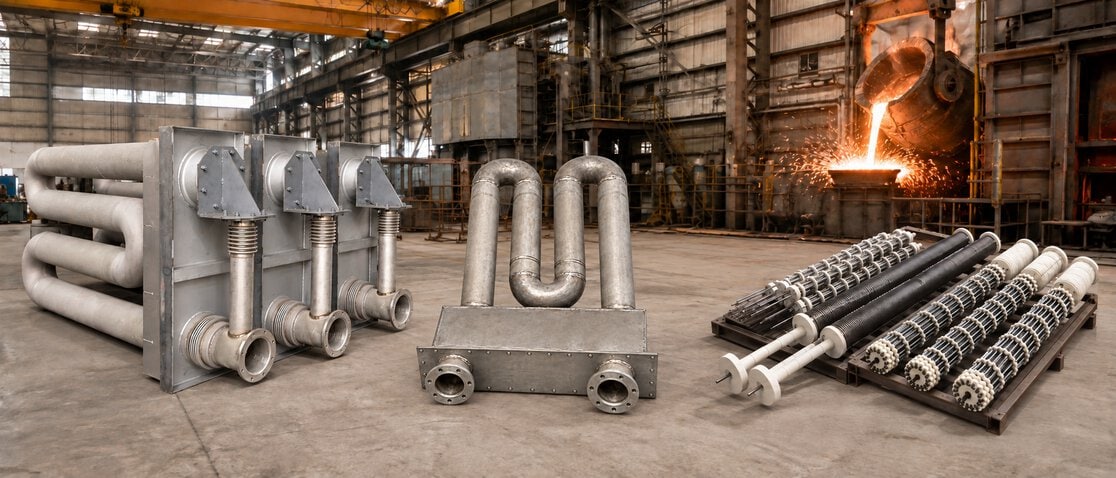
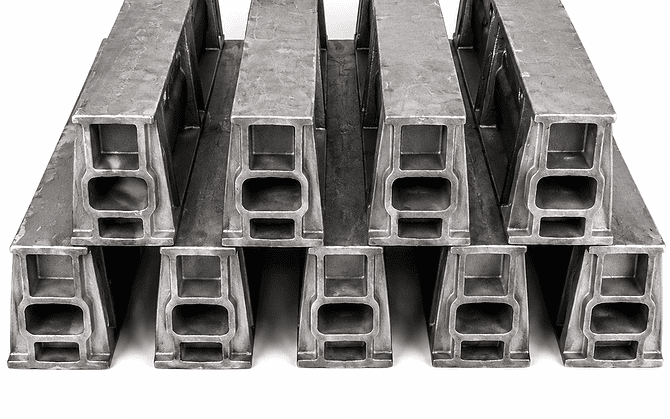
Where radiant tubes are used
Radiant tubes are common in annealing furnaces, carburizing furnaces and other continuous or batch heat-treatment equipment. Gas-fired radiant tubes must withstand flame-side temperature, repeated thermal expansion and the chemical condition inside and outside the tube. Electric radiant tubes have different heating-element and insulation requirements.
The same nominal tube diameter can perform differently depending on length, burner arrangement, support spacing, furnace atmosphere and heat input. A replacement should therefore match the furnace system, not only the outside dimensions.
Three conditions that control tube life
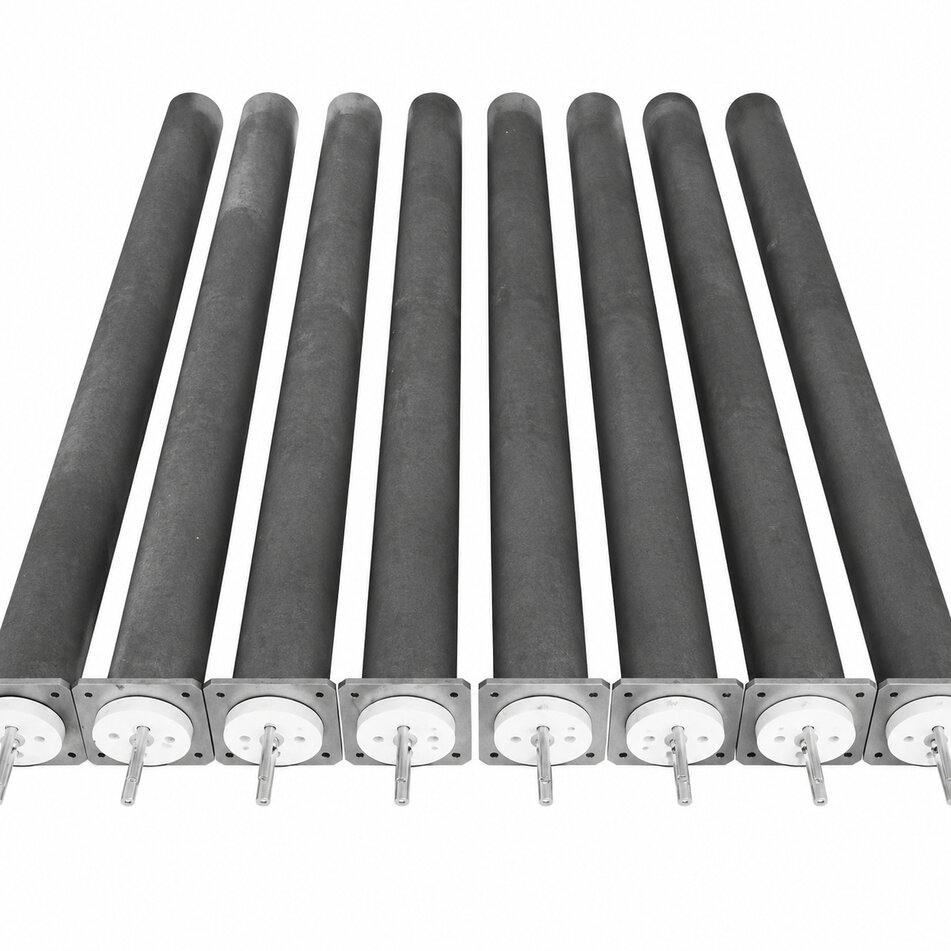
Temperature and thermal cycling
Tube life is affected by the normal temperature, peak temperature, heating rate, cooling rate and number of start-stop cycles. Local hot spots may be more damaging than the average furnace temperature. Burner adjustment, flame impingement and scale deposits should be reviewed when a tube develops a concentrated failure area.
Atmosphere and oxidation
Oxidizing, neutral, carburizing and other furnace atmospheres create different surface reactions. Oxidation, carburization, nitriding, sulfur exposure and moisture can change the behavior of a heat-resistant alloy. Material selection must reflect the actual atmosphere and not rely on a generic “high-temperature” label.
Support, alignment and thermal expansion
Long radiant tubes need room to expand. Incorrect support, misalignment or excessive restraint can create bending stress and accelerate cracking. Clearance, burner fit, mounting orientation and tube sag should be checked during installation and maintenance.
Common radiant tube failure modes
- Longitudinal cracking: may be associated with thermal fatigue, creep, stress concentration or local overheating.
- Burn-through or severe thinning: may indicate oxidation, flame impingement, deposits or an unsuitable alloy for the atmosphere.
- Bulging and sagging: can be linked to high-temperature creep, insufficient wall thickness, unsupported length or excessive heat input.
- Repeated flange or end damage: may point to alignment, sealing, installation or differential expansion problems.
Photographs showing the entire tube and close-ups of the failed area are useful. The operating side, furnace zone, hours in service and previous repair history are also important for failure analysis.
How to compare radiant tube materials
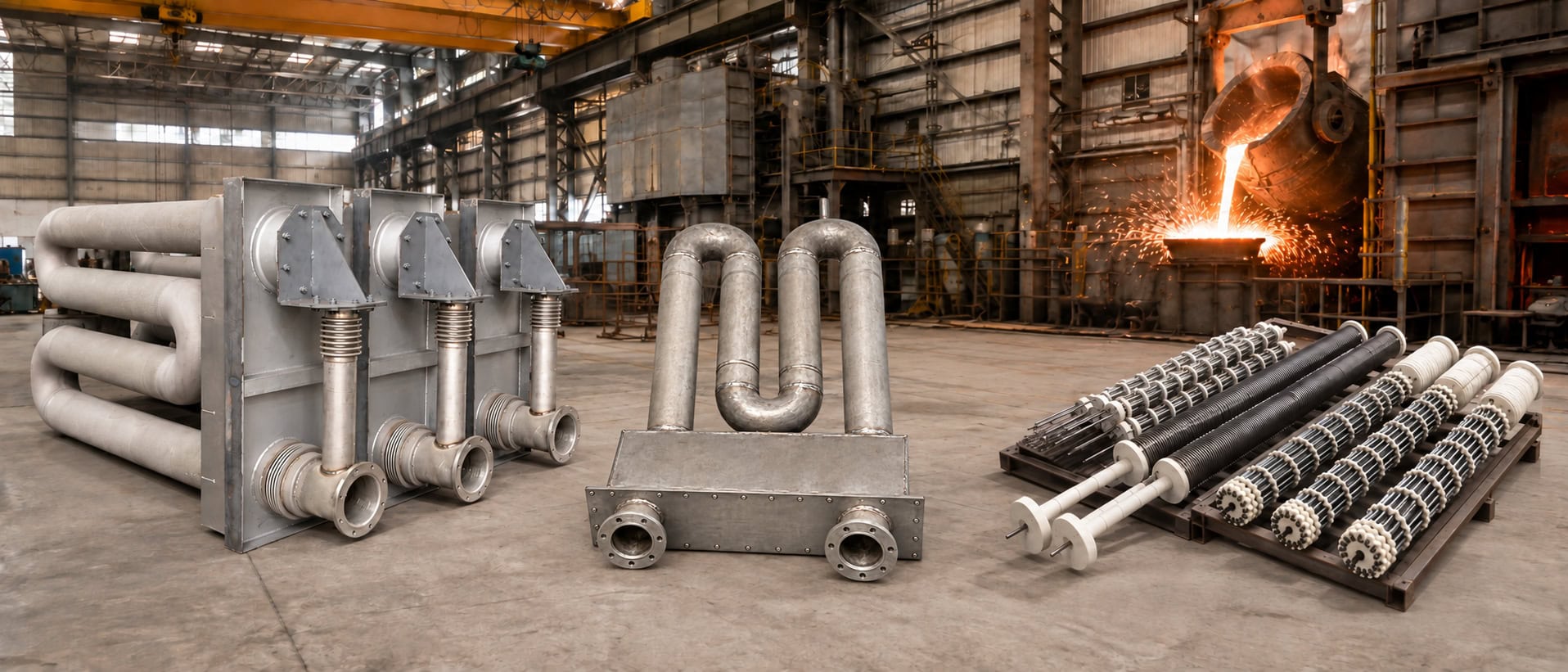
Heat-resistant cast alloys such as HK40, HP40-type grades and selected heat-resistant stainless steels may be considered for different conditions. Reference grades including 25Cr-20Ni, X15CrNiSi25-21 and 25Cr-35Ni-Nb can have different oxidation, creep and thermal-cycling behavior. The final choice depends on temperature, atmosphere, tube geometry, wall thickness, heat input and expected service life.
A published temperature range should be treated as a reference, not as a universal guarantee. For a practical selection, compare the grade, manufacturing process, casting quality, dimensional stability, inspection requirements and replacement lead time together.
Information required for a quotation
To quote a replacement radiant tube, provide the furnace type, heating method, gas or electric specification, tube length, outside diameter, wall thickness, straight or shaped geometry, end connection, burner arrangement, operating temperature, furnace atmosphere, quantity and delivery country.
Please also include drawings or clear photographs, the current alloy grade if known, and the reason for replacement. If the tube failed after a short service period, note the location and appearance of the failure. This allows the manufacturer to consider design or operating corrections instead of repeating the same problem.
A practical replacement strategy
For a direct replacement, dimensional compatibility and installation clearance are essential. For a new furnace project or repeated failure, a design review may identify improvements in alloy selection, wall thickness, support, burner alignment or manufacturing process.
ECOOSUN supplies custom radiant tubes for heat-treatment furnaces based on drawings and operating conditions. If you are comparing materials or need a replacement quotation, send the tube drawing, furnace data and failure photographs for a technical review.
Buyer’s final checklist
Before placing an order, confirm five points: the actual operating atmosphere, the complete thermal cycle, the tube’s support and expansion condition, the required alloy and manufacturing route, and the inspection or dimensional requirements. A clear RFQ helps the supplier recommend a solution that balances service life, compatibility and total replacement cost.
FAQ
What should a buyer confirm for a radiant tube requirement?
Confirm the drawing or used sample, key dimensions and interfaces, furnace type and clearance, load, operating cycle, failure evidence and inspection requirements. Final acceptance criteria should be agreed for the specific project.
Can ECOOSUN review a custom radiant tube requirement?
Yes. ECOOSUN can review a customer drawing or used sample and discuss casting, laboratory and inspection requirements for a custom furnace-component project. Suitability and final scope are confirmed from the supplied information.
Related Radiant Tube Resources
Use these technical guides when specifying, inspecting or replacing radiant tubes for an industrial furnace:
- Straight, U-Type or W-Type Radiant Tubes
- Radiant Tube Failure: Cracking, Sagging and Oxidation
- Radiant Tube Installation and Connection Inspection Guide
- Industrial Furnace Radiant Tubes: Material and Service Life
Related ECOOSUN Products
Information for a Faster Quotation
Provide alloy grade or service conditions, straight/U/W form, tube dimensions, burner and connection details, operating temperature, furnace zone, quantity, drawing or used sample, and inspection requirements.
Request a Custom Quote · Send Your Drawing · WhatsApp ECOOSUN

 +44 7419 144346