
First article inspection (FAI) for a custom heat-resistant steel casting should confirm that the first production part matches the approved drawing, material requirement, critical dimensions and agreed inspection plan before batch production begins. It is not a single measurement. It is a documented comparison between the purchase requirements and the actual first part.
For furnace components, this step is particularly useful when the part is made from a worn sample, when the drawing has been revised, or when geometry such as support points, locating features, wall thickness or runout affects service performance.
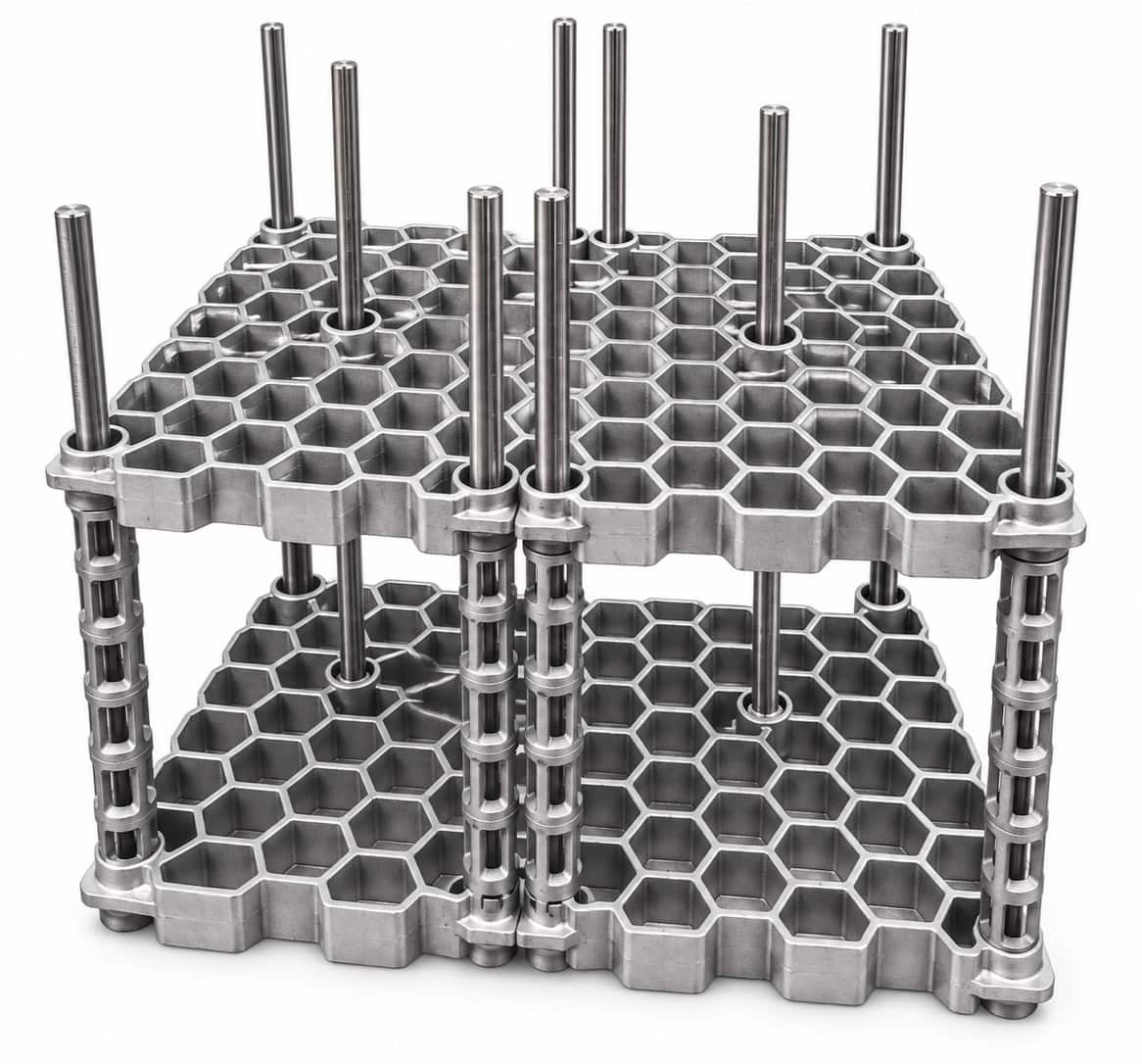
For heat treatment fixtures, tie first-article checks to the locating features and installation interfaces identified on the approved drawing.
What should be approved before the first casting is made?
The supplier and buyer should work from one controlled technical package. At minimum, it should identify:
- the drawing number and revision;
- the heat-resistant alloy or the agreed material selection basis;
- critical dimensions and datums;
- casting process and any required machining;
- inspection methods and sampling level;
- acceptance criteria for visible and internal discontinuities;
- required records, marking and traceability;
- the person or department authorized to approve the first article.
If the order is based on a worn sample, the buyer should also identify which dimensions are original design features and which areas have changed through wear, oxidation, creep or distortion. Copying every worn dimension can reproduce the failure rather than reproduce the intended part.
A practical FAI sequence
1. Verify document identity
Start with the drawing number, revision, purchase order and part identification. A correct measurement recorded against the wrong drawing revision is still an invalid inspection result. Photographs of the identification mark and the inspected part can make the record easier to audit later.
2. Review appearance and workmanship
Visual inspection should check the surfaces, edges, openings, welds or joined features where applicable, and the general condition after cleaning. Acceptance should be based on the project specification, not on an undefined expectation that a casting must look like a machined part.
3. Measure critical geometry
Not every dimension carries the same risk. For baskets, trays and fixtures, support spacing, usable envelope, stacking interfaces and locating features may be more important than non-functional surface details. For radiant tubes and furnace rolls, connection geometry, straightness, concentricity or runout may control installation and operation.
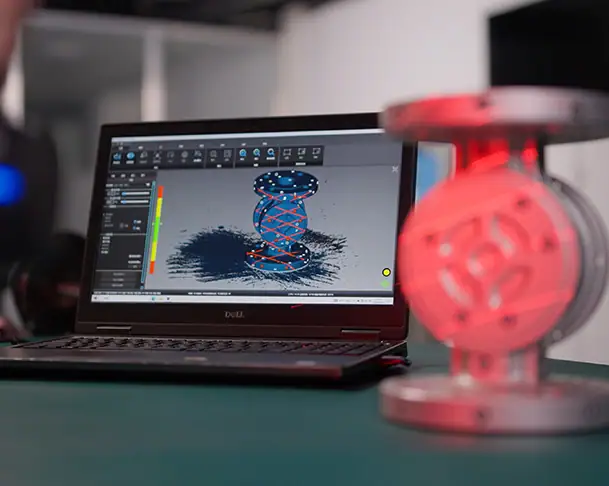
Record the measuring method as well as the result. A dimensional report is more useful when it identifies the datum, instrument and inspection location.
4. Confirm material evidence
Material verification should follow the purchase specification. Depending on the project, the record may include heat identification, chemical composition results and any mechanical or metallographic tests that were specifically ordered. The report should clearly connect the tested sample or heat to the delivered part.
A material grade name by itself is not a complete acceptance record. The buyer should know which specification, composition limits and test basis apply to the order.
5. Apply the agreed NDT plan
Non-destructive testing is selected according to geometry, process, risk and the type of discontinuity being evaluated. Dye penetrant, magnetic particle, ultrasonic or radiographic examination are not interchangeable. The purchase order should define the required method, coverage and acceptance basis before testing begins.
6. Record deviations and disposition
Any deviation should be listed clearly. The record should show whether the part was accepted as-is, reworked and reinspected, or rejected. Verbal approval is difficult to trace when the next batch is produced months later.
What should an FAI report contain?
A useful report normally contains:
- supplier, buyer and part identification;
- purchase order, drawing number and revision;
- material and heat or batch reference;
- inspection characteristics and acceptance limits;
- actual results, not only “pass” statements;
- instruments or inspection methods used;
- photographs where they clarify identity or condition;
- nonconformance and reinspection records;
- inspector and approval dates;
- buyer approval status before batch release.
FAI is not the same as final inspection
FAI confirms that the production route can make a part that satisfies the controlled requirements. Final inspection confirms the delivered parts meet the order requirements. A successful first article does not remove the need for batch traceability, process control or final inspection.
How ECOOSUN approaches custom furnace components
ECOOSUN is the overseas operating brand of Xinghua Hengxin Machinery Co., Ltd. For custom heat treatment baskets, trays, fixtures, radiant tubes and furnace rolls, project review begins with the customer drawing or sample, operating conditions and required inspection records. The final material, dimensions and inspection plan are confirmed for each project rather than assumed from a generic catalog description.
Before requesting a quotation, send the drawing revision, critical dimensions, furnace atmosphere, operating cycle, load information, quantity and any required inspection or documentation standard through the Contact Us page.
Related resources: ECOOSUN engineering and inspection process, purchase-order acceptance criteria and company facts and product catalog.
Frequently asked questions
Is FAI required for every repeat order?
Not automatically. A new FAI is usually most valuable after a drawing revision, material change, tooling change, process change, long production interruption or significant nonconformance. The buyer and supplier should define the trigger in the order.
Can a worn sample replace a drawing for FAI?
A worn sample can provide geometry and installation evidence, but damaged or distorted areas must be reviewed. A controlled replacement drawing is preferable for recording the final approved dimensions.
Does an FAI report guarantee service life?
No. It confirms conformance to agreed manufacturing and inspection requirements. Service life also depends on furnace atmosphere, temperature cycle, load, support, handling and maintenance.
Should all dimensions be reported?
That depends on the order. Critical and interface dimensions should be explicit. Full dimensional reporting can be requested when the risk, geometry or customer quality system requires it.
Related Quality and Procurement Evidence
Use these guides to define inspection, documentation, traceability and release requirements for custom heat-resistant furnace castings:
- Material Certificates and Quality Documents for Heat-Resistant Castings
- How to Read a Heat-Resistant Casting Inspection Report
- Heat and Batch Traceability for Custom Heat-Resistant Castings
- Inspection and Test Plan for Custom Furnace Castings
- Witness Points and Hold Points for International Furnace-Part Orders
- Nonconformance, Rework and Corrective Action for Custom Castings
Related ECOOSUN Products
Information for a Faster Quotation
Provide the drawing revision, material standard, critical dimensions and tolerances, required inspection and NDT scope, traceability documents, report format, witness or hold points, and final release requirements.
Request a Custom Quote · Send Your Drawing · WhatsApp ECOOSUN

 +44 7419 144346