
Short answer: Heat treatment tray flatness is controlled by alloy selection, section design, support span, load distribution, thermal clearance and inspection method. A drawing should define the required cold flatness and the service conditions that influence hot distortion.
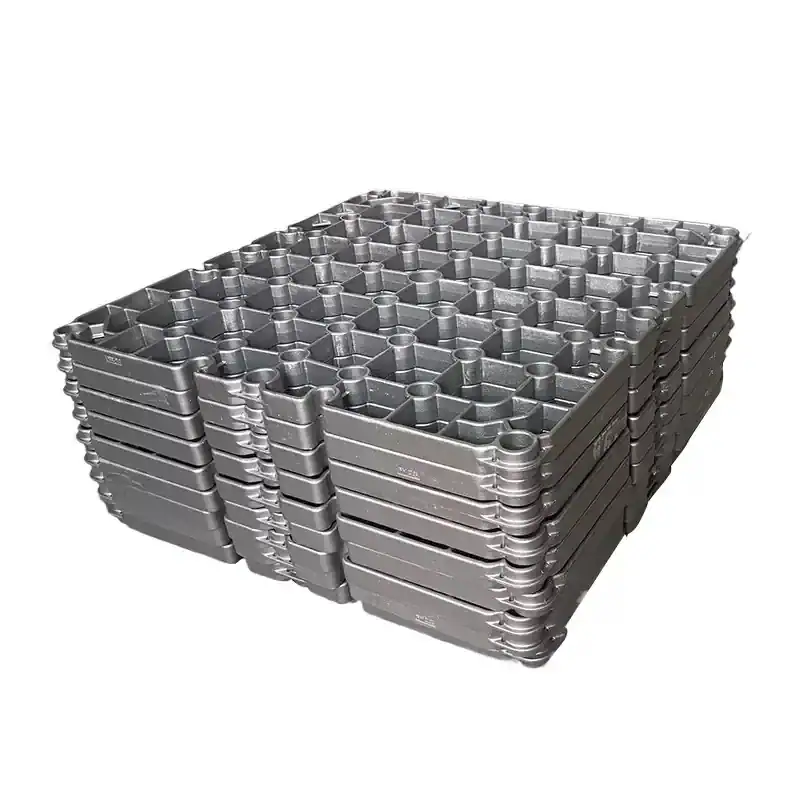
Flatness is not only a machining measurement
When purchasing a heat treatment tray, clarify whether flatness is measured at room temperature before service, after a defined thermal cycle, or while the tray is hot. These conditions are not interchangeable. A tray can meet a cold inspection target and still show temporary thermal bowing if it is unevenly heated or loaded. Conversely, a tray that is permanently warped after repeated cycles may have a design, support or material problem rather than a simple machining issue.
State the datum surface, measurement method, inspection temperature and acceptance criteria on the drawing or purchase order. If the tray must run on rails or pass through a narrow furnace opening, also define the maximum overall height, diagonal difference and allowable edge lift.
Why furnace trays warp
- Uneven loading: a heavy workpiece concentrated in the center creates local bending and different thermal expansion.
- Long unsupported spans: the tray base may sag between rails or support points during repeated heating.
- Restricted expansion: tight contact with rails, stops or neighboring trays can create compressive stress.
- Blocked openings: poor atmosphere circulation produces temperature gradients across the tray.
- Thin or unbalanced sections: a flat plate without adequate ribs can lose stiffness during cycling.
- Oxidation, carburization or creep: the atmosphere and long dwell time can reduce useful service life.
Design choices that improve dimensional stability
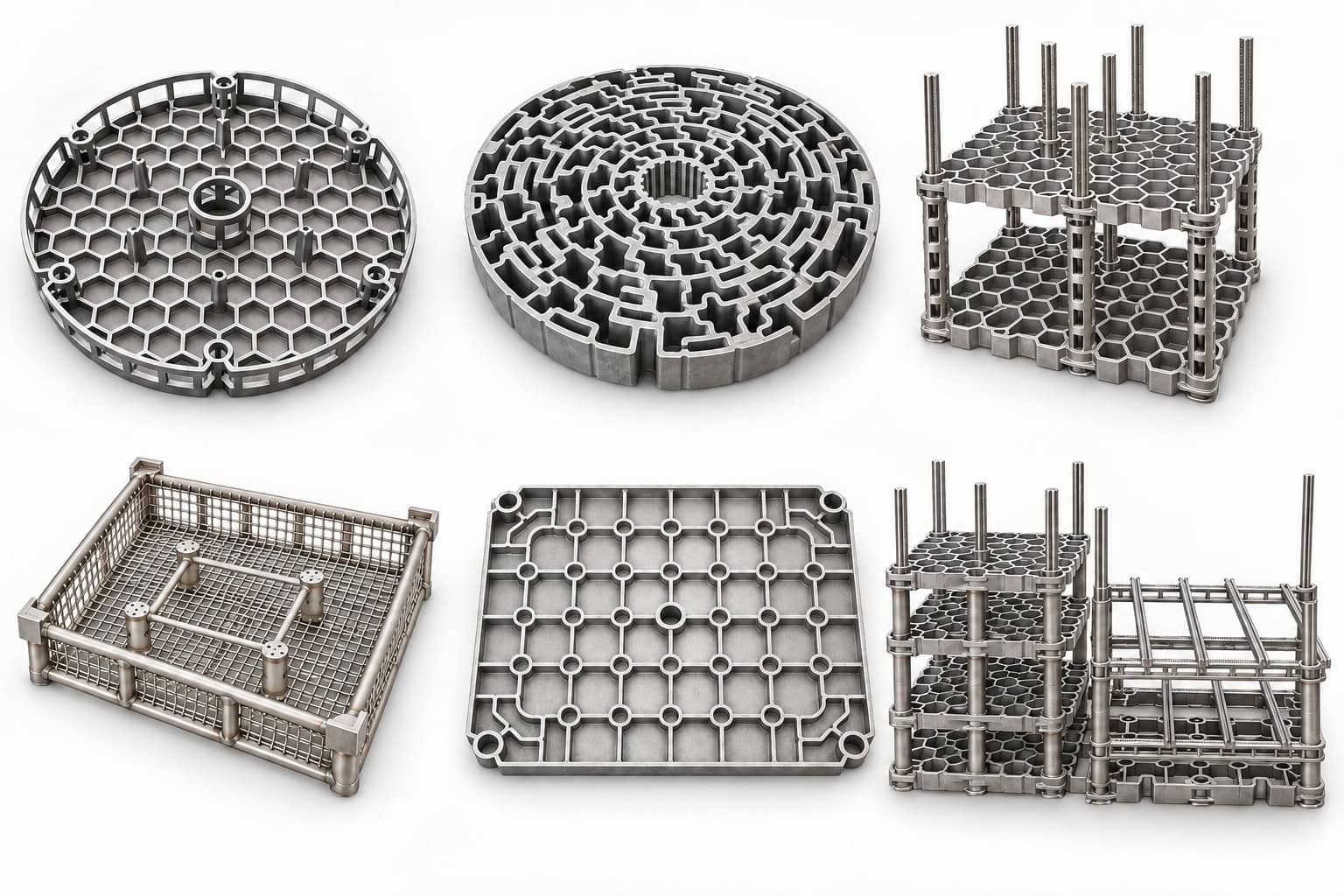
A stable heat treatment tray normally starts with a clear load path. Reinforced edges, ribs, perforations, support rails and contact pads should be positioned around the actual load rather than added as generic features. The opening pattern must retain the workpieces while allowing heat and atmosphere to reach them. If a tray is nested, the rim and lifting features must also be checked for interference.
Material selection should follow the real furnace temperature and atmosphere. As reference grades, EN 1.4852 / 25Cr-35Ni-Nb is commonly discussed around 1100–1150°C, EN 1.4851 / X15CrNiSi25-21 and EN 1.4845 / 25Cr-20Ni around 900–1000°C, EN 1.4857 / 25Cr-35Ni / HP40 around 1050–1150°C, and HU / ZG45Ni38Cr18Si2 around 1093°C. The final grade, wall thickness and design must be confirmed against the purchaser’s cycle, atmosphere, loading pattern and replacement history.
Recommended inspection points
For a tray replacement, inspection should be agreed before production. Typical checks can include overall length, width and height; diagonal difference; base flatness; thickness; hole or slot position; edge and rib dimensions; lifting-point location; visual surface condition; and identification or traceability. Chemical composition, hardness and suitable non-destructive testing can be included when required by the application or quality plan.
Ask for an inspection report that identifies the drawing revision and the actual measured values. This is more useful than a generic statement that the tray was “checked.” If the tray will be used in a continuous furnace, add the rail spacing, travel direction and any run-in or alignment requirement.
Tray RFQ information checklist
- Internal loading area and maximum external envelope.
- Required flatness, datum and tolerance method.
- Workpiece weight, distribution, spacing and quantity per cycle.
- Operating temperature, atmosphere, cycle duration and furnace type.
- Support span, rail arrangement, lifting method and stacking requirement.
- Preferred material, previous distortion or crack photos, quantity and delivery date.
ECOOSUN supplies custom heat treatment trays and can compare a tray design with heat treatment baskets or heat treatment fixtures when the complete load system requires coordinated support. Send the drawing through Contact Us, use Request a Custom Quote or Send Your Drawing. For a quick engineering discussion, contact ECOOSUN on WhatsApp.
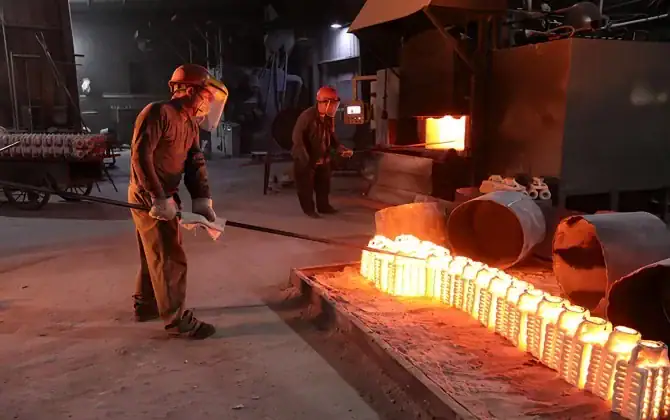
Manufacturing and Product Evidence
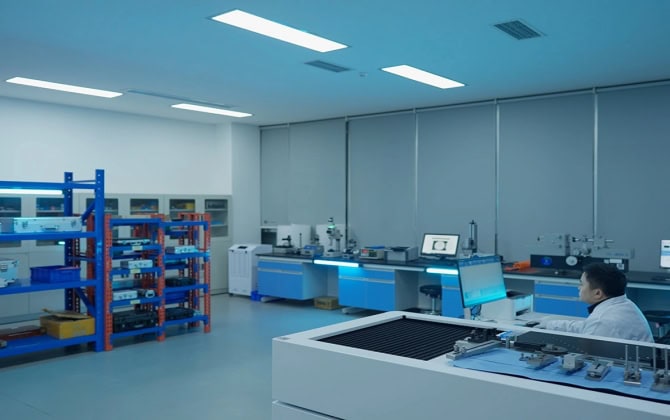
For a project review, send your drawing, sample photos, furnace conditions, quantity and inspection requirements through our Contact Us page.
Related Heat Treatment Tray Resources
Use these technical guides when specifying, inspecting or replacing heat treatment trays for an industrial furnace:
- Heat Treatment Trays: Rib Design, Perforation and Distortion Control
- Heat Treatment Tray Design: Load, Alloy and Deformation
- Heat Treatment Tray Installation and Furnace Clearance Guide
- Heat Treatment Tray Acceptance Inspection Checklist
- Heat Treatment Baskets vs Trays vs Fixtures
Related ECOOSUN Products
Information for a Faster Quotation
Provide alloy grade or service conditions, tray dimensions, load capacity, flatness or clearance requirements, operating temperature, furnace type, quantity, drawing or used sample, and inspection requirements.
Request a Custom Quote · Send Your Drawing · WhatsApp ECOOSUN

 +44 7419 144346