
Short answer: Select a heat treatment basket by matching the usable loading envelope, furnace clearance, workpiece weight, support points, atmosphere and operating temperature—not by choosing a standard outside size alone.
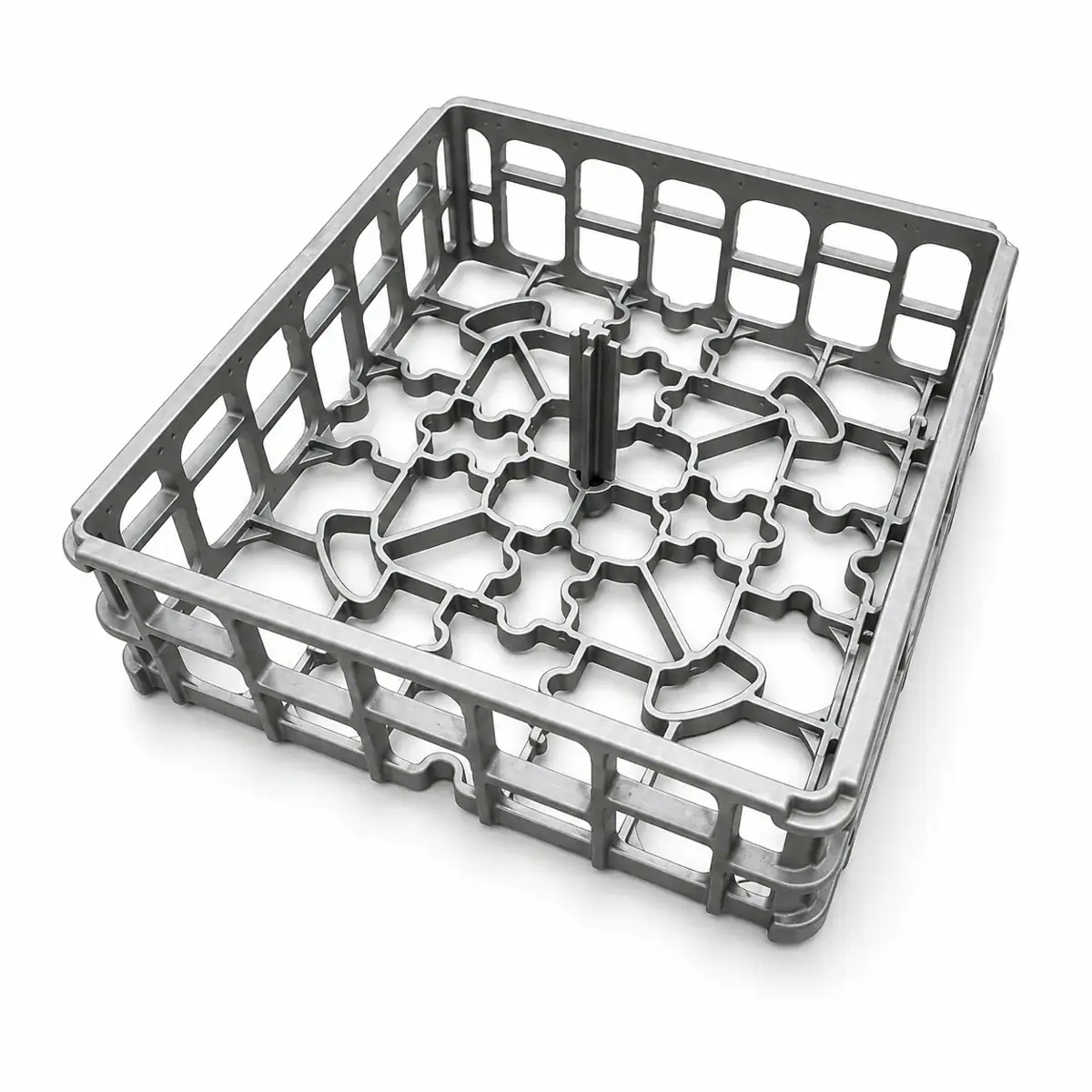
Start with the usable loading envelope
For a purchasing team, the first question is how many parts must fit in one cycle and how they will be loaded. Record the workpiece length, width, height, spacing requirement and loading direction. Then check the clear furnace width, height, door opening, conveyor or hearth arrangement and the clearance required for circulation of heat and atmosphere. The basket outside dimensions should leave practical clearance for loading, thermal expansion and removal after the cycle.
Ask the supplier to distinguish usable internal dimensions from overall dimensions. A basket may have lifting lugs, a reinforced rim or a base frame that reduces the effective loading area. ECOOSUN can review a drawing, sample or marked-up photograph and return a manufacturability comment before quotation.
Dimensions that affect performance
- Internal length, width and height of the loading area.
- Opening or mesh pattern for atmosphere flow, drainage and part retention.
- Wall, rim, mesh or section thickness in relation to load and thermal cycling.
- Lifting points, fork pockets, handles and the empty basket weight.
- Support span and contact points on the furnace hearth, rails or conveyor.
- Stacking or nesting requirements when empty baskets are stored or returned.
Do not specify only “one basket, 1,000 mm long” when requesting a quote. The supplier also needs to know whether the stated size is external, internal or the maximum envelope allowed by the furnace.
Choose operating temperature with the atmosphere
The temperature shown on a furnace controller is only one part of material selection. The basket alloy must also suit the atmosphere, cycle time, heating and cooling rate, part contact pattern and expected number of cycles. Oxidizing, carburizing, nitriding and other atmospheres can change oxidation, carburization and thermal-fatigue behavior.
As an initial reference, common heat-resistant alloy options discussed for industrial furnace parts include EN 1.4852 / 25Cr-35Ni-Nb at approximately 1100–1150°C, EN 1.4851 / X15CrNiSi25-21 at approximately 900–1000°C, EN 1.4845 / 25Cr-20Ni at approximately 900–1000°C, EN 1.4857 / 25Cr-35Ni / HP40 at approximately 1050–1150°C, and HU / ZG45Ni38Cr18Si2 around 1093°C. These are reference ranges, not a blanket service guarantee; final grade selection should be confirmed against the actual furnace profile and atmosphere.
Load distribution is as important as total weight
Two baskets with the same total load can behave differently if one concentrates weight near the center or blocks the openings. Provide the total loaded mass, the number of parts, individual part weight, center of gravity and whether the basket is charged manually, by crane or by automated handling. Support ribs, a reinforced base and suitable part spacing can reduce local distortion and improve circulation.
For repeated cycles, ask about thermal expansion allowance and whether the basket must remain compatible with an existing fixture or tray. If a basket is used in a continuous furnace, also provide travel direction, support roller arrangement and cycle speed.
What to include in a basket RFQ
- Drawing or sample, with internal and overall dimensions.
- Workpiece geometry, quantity per load and loaded weight.
- Operating temperature, atmosphere, cycle and heating/cooling details.
- Furnace type, clearances and support method.
- Preferred alloy, previous basket failure information and target service life.
- Quantity, delivery location and inspection or traceability requirements.
ECOOSUN manufactures custom heat treatment baskets and can compare the basket design with related heat treatment trays and heat treatment fixtures when the loading system uses more than one furnace component. For a fast review, use Contact Us, choose Request a Custom Quote, or Send Your Drawing. You can also start a specification discussion through WhatsApp.
Manufacturing and Product Evidence
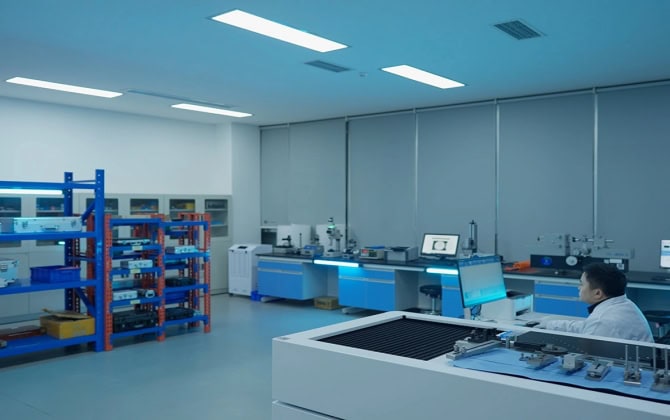
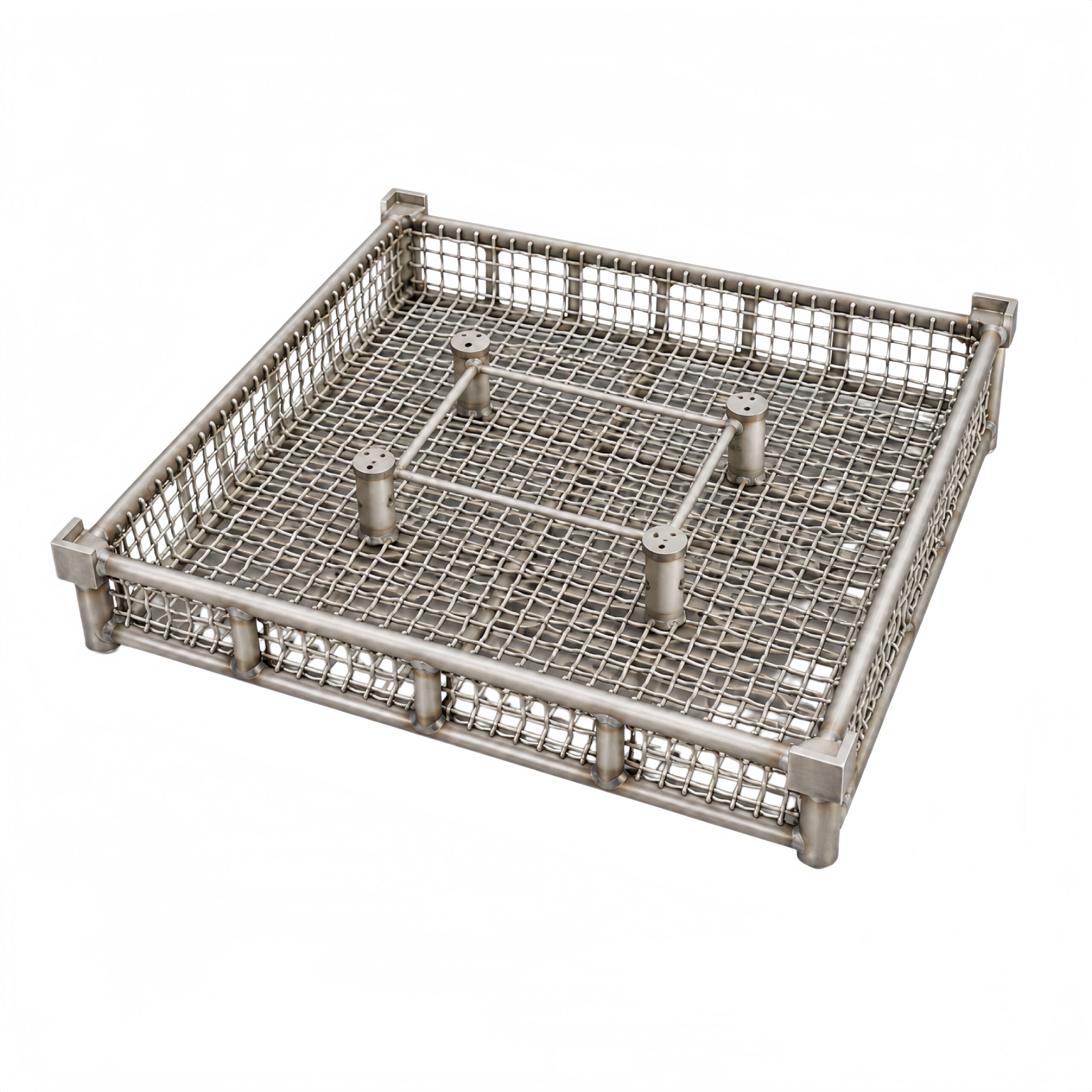
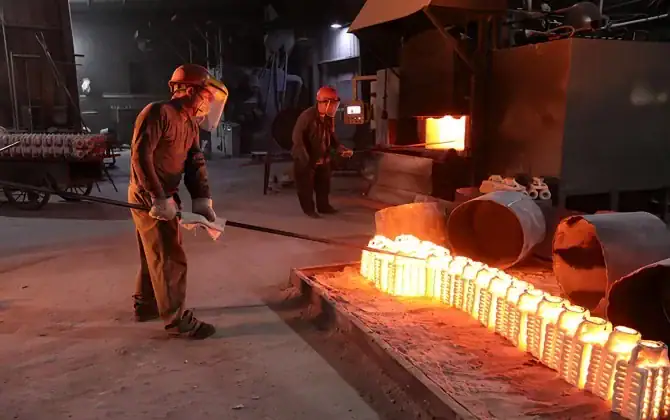
For a project review, send your drawing, sample photos, furnace conditions, quantity and inspection requirements through our Contact Us page.
Related Heat Treatment Basket Resources
Use these technical guides when specifying, inspecting or replacing heat treatment baskets for an industrial furnace:
- Heat Treatment Baskets: Load, Material and RFQ Guide
- How to Choose Heat Treatment Baskets
- Heat Treatment Basket Failure Analysis
- How to Replace a Heat Treatment Basket from a Worn Sample
- How to Inspect a Heat Treatment Basket Before Replacement
Related ECOOSUN Products
Information for a Faster Quotation
Provide alloy grade or service conditions, basket dimensions, expected load, operating temperature, furnace type, quantity, drawing or used sample, and inspection requirements.
Request a Custom Quote · Send Your Drawing · WhatsApp ECOOSUN

 +44 7419 144346