
Short answer: Heat treatment fixtures usually crack because repeated thermal stress combines with a local weakness such as a sharp corner, thin section, weld defect, overload, misalignment or unsuitable alloy. The crack location and service history are essential for choosing a reliable replacement.
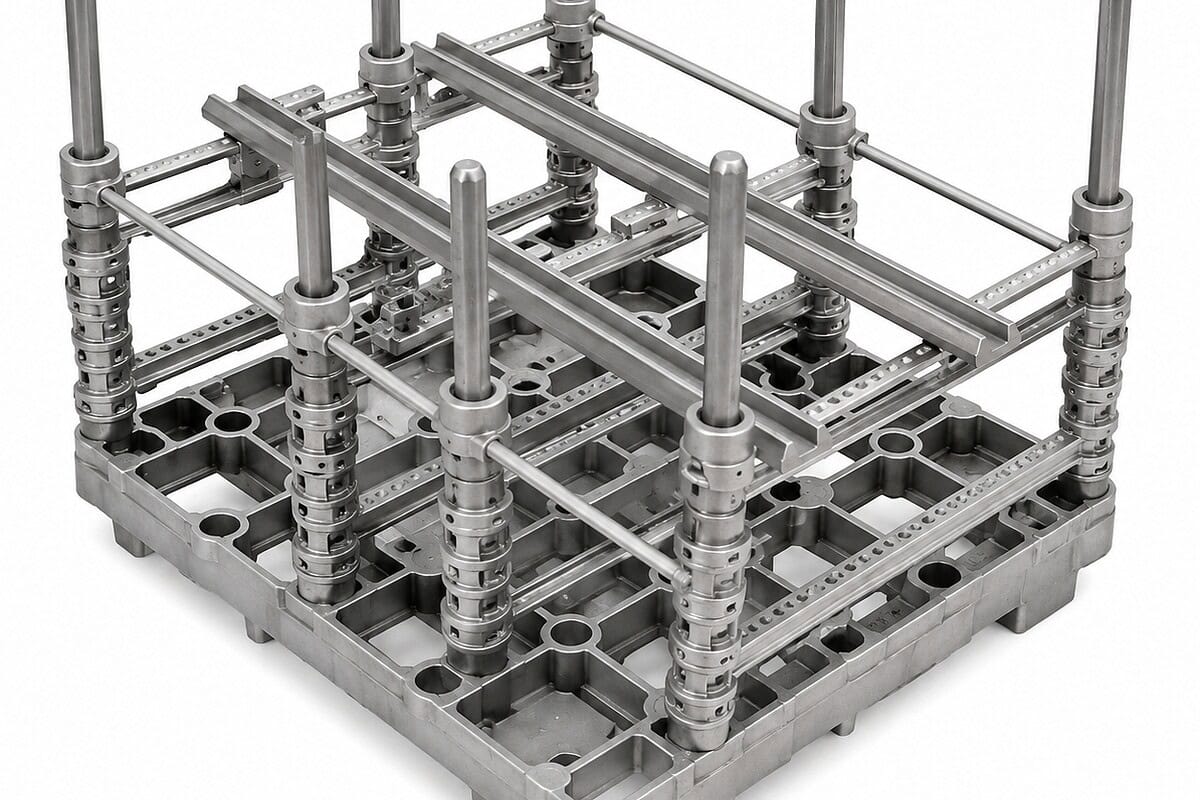
Read the crack pattern before choosing a new fixture
A crack at a corner, hole, hook, weld toe or change in section often indicates stress concentration. A crack across a long heated member can point to thermal gradients, bending or restrained expansion. Cracks around workpiece contact points may be linked to impact, local overheating or an unsupported load. Photograph the failed fixture from several angles and mark the crack length, direction and position on the drawing.
Also record how many cycles the fixture completed, whether the crack appeared during heating or unloading, and whether the workpiece changed position. That evidence helps distinguish a material problem from a design or handling problem.
Five common causes of fixture cracking
- Thermal fatigue: repeated heating and cooling expands and contracts the fixture. The damage accumulates fastest at restrained or highly stressed features.
- Stress concentration: sharp internal corners, abrupt thickness changes, small holes and narrow ligaments can amplify local stress.
- Overload or impact: a fixture can be overloaded by a heavier charge, a shifted workpiece, crane impact or an incorrect loading sequence.
- Material or process mismatch: the alloy, casting quality, weld procedure or heat treatment may not suit the temperature and atmosphere.
- Furnace misalignment: contact with a rail, basket, tray or furnace wall can create a bending force that was not present in the original design.
Temperature and atmosphere affect crack development
Do not assess a cracked heat treatment fixture from temperature alone. Provide the working temperature, peak temperature, dwell time, cycle frequency and atmosphere. Oxidizing, carburizing and nitriding conditions can change surface condition and dimensional stability. Rapid transfer from a furnace to air or quench can also introduce thermal shock.
Common reference materials for industrial heat-resistant parts include EN 1.4852 / 25Cr-35Ni-Nb at approximately 1100–1150°C, EN 1.4851 / X15CrNiSi25-21 and EN 1.4845 / 25Cr-20Ni around 900–1000°C, EN 1.4857 / 25Cr-35Ni / HP40 around 1050–1150°C, and HU / ZG45Ni38Cr18Si2 around 1093°C. These approximate ranges do not replace an application review. The final material should be selected using the actual furnace conditions and failure evidence.
Inspection before repair or replacement
A practical review can include visual examination, dimensional checks and confirmation of the crack origin. Chemical composition and hardness checks help compare a failed part with the specified alloy. Depending on geometry and material, dye penetrant, magnetic particle or another suitable non-destructive test may be considered. Welded or cast fixtures may need different inspection methods.
Repair is not automatically the best option. If the crack is in a highly loaded or inaccessible location, if repeated cracks have appeared, or if the fixture has lost alignment, a redesigned replacement may provide a more predictable result. Any repair plan should define cleaning, crack removal, welding or casting route, heat treatment and final inspection.
How to request a replacement fixture quote
- Original drawing, sample or clear photos with marked crack locations.
- Workpiece shape, weight, contact points and loading orientation.
- Furnace type, temperature, atmosphere, cycle and cooling method.
- Previous material grade, cycle count and observed failure mode.
- Required dimensions, tolerance, quantity and target delivery.
- Inspection, chemical, hardness, NDT and traceability requirements.
ECOOSUN manufactures custom heat treatment fixtures and can review related heat treatment baskets or heat treatment trays when the fixture works inside a larger loading system. Send the drawing via Contact Us, select Request a Custom Quote or Send Your Drawing. You may also discuss the failure photos through WhatsApp.
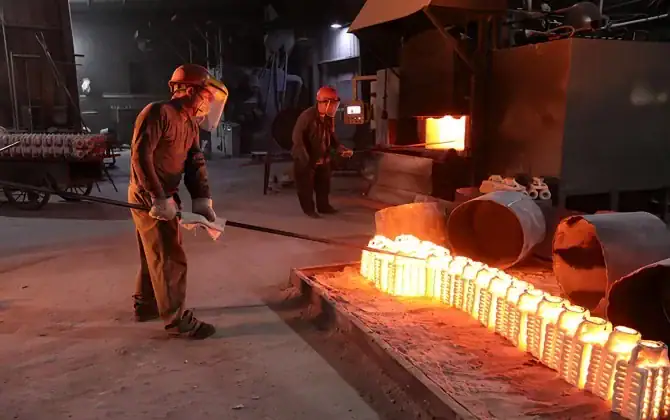
Manufacturing and Product Evidence
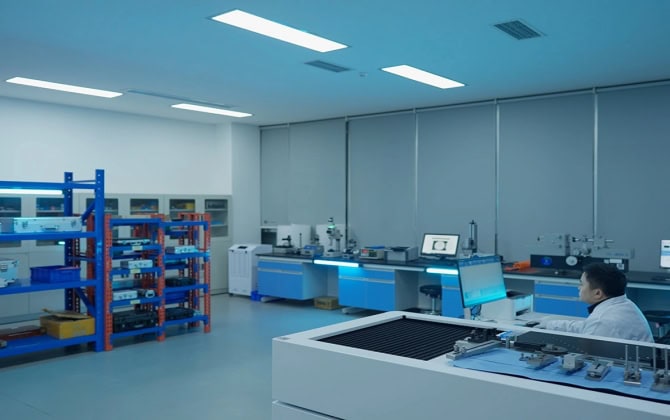
For a project review, send your drawing, sample photos, furnace conditions, quantity and inspection requirements through our Contact Us page.
Related Heat Treatment Fixture Resources
Use these technical guides when specifying, inspecting or replacing heat treatment fixtures for an industrial furnace:
- Custom Heat Treatment Fixtures: Buyer RFQ and Drawing Checklist
- Heat Treatment Fixture Workpiece Location and Release Design
- Heat Treatment Fixtures for Repeated Furnace Cycles
- Heat Treatment Fixture Dimensional Acceptance Checklist
- Why Does a Heat Treatment Fixture Lose Alignment?
Related ECOOSUN Products
Information for a Faster Quotation
Provide alloy grade or service conditions, workpiece geometry, locating and release points, dimensions and tolerances, cycle temperature, furnace type, quantity, drawing or used sample, and inspection requirements.
Request a Custom Quote · Send Your Drawing · WhatsApp ECOOSUN

 +44 7419 144346