
Short answer: Centrifugal casting is a suitable manufacturing route for many cylindrical furnace rolls because rotation helps form a dense working shell, but the correct alloy, geometry, machining and inspection plan still depends on load, temperature, span, speed and atmosphere.
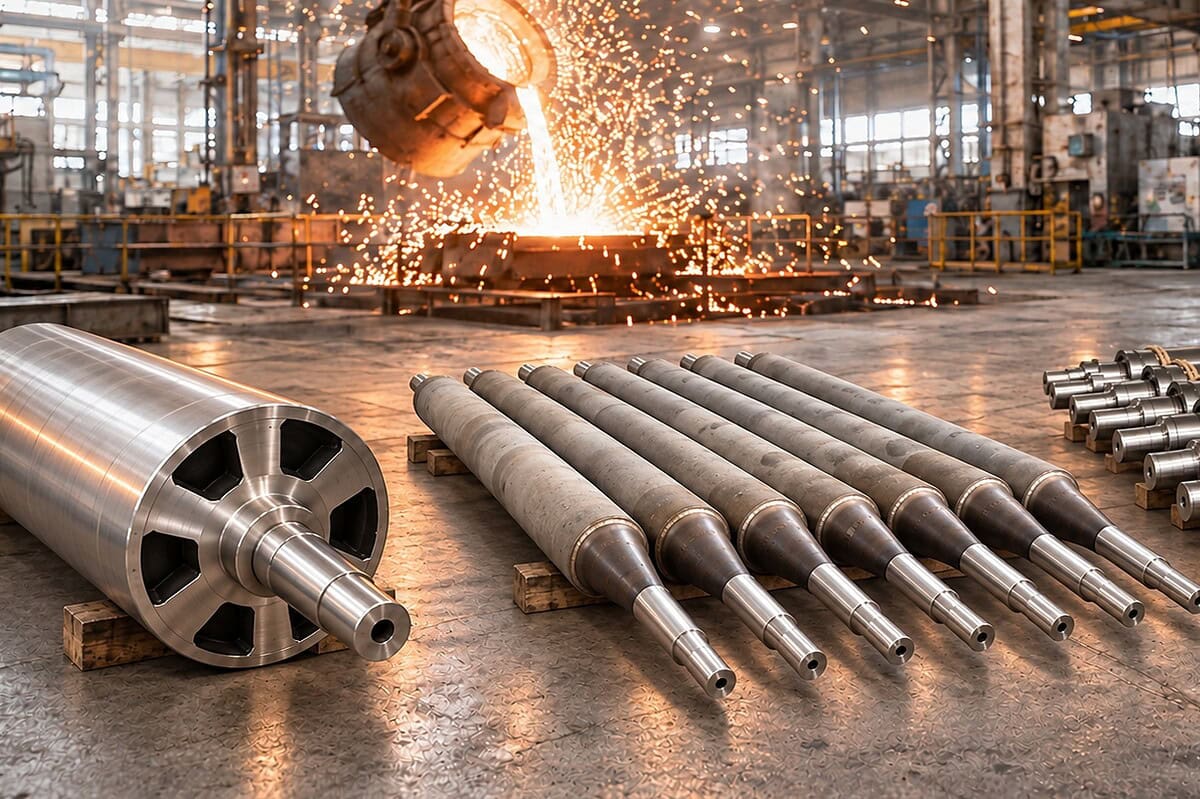
What centrifugal casting contributes
In centrifugal casting, molten alloy is introduced into a rotating mold so that the metal forms a cylindrical body against the mold wall. The process can be used to produce a hollow or tubular roll body that is then machined and finished to the required dimensions. Rotation, pouring control and solidification practice influence wall uniformity, surface condition and internal soundness.
The process is not a substitute for an application specification. A furnace roll may include a working shell, internal bore, journals, shafts, drive features, cooling passages or welded and machined interfaces. The complete assembly must be checked for concentricity, support, thermal expansion and connection to the furnace drive.
Where the roll operates
Provide the furnace type, heated span, support span, material being conveyed, load distribution, line speed, rotation speed, atmosphere and temperature. A roll used in a roller hearth furnace has different requirements from a roll used in a continuous annealing, carburizing or sintering line. Contact with the product, scale build-up and cleaning method can also affect the working surface.
Important service questions include whether the roll is continuously hot, how it is cooled at the shaft ends, whether the load is centered or distributed, and what happens during start-up, shutdown and an upset condition. These details help the manufacturer evaluate bending, thermal fatigue and wear risks.
Material references for preliminary selection
Common heat-resistant alloy references for industrial furnace parts include EN 1.4852 / 25Cr-35Ni-Nb at approximately 1100–1150°C, EN 1.4851 / X15CrNiSi25-21 at approximately 900–1000°C, EN 1.4845 / 25Cr-20Ni at approximately 900–1000°C, EN 1.4857 / 25Cr-35Ni / HP40 at approximately 1050–1150°C, and HU / ZG45Ni38Cr18Si2 around 1093°C. These are approximate reference ranges. The final alloy and roll construction must be confirmed against actual roll-metal temperature, atmosphere, load and cycle.
Machining, runout and shaft details
Furnace roll performance depends on more than the cast body. Define the finished outside diameter, body length, overall length, bore, journal diameter, shaft material, keyway or drive detail, bearing seats, seal arrangement and cooling connection. State the measurement datum and the acceptable radial runout or straightness on the drawing. If balance is important at operating speed, provide the speed and balancing requirement.
Runout can be influenced by casting, stress relief, machining sequence, heat exposure and assembly. For that reason, a supplier should know whether runout is measured on the finished body, journals or installed assembly, and at what temperature or support condition.
Inspection and documentation
- Dimensional inspection of body, bore, journals, shaft and connection features.
- Radial runout, straightness, concentricity and, where specified, balance.
- Visual and surface inspection of the working shell and machined areas.
- Chemical composition, hardness and material identification or traceability.
- Suitable non-destructive testing for critical sections where required.
- Inspection report linked to drawing revision, batch or heat number.
When centrifugal casting may not be the only route
Complex roll geometry, special internal cooling, small quantities or a repair assembly may require a combined casting, forging, welding and machining plan. The correct choice should be based on geometry and service risk, not on a process name alone. A drawing review allows ECOOSUN to confirm whether centrifugal casting, static casting or another route is appropriate.
For a quotation, send the roll drawing, a photograph of the installed position and the previous failure description. ECOOSUN manufactures custom furnace rolls and can coordinate related radiant tubes or heat treatment trays when a furnace project needs multiple heat-resistant components. Use Contact Us, select Request a Custom Quote or Send Your Drawing. You can also contact ECOOSUN through WhatsApp.
Manufacturing and Product Evidence
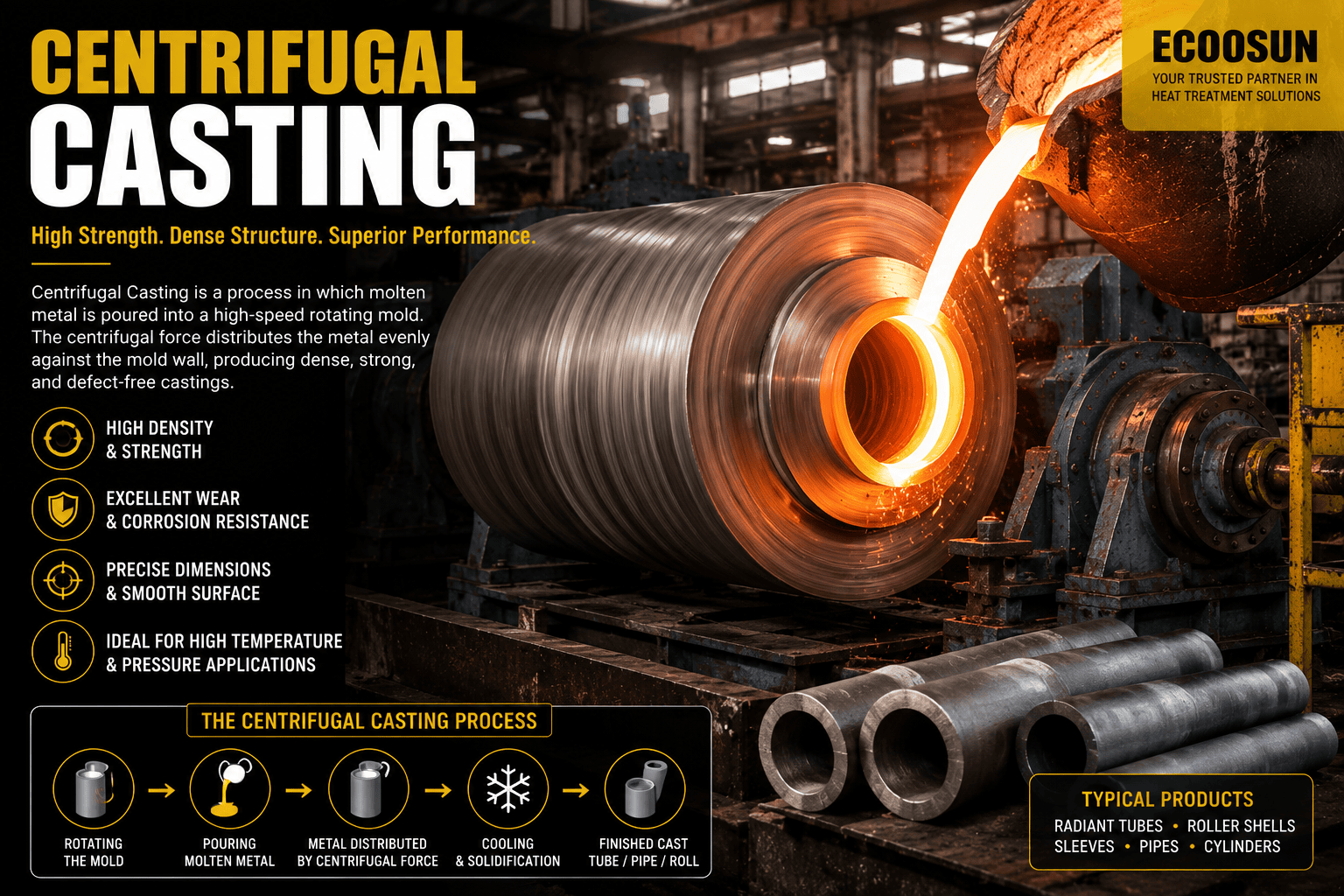
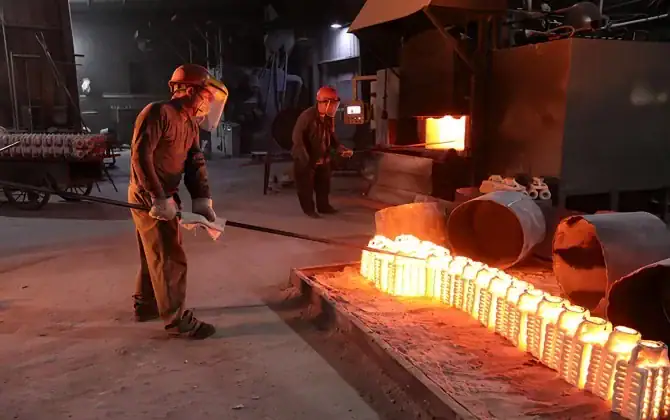
For a project review, send your drawing, sample photos, furnace conditions, quantity and inspection requirements through our Contact Us page.
Related Furnace Roll Resources
Use these technical guides when specifying, inspecting or replacing furnace rolls for an industrial furnace:
- Furnace Rolls: Material, Runout and Replacement Criteria
- Furnace Roll Replacement: Diameter, Length, Load and Runout
- Why Furnace Rolls Deform and How to Improve Service Life
- Furnace Roll Installation and Alignment Inspection Checklist
- Furnace Roll Replacement and Inspection Guide
Related ECOOSUN Products
Information for a Faster Quotation
Provide alloy grade or service conditions, roll dimensions, load, span, speed, allowable runout, atmosphere, temperature, shaft and drive details, cooling requirements, drawing or used sample, and inspection requirements.
Request a Custom Quote · Send Your Drawing · WhatsApp ECOOSUN

 +44 7419 144346