
Direct answer
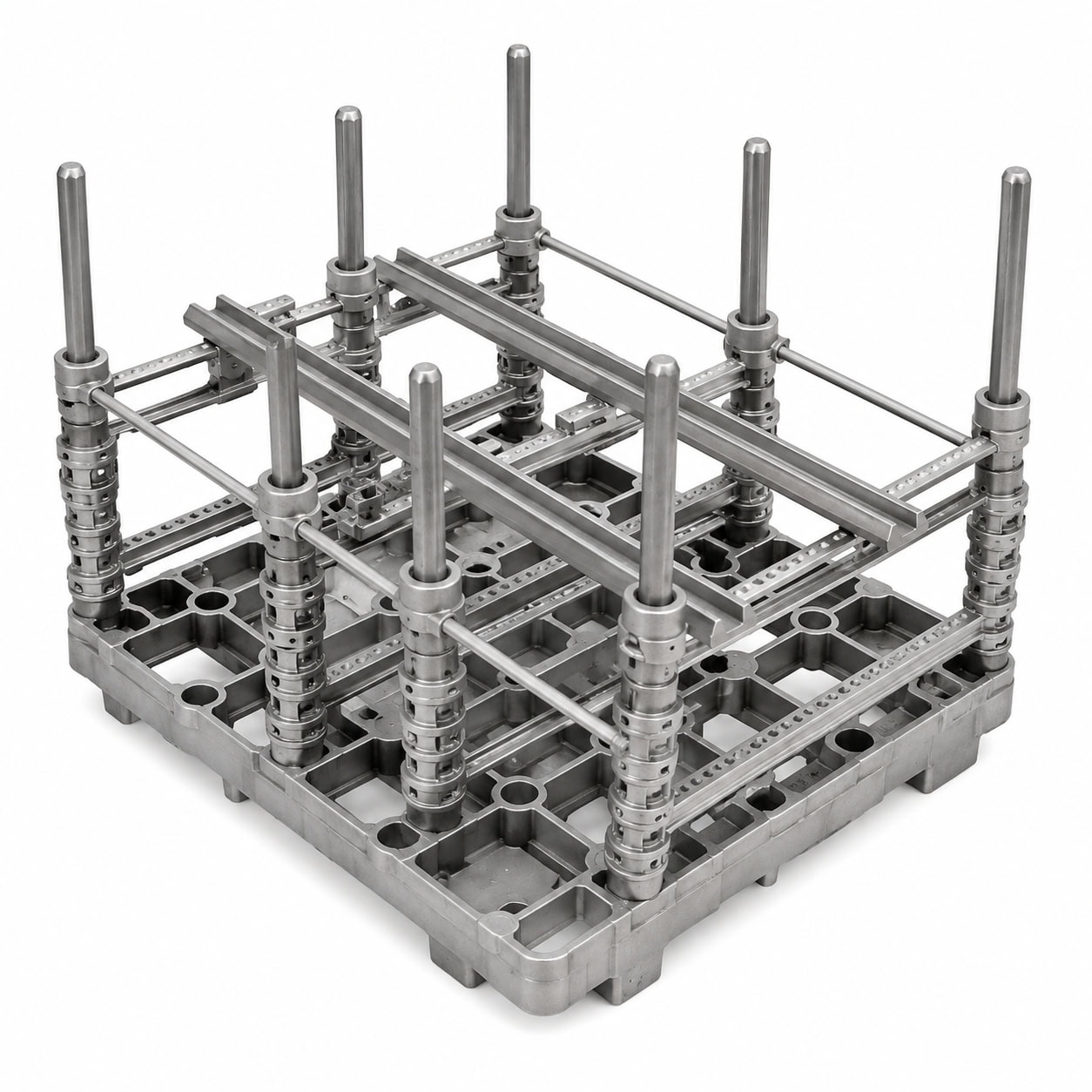
A heat treatment fixture can lose alignment because of wear at locating or support surfaces, distorted members, altered furnace supports, handling damage, excessive or unintended restraint, or a change in the workpiece or loading method. Start by measuring the locating features and comparing them with the current drawing. Then inspect contact marks, support condition, release path, and the installed furnace interface. Treat “misalignment” as a condition to document, not as proof of a casting defect.
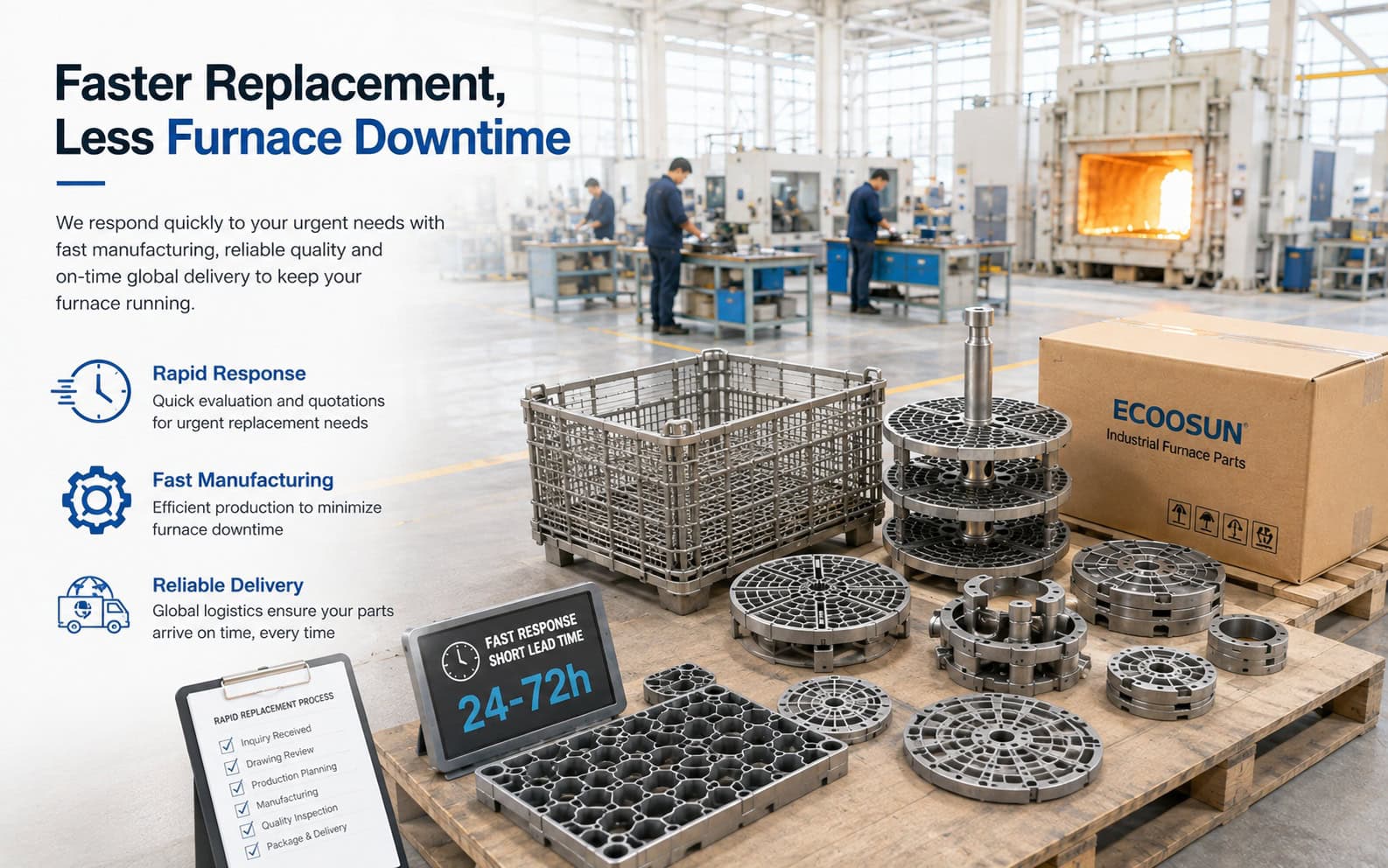
Check the locating surfaces first
Measure the locating points from the agreed datum and compare the result with the workpiece fit. Look for polished, fretted, dented, or galled contact areas. Record whether the error is repeatable on multiple fixtures or limited to one. Repeatability helps prioritize inspection of a common support or loading condition, but it is not a root-cause conclusion by itself.
Inspect support and restraint
Check whether the fixture is supported where the design expects and whether any clamp, stop, or restraint has become tight. A fixture may shift if a support is worn, missing, or carrying load at one corner. It may also bind if a release path is blocked by scale or a workpiece has changed shape. Photograph the actual installed condition before adjustment.
Check handling and line changes
Review lifting direction, operator loading, transfer equipment, furnace rails, and nearby components. Note any maintenance or line change before the alignment problem appeared. If the fixture was straightened or welded, record the intervention. A supplier needs the history to decide whether a direct replacement, repair review, or redesign is appropriate.

How ECOOSUN can help
ECOOSUN can review drawings, worn samples, operating information, engineering requirements, and inspection requirements for a custom fixture. Send the alignment measurements through Heat Treatment Fixtures or contact-us.
FAQ
What evidence is needed when a heat treatment fixture loses alignment?
Record the affected workpiece locations, fixture datums, joints and support contacts. Compare dimensions before and after service, and document the loading, thermal cycle and handling sequence.
Does misalignment prove that the fixture alloy is unsuitable?
No. Distortion, joint movement, wear, support conditions and restraint can all require investigation. The replacement decision should follow dimensional and service evidence rather than a material change based only on appearance.
Related Heat Treatment Fixture Resources
Use these technical guides when specifying, inspecting or replacing heat treatment fixtures for an industrial furnace:
- Custom Heat Treatment Fixtures: Buyer RFQ and Drawing Checklist
- Heat Treatment Fixture Workpiece Location and Release Design
- Heat Treatment Fixtures for Repeated Furnace Cycles
- Heat Treatment Fixture Dimensional Acceptance Checklist
Related ECOOSUN Products
Manufacturing and quality evidence · Official company facts and current catalog
Information for a Faster Quotation
Provide alloy grade or service conditions, workpiece geometry, locating and release points, dimensions and tolerances, cycle temperature, furnace type, quantity, drawing or used sample, and inspection requirements.
Request a Custom Quote · Send Your Drawing · WhatsApp ECOOSUN

 +44 7419 144346