
Direct answer
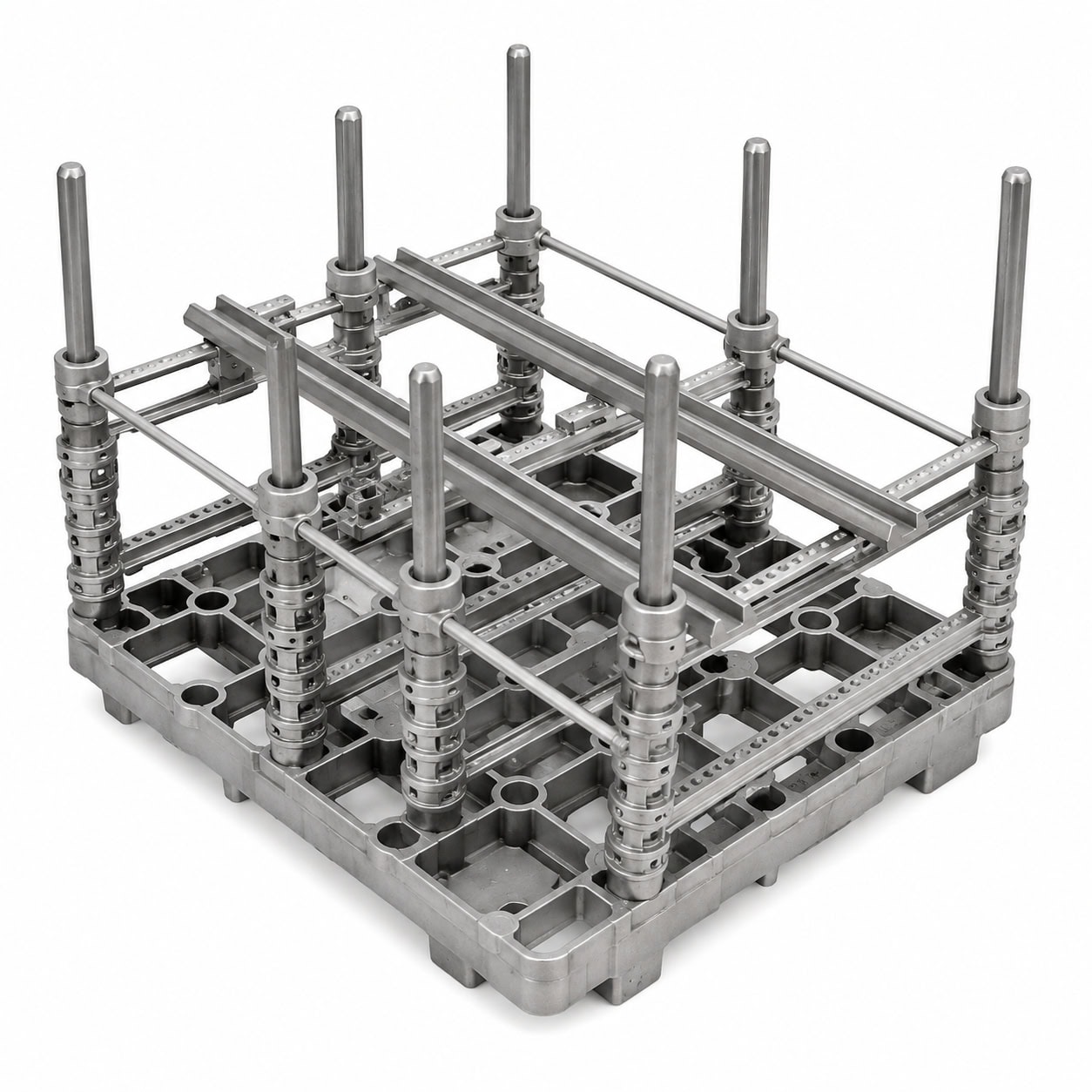
Heat treatment fixtures are purpose-built tools that locate, support, restrain, or orient workpieces during furnace handling and processing. Their job is to make the position repeatable while leaving the required access and allowing the workpiece and fixture to be handled safely. A fixture should not be specified from its name alone. The workpiece datums, contact areas, release path, furnace envelope, handling method, and evidence from previous distortion or sticking all matter.
What makes a fixture different from a tray?
A tray primarily provides a broad support platform. A fixture usually includes locating features or controlled restraint for a defined workpiece. That can improve repeatability, but it also introduces contact points that may wear, stick, mark a part, or prevent easy release. The design must balance location and freedom of movement rather than simply adding more supports.
Information that defines the fixture
Provide the workpiece drawing or sample, the surfaces that may be contacted, the surfaces that must remain clear, and the loading direction. Mark the datum features used for inspection. Add the approximate mass and the way the operator or equipment loads and removes the workpiece. If the current fixture has changed shape or no longer releases cleanly, photograph it before repair or cleaning.
The furnace side is equally important. Record the available envelope, rails or supports, nearby parts, door clearance, and any transfer tooling. A fixture that locates the workpiece correctly but cannot pass through the furnace opening is not a usable design.
How ECOOSUN can help
ECOOSUN provides custom casting support for heat-treatment factories and industrial heat-treatment furnace manufacturers. The team can review the workpiece, drawing or worn sample, furnace interface, operating information, and agreed inspection requirements. Visit Heat Treatment Fixtures or use contact-us to send the requirement.
Frequently asked questions
Should a fixture restrain every direction?
Not necessarily. Restraint should follow the workpiece and process requirement. Excessive contact can make loading, release, or movement worse.
What is the most useful drawing?
The workpiece drawing plus the fixture drawing is ideal. If one is missing, add a sample, photographs, datums, and a clear description of the intended location.
Manufacturing and Product Evidence

For a project review, send your drawing, sample photos, furnace conditions, quantity and inspection requirements through our Contact Us page.
Related Heat Treatment Fixture Resources
Use these technical guides when specifying, inspecting or replacing heat treatment fixtures for an industrial furnace:
- Custom Heat Treatment Fixtures: Buyer RFQ and Drawing Checklist
- Heat Treatment Fixture Workpiece Location and Release Design
- Heat Treatment Fixtures for Repeated Furnace Cycles
- Heat Treatment Fixture Dimensional Acceptance Checklist
- Why Does a Heat Treatment Fixture Lose Alignment?
Related ECOOSUN Products
Information for a Faster Quotation
Provide alloy grade or service conditions, workpiece geometry, locating and release points, dimensions and tolerances, cycle temperature, furnace type, quantity, drawing or used sample, and inspection requirements.
Request a Custom Quote · Send Your Drawing · WhatsApp ECOOSUN

 +44 7419 144346