
Direct answer
Analyze a failed heat treatment basket by mapping the damage against the load path, support points, contact locations, handling direction, and cycle history. A crack or deformation pattern is an observation; it is not automatically proof of a material or manufacturing cause. Photograph the basket before alteration, identify the installed orientation, measure the damaged area, and compare the evidence with the drawing and loading arrangement. This produces a useful next action: inspect the furnace interface, review the load, or prepare a controlled replacement brief.
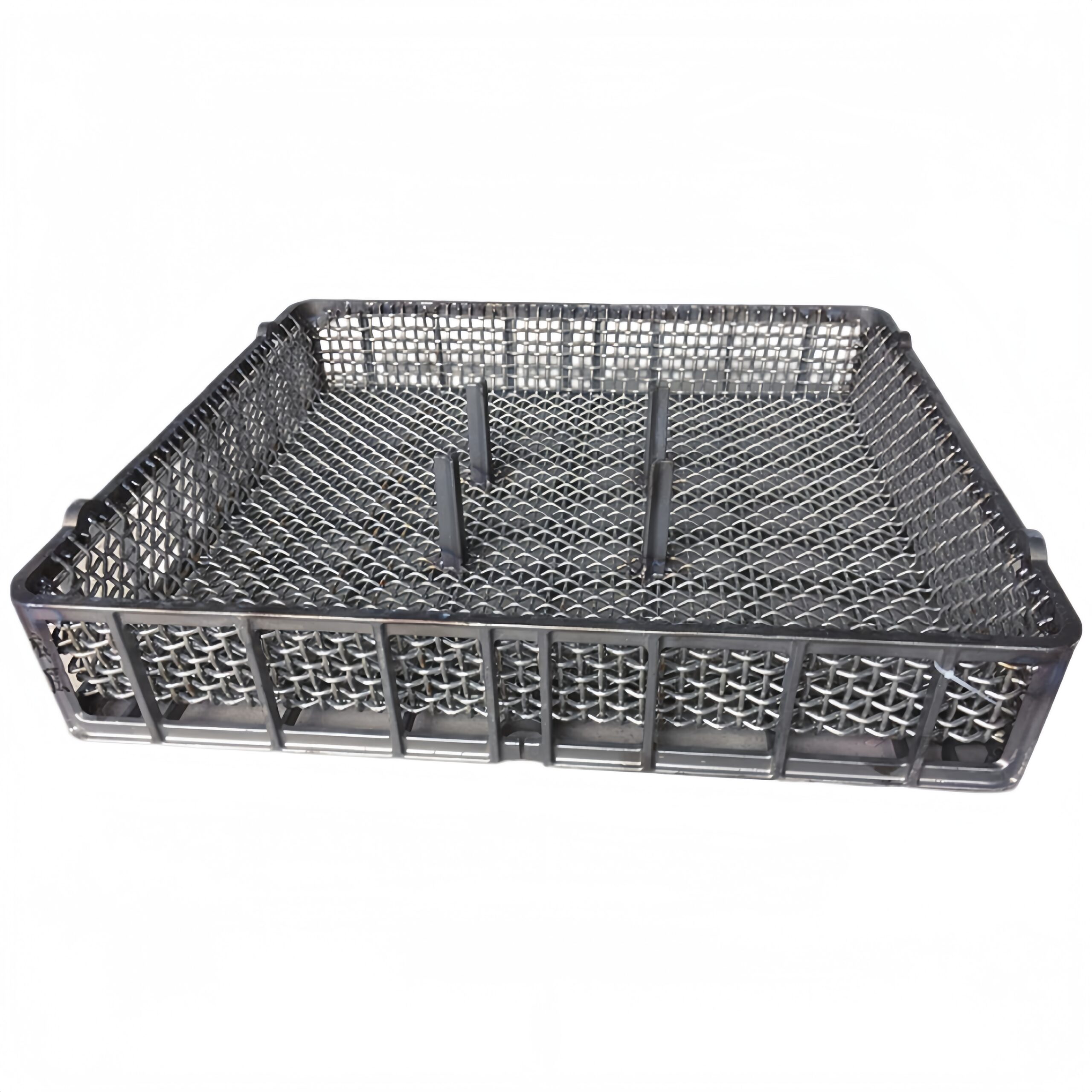
Map the damage before naming the cause
Create a simple damage map. Mark cracks, bent members, thinning, polished contacts, dents, and areas where scale has collected. Note whether the damage repeats on several baskets or occurs only on one location. Repetition can point to a shared support or loading condition, while a single local mark may require closer inspection of handling or contact.
Follow the load path
Draw where the workpiece load enters the basket and where the basket transfers it to rails, hooks, or supports. Compare the intended path with the actual contact marks. Check whether the workpiece arrangement changed, whether the load became concentrated, or whether a support was missing or out of position. Do not turn an approximate load note into a capacity claim; use it as an input for engineering review.
Check contact and handling evidence
Look for interference at the furnace door, guide, stop, transfer device, and lifting points. Record fresh bright marks, repeated dents, or deformation in the direction of a handling force. Add the thermal-cycle and maintenance history only when available. Missing history should be recorded as a gap, not filled with a guess.

What a supplier needs next
Send the damaged basket, photos, drawing revision, measured geometry, load arrangement, furnace interface, and inspection requirements. ECOOSUN can review drawings, worn samples, operating information, and engineering requirements for a custom casting through Heat Treatment Baskets or contact-us.
FAQ
What should a buyer confirm for a heat treatment basket requirement?
Confirm the drawing or used sample, key dimensions and interfaces, furnace type and clearance, load, operating cycle, failure evidence and inspection requirements. Final acceptance criteria should be agreed for the specific project.
Can ECOOSUN review a custom heat treatment basket requirement?
Yes. ECOOSUN can review a customer drawing or used sample and discuss casting, laboratory and inspection requirements for a custom furnace-component project. Suitability and final scope are confirmed from the supplied information.
Related Heat Treatment Basket Resources
Use these technical guides when specifying, inspecting or replacing heat treatment baskets for an industrial furnace:
- Heat Treatment Baskets: Load, Material and RFQ Guide
- How to Choose Heat Treatment Baskets
- Heat Treatment Basket Failure Analysis
- How to Replace a Heat Treatment Basket from a Worn Sample
- How to Inspect a Heat Treatment Basket Before Replacement
Related ECOOSUN Products
Information for a Faster Quotation
Provide alloy grade or service conditions, basket dimensions, expected load, operating temperature, furnace type, quantity, drawing or used sample, and inspection requirements.
Request a Custom Quote · Send Your Drawing · WhatsApp ECOOSUN

 +44 7419 144346