
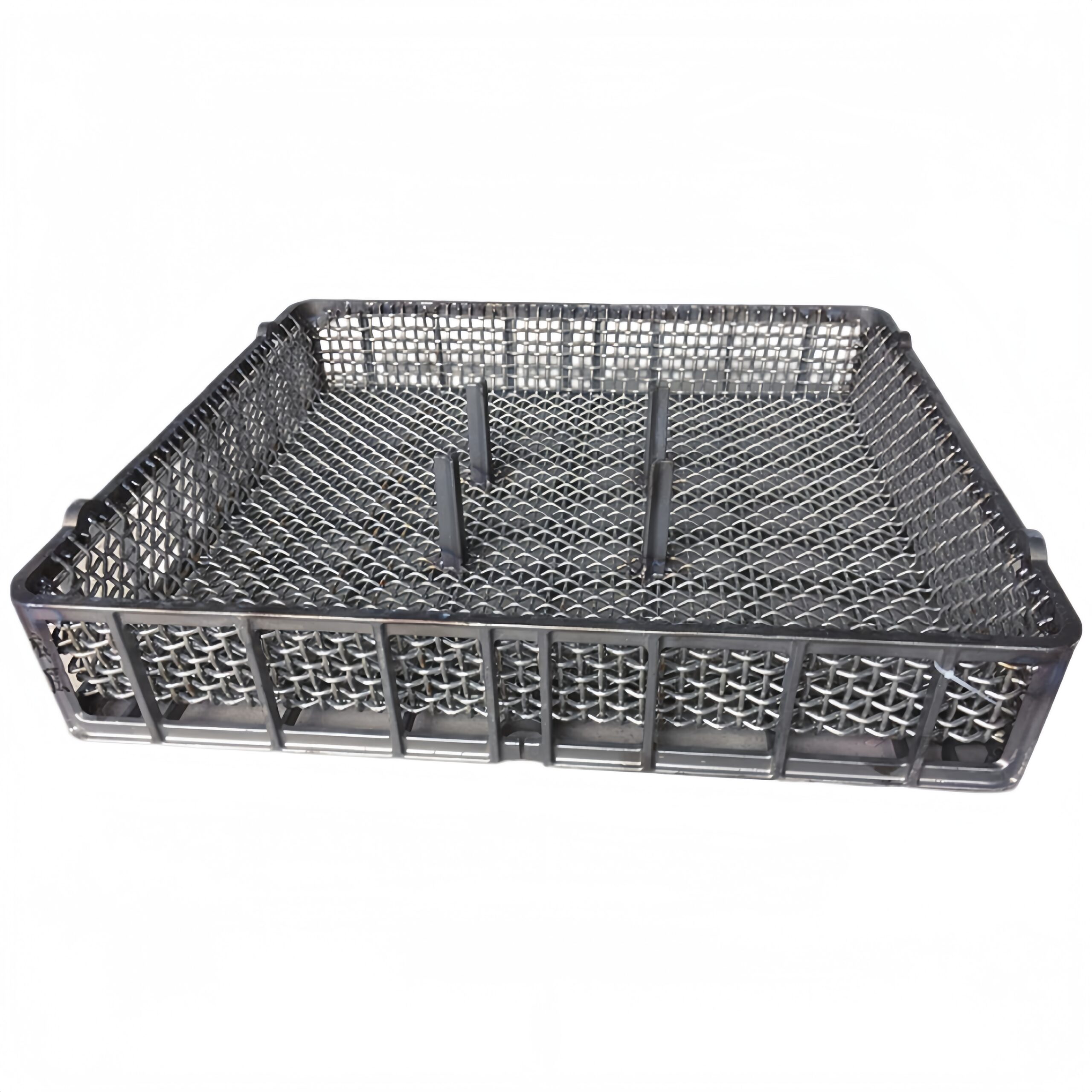
Direct answer: Cast and fabricated heat treatment baskets can both be suitable, but they solve different design and maintenance problems. A cast basket can integrate ribs, load paths, locating features and complex open sections into one heat-resistant structure. A fabricated basket can be practical where the geometry is simple, welded construction is acceptable and repair or modification is expected. The correct choice depends on furnace duty, load distribution, support spacing, lifting method, atmosphere, thermal cycle and the buyer’s inspection requirements.
Start with the furnace duty, not the manufacturing label
“Cast” and “fabricated” describe how the basket is made; they do not by themselves establish service life. Before comparing routes, define what the basket must carry, how it is supported, how it is lifted and transferred, and what happens during heating, cooling and unloading. A basket that fits at room temperature may still interfere with rails, guides or other baskets after thermal movement.
For carburizing, annealing, hardening and tempering applications, also provide the furnace atmosphere, normal cycle, upset conditions and quench route where applicable. Final material selection and construction should be confirmed for the actual duty.
Practical comparison for buyers
| Decision point | Cast basket | Fabricated basket |
|---|---|---|
| Geometry | Useful for integrated ribs, complex grids, bosses and repeated shapes. | Often practical for simpler frames, mesh panels and welded assemblies. |
| Load path | Can be designed as a continuous cast structure with controlled transitions. | Depends strongly on member layout, joints and weld locations. |
| Thermal movement | Section changes, ribs and junctions must be reviewed for casting and service stresses. | Member expansion and restraint at welds and joints must be reviewed. |
| Modification | Changes may require new tooling or pattern work. | Simple dimensional changes may be easier, subject to engineering review. |
| Inspection | Critical dimensions, surface condition, material traceability and agreed NDT may apply. | Dimensions, material identification, weld quality and joint inspection may apply. |
| Replacement evidence | Drawing, pattern reference or measured sample plus failure history. | Assembly drawing, member sizes, weld details and distortion record. |
When a cast basket may fit the requirement
A cast design is worth reviewing when the basket needs repeated integrated geometry, shaped load supports, controlled openings, cast lifting features or a load path that would otherwise require many welded intersections. It may also be appropriate when the existing furnace already uses a proven cast design and the replacement reference can be confirmed from the approved drawing or a measured sample.
Do not assume that a heavier casting is automatically stronger in service. Thick and thin transitions, unsupported spans, sharp junctions and concentrated loads still require review. Increasing alloy content cannot compensate for a poor support arrangement.
When a fabricated basket may fit the requirement
A fabricated construction may be practical for straightforward frames or mesh assemblies, especially when the design must be modified regularly or local repair is part of the maintenance strategy. The buyer should nevertheless review weld locations, restraint, heat-affected zones, member movement and the way the assembly transfers load into furnace supports.
The choice should not be made only from purchase price. Compare fit-up risk, inspection scope, repair method, repeatability and the complete replacement cost.

Information to include in the RFQ
- Approved drawing, revision or measured worn sample.
- Usable internal dimensions and overall furnace envelope.
- Workpiece layout, maximum batch mass and concentrated contact points.
- Furnace rails, posts, rollers, stacking and support spacing.
- Lifting points, transfer method and operator-access requirements.
- Atmosphere, normal thermal cycle and known upset conditions.
- Observed distortion, cracks, wear or repair history.
- Required material documents, dimensions and inspection records.
ECOOSUN can review a custom heat treatment basket requirement from a drawing or used sample. See the ECOOSUN company facts and product catalog, or send the application information through Contact Us.
Frequently asked questions
Is a cast basket always better at high temperature?
No. Suitability depends on alloy, geometry, load, support, atmosphere, thermal cycle and inspection—not on the process name alone.
Can a fabricated basket be copied as a casting?
It can be reviewed, but the geometry should not be converted directly without checking load paths, section transitions, openings, tooling and furnace clearance.
Which route is easier to repair?
That depends on the design, alloy, damage and approved repair procedure. Repairability should be specified before purchase rather than assumed after failure.
What should ECOOSUN receive first?
Send the drawing or sample photographs, key dimensions, load arrangement, furnace supports, lifting method, atmosphere, cycle and failure history.
Related Heat Treatment Basket Resources
Use these technical guides when specifying, inspecting or replacing heat treatment baskets for an industrial furnace:
- Heat Treatment Baskets: Load, Material and RFQ Guide
- How to Choose Heat Treatment Baskets
- Heat Treatment Basket Failure Analysis
- How to Replace a Heat Treatment Basket from a Worn Sample
- How to Inspect a Heat Treatment Basket Before Replacement
Related ECOOSUN Products
Information for a Faster Quotation
Provide alloy grade or service conditions, basket dimensions, expected load, operating temperature, furnace type, quantity, drawing or used sample, and inspection requirements.
Request a Custom Quote · Send Your Drawing · WhatsApp ECOOSUN

 +44 7419 144346