
Direct answer: A heat treatment fixture can be reproduced from a used sample only after the supplier separates original design features from wear, distortion, repairs and service damage. Record the sample in its installed orientation, establish datums, measure critical locating and support points, compare opposite or repeated features, and combine the sample with workpiece, furnace and operating information. The final drawing—not the damaged shape—should become the controlled replacement reference.
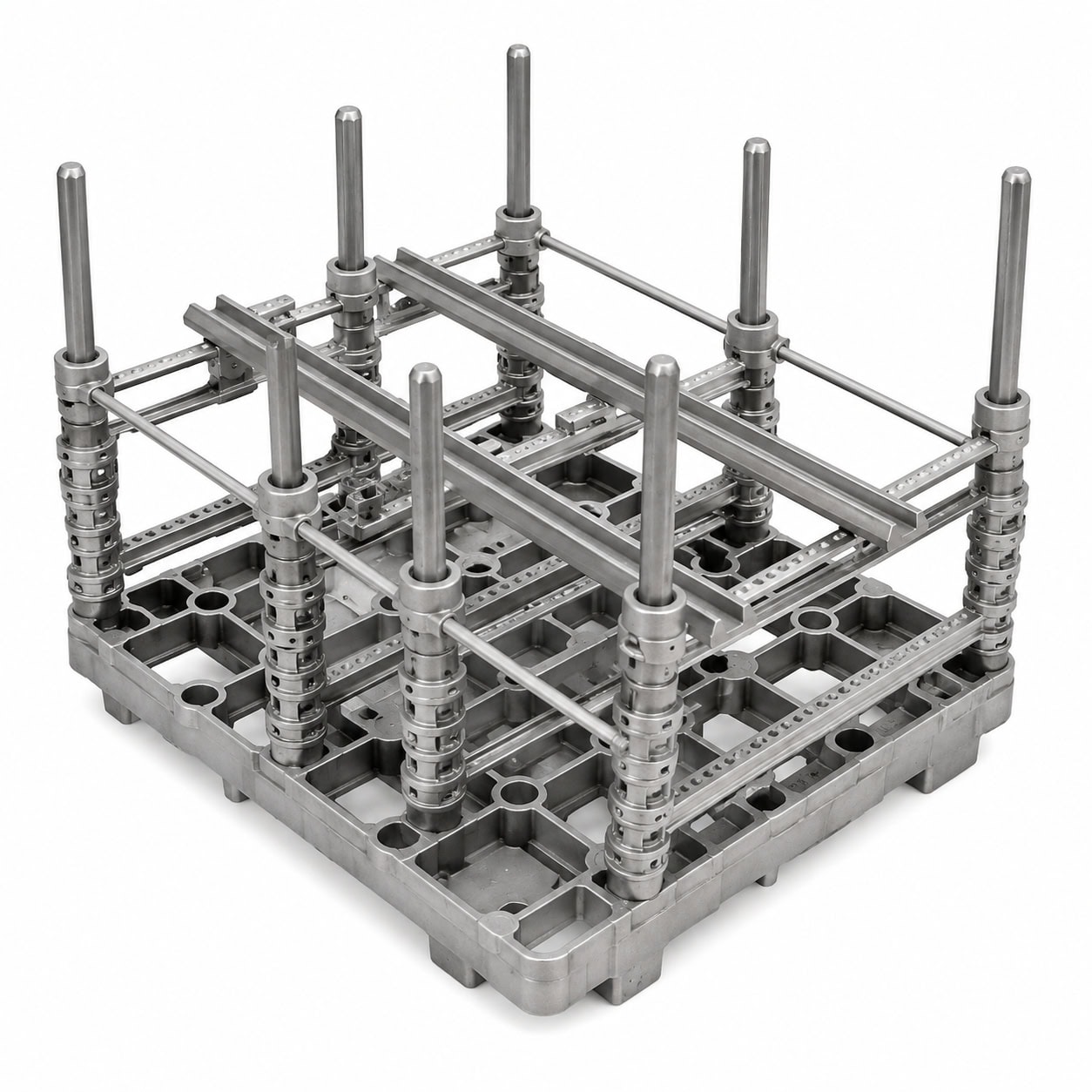
Preserve the sample before changing it
Photograph the complete fixture from the top, bottom and all sides before cleaning, straightening, welding or cutting. Mark furnace direction, loading orientation, workpiece position and lifting direction. Close-up photographs should record cracks, rubbed surfaces, polished contacts, bent posts, worn holes, repairs and areas that no longer fit.
If several used fixtures are available, compare them. Repeated geometry is more reliable than a single damaged feature, while repeated damage in the same location deserves a design and service review.
Build a measurement plan around function
| Feature | Measurement question | Replacement risk if missed |
|---|---|---|
| Primary datums | Which surfaces or axes establish the inspection coordinate system? | The drawing may be complete but impossible to inspect consistently. |
| Locating points | Which pins, nests or stops control workpiece position? | The workpiece may sit incorrectly or bind after heating. |
| Support points | Which features carry load and which only prevent movement? | Load may transfer into an unintended feature. |
| Furnace interfaces | Where does the fixture contact rails, rollers, posts or transfer tools? | The replacement may not fit or may rock during handling. |
| Release clearance | Where must the workpiece remain free after the thermal cycle? | Parts may stick or require damaging removal force. |
Distinguish intended geometry from service change
Do not treat every measured dimension as an original design value. Label each measurement as confirmed, repeated, worn, distorted, repaired, estimated or pending. Where possible, use symmetry, mating workpiece dimensions, furnace interfaces and historical drawings to reconstruct the intended value.
A bent locating post or enlarged hole may record service damage rather than design intent. Conversely, an apparently irregular feature may be a necessary clearance or loading aid. Resolve uncertainty on the replacement drawing and obtain buyer approval before tooling or production.
Review the fixture with the workpiece and furnace
The supplier needs the workpiece drawing or sample, critical post-treatment dimensions, loading sequence, batch quantity, furnace supports, available clearance, handling method, atmosphere and thermal cycle. A fixture should locate the workpiece repeatably without imposing unnecessary restraint during heating and cooling.
If the process or workpiece has changed, copying the old fixture may reproduce an obsolete interface. Document the current application.
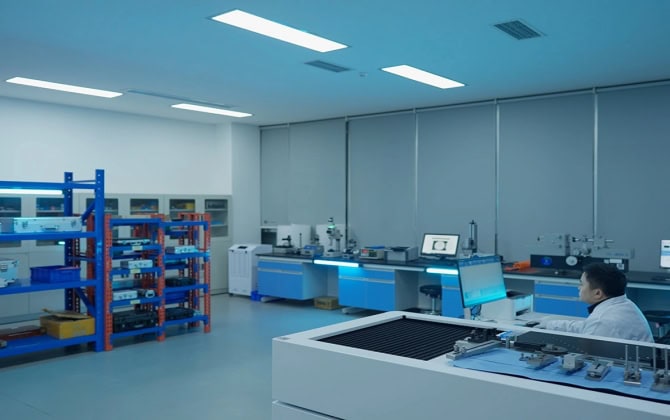
Release the replacement drawing and inspection plan
- Identify the drawing revision and source of every critical dimension.
- Define primary, secondary and tertiary datums.
- Mark locating, support, release, lifting and furnace-interface features.
- State dimensional, alignment, visual and documentation requirements.
- Record approved assumptions and unresolved buyer inputs.
- Keep the final inspection report as a baseline for future service comparison.
ECOOSUN can review custom heat treatment fixtures from a drawing or used sample. Related guidance includes the fixture dimensional acceptance checklist and drawing versus worn-sample review. See ECOOSUN company facts or submit the package through Contact Us.
Frequently asked questions
Is one used fixture enough?
It can start the review, but multiple samples, the workpiece and furnace interfaces provide stronger evidence for intended geometry.
Should the sample be straightened before measurement?
No. Record orientation, damage and critical dimensions first. Straightening can remove evidence and change the reference.
Can worn holes or bent posts be copied directly?
They should be classified as wear or distortion and resolved against functional interfaces before the final drawing is approved.
What controls fixture accuracy?
Datum selection, locating features, support points, casting and machining allowances, thermal movement and the agreed inspection method all contribute.
Related Heat Treatment Fixture Resources
Use these technical guides when specifying, inspecting or replacing heat treatment fixtures for an industrial furnace:
- Custom Heat Treatment Fixtures: Buyer RFQ and Drawing Checklist
- Heat Treatment Fixture Workpiece Location and Release Design
- Heat Treatment Fixtures for Repeated Furnace Cycles
- Heat Treatment Fixture Dimensional Acceptance Checklist
- Why Does a Heat Treatment Fixture Lose Alignment?
Related ECOOSUN Products
Information for a Faster Quotation
Provide alloy grade or service conditions, workpiece geometry, locating and release points, dimensions and tolerances, cycle temperature, furnace type, quantity, drawing or used sample, and inspection requirements.
Request a Custom Quote · Send Your Drawing · WhatsApp ECOOSUN

 +44 7419 144346