
Sintering bonds particles through heating, often with controlled atmosphere or pressure, to develop the required part structure. Sintering covers different materials and production routes, so procurement should begin with the actual workpiece and process rather than a generic furnace label. Buyers need to describe how parts are arranged, supported and moved, then identify the components included in the equipment or replacement scope. Process parameters and product acceptance remain with the responsible process owner.
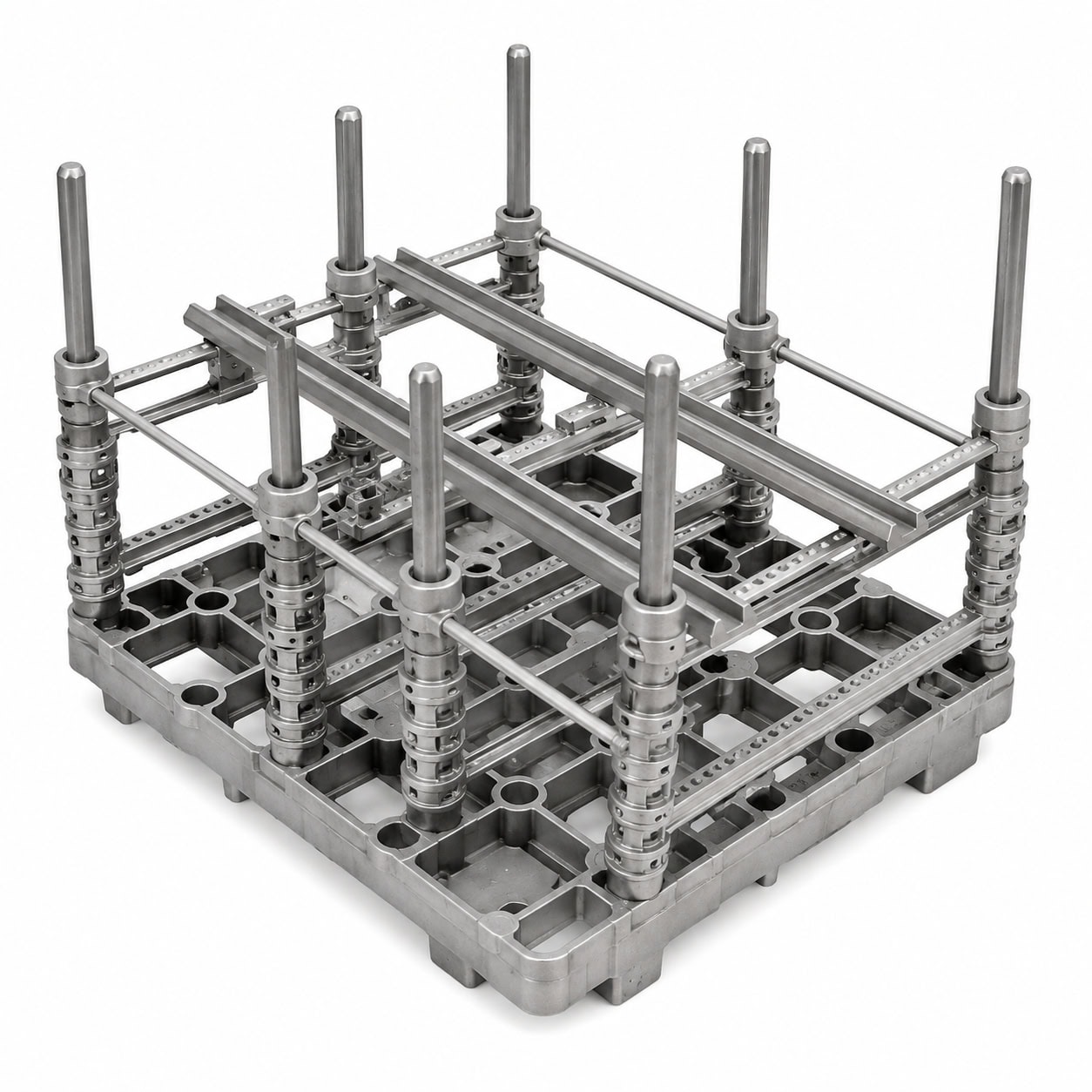
Where the process permits metallic tooling, custom heat treatment fixtures can be reviewed against the part contacts and furnace supports.

For a sintering project, document the material form, part dimensions, batch or continuous flow, load density and handling method. State which surfaces may contact the carrier and which need separation or support. The process owner should provide the approved atmosphere and cycle relevant to component review. These inputs help suppliers assess usable loading space, carrier geometry and furnace interfaces without making assumptions about product quality.
Metal Sintering
Metal sintering consolidates metal particles through a specified thermal route; composition and part density affect the process requirements. Metal sintering loads can differ widely in size, mass and fragility. Identify the smallest and largest components, total batch weight, permitted stacking and the orientation that exposes the required surfaces. If the load contains mixed parts, list the allowed combinations and worst-case arrangement. A drawing or layout sketch lets the supplier assess openings, supports and separation features against the production case.
Sintering Furnace
A sintering furnace provides the controlled thermal and environmental conditions required to consolidate the specified material. When specifying a sintering furnace or replacement internals, confirm the usable chamber dimensions, support locations, loading route and contact materials allowed by the process. Ask the equipment supplier which components are included and what interface governs replacement. For a custom carrier, provide the operating cycle and load details, but do not treat a material recommendation as process approval. The final component specification should cite the released drawing and agreed acceptance checks.
A useful RFQ includes the part drawing, loading layout, supported mass, furnace interface, operating conditions, quantity and inspection requirements. ECOOSUN can review a drawing or sample for a custom heat-resistant component when the duty and scope are defined.
Questions buyers ask
Are all metal trays suitable for sintering?
No. The process may restrict carrier materials because of contamination, reactions or product contact. Confirm these restrictions with the process owner before selecting a tray material.
How should buyers specify supports for fragile sintering parts?
Show the required contact surfaces, permitted handling loads and any change in geometry during the cycle. Review a representative load and trial acceptance criteria before approving production tooling.
Discuss a component requirement with ECOOSUN: send the drawing and operating duty. Include the required quantity and documents so the quotation identifies a reviewable supply scope.
Related component and technical pages: heat treatment trays | heat treatment fixtures | heat treatment furnace parts selection guide

 +44 7419 144346