
Nitriding introduces nitrogen into a material surface to develop a specified hardened layer without relying on the same route as carburizing. Nitriding and related processes use different routes and furnace conditions. A purchasing specification should name the actual treatment, workpiece family and load arrangement rather than combine process terms as if they were interchangeable. The process owner sets the treatment requirements; component suppliers need the operating duty and geometry to review carriers or furnace internals.
For individually positioned parts, review heat treatment fixtures against process access and the approved loading arrangement.
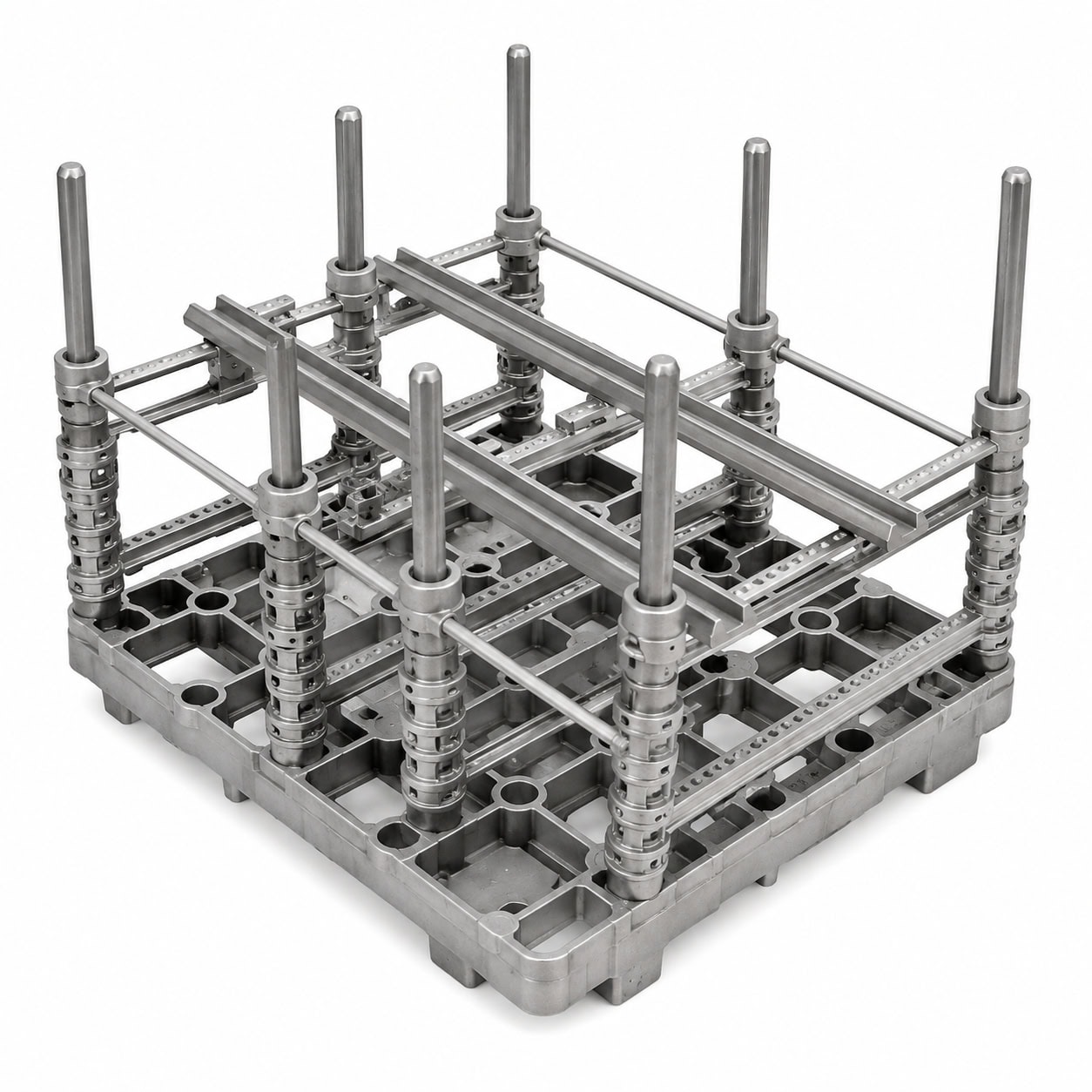
For nitriding, provide the process route and approved cycle, part material, dimensions, quantity per load and orientation. Mark surfaces that must remain accessible or cannot contact the carrier. If the batch varies, show the permitted loading cases. A supplier can then review support points, spacing and handling features without assuming a universal fixture design or making a product hardness guarantee.
Nitriding Furnace
A nitriding furnace provides the controlled environment needed for the specified nitriding route and load configuration. When specifying a nitriding furnace or replacing its internal components, confirm the usable chamber, atmosphere arrangement, loading hardware and clearances. Ask which fixtures or supports are included with the equipment and how replacements are located. Send the furnace layout and carrier drawing to the relevant suppliers; the furnace model alone does not define all interfaces or component exposure.
Gas Nitriding
Gas nitriding introduces nitrogen through a controlled gaseous environment; material and process control determine the resulting layer. For gas nitriding, identify the approved gas atmosphere and cycle through the process owner, then share the information relevant to the component’s exposure. Document the workpiece layout, support surfaces and batch weight. Do not substitute a generic gas designation for the actual operating specification. The supplier’s quotation should state the assumed duty and the material or inspection items that remain subject to confirmation.
Plasma Nitriding
Plasma nitriding uses an ionized gas environment to treat component surfaces; electrical configuration and geometry affect loading requirements. A plasma nitriding RFQ should identify the furnace setup, loading configuration and any workpiece spacing or electrical/contact restrictions specified by the process owner. Explain how parts are held and which areas need process access. Provide drawings of both the workpiece and fixture. This allows the supplier to assess geometry and handling; final process suitability and treatment outcome remain the responsibility of the heat treater.
Nitrocarburizing
Nitrocarburizing introduces nitrogen and carbon into the surface; the specified route and resulting layer differ from conventional carbonitriding. For nitrocarburizing, state the exact route, cycle and atmosphere rather than grouping it with every nitriding process in a purchase order. Identify the parts, load arrangement, contact limits and whether one carrier will serve other processes. The approved component specification should list all permitted duties. Review the supplier’s scope against those conditions before treating an existing design as interchangeable.
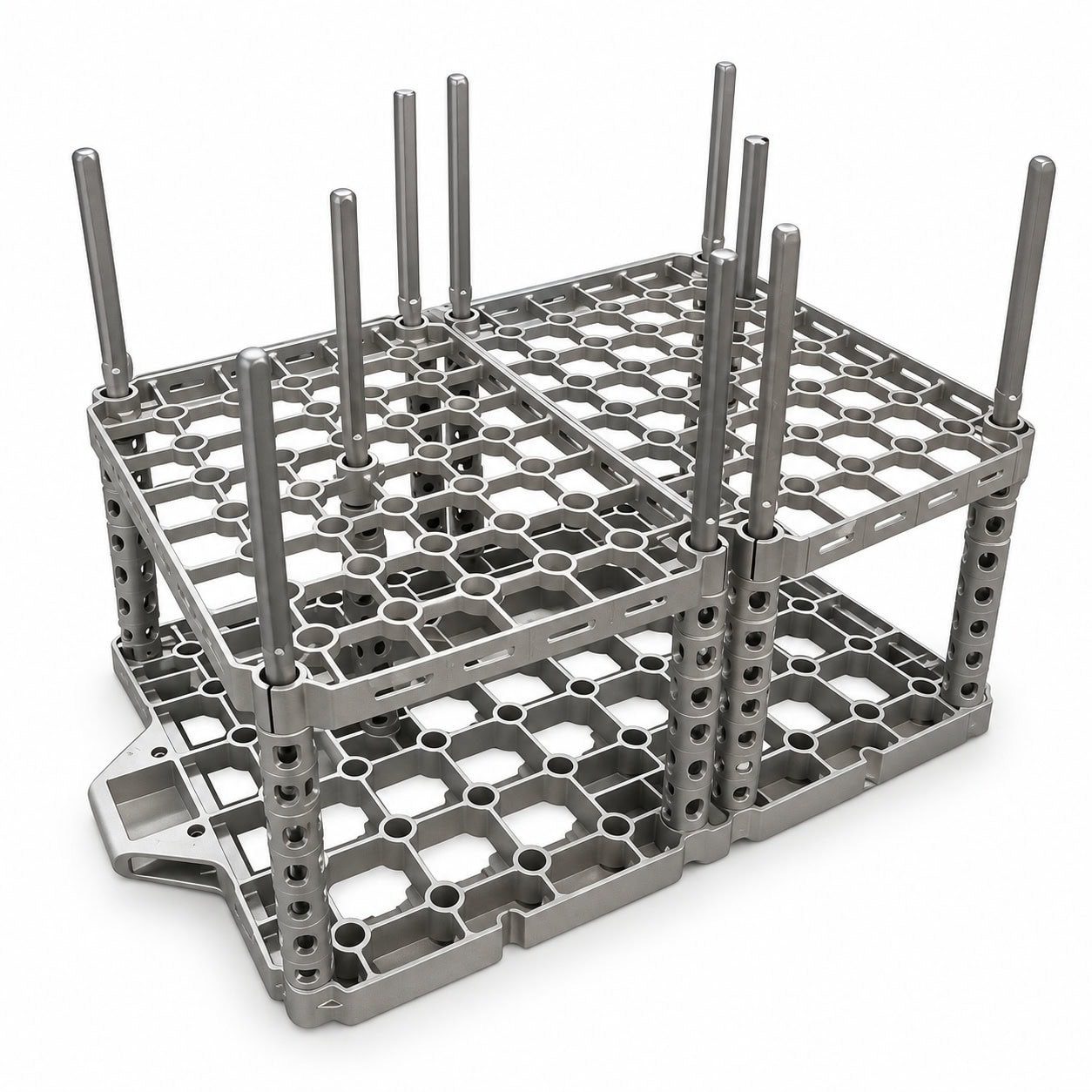
Send the fixture or carrier drawing, process and atmosphere information, workpiece layout, load mass, handling method and acceptance documents required. ECOOSUN can review a custom heat-resistant component against the supplied duty; process parameters and product results must be confirmed by your responsible engineering team.
Questions buyers ask
Can a gas nitriding fixture be used for plasma nitriding?
Do not assume interchangeability. Plasma loading may impose electrical contact, shielding and spacing constraints that a gas process does not share. Obtain approval of the actual fixture and loaded arrangement.
Is nitrocarburizing the same as carbonitriding?
No. They have different process objectives and treatment conditions. State the route and acceptance specification explicitly, then assess carrier exposure for that route.
Discuss a component requirement with ECOOSUN: send the drawing and operating duty. Include the required quantity and documents so the quotation identifies a reviewable supply scope.
Related component and technical pages: heat treatment fixtures | heat treatment trays | heat treatment baskets | radiant tubes
Related buying guides
- Carburizing and Case Hardening Procurement Guide
- Steel Hardening and Tempering Fixture Selection Guide
Related Heat Treatment Fixture Resources
Use these technical guides when specifying, inspecting or replacing heat treatment fixtures for an industrial furnace:
- Custom Heat Treatment Fixtures: Buyer RFQ and Drawing Checklist
- Heat Treatment Fixture Workpiece Location and Release Design
- Heat Treatment Fixtures for Repeated Furnace Cycles
- Heat Treatment Fixture Dimensional Acceptance Checklist
- Why Does a Heat Treatment Fixture Lose Alignment?
Related ECOOSUN Products
Manufacturing and quality evidence · Official company facts and current catalog
Information for a Faster Quotation
Provide alloy grade or service conditions, workpiece geometry, locating and release points, dimensions and tolerances, cycle temperature, furnace type, quantity, drawing or used sample, and inspection requirements.
Request a Custom Quote · Send Your Drawing · WhatsApp ECOOSUN

 +44 7419 144346